Bonsai Styles Explained: Upright, Slanting, Cascade
The art of bonsai styles transforms ordinary trees into living sculptures. Understanding these unique forms is key to cultivating your own miniature masterpiece, a process often guided by Bonsai Species Comparison for Different Climates. From the elegant simplicity of an upright trunk to the dramatic sweep of a cascade, each style tells a distinct story and embodies specific aesthetic principles.
This guide will introduce you to the fundamental bonsai styles, helping you identify their characteristics and appreciate the skill involved in their creation. Whether you are a beginner or an experienced enthusiast, exploring these styles deepens your connection to this ancient horticultural practice.
Table of Contents
The Essence of Traditional Bonsai Styles
Traditional bonsai forms are the foundation of this intricate art. These styles developed over centuries, guided by observations of nature and specific aesthetic rules. Mastering these basic principles is crucial for creating balanced and harmonious bonsai.
Each traditional style has a Japanese name that often describes its visual characteristics. These forms provide a framework, but also allow for individual artistic expression. Let’s delve into some of the most recognized traditional bonsai styles.
Chokkan (Formal Upright)

The Chokkan style is perhaps the most fundamental and striking. It features a perfectly straight trunk that tapers from base to apex. Branches emerge alternately on left and right, with the lowest branch being the longest, and gradually shortening towards the top.
This style embodies strength, dignity, and stability, mimicking trees that grow in open, ideal conditions. It requires meticulous pruning and wiring to maintain its strict, formal appearance.
Moyogi (Informal Upright)

More common in nature, the Moyogi style features a trunk that curves gently, often in an S-shape, while still maintaining an overall upright growth pattern. The apex of the tree is directly above the base of the trunk.
This style offers a softer, more natural appearance compared to the Chokkan. It allows for more artistic freedom while still adhering to principles of balance and proportion. Most trees you encounter will fall into this versatile style.
Shakan (Slanting)
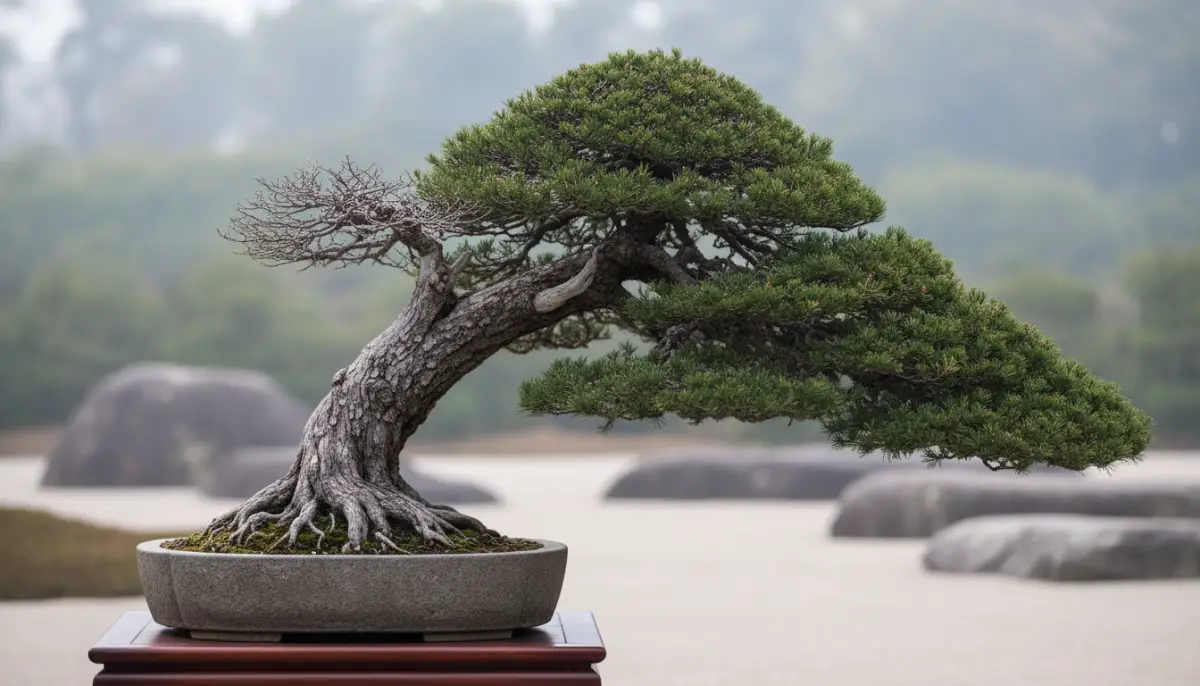
In the Shakan style, the trunk leans significantly to one side, typically between 45 to 60 degrees from the vertical. The roots on the side opposite the lean are often more developed to provide balance and stability.
This style evokes images of trees growing on a hillside or near a strong prevailing wind. The primary branches are usually positioned to provide visual counter-balance to the dramatic lean of the trunk, creating a dynamic composition.
Kengai (Cascade)

The Kengai, or Cascade, style is one of the most visually striking. The trunk grows upwards briefly before descending sharply, falling below the rim of the pot. The apex of the tree extends further down than the pot’s base.
This style emulates trees that grow in harsh mountain environments, clinging to cliff faces and bending under the weight of snow or wind. It requires tall pots and careful training to achieve its iconic downward flow.
Han-Kengai (Semi-Cascade)

Similar to Kengai, the Han-Kengai style also features a trunk that extends downwards, but only to about the level of the pot’s rim, or slightly below. It is less dramatic than the full cascade but still conveys a sense of movement.
This style often depicts trees growing over water or on gentle slopes. It offers a softer, more contained downward flow, making it suitable for a wider range of display options than its more extreme cousin.
Bunjingi (Literati)
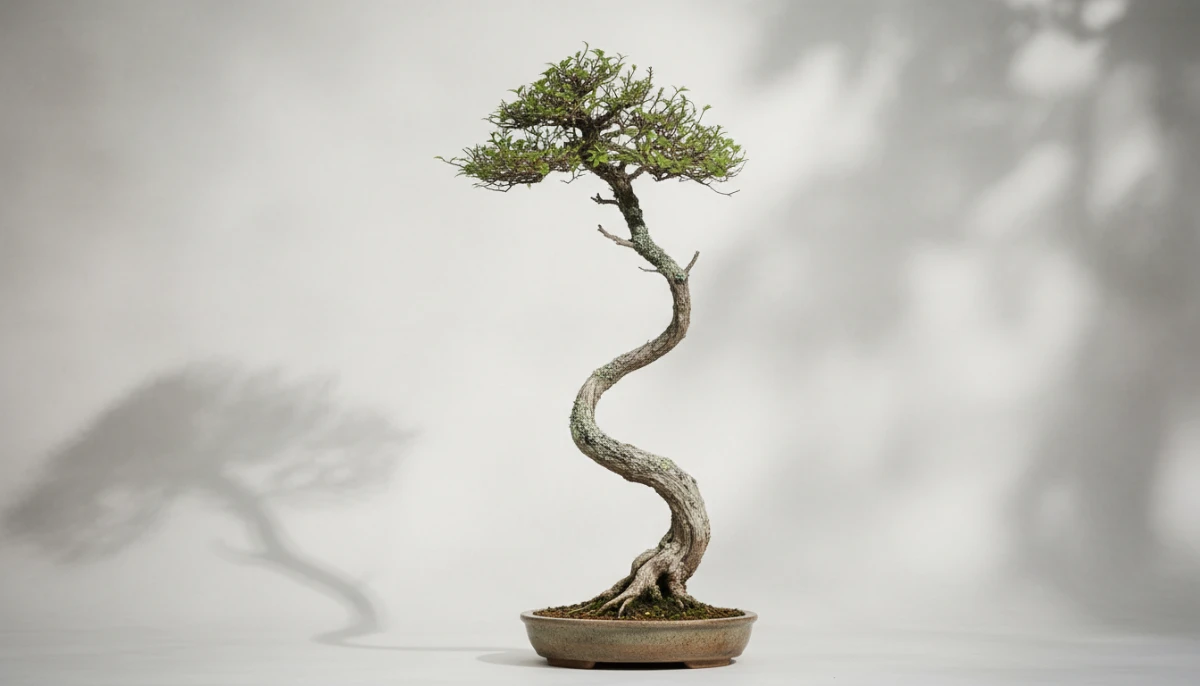
The Bunjingi, or Literati, style is highly artistic and often less concerned with naturalistic depiction. It features a tall, slender trunk with minimal branching, often only near the apex. The trunk itself might have dramatic curves or twists.
This style is inspired by ancient Chinese ink paintings of trees struggling in harsh conditions. It emphasizes elegance, minimalism, and the tree’s resilience, focusing on the beauty of the trunk’s lines rather than a full canopy.
Beyond sculptural forms, some enthusiasts delight in the ephemeral beauty of blossoms. For those interested in cultivating vibrant displays, explore dedicated guidance on Flowering Bonsai Trees: Cultivation & Bloom Tips to achieve stunning seasonal blooms. To ensure robust health and vibrant growth, a deep understanding of Bonsai Soil, Fertilization & Nutrition is paramount, including a well-planned Bonsai Fertilization Schedule, and mastering techniques like Ramification and Fine Branching in Bonsai. As seasons change, specific care is vital, with comprehensive guidance available on Spring Care for Bonsai SH. Additionally, protecting your delicate creations from threats like Common Pests of NZ Native Bonsai: Identification & Organic Solutions is essential for their longevity, alongside considering The Future of NZ Native Bonsai: Innovation, Sustainability & Global Recognition.
Exploring Modern Bonsai Styles and Interpretations
While traditional styles provide a strong foundation, the world of bonsai is dynamic. Modern interpretations and less formal styles allow for greater creativity and expression. These styles often combine elements of traditional forms or represent specific natural phenomena.
Understanding these diverse bonsai styles broadens your perspective and offers more avenues for developing your trees. They often portray trees in more challenging or unique environmental settings, capturing a different kind of beauty.
Fukinagashi (Wind-Swept)

The Fukinagashi style captures the resilience of trees exposed to constant, strong winds. The trunk and all branches are bent or swept predominantly in one direction, creating a powerful sense of motion.
This style beautifully conveys the struggle and survival of nature. It’s a visually dynamic form that tells a story of enduring the elements, requiring careful balance to ensure the tree doesn’t look unbalanced despite its dramatic lean.
When you’ve cultivated such a captivating narrative through your trees, sharing their beauty becomes a natural next step. Learn how to capture their essence effectively with our Bonsai Photography Tips for Sharing Your Trees.
Continue Your Bonsai Journey
Mastering bonsai styles is a rewarding endeavor, and your journey doesn’t have to be a solitary one. Engaging with fellow enthusiasts can provide inspiration, tips, and opportunities to showcase your work. Connect with the vibrant Bonsai Community & Events and explore Social Media for Bonsai Enthusiasts: Groups & Hashtags to further enrich your passion and knowledge.