Air Layering for New Bonsai Trees

bonzai.co.nz
Bonsai air layering is an effective propagation method where new roots are encouraged to grow on a branch still attached to the parent plant. This technique allows you to create a clone of an existing bonsai, ensuring desired characteristics are maintained. It’s ideal for producing larger, more mature specimens faster than seeds or cuttings.
Do you admire a particular branch on your favorite bonsai and wish you could create a new tree just like it? The bonsai air layering guide offers an exciting path to propagate new plants. Air layering is a time-tested technique in horticulture. It allows you to produce new, healthy bonsai directly from a mature branch. This method provides several benefits over traditional cuttings or growing from seed.
Table of Contents
Understanding Bonsai Air Layering
Air layering involves stimulating a section of a branch to grow new roots while still attached to the parent plant. Once enough roots form, the branch is cut and becomes a new independent tree. This ensures the new plant carries all the desirable traits of the original.
It’s a form of vegetative propagation, meaning the new plant is a clone. This is perfect for preserving unique leaf shapes, bark textures, or growth habits. For anyone seeking to expand their bonsai collection with guaranteed quality, a detailed bonsai air layering guide is invaluable. It’s a technique that allows enthusiasts to explore the artistic display potential of specific branches.

Why Choose Air Layering for Bonsai?
Compared to other methods, air layering often results in a larger, more established plant much quicker. Cuttings can take years to develop a thick trunk or a strong root system. Air layering provides a head start, as the new tree already has some branch structure, making it suitable for immediate training into bonsai art.
- Faster Maturation: New trees are larger and more mature from day one, often ready for initial styling, including advanced techniques like Creating Deadwood Effects: Jin and Shari.
- Genetic Fidelity: The new plant is an exact clone of the parent, preserving specific aesthetic and resilience traits.
- Higher Success Rate: Often more reliable than rooting difficult cuttings, especially for species-specific projects.
- Corrective Pruning: You can use layers to improve the shape of an existing bonsai, a key aspect of seasonal care.
Suitable Species for Air Layering
Many popular bonsai species respond well to air layering. Deciduous trees like maples, elms, and liquidambars are excellent candidates. Fig varieties (Ficus) are also highly successful. Even some conifers, such as junipers and pines, can be layered, though they might take longer to root. Researching your specific tree’s suitability is always a good first step in this bonsai air layering guide, as species-specific content is crucial for success.
The Air Layering Process: A Step-by-Step Guide
Successful air layering requires careful attention to detail. Follow these steps for the best results in your bonsai propagation efforts. Precision in each step contributes to the overall health and environmental resilience of your new bonsai.
Step 1: Selecting the Right Branch
Choose a healthy, vigorous branch that is at least pencil-thick. The branch should have good structure and potential to become an attractive bonsai. Consider its thickness, taper, and existing foliage. A strong branch will provide the energy needed for new root development.

Step 2: Preparing the Branch (Girdling)
Using a sharp, clean knife, make two parallel cuts around the branch. These cuts should be about 1 to 1.5 inches apart, depending on the branch thickness. Carefully peel off the bark between these two cuts. Ensure you remove all the bark and the thin, slimy green cambium layer underneath. If the cambium is not fully removed, the branch may heal instead of rooting. For an advanced bonsai air layering guide, some prefer the ring bark method or the tongue cut method.
Step 3: Applying Rooting Hormone
Lightly scrape the exposed woody ring to encourage root growth. Then, apply a quality rooting hormone powder or gel to the upper edge of the scraped area. This hormone contains auxins, which are vital for stimulating new root formation. This step significantly boosts your chances of success, leading to stronger root development.
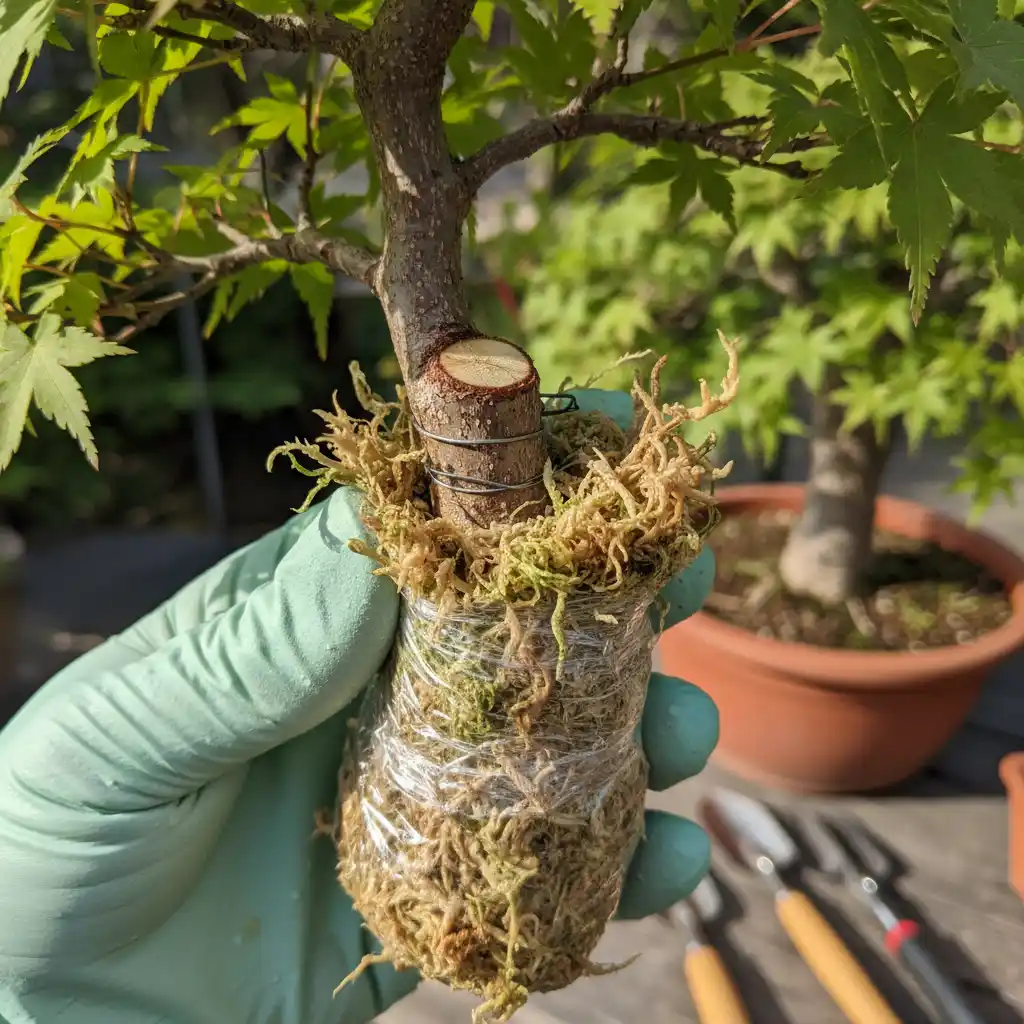
Step 4: Wrapping with Sphagnum Moss
Soak a generous amount of sphagnum moss in water until it is thoroughly saturated, then squeeze out the excess. Form a ball of moss around the girdled section of the branch. The moss needs to be damp but not dripping wet. This provides the ideal moist environment for roots to grow and thrive.
Step 5: Securing the Wrap
Wrap the moss ball tightly with clear plastic sheeting. Secure the top and bottom with electrical tape or zip ties. Ensure the wrap is airtight to prevent moisture loss. You want to create a miniature greenhouse effect around the girdled area. Some use aluminum foil over the plastic to block light, which can discourage algae growth and support root health.
Step 6: Monitoring and Watering
Periodically check the moss for moisture. If it appears dry, inject water using a syringe through the plastic. Within weeks to months, you should start seeing new roots forming inside the moss ball. The time frame depends on the tree species and environmental conditions. Patience is crucial for a successful bonsai air layering guide.
Step 7: Severing the New Plant
Once a substantial mass of healthy, white roots has formed within the moss ball, it’s time to separate the new plant. Use clean, sharp pruning shears to cut the branch just below the new root ball. Make a clean cut to minimize stress on the new plant, ensuring its best chance at independent growth.
Step 8: Aftercare and Potting
Carefully remove the plastic wrap and gently pot your new bonsai into a well-draining bonsai soil mix. For detailed guidance on Crafting the Perfect Bonsai Soil Mixes, refer to our expert resources. Keep the newly potted plant in a shaded, protected location for several weeks. This allows it to adjust to its new independent life. Gradually introduce it to more light, following principles of proper seasonal care. Avoid heavy fertilization initially; focus on gentle watering and stability. Should you observe any signs of distress, such as Yellow Leaves Bonsai Fix, prompt diagnosis and treatment are crucial for the new plant’s success.
Best Time for Air Layering Bonsai
Timing plays a significant role in the success of your bonsai air layering guide efforts. The plant’s natural growth cycle greatly influences root development and overall vitality.
Spring to Early Summer
The ideal time for air layering is typically from late spring to early summer. During this period, trees are actively growing. Sap flow is strong, and temperatures are warm, both of which stimulate root production. Starting too late in the season might mean roots don’t develop sufficiently before colder weather arrives, impacting the new plant’s environmental resilience. To ensure optimal health and recovery during this vital period, refer to our detailed guide on Spring Care for Bonsai SH.
Climate Considerations
In warmer climates, you might have a longer window for air layering. In cooler regions, stick to the peak growing season. Protecting the layered branch from extreme heat or cold is always a good practice. Consistent moderate temperatures help in quicker rooting. Understanding your local climate is key to successful seasonal care for your bonsai.

Tips for Rooting Success
To maximize your chances of success with this bonsai air layering guide, consider these expert tips for optimal root development and plant health.
- Patience is Key: Don’t rush the process. Let the roots fully develop before severing the branch. Premature cutting can lead to failure, hindering the new bonsai’s environmental resilience.
- Maintain Humidity: Ensure the moss remains consistently moist. Drying out even once can kill nascent roots, a critical aspect of seasonal care.
- Proper Girdling: Removing all the cambium layer is critical. Any remaining tissue can bridge the cut and prevent rooting, impacting species-specific propagation results.
- Sterilization: Always use sterile tools to prevent fungal infections or diseases, crucial for the health of both parent and new plant.
- Branch Selection: Choose branches with good light exposure and vigorous growth for best results, contributing to the overall artistic display potential.
Common Challenges and Solutions
Even with a thorough bonsai air layering guide, challenges can arise. Lack of root formation might be due to incomplete cambium removal or insufficient moisture. If roots are slow to appear, ensure the environment is consistently warm and humid. Sometimes, the species itself might be slow-rooting, requiring more patience and species-specific knowledge. Pest or disease issues around the wound site are rare but can be treated with appropriate horticultural remedies. For a comprehensive guide on Identifying & Treating Common Bonsai Diseases, refer to our dedicated resource, enhancing the plant’s environmental resilience.
References
For more detailed information on tree propagation methods and horticultural practices, you can visit Wikipedia’s Plant Propagation page. This resource offers a broader understanding of the techniques discussed in this guide.
Conclusion
Air layering is a rewarding technique for any bonsai enthusiast. It allows for the precise propagation of desired traits and creates new, larger trees more quickly than other methods. By following this comprehensive bonsai air layering guide, you can confidently create beautiful new specimens for your collection. Remember to choose healthy branches, maintain proper moisture, and be patient. With practice, you’ll master this ancient art and expand your bonsai garden with ease. This technique contributes to the rich historical, cultural, and artistic display aspects of bonsai, allowing you to deepen your connection with these living works of art.