Winterizing Bonsai Trees: Protecting from Cold – Your Guide to Winter Bonsai Care
As the colder months approach, your cherished bonsai trees need special attention. Understanding essential winter bonsai care is crucial to ensure they survive and thrive until spring. This guide will walk you through the best practices for protecting your miniature trees from freezing temperatures and harsh conditions, setting them up for success in 2026.
Table of Contents
Protecting Outdoor Bonsai Trees
For many bonsai enthusiasts, the biggest challenge of winter is keeping outdoor trees safe. Even hardy species require protection from extreme cold, especially their delicate root systems. Proper preparation is a key aspect of effective winter bonsai care for outdoor specimens.
Understanding Hardiness Zones
Your local USDA Hardiness Zone is your first reference point. It tells you the average annual extreme minimum winter temperature for your area. Knowing your zone helps you decide how much protection your outdoor bonsai needs.
Trees that are one or two zones hardier than your local climate can usually remain outdoors with minimal protection. However, if your bonsai is less hardy, it will need significant sheltering or even relocation indoors for the winter months.
Sheltered Locations and Microclimates
Even within a single garden, microclimates exist. Placing your bonsai against a south-facing wall can offer considerable warmth from direct sunlight. A position under an overhang or dense evergreen tree can protect against frost and harsh winds.
Avoid placing trees in open, exposed areas where they will bear the full brunt of winter gales. These winds can quickly dehydrate branches and strip away protective snow cover.
Mulching and Wrapping
The root system of a bonsai is particularly vulnerable because it’s confined to a shallow pot. Insulating the pot is paramount. You can achieve this by:
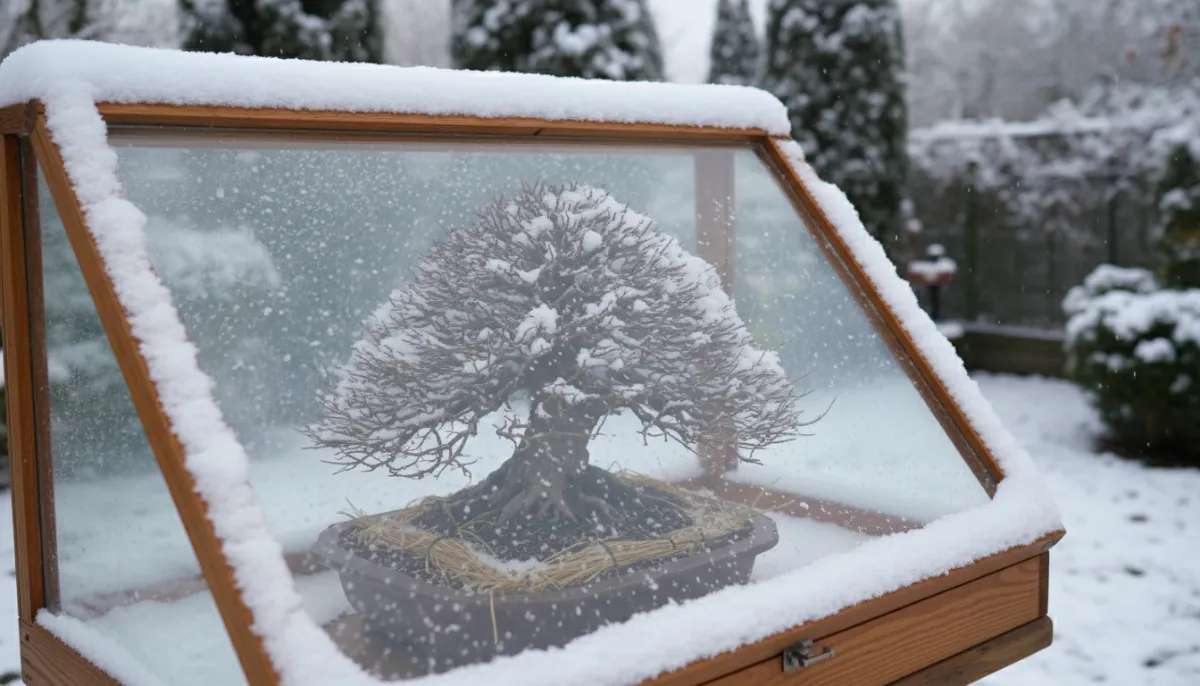
- Mulching: Cover the soil surface with a thick layer of pine bark, straw, or sphagnum moss. This helps regulate soil temperature and retain moisture.
- Wrapping Pots: Wrap the entire pot in burlap, bubble wrap, or blankets. For extra insulation, place the pot inside a larger container and fill the gaps with straw or leaves.
- Burying Pots: In very cold climates, burying the pot directly into the ground or a larger bed of mulch can provide excellent root protection.
These methods are crucial for preventing root damage from freezing and thawing cycles. Roots are much more susceptible to cold than the branches. When considering the ideal vessel for your trees, especially unique specimens, understanding Choosing Bonsai Pots for NZ Natives: Function & Form is vital. For comprehensive guidance on maintaining healthy roots and overall plant vitality, consider exploring resources on Bonsai Soil, Fertilization & Nutrition.
Temporary Cold Frames and Greenhouses
For more serious protection, consider a temporary cold frame or a mini-greenhouse. These structures offer controlled environments, shielding trees from wind, heavy snow, and extreme temperature drops. Ensure they have good ventilation on warmer winter days to prevent fungal issues.
Even a simple pop-up greenhouse can make a significant difference. Proper ventilation is key to prevent excessive humidity and potential disease outbreaks. For more information on plant protection, you can refer to general horticultural resources like Wikipedia’s Plant Protection page.
Winter Watering Regime for Outdoor Bonsai
While dormant, bonsai trees still need water. However, the frequency changes dramatically. Check the soil moisture periodically by hand. Water thoroughly on warmer days when the soil isn’t frozen, allowing excess to drain.
Never water when temperatures are below freezing or when the soil is already frozen, as this can lead to ice formation around the roots, causing damage. Allow the soil surface to dry slightly between waterings.
Indoor Winter Care Tips for Bonsai
Some bonsai species, especially tropical and sub-tropical varieties, cannot withstand freezing temperatures and must be brought indoors for winter. Providing the right environment inside is critical for proper winter bonsai care indoors.
Optimizing Light Requirements
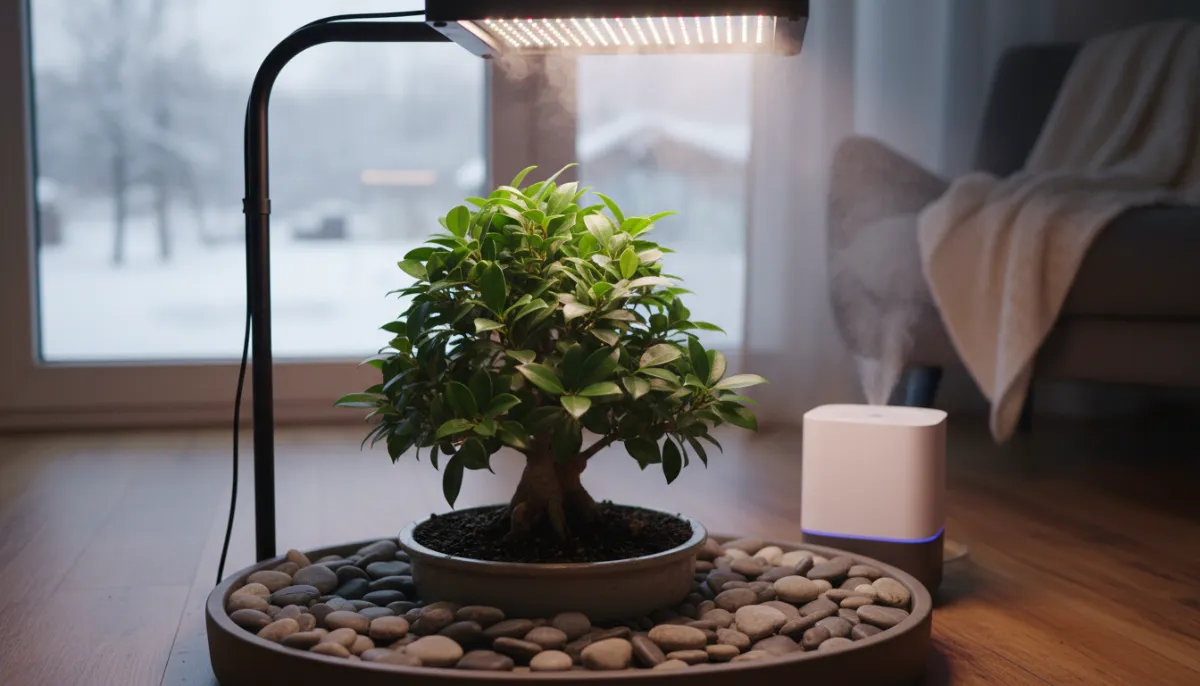
Indoor conditions often lack sufficient natural light. Place your bonsai near a bright, south-facing window. If natural light is inadequate, consider using artificial grow lights. Full spectrum LED lights are highly effective and energy-efficient for indoor growing.
Ensure the lights are positioned at the correct distance to provide ample illumination without scorching the foliage. Most indoor bonsai need at least 10-12 hours of strong light daily during winter.
Controlling Humidity Levels
Indoor heating can drastically reduce humidity, which is detrimental to many bonsai. Dry air can lead to leaf drop, crispy edges, and increased susceptibility to pests. Increase humidity around your trees by:
- Pebble Trays: Place pots on trays filled with pebbles and water, ensuring the pot itself isn’t sitting in water. As the water evaporates, it increases local humidity.
- Humidifiers: A small room humidifier can significantly boost overall humidity levels.
- Misting: While less effective than other methods for long-term humidity, occasional misting can provide temporary relief and clean dust from leaves.
Consistent humidity is crucial for the health of tropical and sub-tropical species.
Adjusting Indoor Watering
Indoor bonsai watering also changes. While not dormant like outdoor trees, they may still grow slower. Check the soil daily, but water only when the top inch or two feels dry to the touch. Overwatering is a common killer of indoor bonsai.
Ensure good drainage. If your home is warmer, trees may dry out faster. If cooler, they may need less water. Always feel the soil before reaching for the watering can.
Vigilant Pest Management
Indoor environments can be breeding grounds for pests like spider mites, aphids, and scale insects. Inspect your trees regularly, especially the undersides of leaves and branch crotches. Early detection is key.
If you spot pests, isolate the affected tree immediately. Treat with appropriate organic insecticides or horticultural oil. Maintaining good airflow and humidity can also deter many common indoor pests.
Dormancy vs. Active Growth
Remember that even indoors, some bonsai species still require a period of dormancy, even if less pronounced than their outdoor counterparts. Understanding their specific needs will contribute significantly to their health and longevity throughout the colder months.
While mastering winter care is essential, the journey of bonsai cultivation is often enriched by shared knowledge and experience. Connecting with other enthusiasts can provide invaluable insights and support. Explore opportunities to join a local Bonsai Community & Events, or consider Starting Your Own Local Bonsai Study Group to deepen your understanding and passion for this ancient art form. This journey often involves understanding the aesthetics and techniques for Developing Bonsai Styles: Classic Forms & Modern Twists, which can sometimes utilize specialized methods like Wiring Techniques for Complex Forms to achieve desired shapes. Furthermore, for continuous improvement and shaping, Bonsai Pruning for Refinement and Ramification, along with dedicated study on Ramification and Fine Branching in Bonsai, is an essential skill.
For those just beginning their bonsai journey, or looking to introduce friends to the hobby, selecting the right tools and initial plant material is crucial. Understanding how to go about Choosing Your First Bonsai Tree can significantly impact early success, and for specific examples, mastering Cherry Blossom Bonsai Care can be particularly rewarding. A good Bonsai Starter Kit Comparison: What to Look For can help new enthusiasts make informed decisions and set themselves up for success from day one. As winter transitions to warmer days, preparing for Spring Care for Bonsai SH becomes the next crucial step in their annual cycle.