Mastering Watering Bonsai Trees: A Complete Guide for 2026
The art of watering bonsai is often cited as the most crucial skill for any enthusiast. This guide will help you understand how often and how much water your miniature trees truly need to thrive.
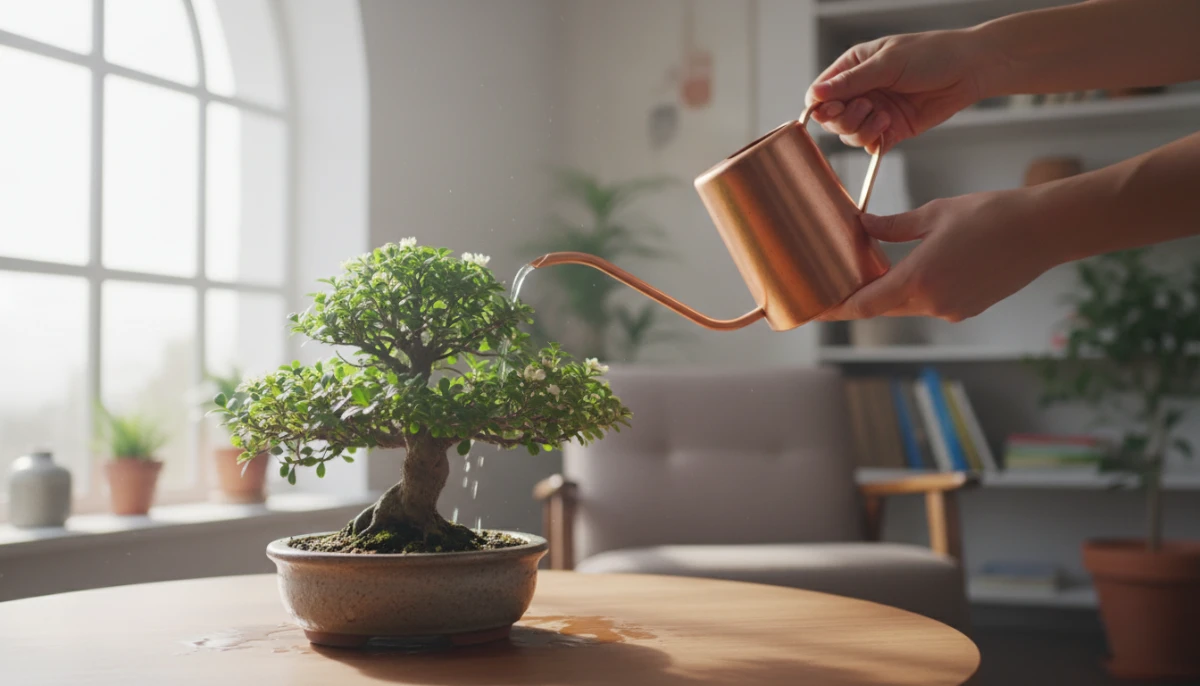
Table of Contents
Understanding Proper Watering Frequency
Getting the frequency right when watering bonsai is paramount. It’s not about a fixed schedule, but rather a response to the tree’s needs and its environment. Several factors influence how often your bonsai requires water.
These factors include the species of tree, the size of its pot, the type of soil mix, and environmental conditions like temperature, humidity, and wind. A tree in a small pot with fast-draining soil during a hot, windy summer day might need water daily, while the same tree in cooler, humid conditions could go several days without.
The golden rule is to water when the topsoil feels dry to the touch. You can check this by gently feeling the soil surface or by using a moisture meter. Waiting until the soil is slightly dry, but not bone-dry, encourages root development as roots reach out for moisture.

Key Factors Influencing Watering Needs
- Bonsai Species: Some trees, like maples, prefer more moisture, while junipers can tolerate drier periods.
- Pot Size and Material: Smaller pots dry out faster. Unglazed pots are more porous and also lead to quicker drying than glazed ones.
- Soil Mix: A gritty, well-draining soil mix is essential for bonsai. This type of soil dries out faster than dense, organic soil. For detailed insights into specific substrates like Akadama, Pumice, and Lava Rock, explore our comprehensive Bonsai Soil Reviews: Akadama, Pumice, Lava Rock. For a broader understanding of how soil, feeding, and general plant health interconnect, delve into Bonsai Soil, Fertilization & Nutrition.
- Climate and Season: Hot, dry, or windy weather increases water evaporation. Trees also need more water during their active growth phases in Spring Care for Bonsai SH and summer, less in dormancy. Preparing for colder periods is also crucial, with detailed advice available on Winter Protection for NZ Bonsai: Ensuring Health Through Colder Months.
Always consider these elements together to create an informed watering routine for each of your bonsai trees. This approach is fundamental to successful bonsai care for 2026 and beyond.
Effective Watering Techniques for Bonsai
Once you’ve determined that your bonsai needs water, the next step is to apply it correctly. There are specific techniques that ensure your tree receives adequate hydration without causing harm.
The most common and effective method is top-watering with a fine-rose watering can. This allows the water to gently penetrate the soil without displacing it. Apply water until it drains freely from the pot’s drainage holes. Then, water again. This second watering ensures that all the soil particles are thoroughly saturated.
A common mistake is to water too little, thinking you might overwater. This often results in dry pockets within the root ball, where roots can quickly die back. Thorough watering is crucial for healthy root systems. In addition to proper watering, understanding Bonsai Root Pruning Techniques for Health is vital for long-term vitality.

The Soaking Method
For very dry bonsai, or trees that have become root-bound, a soaking method can be beneficial. Place the entire pot into a basin of water, allowing the water level to reach just below the rim of the pot. Leave it there until air bubbles stop rising to the surface, indicating the soil is fully saturated. This method is excellent for rehydrating stubborn dry spots.
Remember, the goal is to fully saturate the root ball. Consistent, thorough watering is far better than frequent, shallow watering. The correct approach to watering bonsai trees is a combination of observation and proper technique.
Tailoring Watering to Specific Bonsai Species
While general rules apply, different bonsai species have unique watering preferences. Understanding these specific needs is key to their long-term health and vitality.
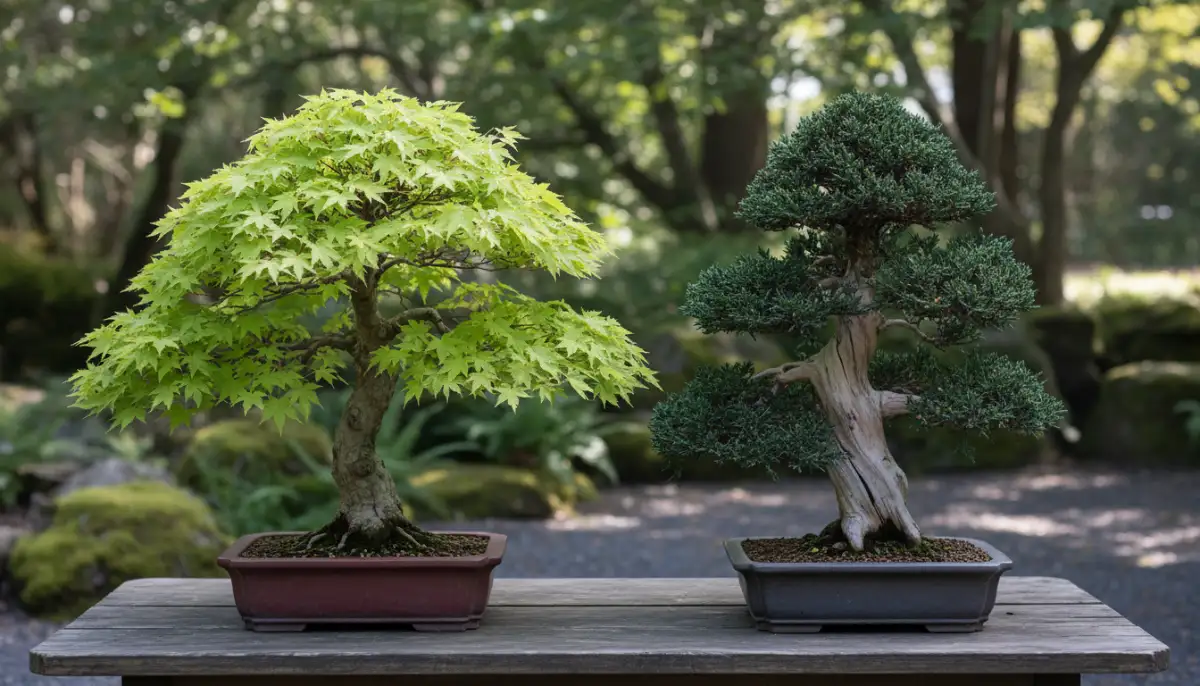
Deciduous trees like Maples (Acer palmatum) and Elms (Ulmus parvifolia) generally prefer consistently moist soil, especially during their active growing season. They are more forgiving of slightly over-moist conditions than conifers, but still require good drainage.
Conifers, such as Junipers (Juniperus) and Pines (Pinus), often prefer slightly drier conditions between waterings. They are more susceptible to root rot if kept constantly wet. Allowing the soil to dry out a bit more between waterings mimics their natural habitat.
Tropical vs. Subtropical Bonsai
Tropical bonsai, like Ficus (Ficus retusa) and Dwarf Jade (Portulacaria afra), typically require more frequent watering and high humidity. Many tropical species thrive with daily watering during warm months. Subtropical varieties might have slightly less demanding water needs, but still appreciate consistent moisture. For example, managing the unique watering and care requirements of a native species like the Kauri presents its own set of Kauri Bonsai: Challenges and Long-Term Care of a Majestic Native. This also ties into the broader vision for The Future of NZ Native Bonsai: Innovation, Sustainability & Global Recognition.
It’s important to research the specific needs of each tree in your collection. A little knowledge goes a long way in developing a personalized watering strategy. For more general information on bonsai species, consider checking resources like Wikipedia. To truly appreciate the artistic aspects and achieve a harmonious form, explore Bonsai Design Principles: Balance & Proportion.
Engaging with fellow enthusiasts can further enhance your journey. For more personalized guidance and accelerated learning, consider exploring Bonsai Mentorship Programs: Finding a Teacher. The Bonsai Community & Events offer invaluable opportunities to learn, share experiences, and connect with other passionate growers, enriching your understanding of specific watering needs and overall bonsai care.
Recognizing Signs of Over and Under Watering
Your bonsai tree will communicate its needs through visual cues. Learning to read these signs is vital for preventing serious health issues related to incorrect watering bonsai practices.
Signs of Under-watering:
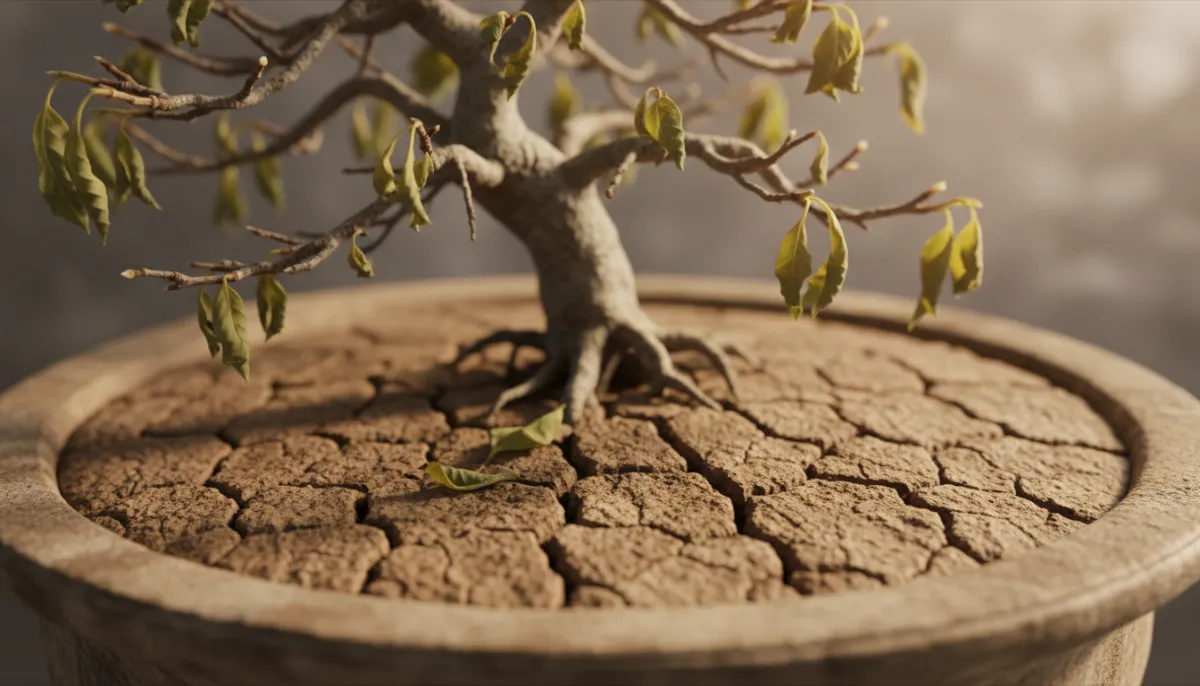
- Drooping or wilting leaves that feel crispy.
- Leaves turning yellow or brown, then dropping off.
- Stunted growth and brittle branches.
- Soil pulling away from the sides of the pot.
If you see these signs, it’s likely your tree isn’t getting enough water. A good soak can often revive an under-watered tree, but prolonged dryness can be fatal.
Identifying Over-watering Issues
Signs of Over-watering:
- Yellowing leaves that feel soft or mushy.
- Leaves turning black or dark brown and dropping off.
- Moss or algae growing on the soil surface.
- A musty smell from the soil.
- Soft, rotten roots (visible during repotting).
Over-watering is often more damaging than under-watering because it leads to root rot, a fungal disease that suffocates the roots. For effective Root Rot Treatment Bonsai, early detection and intervention are key. If you suspect over-watering, allow the soil to dry out completely before watering again. In severe cases, repotting into fresh, well-draining soil may be necessary.
Prevention is always better than cure. By consistently monitoring your bonsai and adjusting your watering habits, you can avoid these common pitfalls.
Essential Watering Tools and Accessories
Having the right tools can make the task of watering bonsai much easier and more effective. While a simple cup might work for emergencies, specialized tools offer precision and care. For a comprehensive look at the best options, including fine-rose watering cans and misters, explore our guide on Bonsai Watering Cans & Misters: Top Picks. For those looking to optimize their watering routine even further, consider delving into Advanced Bonsai Watering Systems & Tips.