Companion Plants & Display Elements for a True NZ Bonsai Scene
What You Will Learn
Elevate your NZ native bonsai with a holistic display. Learn about companion plants, authentic stones, lighting, and modern tokonoma for a stunning bonsai display NZ.
Beyond the meticulously trained trunk and canopy of your exquisite New Zealand native bonsai – achieved through precise techniques like wiring & pruning NZ Natives and advanced aesthetic refinement – lies a world of artistic possibility – the holistic bonsai display.
Crafting an authentic bonsai display NZ style isn’t just about placing a pot; it’s about invoking the tranquility of a native forest, the rugged beauty of a coastline, or the quiet strength of a mountain range. Understanding Classic Bonsai Styling Forms is an integral part of this artistic process.
Table of Contents
- Creating a Holistic Bonsai Display
- Selecting Appropriate NZ Native Companion Plants
- Using Stones, Moss, and Accents Authentically
- Lighting and Background for Optimal Presentation
- The Art of the Tokonoma in a Modern NZ Home
- Frequently Asked Questions
Creating a Holistic Bonsai Display
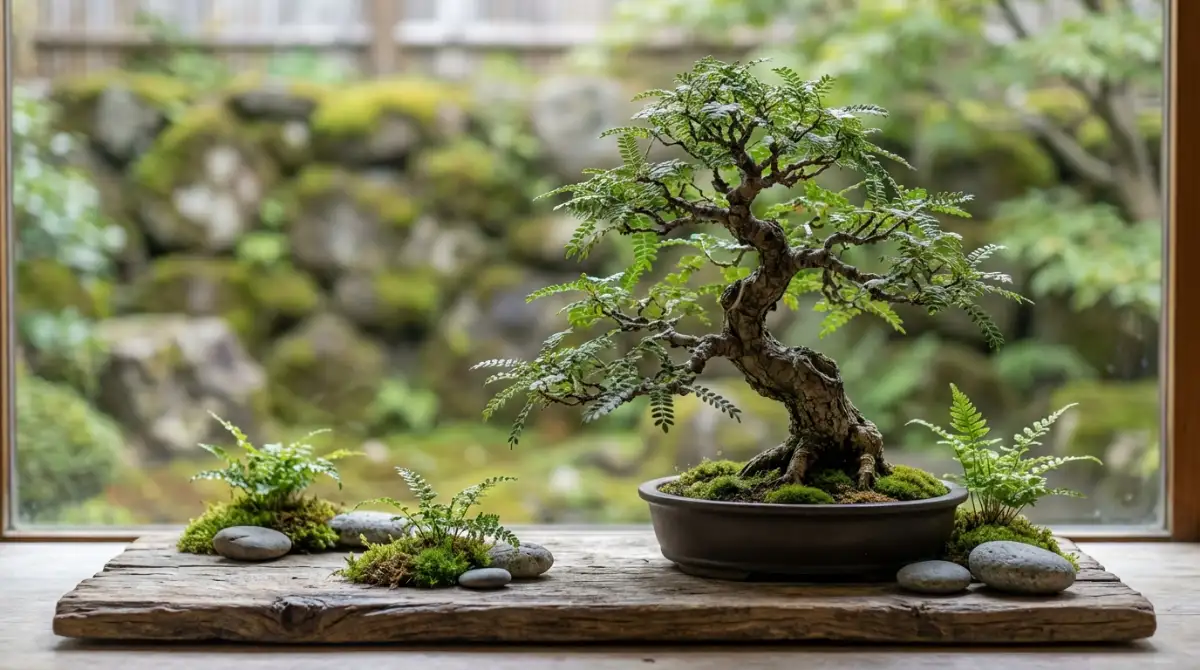
A holistic bonsai display goes beyond a single tree. It’s a miniature ecosystem, a narrative sculpted by the artist, inviting contemplation and reflecting nature’s harmony. Imagine your bonsai not as an isolated specimen, but as the focal point within a carefully composed landscape. This approach enriches the viewer’s experience, providing context and depth.
The goal is to create a visual poem, where every element contributes to the overall mood and story. Consider the natural habitat of your NZ native bonsai – whether it’s a coastal pōhutukawa, a forest kahikatea, or an alpine totara. Your display should subtly echo these origins, enhancing the tree’s natural beauty and sense of place.
Elements of a Harmonious Bonsai Display: A Checklist
- The Main Bonsai: The star, meticulously styled and healthy, with fundamental practices like Repotting a New Bonsai for Beginners.
- Companion Plants (Kusamono/Shitakusa): Small plantings that complement the bonsai without overpowering it.
- Accent Stones (Suiseki): Naturally shaped stones that add geological interest and grounding.
- Moss: Creates a miniature forest floor, enhancing realism and moisture retention.
- Display Stand: Elevates the bonsai, providing respect and defining its space.
- Background: Simple, understated, drawing focus to the display.
- Lighting: Illuminates the scene, creating shadows and highlights.
- Figurines/Accents (Optional): Sparingly used, if they enhance the narrative or atmosphere.
“The essence of a great bonsai display lies in its ability to transport the viewer, even for a moment, to a serene natural world.”
Selecting Appropriate NZ Native Companion Plants
Companion plants, known as kusamono or shitakusa in Japanese bonsai, are vital for completing an NZ native bonsai scene. They provide a sense of scale, seasonality, and natural habitat, softening the lines of the pot and connecting the tree to a broader landscape. The key is to choose species that are indigenous to New Zealand, thrive in similar conditions to your bonsai, and possess subtle beauty.
Consider plants with fine textures, interesting foliage, or delicate flowers that bloom at different times, adding seasonal interest. Think about miniature ferns, small sedges (e.g., various Carex species), native orchids, tiny groundcovers like Pratia angulata, or small-leaved hebes. Their colours and forms should harmonise with, rather than compete with, your primary bonsai.
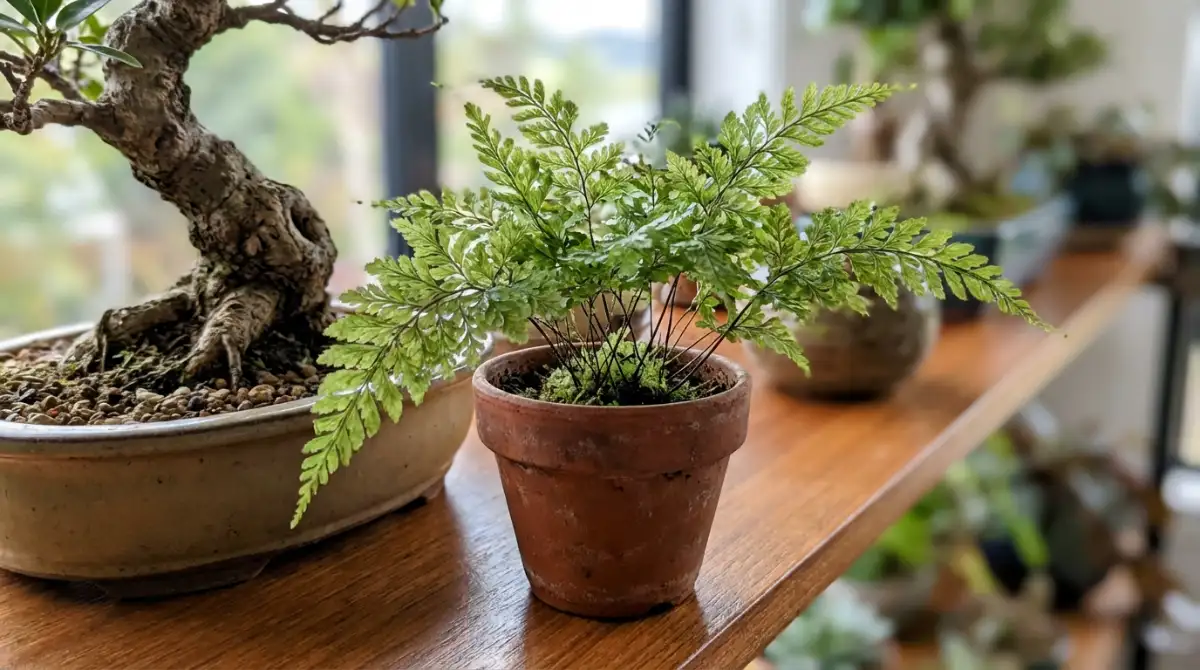
- Native Ferns: Small varieties like Asplenium species (e.g., spleenworts) offer delicate, intricate foliage.
- Native Grasses/Sedges: Carex flagellifera or Uncinia rubra provide texture and movement.
- Groundcovers: Pratia angulata (Panakenake) offers small white flowers and lush green leaves.
- Tiny Hebes: Some miniature Hebe species can be pruned to stay small and offer evergreen structure.
- Small Flowered Plants: Ourisia macrocarpa or Gentiana saxosa (if conditions allow) provide seasonal colour.
Always ensure the companion plants share similar light, water, and soil requirements as your bonsai to simplify care and ensure their longevity, including essential seasonal attention such as Spring Care for Bonsai, and broader care guides like Maple Bonsai Care: Seasonal Needs & Pruning.
Using Stones, Moss, and Accents Authentically
Stones and moss are the silent storytellers of a bonsai display, grounding the scene and adding a timeless quality. For an authentic NZ bonsai display, sourcing local materials is paramount, evoking the islands’ unique geological heritage.
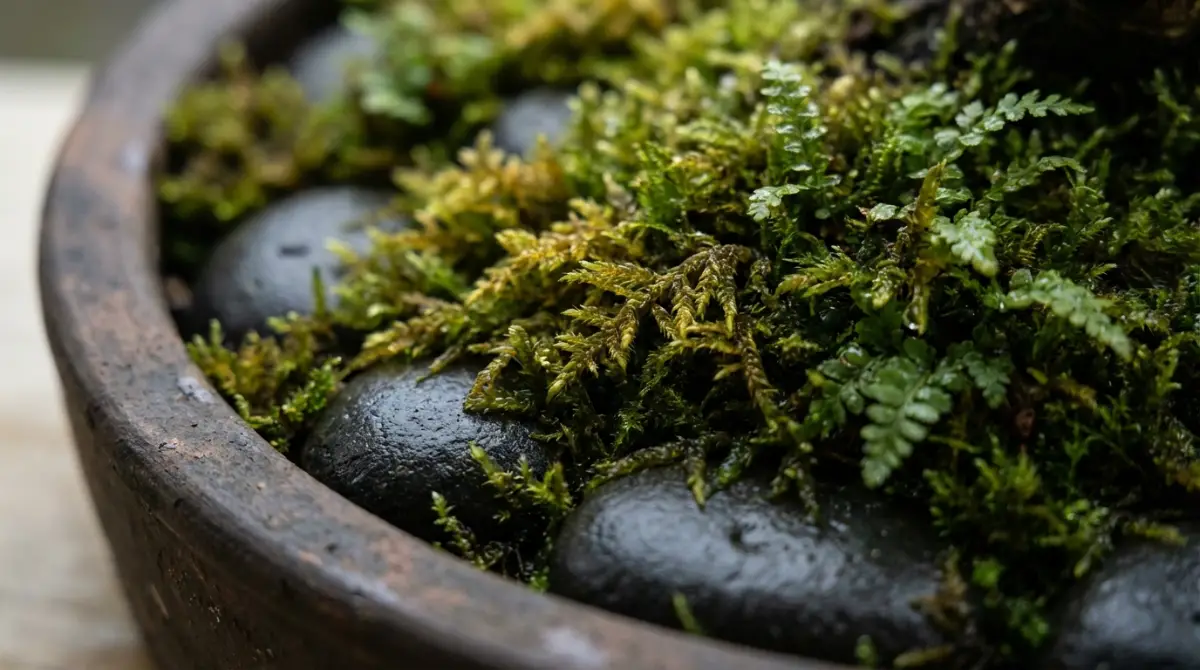
Stones: Look for stones with interesting textures, colours, and forms that reflect NZ landscapes. River stones, volcanic rocks, greywacke, or even weathered slate can be used. The placement should appear natural, as if they have always been there, mimicking rock formations or riverbeds. A single, well-chosen stone (suiseki) can be a focal point in itself, complementing the bonsai’s character.
Moss: Indigenous mosses are crucial for creating a living forest floor effect. They retain moisture, prevent soil erosion, and add vibrant green texture. Collect moss sustainably from your garden or reputable sources, ensuring it’s free from pests. Gently press it onto the soil surface around your bonsai and companion plants. Misting regularly will help it establish and thrive.
Accents: Use accents sparingly and thoughtfully. Small, naturalistic elements like a weathered piece of driftwood (tītoki or mataī), a miniature native bird figurine (e.g., a fantail), or a small, simple ceramic lantern can add narrative depth without distracting from the main subject. The key is subtlety and reverence for nature.
Lighting and Background for Optimal Presentation
The perfect lighting and background can elevate a well-composed bonsai display from beautiful to breathtaking, defining its presence and mood.
“Effective lighting doesn’t just illuminate; it sculpts and reveals the hidden beauty of your bonsai scene.”
Lighting: Natural light is often preferred, but indoor displays benefit greatly from thoughtful artificial illumination. A single, focused light source from slightly above and to the front will create natural shadows, highlighting the tree’s form, texture, and the interplay of elements in the display. Avoid harsh, direct light that flattens the image. Warm-spectrum LED lights designed for plants can mimic natural daylight while also supporting plant health.
Background: The background should be a quiet canvas that allows your bonsai scene to shine. A plain, neutral wall (earth tones, charcoal grey, or even a soft white) is ideal. Avoid busy patterns, bright colours, or clutter that might compete for attention. In a more natural setting, a blurred backdrop of greenery can work beautifully, provided it doesn’t distract. Simplicity is key to enhancing the focus on your curated miniature world.
The Art of the Tokonoma in a Modern NZ Home
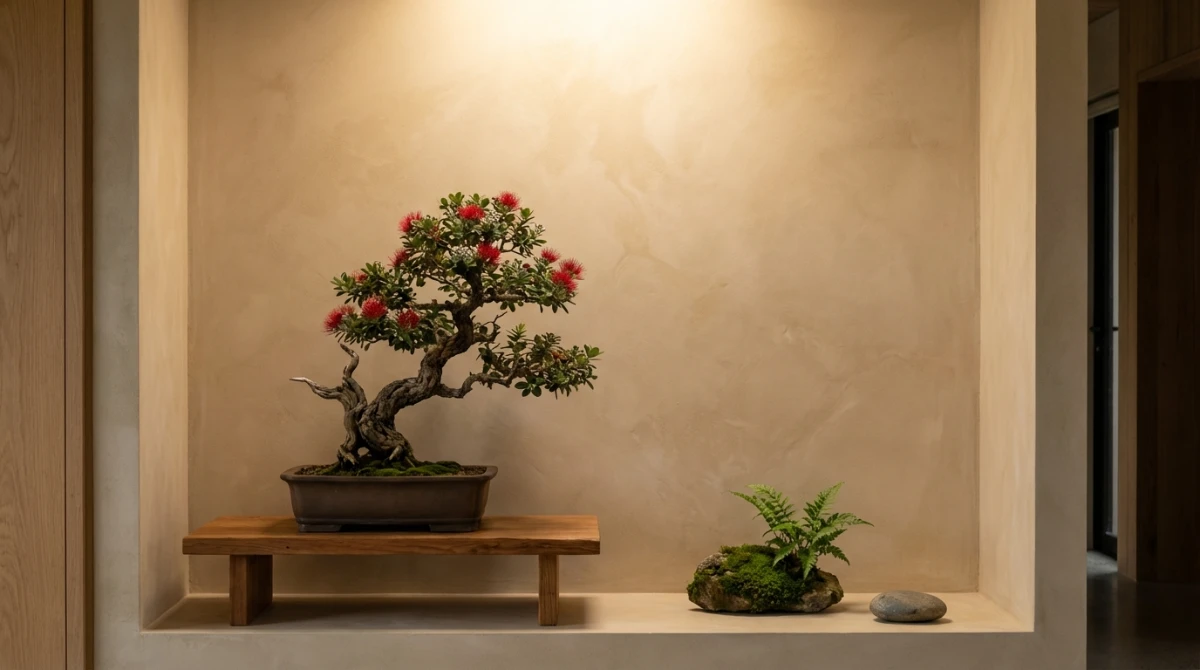
The tokonoma is a traditional Japanese alcove designed for displaying cherished art, scrolls, and flower arrangements (ikebana) – and, of course, bonsai. It’s a sacred space dedicated to aesthetic contemplation. While most modern NZ homes don’t have a built-in tokonoma, the spirit of this tradition can be beautifully adapted.
Think of creating a dedicated, uncluttered space in your home where your bonsai display can reside, bathed in appropriate light, away from everyday distractions. This could be a simple, elegant shelf, a small side table against a plain wall, or a low pedestal in a minimalist living area. The principles remain the same: simplicity, balance, and a sense of reverence for the object displayed.
- Choose a Quiet Corner: Select a space free from high traffic or visual clutter.
- Elevate with Purpose: Use a simple, sturdy stand or table that suits your home’s aesthetic.
- Minimalism is Key: Avoid overcrowding. One primary bonsai display (tree + companion + accent) is usually enough.
- Seasonal Rotation: Change your display elements seasonally to reflect the outdoors and maintain freshness.
- Thoughtful Lighting: Ensure the space is well-lit, either naturally or with a dedicated art light.
By applying the spirit of the tokonoma, you transform a simple display into a focal point of beauty and contemplation, celebrating your NZ native bonsai as a living masterpiece within your home.
Frequently Asked Questions About NZ Bonsai Displays
What are the best NZ native companion plants for bonsai?
Excellent choices include small native ferns (e.g., Asplenium species), native sedges (Carex spp., Uncinia spp.), tiny Hebe varieties, and groundcovers like Pratia angulata. The best selections are those with fine textures that don’t overpower the bonsai and share similar environmental needs.
How do I choose stones for an authentic NZ bonsai display?
Look for stones indigenous to New Zealand, such as river stones, volcanic rock, or greywacke. Select pieces with natural textures, interesting forms, and colours that harmonise with your bonsai and evoke a sense of the NZ landscape. Placement should appear natural and intentional.
Can I create a tokonoma-style display in a modern New Zealand home?
Absolutely. While a traditional tokonoma is an architectural feature, you can adapt its principles. Choose a dedicated, uncluttered space – perhaps an elegant shelf or side table against a plain wall – and display your bonsai with minimal, thoughtfully chosen accents. The goal is to create a serene focal point for aesthetic contemplation.
What is the importance of background and lighting for a bonsai display?
Both background and lighting are crucial for optimal presentation. A simple, neutral background allows the bonsai display to be the focal point, preventing visual distraction. Thoughtful lighting, ideally from slightly above and in front, creates depth, highlights textures, and enhances the overall mood, making the display more captivating.