Companion Plants & Display Elements for a True NZ Bonsai Scene
What You Will Learn
Elevate your NZ native bonsai display with our expert guide. Discover companion plants, authentic accents, lighting tips, and how to create a true Tokonoma scene reflecting New Zealand’s beauty.
Creating a captivating bonsai display goes far beyond the tree itself. For enthusiasts of NZ native bonsai, the goal is to evoke the spirit of Aotearoa – a miniature landscape that tells a story, brimming with authenticity and natural beauty. This requires a thoughtful selection of companion plants, accent elements, and careful consideration of presentation. A truly harmonious bonsai display NZ reflects a deep connection to the environment, transforming a simple plant into a living art installation.
This comprehensive guide will help you elevate your NZ native bonsai scene from a solitary tree to a breathtaking, holistic masterpiece. We’ll delve into selecting indigenous companion plants, the subtle art of using stones and moss, and how lighting and background can dramatically enhance your presentation, culminating in the revered practice of the Tokonoma in a contemporary New Zealand setting.
Table of Contents
- Creating a Holistic Bonsai Display
- Selecting Appropriate NZ Native Companion Plants
- Using Stones, Moss, and Accents Authentically
- Lighting and Background for Optimal Presentation
- The Art of the Tokonoma in a Modern NZ Home
- Frequently Asked Questions
Creating a Holistic Bonsai Display
A holistic bonsai display is an entire ecosystem in miniature, designed to transport the viewer to a natural scene. It’s about more than just placing a tree on a stand; it’s about crafting an immersive experience where every component contributes to the overall narrative. For those new to the craft, learning about Essential Bonsai Tools for Beginners can be invaluable. For an authentic bonsai display NZ, this means drawing inspiration directly from New Zealand’s unique landscapes.
1. Understand Your Tree’s Natural Habitat
Begin by studying the natural environment of your specific NZ native bonsai species, understanding how techniques like Pruning for Bonsai Shape and Health can enhance their inherent beauty. Is it a mountain dweller, a coastal plant, or found in a forest understory? This understanding will guide your choice of companion plants, stones, and even the type of moss you select.
2. Embrace Asymmetry and Balance
Nature is rarely symmetrical. Strive for an asymmetrical balance in your composition, where visual weight is distributed harmoniously. This often involves the rule of threes or fives, creating dynamic tension and interest within your bonsai display NZ.
3. Choose Complementary Elements
Every element in your display should complement, rather than compete with, the main bonsai. Focus on textures, colours, and forms that enhance the tree’s character. The aim is to create a seamless, integrated scene that feels naturally occurring.
Selecting Appropriate NZ Native Companion Plants
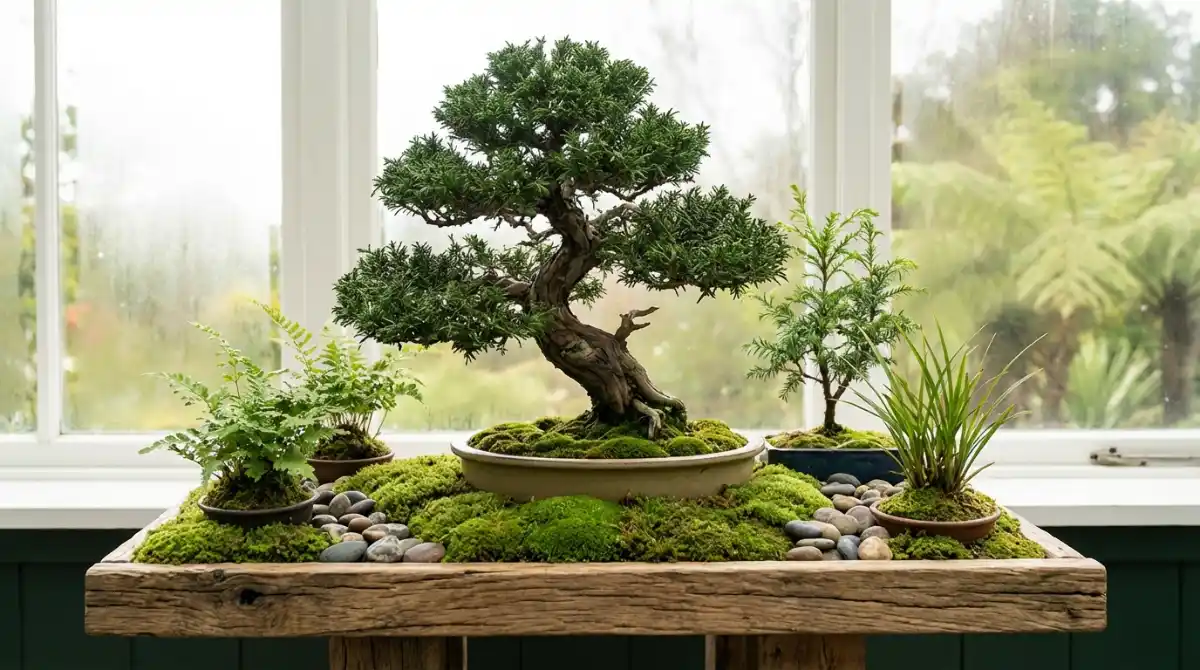
Companion plants, or ‘kusamono’, are vital for adding scale, seasonal interest, and contextual depth to your bonsai display NZ. They should echo the scale and natural environment of the bonsai without overwhelming it.
1. Consider Scale and Growth Habit
Choose small, slow-growing native species that won’t quickly outgrow their place in the display. Their foliage should be delicate and proportionate to the bonsai’s leaves. Avoid anything too bold or fast-growing.
2. Match Environmental Needs
Ensure companion plants have similar requirements for light, water, and humidity as your bonsai. This simplifies care and ensures all elements thrive together, a topic further explored in Spring Care for Bonsai SH, preventing issues like common pests of NZ native bonsai and those covered in our guide on Disease Management for NZ Bonsai: Fungal, Bacterial & Viral Threats, and creating a vibrant New Zealand native bonsai scene.
3. Explore Texture and Form
Native grasses, miniature ferns, and groundcovers can provide wonderful textural contrast. Think about how their forms interact with the structure of your bonsai, adding subtle layers of interest.
“The finest bonsai displays transcend the individual tree; they are miniature worlds, carefully curated to reflect the beauty and spirit of a chosen landscape.”
Action Checklist for NZ Native Companion Plants:
- Flax Seedlings (Harakeke): Very young seedlings offer delicate linear forms.
- Miniature Ferns: Species like Asplenium (spleenworts) or Blechnum (kiokio) in their juvenile stages.
- Native Sedges & Grasses: Carex species or small Chionochloa varieties add natural texture.
- Small Hebes: Dwarf varieties can provide evergreen structure and tiny flowers.
- Native Mosses: Crucial for groundcover and moisture retention, enhancing the forest floor feel.
Using Stones, Moss, and Accents Authentically
Stones, moss, and other accent elements are the silent storytellers of your bonsai display NZ. They ground the scene, add ruggedness, or introduce a sense of serene tranquillity. Their placement is an art in itself.
1. Select Local, Natural Stones
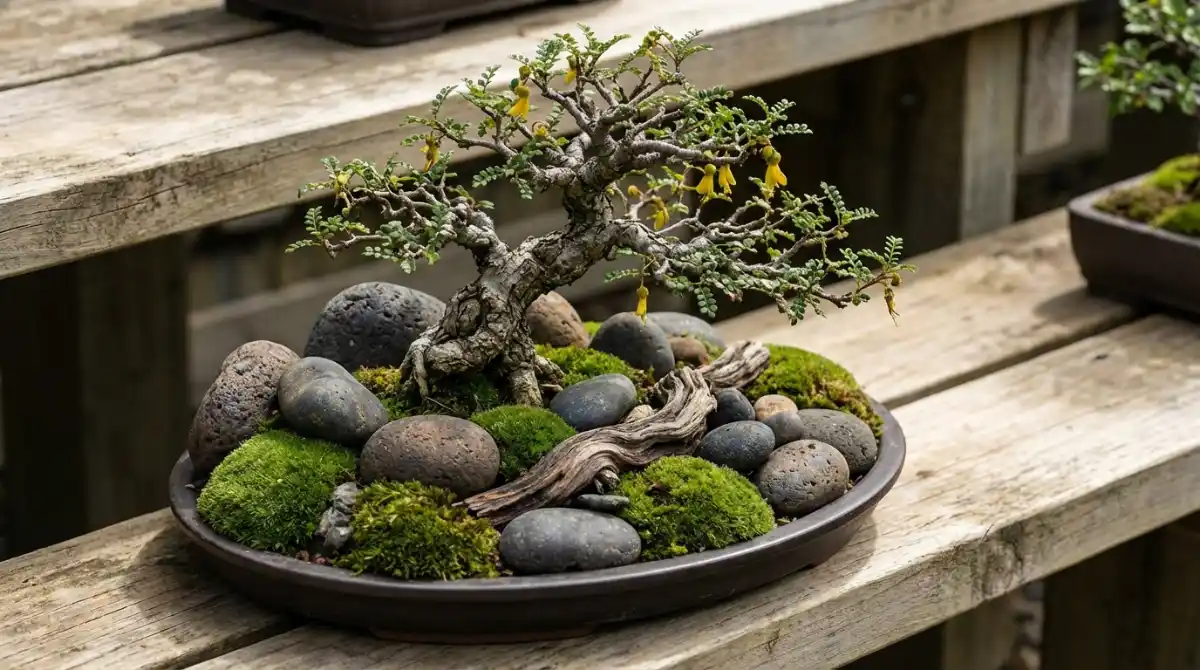
Whenever possible, choose stones native to New Zealand. River stones, volcanic rocks, or weathered greywacke can mimic actual NZ geological features. Look for stones with interesting textures, colours, and natural erosion patterns. Avoid shiny, polished, or overly decorative rocks.
2. Cultivate Authentic Moss
Moss is the living carpet of your bonsai display, unifying elements and providing a lush, aged appearance. Collect moss from shaded, damp areas (responsibly!) or purchase specific bonsai moss. Apply it carefully, ensuring good contact with the soil for establishment.
3. Integrate Subtle Accents
Consider small, natural accents like a piece of weathered driftwood, a tiny native seed pod, or a miniature figurine (though sparingly for purist NZ native scenes). These elements should enhance, not distract from, the primary composition. The key is subtlety and authenticity for a true New Zealand bonsai aesthetic.
Lighting and Background for Optimal Presentation
The right lighting and background can dramatically transform your bonsai display NZ, bringing out its best features and setting the mood. These often-overlooked elements are critical for creating visual depth and focus.
1. Utilize Soft, Diffused Lighting
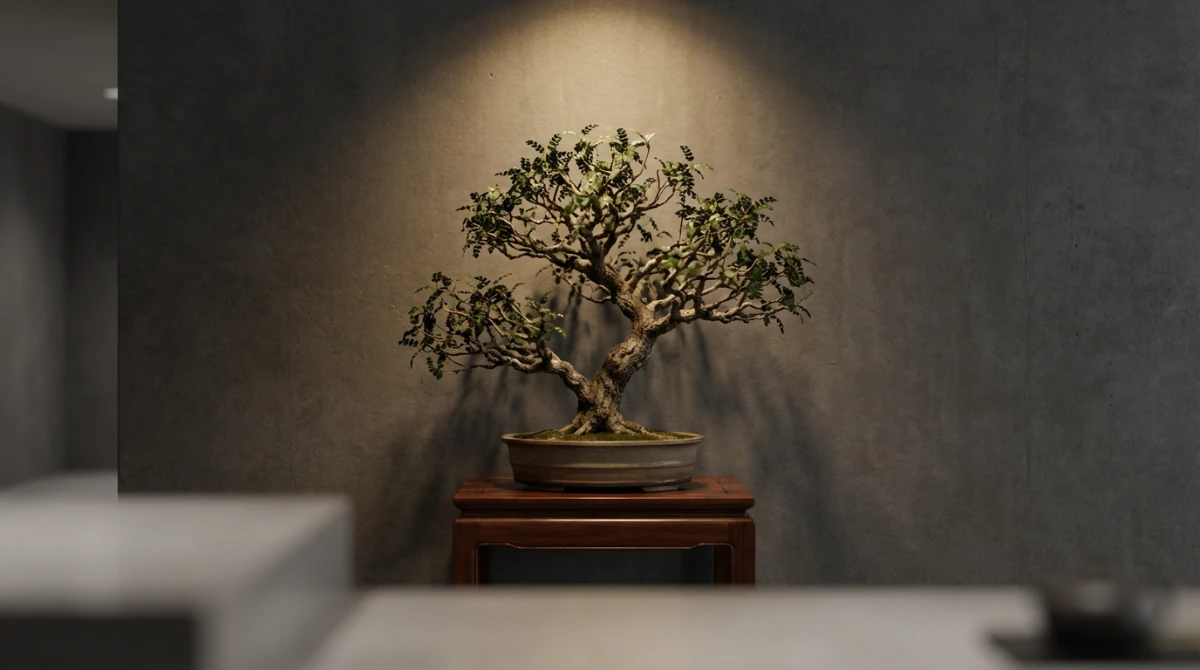
Natural, indirect light is ideal. If using artificial light, opt for full-spectrum LED lights that mimic daylight, positioned to cast gentle shadows that highlight the bonsai’s contours and texture. Avoid harsh, direct light that can create stark contrasts and wash out details.
2. Choose a Simple, Uncluttered Background
The background should be neutral and recessive, allowing your bonsai display to be the focal point. Plain walls in muted tones (greys, creams, earthy greens) work well. Avoid busy patterns or competing elements that detract from the miniature scene. A single, dark coloured fabric can also serve as an effective backdrop.
3. Consider the Viewing Angle
Position your display at eye level or slightly below, allowing viewers to appreciate the full composition. Experiment with different angles to find the most impactful perspective, considering how light interacts with the tree and its companions. This careful placement is crucial for any high-end aesthetic refinement in a bonsai display NZ.
The Art of the Tokonoma in a Modern NZ Home
The Tokonoma is a traditional Japanese alcove for displaying art, revered for its minimalist elegance. Adapting this concept for a modern New Zealand home provides a dedicated space for your bonsai display NZ, elevating it to a truly contemplative art form.
1. Designate a Dedicated Niche
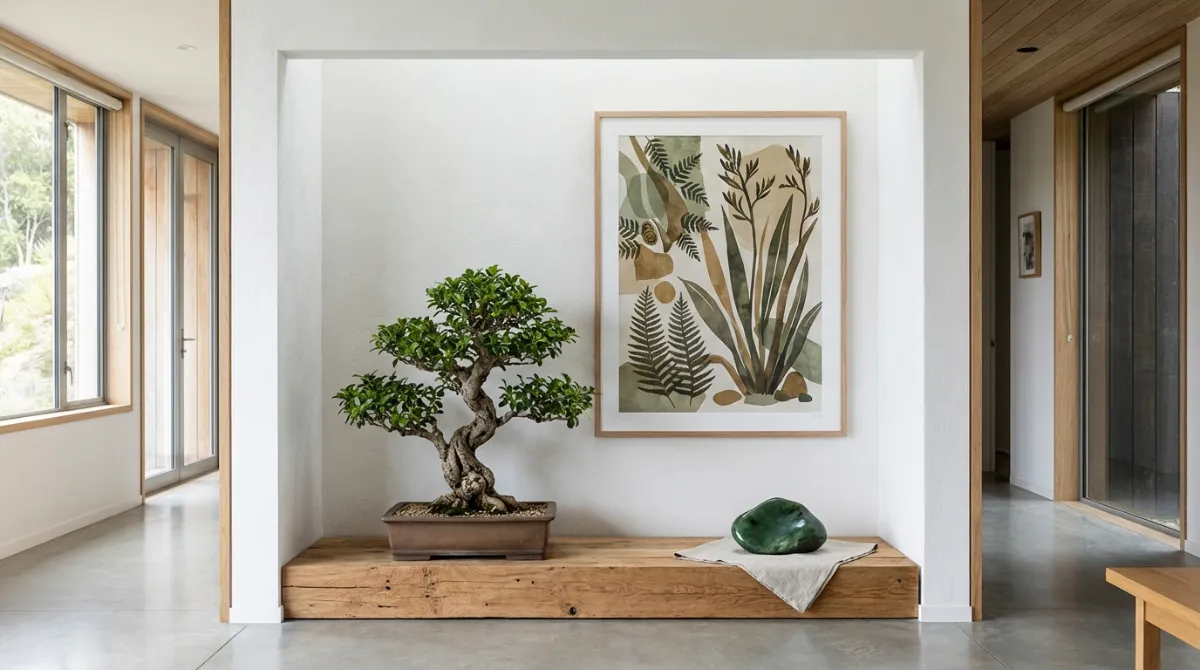
A Tokonoma doesn’t need to be a formal alcove. It can be a simple, elevated shelf, a recessed wall niche, or even a specially designed plinth against an uncluttered wall. The key is its exclusivity – a space reserved solely for displaying your bonsai and its accompanying elements.
2. Embrace Simplicity and Seasonal Rotation
The Tokonoma thrives on minimalism. Typically, it features one main bonsai, a scroll painting (kakemono), and a seasonal accent flower or object (chabana or okimono). For an NZ context, consider a scroll with native art or a botanical print, and a small, indigenous floral arrangement or a beautiful Pounamu (greenstone) carving as an accent.
3. Cultivate Quiet Contemplation
The Tokonoma is a space for quiet contemplation and appreciation. Ensure it is free from clutter and distractions. The arrangement should be changed seasonally to reflect the changing moods of nature, offering a fresh perspective on your cherished bonsai display NZ with each passing month.
By thoughtfully integrating companion plants, natural accents, optimal lighting, and the principles of the Tokonoma, you can create an NZ native bonsai scene that is not just a collection of plants, but a profound artistic statement, truly reflecting the unique beauty of Aotearoa.
Frequently Asked Questions
What are the best NZ native plants to use as bonsai companions?
For an authentic bonsai display NZ, suitable native companion plants include very young flax seedlings (Harakeke), miniature native ferns (like some Asplenium or Blechnum species), small native sedges or grasses (Carex), and dwarf Hebe varieties. Always choose slow-growing species with fine foliage that complement your bonsai without overpowering it.
How important is lighting for an authentic bonsai display?
Lighting is crucial for an authentic bonsai display. Soft, diffused natural light or full-spectrum artificial light that mimics daylight is ideal. Proper lighting highlights the bonsai’s form, texture, and contours, creating depth and visual interest. It’s essential for both the aesthetic presentation and the health of the plants, including considerations for specific species like Ficus Bonsai Care: Indoor Growing and Shaping.
What is a Tokonoma, and how can it be adapted for a modern NZ home?
A Tokonoma is a traditional Japanese alcove for displaying art. In a modern NZ home, it can be adapted as a dedicated, uncluttered space like an elevated shelf, a recessed niche, or a simple plinth. It typically features a main bonsai, a relevant artwork (e.g., native NZ art), and a seasonal accent (e.g., a small native flower or a Pounamu carving) to encourage quiet contemplation.
Where can I find suitable stones and moss for my NZ bonsai display?
For an authentic bonsai display NZ, suitable stones can often be responsibly collected from riverbeds (check local regulations) or purchased from landscaping suppliers, focusing on natural river stones, volcanic rocks, or greywacke. Moss can be collected from shaded, damp areas, or specific bonsai moss can be purchased from specialist nurseries.
How do I create a truly holistic bonsai scene?
Creating a holistic bonsai scene involves understanding your tree’s natural habitat, embracing asymmetrical balance in composition, and choosing complementary elements that enhance the main bonsai. It’s about crafting an entire miniature ecosystem where companion plants, stones, moss, lighting, and background all work together to tell a coherent story of a natural NZ landscape.