Mastering Juniper Bonsai Care: Advanced Techniques for Thriving Trees

bonzai.co.nz
Effective juniper bonsai care involves a meticulous balance of proper watering, strategic light exposure, and precise pruning tailored to the tree’s specific needs. It aims to cultivate a miniature tree that reflects the majesty of its full-sized counterparts, ensuring health and aesthetic appeal through advanced horticultural practices.
Juniper bonsai are among the most popular choices for enthusiasts. Their hardy nature and flexible branches make them ideal for various bonsai styles. However, truly mastering juniper bonsai care goes beyond basic maintenance. It requires a deeper understanding of their unique needs and advanced techniques.
This guide will help you elevate your juniper bonsai care skills. We will cover everything from specific pruning methods to ideal watering schedules. You will learn how to keep your juniper healthy and looking its best.
Understanding Juniper Varieties and Their Needs
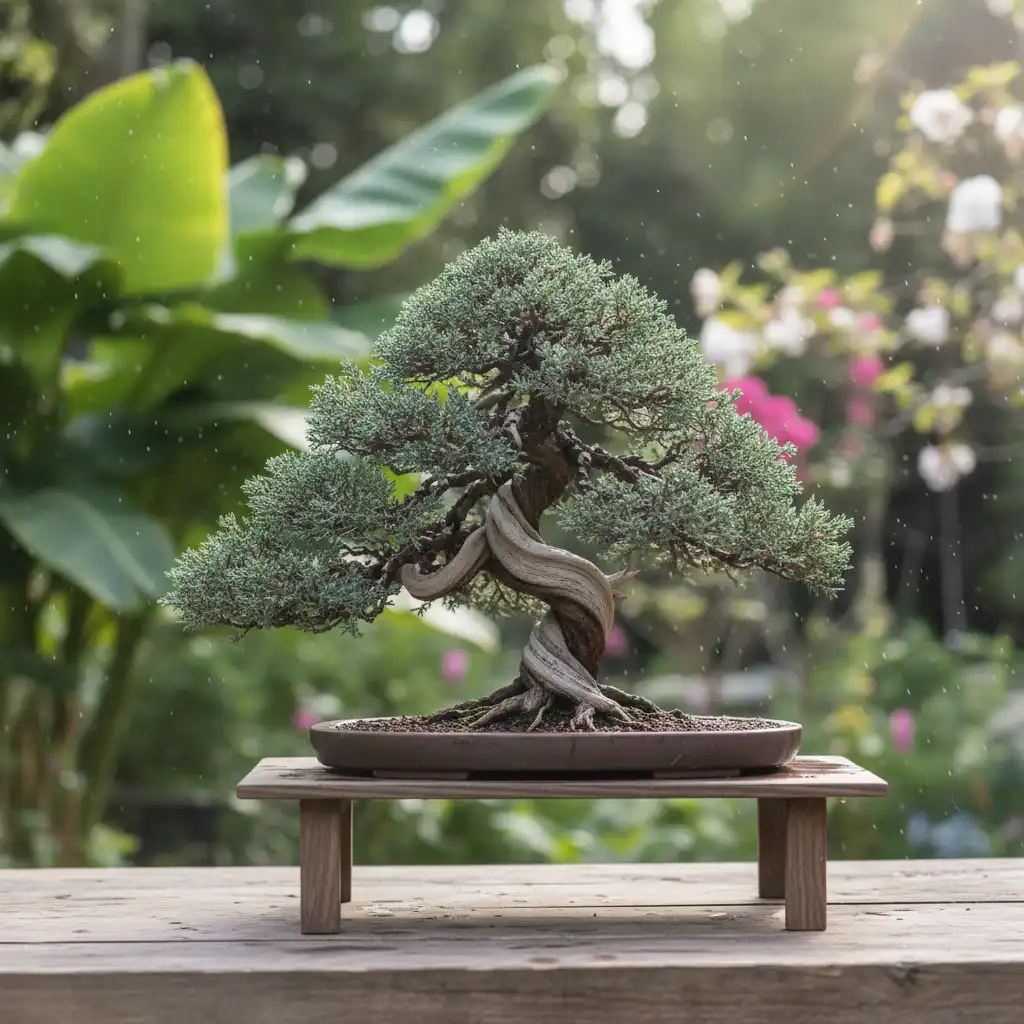
Before diving into advanced techniques, it’s important to recognize that different juniper varieties have slightly different care requirements. Common types include Juniperus procumbens nana, Juniperus chinensis, and Juniperus horizontalis. While general juniper bonsai care principles apply, subtle differences in growth habit and environmental tolerance exist.
For example, some junipers might tolerate slightly more shade, while others thrive in full sun. Knowing your specific variety helps tailor your approach, leading to better results and a healthier tree. Always research your juniper’s specific needs.
Specific Pruning Needs for Juniper Bonsai
Pruning is a cornerstone of juniper bonsai care. It’s not just about trimming; it’s about shaping, encouraging dense foliage, and maintaining the tree’s miniature form. Junipers respond well to careful and consistent pruning.
Initial Shaping and Styling
When you first acquire a juniper for bonsai, initial shaping is critical. This involves identifying the tree’s potential and making major structural cuts. Use sharp, sterile tools (consult Essential Bonsai Tools for Beginners for guidance) to prevent disease. Aim to create a strong trunk line and primary branches.
Remove any branches that cross, grow inwards, or detract from the overall design. For broader principles on aesthetic arrangements, consider exploring Designing Bonsai Compositions and Plantings. Consider the natural growth habit of your juniper. This initial phase sets the foundation for years of refined juniper bonsai care.
Maintenance Pruning
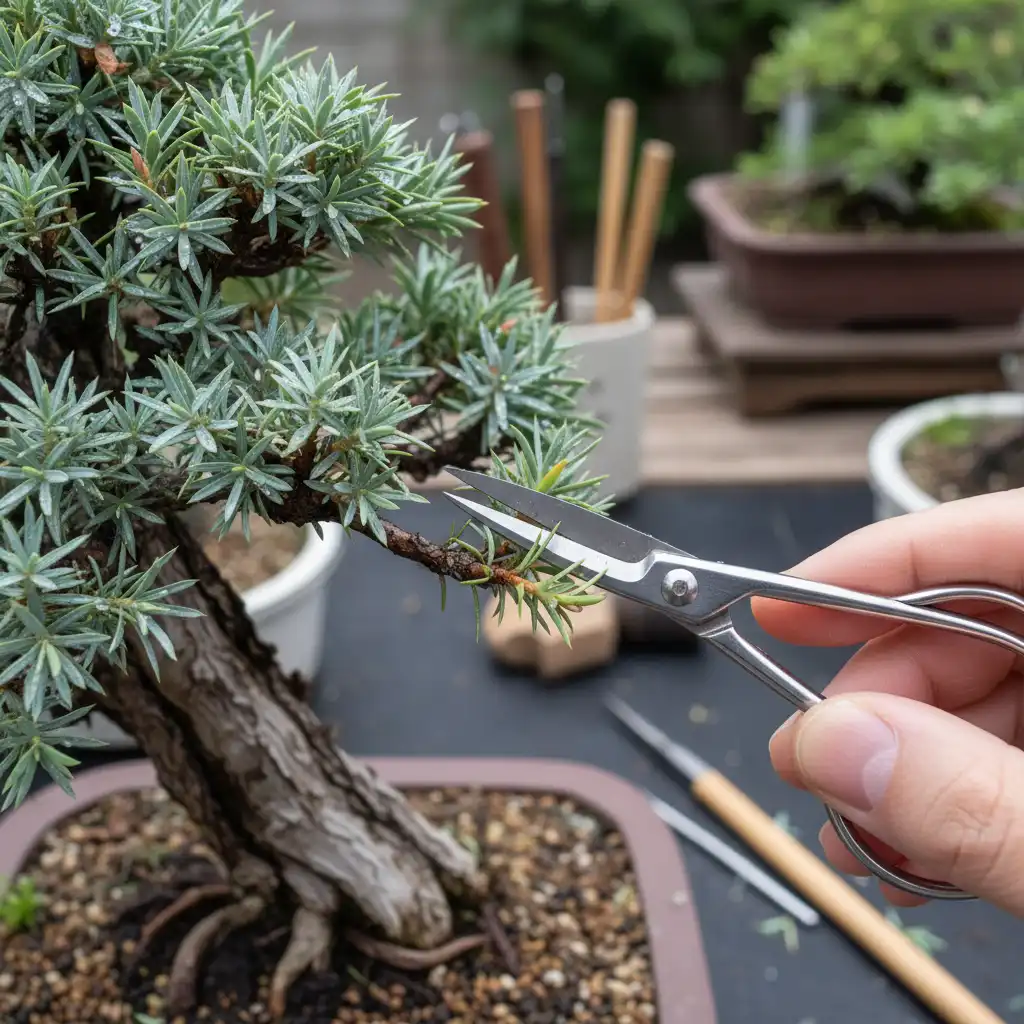
Maintenance pruning is ongoing. It focuses on keeping the established shape and promoting fine ramification. Pinch back new growth to two sets of needles during the growing season. Avoid heavy pruning during hot summer months, as junipers are sensitive to sap loss.
Regular light trimming is better than infrequent, drastic cuts. This encourages dense foliage pads, a hallmark of well-cared-for juniper bonsai. Always observe how your tree responds to pruning.
Wiring Techniques
Wiring is essential for shaping juniper bonsai branches. Junipers are flexible, making them excellent candidates for wiring. Use anodized aluminum or copper wire. Apply wire snugly but not so tight that it cuts into the bark.
Check the wire regularly to ensure it isn’t constricting growth. Remove wire before it bites into the bark, typically after a few months. Rewire if needed. Understanding wiring techniques is crucial across various species, including Pine Bonsai and even deciduous trees like those requiring specific Maple Bonsai Care: Seasonal Needs & Pruning.
Deadwood Creation: Jin and Shari
Juniper bonsai often feature striking deadwood elements like jin (dead branches) and shari (dead trunk sections). These techniques mimic natural aging and harsh conditions in nature. Creating deadwood adds character and drama to your tree.
Carefully strip bark from areas designated for jin or shari. Use specialized tools to carve and shape the wood. Apply lime sulfur to bleach and preserve the deadwood, giving it an aged, weathered look. This advanced technique significantly enhances the aesthetic value of your juniper bonsai.
Watering and Light Requirements
Proper watering and adequate light are foundational to successful juniper bonsai care. Incorrect practices in these areas are common causes of decline.
Optimal Watering Practices
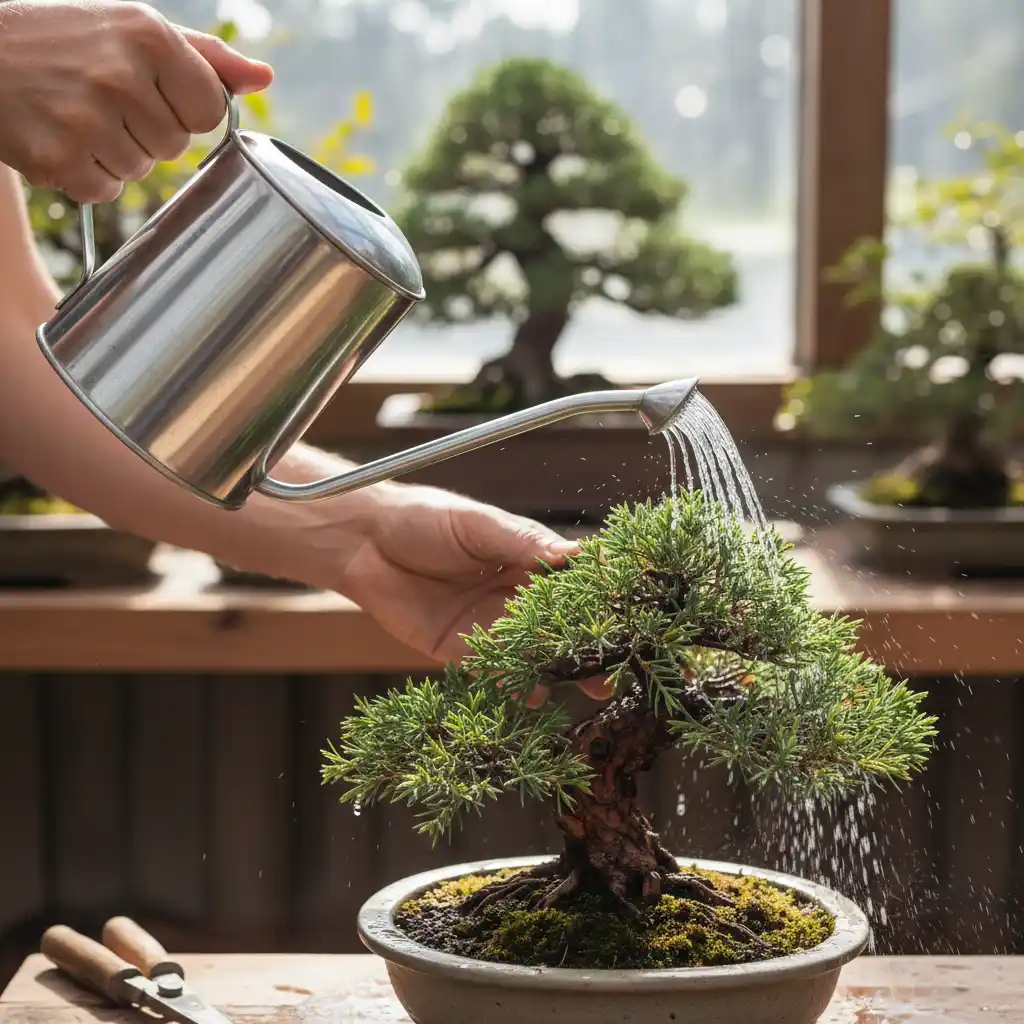
Junipers prefer to dry out slightly between waterings. Overwatering is a major killer of bonsai. Check the soil moisture by feeling the top inch of the soil. Water thoroughly until water drains from the bottom of the pot.
The frequency of watering depends on the climate, pot size, and soil mix. During hot, dry periods, you might water daily. In cooler weather, less often. A Seasonal Care Calendar for NZ Bonsai: A Month-by-Month Guide can provide a comprehensive year-round schedule. Good drainage is paramount for healthy roots.
Light and Location
Junipers thrive in full sun. They need at least 6 hours of direct sunlight per day to maintain vigor and dense foliage. Place your juniper bonsai in a location where it receives ample light.
In extremely hot climates, some afternoon shade can prevent scorching, especially for younger trees. However, insufficient light leads to sparse growth and weakened health. Rotate your tree periodically to ensure even exposure.
Humidity and Air Circulation
While junipers appreciate good air circulation, they also benefit from moderate humidity, especially if grown indoors or in very dry climates. Misting foliage can help, but it’s not a substitute for proper watering.
Consider placing your juniper on a humidity tray filled with pebbles and water. Ensure the pot doesn’t sit directly in the water. Good air circulation prevents fungal issues, particularly important for comprehensive juniper bonsai care.
Soil, Fertilization, and Repotting
The medium your juniper grows in, and how you nourish it, directly impacts its health and development. For a comprehensive guide, refer to Bonsai Soil, Fertilization & Nutrition.
Choosing the Right Soil Mix
A well-draining, air-retentive soil mix is crucial for junipers. A typical mix often includes akadama, pumice, and lava rock in varying proportions. Organic components like bark fines can also be added in small amounts.
Avoid heavy, water-retentive garden soil. The right soil mix ensures proper root development and prevents root rot, a common issue in less than ideal conditions for juniper bonsai care.
Fertilization Strategies
Fertilize your juniper bonsai during its active growing season, typically from early spring to late autumn. Use a balanced liquid or slow-release granular fertilizer. Reduce or stop fertilizing during extreme heat or winter dormancy.
Start with a lower concentration for young or newly repotted trees. Adjust the feeding schedule based on the tree’s vigor and desired growth. Consistent, moderate fertilization supports strong growth without excessive elongation.
Repotting and Root Pruning
Junipers typically need repotting every 2-5 years, depending on their age and growth rate. Repotting rejuvenates the root system and provides fresh soil. The best time for repotting is in early spring before new growth begins.
During repotting, carefully prune about one-third of the root mass. Remove thick, circling roots and encourage fine feeder roots. After repotting, water thoroughly and place the tree in a shaded, protected spot for a few weeks to recover. This is a critical aspect of long-term juniper bonsai care.
Pest and Disease Prevention
Vigilance is key to protecting your juniper bonsai from common pests and diseases. Early detection and treatment prevent major issues.
Common Pests and Solutions
Junipers can be susceptible to spider mites, aphids, and scale insects. Inspect your tree regularly, especially the undersides of leaves and branch crotches. Sticky residue or discoloration can indicate a pest problem.
For spider mites, spray with a strong stream of water or use insecticidal soap. Aphids can be removed by hand or treated with neem oil. Scale insects require more persistent treatment, often involving a brush to remove them manually followed by an insecticidal spray.
Identifying and Treating Diseases
Fungal diseases like rust can affect junipers, especially in humid conditions. Symptoms include orange or brown spots on needles. Ensure good air circulation and avoid overwatering to prevent these issues.
Treat fungal infections with appropriate fungicides. Always follow product instructions carefully. Maintaining overall tree health through proper juniper bonsai care is the best defense against diseases.
Winter Care for Juniper Bonsai
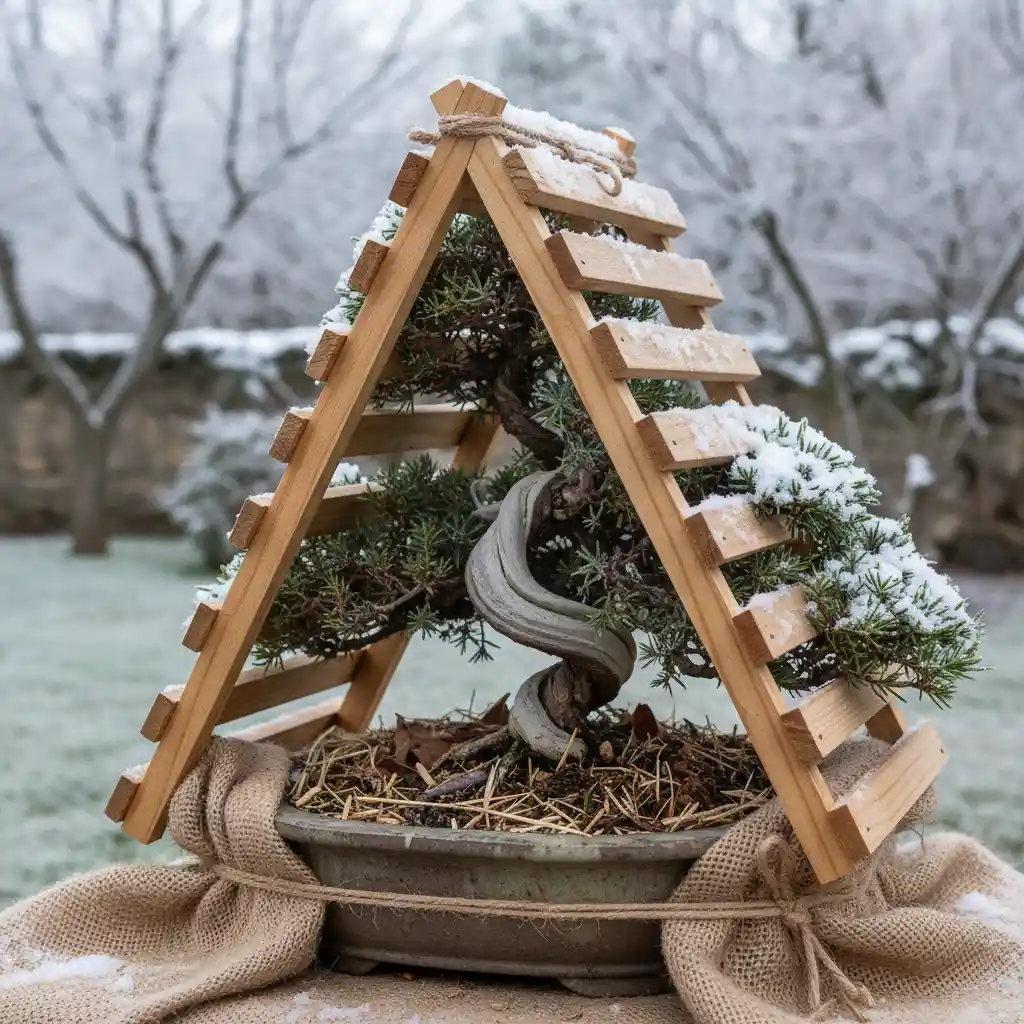
Junipers are hardy but still need protection during winter, especially if kept in shallow bonsai pots. Protect them from harsh winds and extreme freezing temperatures. In cold climates, bury the pot in the ground or move it to an unheated shed or garage.
Ensure the soil remains slightly moist throughout winter to prevent desiccation. Avoid fertilizing during dormancy. Proper winterization ensures your juniper recovers well, preparing it for the critical Spring Care for Bonsai activities.
Conclusion
Mastering juniper bonsai care is a rewarding journey that blends horticulture with art. By understanding the specific needs of your juniper and applying advanced techniques in pruning, wiring, watering, and pest control, you can cultivate a truly magnificent miniature tree.
Remember that patience and observation are your best tools. Each juniper bonsai is unique, and learning to read its signals will guide your care decisions. Embrace the process, and your juniper will thrive for many years to come.