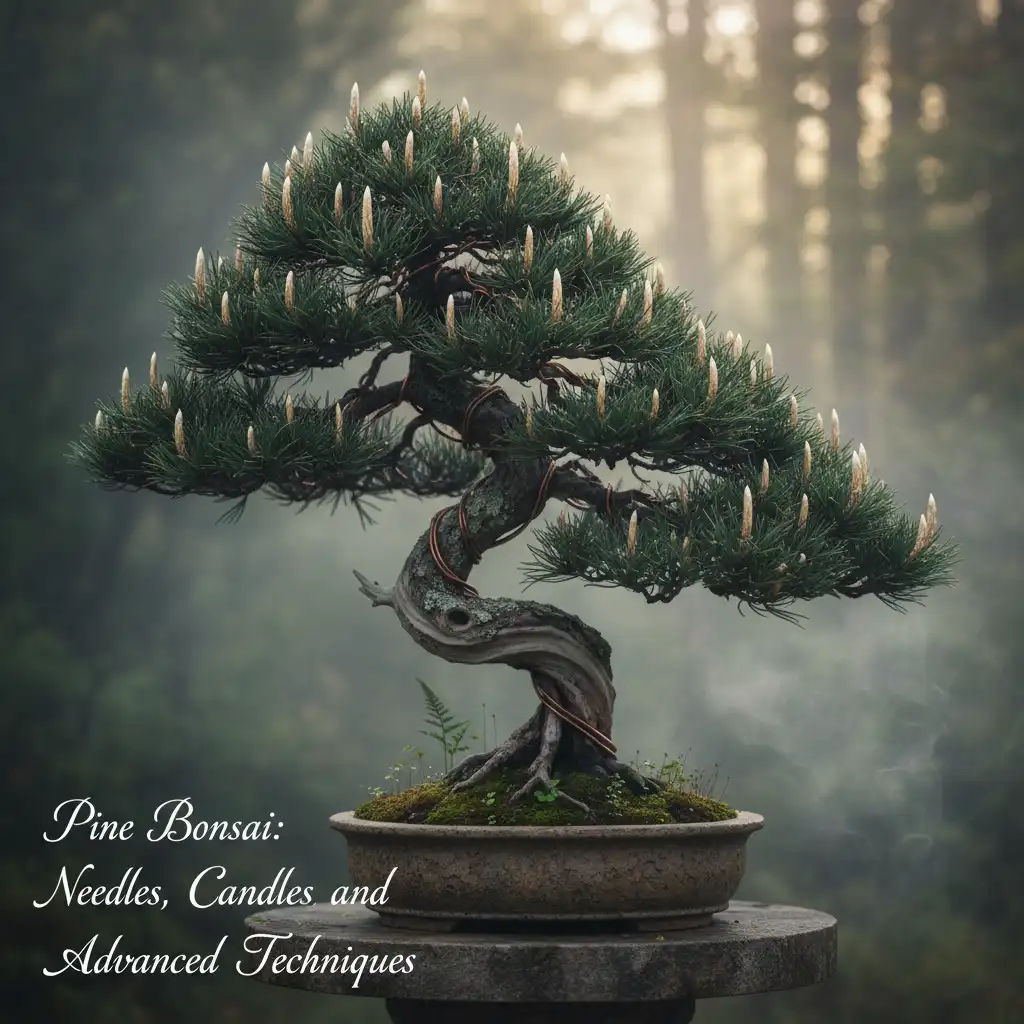
Pine Bonsai: Needles, Candles, and Advanced Techniques
bonzai.co.nz
Pine bonsai advanced care involves specialized techniques like candle pruning and needle plucking to manage growth and refine aesthetics. These methods control vigor, reduce needle size, and promote branch ramification, ensuring your pine bonsai maintains its artistic form and robust health throughout its lifecycle.
Mastering pine bonsai care takes dedication and an understanding of specific horticultural practices. Pine trees are unique, requiring distinct techniques to achieve their iconic mature aesthetic. This guide explores advanced methods for needle management, candle development, and essential seasonal protection, all critical for long-term health and exquisite styling.
Whether you’re working with a vigorous Japanese Black Pine or a more restrained Scots Pine, these techniques will help you achieve the detailed ramification and balanced growth characteristic of exceptional pine bonsai. Let’s delve into the specifics of pine bonsai advanced care.
Candle Pruning Explained
Candle pruning, or de-candling, is perhaps the most fundamental and impactful advanced technique for pine bonsai. Candles are the new shoots that emerge in spring, elongating to form new branches and needles. Managing these candles allows artists to control growth, reduce needle length, and develop dense, intricate branch structures.
What are Pine Candles?
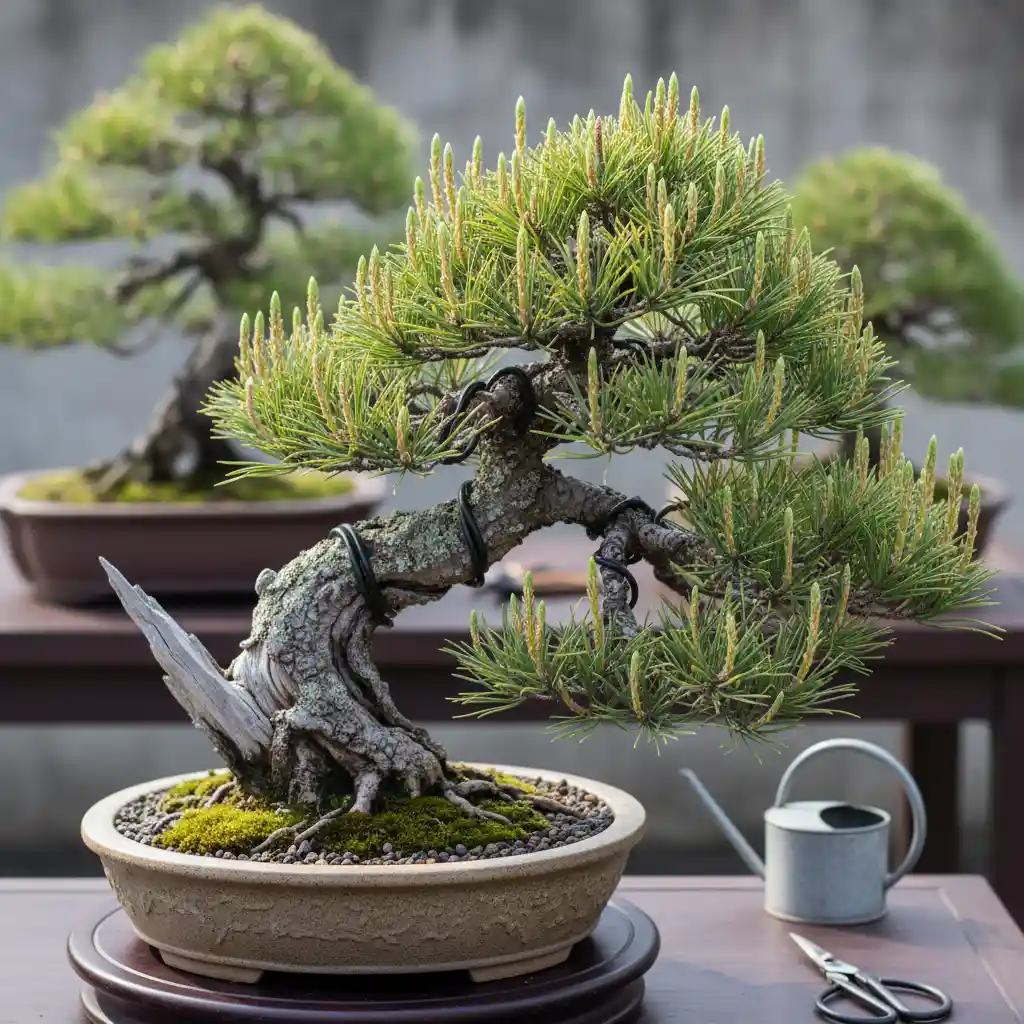
Pine candles are the unexpanded new shoots that appear at the tips of branches in early spring. They look like small, upright, waxy growths, often with a slightly different color than the older foliage. Each candle contains the potential for new needles and future branch development. Their vigor dictates the strength of the new growth.
Understanding the life cycle and energy distribution within these candles is key to effective pruning. Stronger candles indicate more vigorous sections of the tree, while weaker candles suggest areas that need to be encouraged.
Why Prune Candles?
The primary goals of candle pruning are to balance tree vigor, reduce needle size, and promote back-budding for finer ramification. Without this intervention, pines tend to grow very long needles and coarse, elongated branches, losing their compact bonsai form.
By pruning candles, we redirect the tree’s energy. Removing strong candles encourages weaker areas to catch up, leading to more uniform growth. It also forces the tree to produce a second flush of growth, often with shorter needles and more compact branching.
Timing and Technique for Candle Pruning
The timing of candle pruning varies by species and climate, but generally occurs from late spring to early summer, after the candles have fully elongated but before the new needles harden. For most two-needle pines like Japanese Black and Red Pines, candles are cut completely back, often leaving just a small stub or the basal needles.
For five-needle pines (e.g., Japanese White Pine), a different technique is often employed, pinching or cutting candles to specific lengths rather than complete removal, as they typically only produce one flush of growth per year. Always use sharp, clean tools.
Needle Plucking Benefits
Needle plucking is another vital component of pine bonsai advanced care, particularly for two-needle species. This technique involves removing older needles to improve light penetration, air circulation, and encourage interior budding. It also helps to balance vigor across the tree.
Purpose of Needle Plucking
Over time, pines can accumulate a dense canopy of old needles, particularly in the interior of the tree. This dense foliage can block sunlight from reaching inner buds and prevent air circulation, leading to weaker growth, pest issues, and an aesthetically heavy appearance.
Plucking needles also helps to reduce overall tree vigor in strong areas. By removing photosynthesizing material, you encourage the tree to put more energy into other parts, promoting balance and developing finer branching closer to the trunk.
How to Pluck Needles
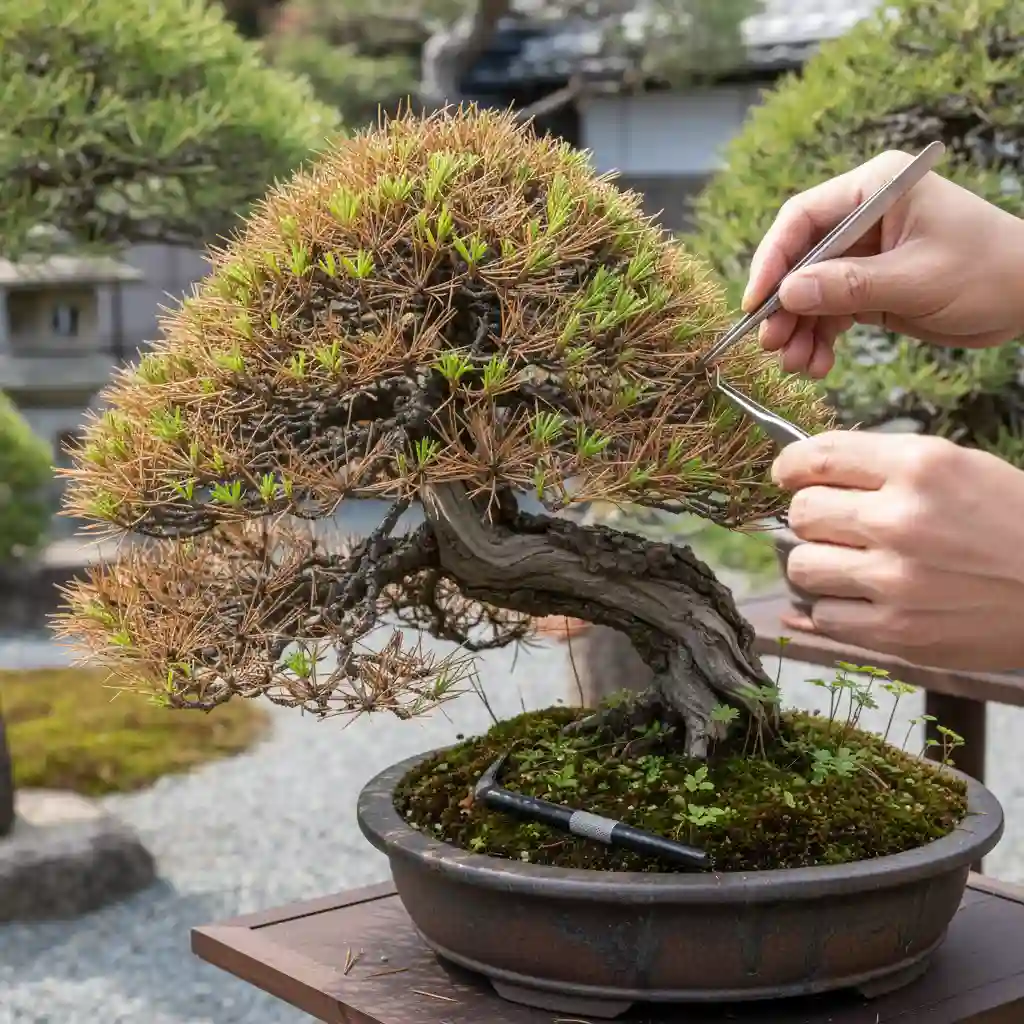
Needle plucking is a meticulous process. Typically, you remove older needles from the previous year’s growth, leaving only the current year’s needles and, if desired, a few pairs of older needles for vigor. The goal is to create space and light within the canopy.
Always pluck needles from the base, taking care not to damage the bark or any developing buds. The number of needles to leave depends on the branch’s strength; stronger branches can have more needles removed than weaker ones.
Timing and Impact on Vigor
The ideal time for needle plucking is typically in autumn or early winter, after the growth season has finished, but before the tree enters deep dormancy. This timing minimizes stress and allows the tree to recover before spring growth.
The impact on vigor is direct: removing needles reduces the tree’s capacity for photosynthesis. This reduction is strategic, allowing you to manage specific areas of the tree, weakening overly vigorous sections and strengthening weaker ones over time.
Winter Protection for Pine Bonsai
Protecting your pine bonsai during the cold winter months is crucial, especially in regions with harsh freezes or strong winds. Pines are hardy, but in shallow bonsai pots, their roots are more vulnerable than those of trees planted in the ground. Proper winter care is a critical aspect of pine bonsai advanced care, just as specific approaches are needed for Jade Bonsai Winter Care.
Why Winter Protection is Crucial
Bonsai pots offer minimal insulation compared to the earth. Freezing and thawing cycles can severely damage delicate root systems, leading to branch dieback or even the loss of the entire tree. Winter winds can also desiccate foliage, especially for evergreen pines.
A well-protected tree enters spring healthier, with more energy to produce strong new growth. Neglecting winter protection can undo years of careful cultivation and styling. For comprehensive guidance on preparing your trees for the warmer months, explore Spring Care for Bonsai.
Sheltering from Harsh Conditions
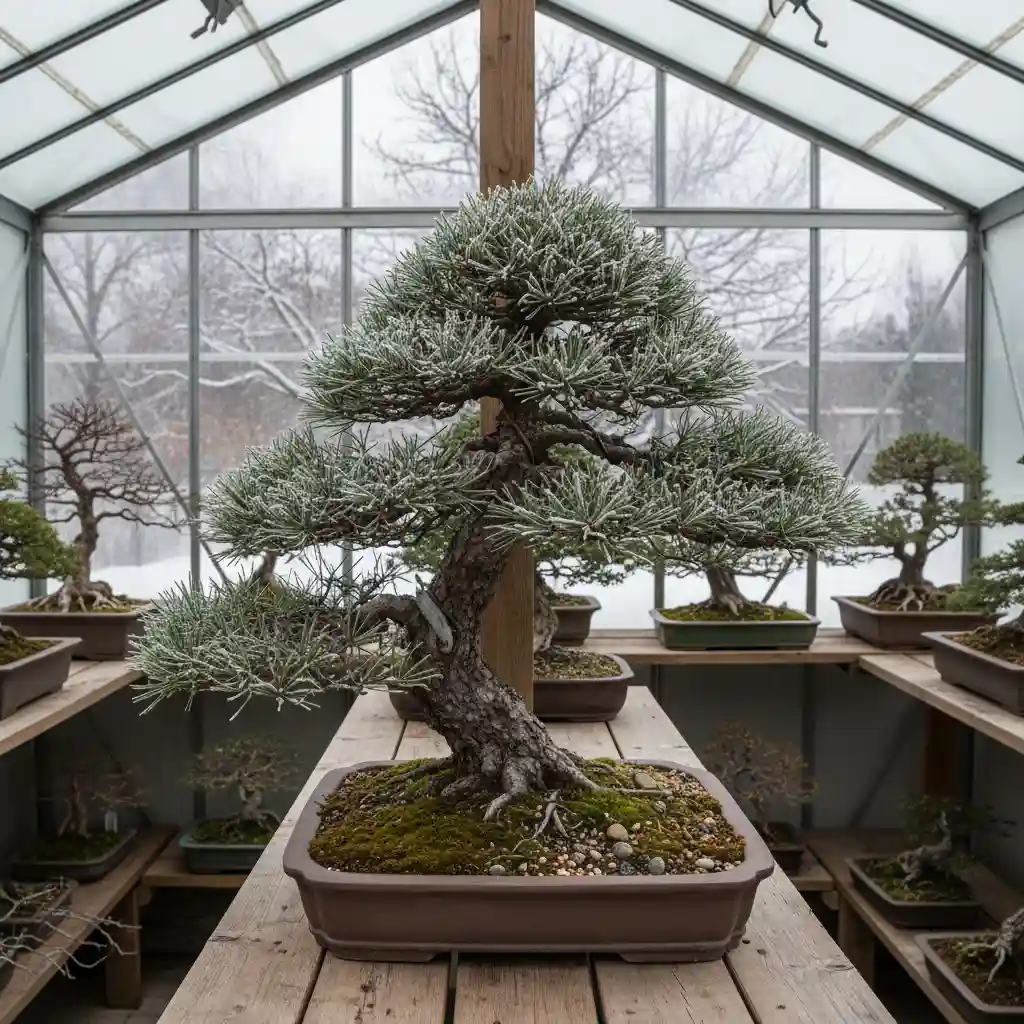
Move your pine bonsai to a sheltered location, such as an unheated garage, shed, cold frame, or a protected area on your patio. The key is to protect them from extreme cold, biting winds, and direct freezing rain or snow, while still allowing them to experience winter dormancy.
Ensure adequate air circulation even in sheltered spots to prevent fungal issues. For very severe climates, burying pots in the ground or insulating them with straw bales can provide extra warmth.
Watering in Winter
While pine bonsai require less water during dormancy, they still need moisture. The soil should never be allowed to dry out completely. Check the soil moisture periodically, especially on milder days or if your trees are in a sheltered, dry environment.
Water sparingly on days when temperatures are above freezing, allowing the water to drain thoroughly. Avoid watering when freezing temperatures are imminent, as the water can freeze in the pot and damage roots.
Other Advanced Care Considerations
Beyond pruning and winterizing, several other aspects contribute to the overall health and artistic development of your pine bonsai. These include thoughtful fertilization, precise wiring, and diligent pest and disease management.
Fertilization and Soil Health
Balanced nutrition is vital. Pines generally benefit from a low-nitrogen, high-phosphorus, and potassium fertilizer in the growing season to promote root development and overall health. For more in-depth knowledge on optimizing your tree’s environment, learn more about Bonsai Soil, Fertilization & Nutrition. Reduce or stop fertilizing during dormancy and adjust feeding schedules based on the tree’s vigor and development stage.
Good soil health is also paramount. Ensure your soil mix provides excellent drainage and aeration, which is critical for healthy pine root systems. Regular repotting every few years refreshes the soil and allows for root pruning, maintaining a compact root ball.
Wiring and Styling
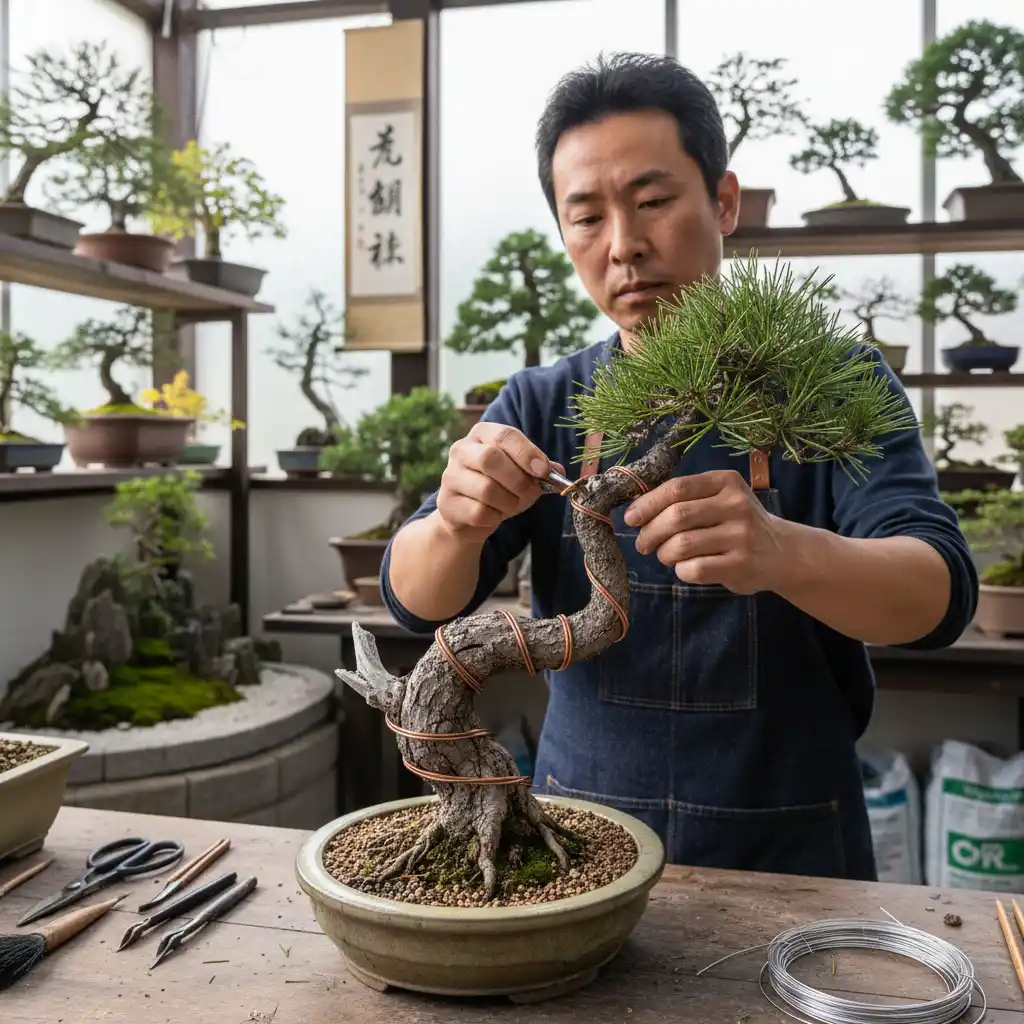
Wiring is an essential technique for shaping pine branches and trunks. Copper wire is often preferred for pines due to its strength and ability to hold shape. Apply wire carefully to avoid damaging the bark, checking regularly for signs of constriction. If you’re new to bonsai, understanding your equipment is key; start with our guide on the Best Bonsai Tools for Beginners: A Starter Guide. For specific guidance on other species, consider learning How To Wire Totara Bonsai, or delve into the specifics of Maple Bonsai Cultivation: Seasonal Care and Styling.
Proper styling requires a vision for the tree’s future form, guiding its growth to achieve balance and aesthetic appeal. Learn about traditional pine bonsai styles to inspire your artistic journey. You can find excellent resources on the history and theory of bonsai styling at Wikipedia.
Conclusion
Mastering pine bonsai advanced care is a rewarding journey that deepens your connection with these magnificent miniature trees. By consistently applying techniques like candle pruning, needle plucking, and thoughtful winter protection, you can cultivate pines of exceptional beauty and health.
Each pine species has its nuances, so observe your trees closely and adapt these general principles to their specific needs. For those interested in the diverse world of bonsai beyond pines, exploring topics like Cherry Blossom Bonsai Care can offer valuable insights into different species’ requirements. With patience and practice, your pine bonsai will flourish, showcasing the intricate artistry and timeless appeal of this ancient living art form. To understand the local context of this art, delve into the History of Bonsai in NZ: From Early Imports to Native Excellence.