Natural Pest Control for Bonsai Trees: A Comprehensive Guide to a Thriving Garden

bonzai.co.nz
Natural pest control for bonsai trees involves using environmentally friendly methods to manage common pests. It focuses on prevention, manual removal, and organic treatments like neem oil and insecticidal soap. These approaches protect your tree’s health and the surrounding ecosystem effectively.
Bonsai trees bring tranquility and beauty, but pests can be a challenge. Opting for natural pest control for bonsai trees safeguards your miniature masterpiece. It also protects your home or garden environment. This guide explores effective, chemical-free strategies to keep your bonsai thriving. For newcomers interested in Starting Bonsai in Australia & New Zealand, and for those considering Choosing Your First Bonsai Tree, these foundational principles are key.
Table of Contents
- Understanding Common Bonsai Pests
- The First Line of Defense: Prevention
- Effective Natural Treatments
- Seasonal Care and Pest Cycles
- Advanced Techniques for Environmental Resilience
- When to Seek Expert Help

Understanding Common Bonsai Pests
Before treating, it’s vital to identify the culprits. Different pests require different approaches. Early detection is key to successful natural pest control for bonsai trees.
Aphids
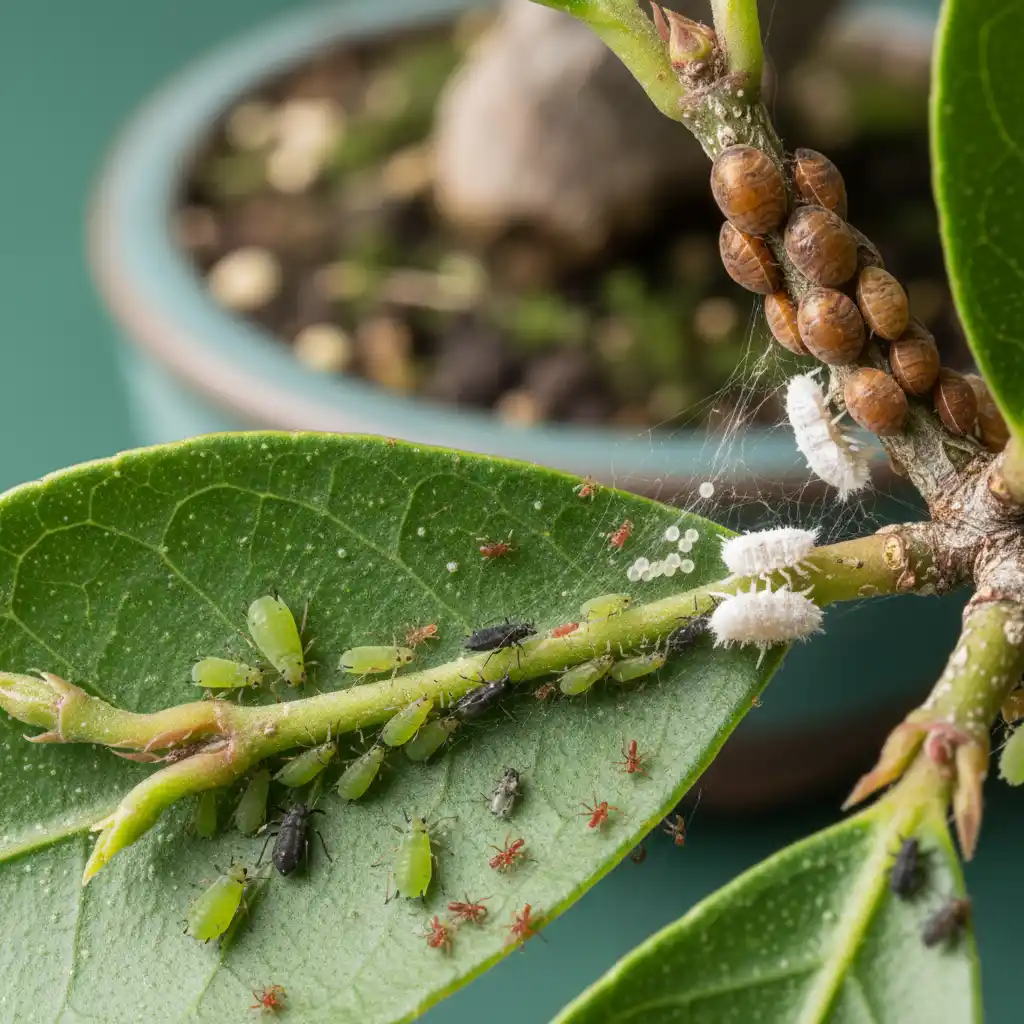
Aphids are tiny, pear-shaped insects. They are often green, black, or red. They cluster on new growth and suck sap. This causes distorted leaves. Aphids also leave a sticky residue called honeydew, which can lead to sooty mold.
Spider Mites
Spider mites are nearly invisible. These tiny arachnids cause yellow or white spots on leaves. Severe infestations create fine webbing. They thrive in dry, warm environments.
Mealybugs
Mealybugs are soft-bodied insects. They are covered in white, cottony wax. They hide in leaf axils and crevices, feeding on sap. Mealybugs also produce honeydew, attracting ants and encouraging mold growth.
Scale Insects
Scale insects are small, immobile pests. They look like tiny bumps on stems and leaves. A waxy or shell-like coating protects them. This makes them resistant to many treatments. Like mealybugs, they excrete honeydew.
The First Line of Defense: Prevention
The best natural pest control for bonsai trees starts with proactive measures. A healthy bonsai is more resilient to infestations. Focus on creating an environment that discourages pests.
Proper Watering and Drainage
Overwatering weakens roots. This makes your bonsai more prone to root-feeding pests. Ensure excellent drainage to prevent stagnant moisture. Consistent and appropriate watering is crucial for plant health.
Good Air Circulation
Stagnant air invites many pests. Spider mites and fungal issues thrive in still conditions. Ensure your bonsai gets adequate airflow. Space plants apart or use a small fan indoors.
Quarantine New Plants
Always isolate new bonsai or nursery stock for several weeks. Do this before introducing them to your existing collection. This prevents the spread of hidden pests or diseases.
Healthy Soil and Nutrition
A healthy bonsai needs well-draining, nutrient-rich soil. This supports strong roots and tree vigor. Balanced fertilization helps your tree resist stress. It makes the plant less attractive to pests. Avoid over-fertilizing, as this promotes tender new growth that pests love.
Regular Inspection
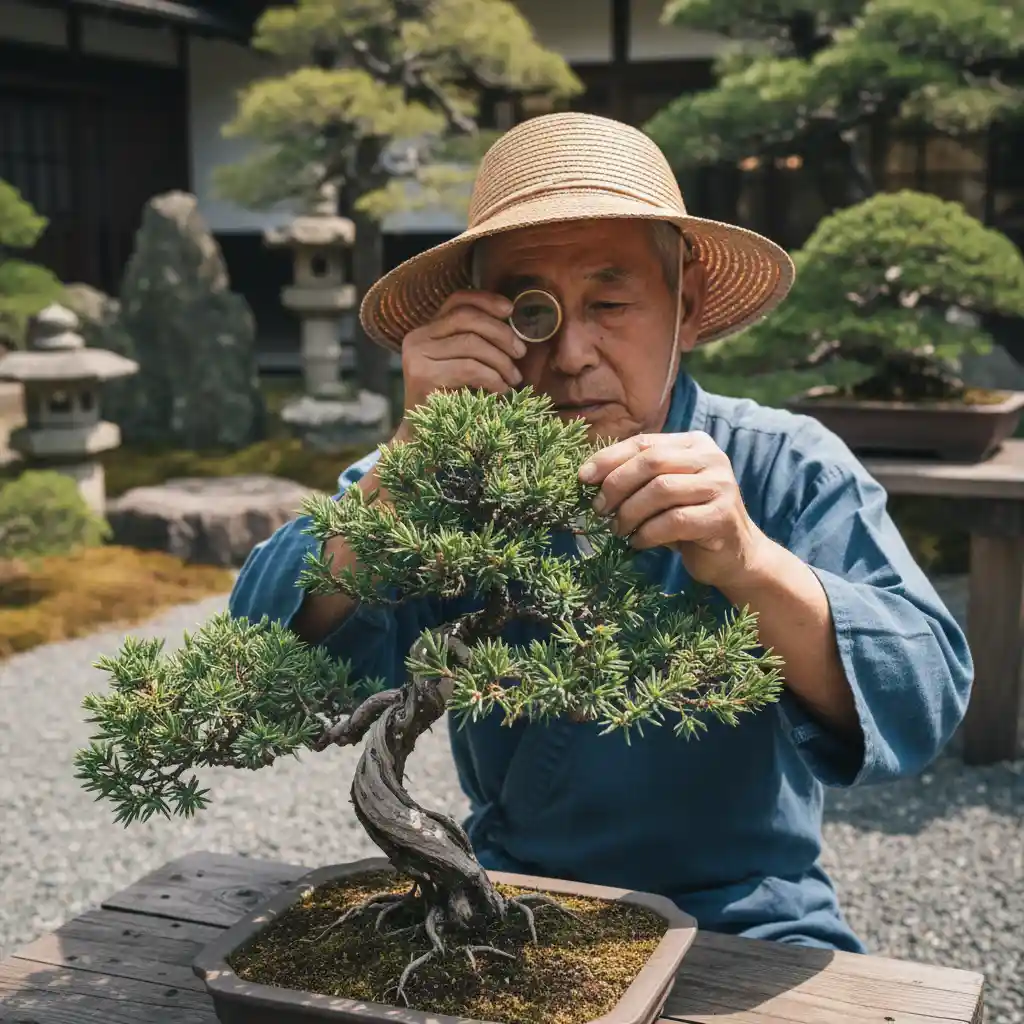
Make it a habit to inspect your bonsai thoroughly every few days. Check under leaves, in crevices, and around the soil line. Early detection allows for easier, less invasive treatments.
Effective Natural Treatments
When prevention isn’t enough, several organic methods can effectively eliminate pests. They do so without harming your bonsai or the environment. These treatments are central to successful natural pest control for bonsai trees.
Manual Removal
For small infestations, hand-picking works well. Remove larger pests like caterpillars by hand. Wash off smaller pests like aphids with a strong water spray. Use tweezers or a soft brush for delicate parts of your bonsai.
Neem Oil
Neem oil comes from the neem tree. It repels insects and disrupts their growth. Mix it as directed and spray thoroughly. Cover all leaf surfaces. Reapply every 7-10 days, or as needed.
Insecticidal Soap
Insecticidal soaps dissolve the outer layer of soft-bodied pests. This causes dehydration. Aphids, mealybugs, and spider mites are vulnerable. You can make a mild solution with pure castile soap and water. Avoid detergents. Spray generously, ensuring good contact with pests.
Diatomaceous Earth (DE)
Food-grade DE is a natural, abrasive powder. It is made from fossilized diatoms. When applied to the soil surface, it can deter crawling insects. It physically damages their exoskeletons. Ensure it remains dry to be effective.
Beneficial Insects
Introduce natural predators like ladybugs or lacewing larvae into your garden. They can effectively control populations of aphids, mites, and other soft-bodied pests. This is an advanced technique for fostering environmental resilience.
Sticky Traps
Yellow sticky traps are excellent for monitoring and capturing flying insects. Examples include fungus gnats or whiteflies. Place them near your bonsai to reduce adult populations and gauge pest activity.

Seasonal Care and Pest Cycles
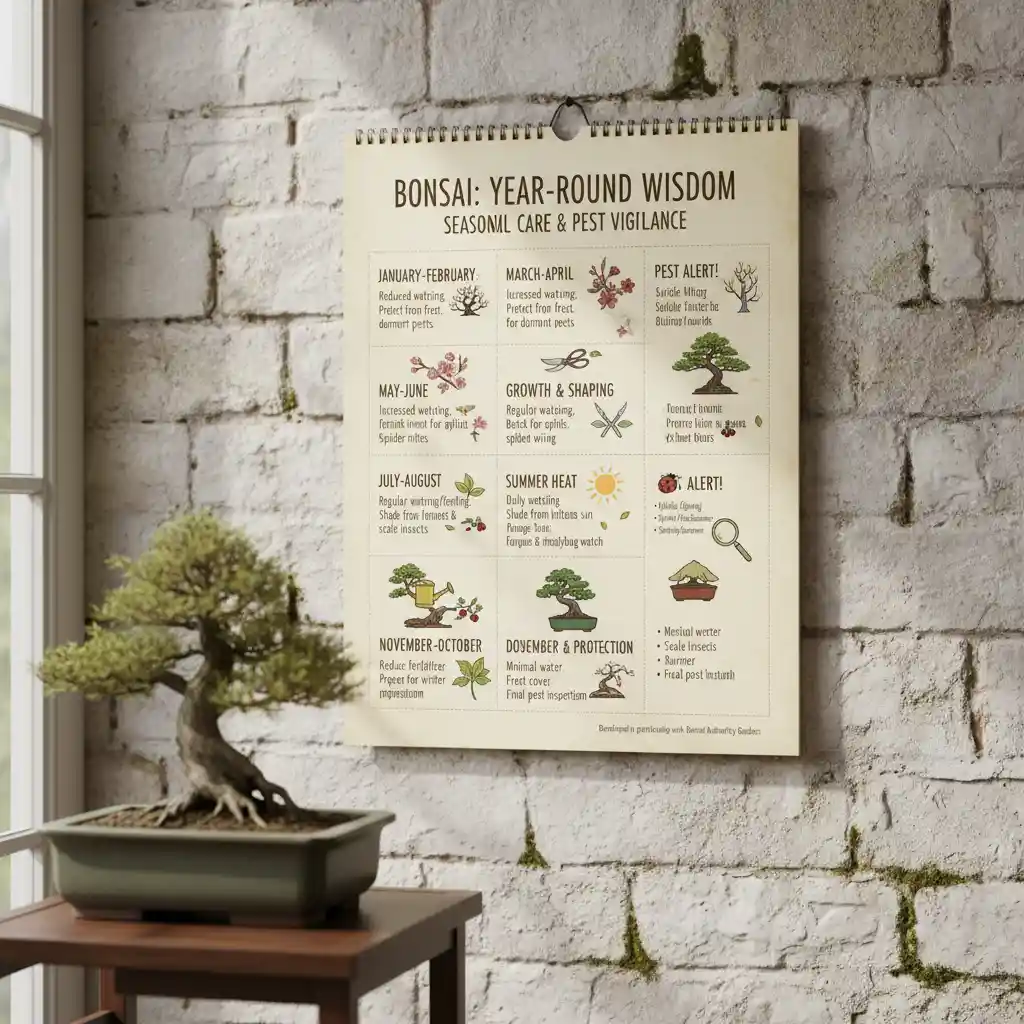
Understanding seasonal impacts is crucial for integrated pest management. Pest activity often varies with temperature and humidity. This means your natural pest control for bonsai trees strategy needs to adapt.
Spring
New growth emerges, which attracts aphids and caterpillars. Be vigilant with inspections as temperatures rise. Apply preventative neem oil sprays before infestations take hold. For a more detailed guide on Spring Care for Bonsai SH, refer to our dedicated resource.
Summer
High temperatures can lead to spider mite outbreaks. This is especially true in dry conditions. Increase humidity if possible and maintain good air circulation. Heat can also accelerate pest breeding cycles.
Autumn
As deciduous bonsai prepare for dormancy, inspect for scale insects and mealybugs. These might overwinter on branches. Clearing fallen leaves reduces hiding spots for pests and fungal spores.
Winter
For indoor bonsai, continue regular inspections in winter. Indoor heating creates dry air, which spider mites favor. Increase humidity around your plants if possible. Pests can still thrive indoors, so stay vigilant.
Advanced Techniques for Environmental Resilience
Beyond direct treatments, fostering a robust and resilient environment enhances your bonsai’s natural defenses. This minimizes pest issues long-term. This holistic approach deepens your natural pest control for bonsai trees efforts.
Building a Healthy Micro-ecosystem
Encourage biodiversity in your garden or growing area. Healthy soil teeming with beneficial microbes supports stronger plants. For ideas on this, explore Companion Plants & Display Elements for a True NZ Bonsai Scene, which can repel pests or attract beneficial insects.
Understanding Species-Specific Vulnerabilities
Some bonsai species, like Japanese Maples, might be more prone to aphids. Understanding specific care needs, such as Maple Bonsai Cultivation: Seasonal Care and Styling, can help in managing these vulnerabilities. Others, like junipers, can attract spider mites. Tailoring your inspection and preventative strategies to your specific tree types can be highly beneficial. For advanced techniques specific to certain conifers, such as Pine Bonsai: Needles, Candles, and Advanced Techniques, further resources are available.
Watering Techniques
Employ techniques such as bottom watering for sensitive species. Also, ensure thorough flushing to remove salt buildup. This buildup can stress trees and make them vulnerable to pests. Proper hydration strengthens cell walls. In cases of stress, understanding Underwatering Bonsai Recovery can be critical for your tree’s survival.
When to Seek Expert Help
While natural pest control for bonsai trees is highly effective, sometimes an infestation can be overwhelming. If you’ve tried several methods and the problem persists or worsens, don’t hesitate to consult a local bonsai nursery or an arborist. They can offer specialized advice or identify less common pests.
Remember that consistent observation and early intervention are your best tools in maintaining a healthy, pest-free bonsai collection. By embracing natural methods, you contribute to a sustainable and thriving environment for your beautiful miniature trees. For more detailed information on specific pests, refer to resources like Wikipedia’s page on Pest Control.