Bonsai Pruning & Wiring Techniques: Mastering the Art

bonzai.co.nz
Bonsai pruning involves selectively removing branches, leaves, and roots to shape the tree, maintain its miniature size, and enhance its aesthetic. Bonsai wiring uses annealed copper or aluminum wire to gently bend and position branches and the trunk, guiding the tree’s growth into desired artistic forms.
Bonsai is an ancient art form that transforms ordinary trees into living sculptures. The core of this transformation lies in two fundamental techniques: pruning and wiring. Mastering Bonsai Pruning & Wiring Techniques allows you to guide your tree’s growth, create stunning shapes, and maintain its health and vigor. These methods are crucial for developing a bonsai that truly reflects your artistic vision and thrives for generations.
Table of Contents
- The Art of Bonsai Pruning
- Mastering Bonsai Wiring
- Seasonal Care and Timing
- Advanced Techniques and Species-Specific Content
- Beyond Techniques: History and Resilience
- Continuous Learning and Enjoyment
The Art of Bonsai Pruning
Pruning is the foundation of bonsai cultivation. It is more than just cutting; it’s about making deliberate choices to shape the tree’s future, enhance its aesthetic appeal, and promote healthy growth. Effective pruning dictates the overall structure and style of your miniature tree.
Why Prune?
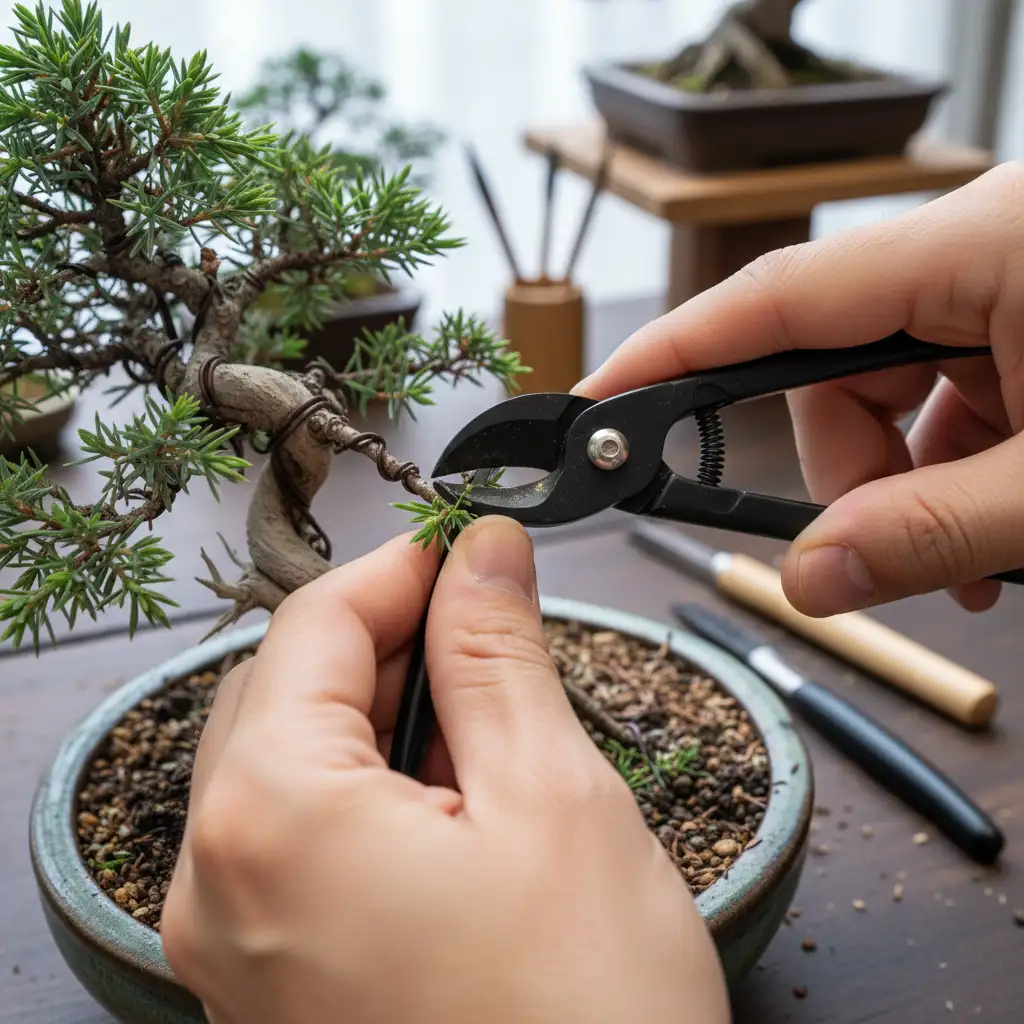
Pruning serves multiple purposes. It helps maintain the tree’s small size, stimulates new growth, and encourages a finer ramification of branches, leading to a denser foliage pad. It also removes unhealthy or unwanted branches, directs energy to specific areas, and reveals the tree’s unique character.
Types of Pruning
There are several types of pruning, each with a specific goal:
- Maintenance Pruning: This involves regular trimming of new shoots and leaves to maintain the tree’s established shape and encourage dense foliage. It’s often performed throughout the growing season.
- Structural Pruning: More drastic, structural pruning establishes the primary branch structure and overall silhouette. This might involve removing large branches and is typically done less frequently, often in late winter or early spring.
- Root Pruning: Performed during repotting, root pruning manages the root ball’s size, stimulates new feeder roots, and ensures the tree can absorb nutrients efficiently. This is a critical aspect of overall tree health and seasonal care.
Tools for Pruning
Specialized tools make pruning easier and result in cleaner cuts that heal better. For those seeking guidance on initial purchases, a resource on Essential Bonsai Tools for Beginners can be highly beneficial. Essential tools include concave cutters for flush cuts, branch cutters for larger branches, and sharp shears for fine detail work and leaf trimming. Always ensure your tools are clean and sharp to prevent disease and damage.
Mastering Bonsai Wiring
Wiring is a powerful technique that allows you to precisely position branches and even the trunk of your bonsai. While pruning removes what you don’t want, wiring shapes what remains, creating dynamic and artistic forms. It complements Bonsai Pruning & Wiring Techniques by adding movement and character.
Why Wire?
Wiring helps guide growth in directions that pruning alone cannot achieve. It can create bends, drops, and twists that emulate aged, natural trees. This method allows you to refine the tree’s silhouette, enhance its visual balance, and capture the essence of natural landscapes within a miniature form.

Choosing the Right Wire
Bonsai wire is typically made from annealed copper or aluminum. Aluminum wire is softer, easier to apply, and suitable for beginners and smaller branches. Copper wire is stronger, holds its shape better, and is often preferred by experienced artists for more significant structural changes. Select a wire thickness that is about one-third the thickness of the branch you are wiring.
Wiring Techniques
Proper wiring involves careful application to prevent scarring the bark:
- Applying the Wire: Start by anchoring the wire securely to the trunk or a sturdy branch. Wrap the wire at a 45-degree angle, making sure each coil is snug but not overtight. The wire should never cross itself.
- Branch Placement: Once the wire is applied, gently bend the branch into the desired position. Use your thumbs to support the branch while bending, avoiding any sudden movements that could cause breakage.
- Trunk Wiring: For shaping the main trunk, thicker wires are often used, sometimes in pairs for extra strength. The same principles of careful application and gentle bending apply.
When to Remove Wire
The wire should be removed before it starts to cut into the bark, which can cause unsightly scars. This usually takes a few months to a year, depending on the tree’s growth rate and species. Regularly check the wire’s tightness and remove it carefully using wire cutters, unwinding rather than pulling to avoid damaging the branches.
Seasonal Care and Timing
The effectiveness of Bonsai Pruning & Wiring Techniques is greatly influenced by timing. Understanding your tree’s growth cycles and applying seasonal care guides are crucial for its health and successful development. Different seasons offer optimal windows for specific tasks.
Pruning Schedules
For most deciduous trees, heavy structural pruning is best done in late winter when the tree is dormant. This minimizes sap bleed and allows for clear visibility of the branch structure. Maintenance pruning, such as pinching back new growth, can be done throughout the active growing season. Evergreen species often tolerate pruning year-round but benefit from heavier work in cooler months. For detailed guidance on nurturing your trees during the critical awakening period, consider our dedicated resource on Spring Care for Bonsai SH.
Wiring Considerations
Wiring is generally best applied during the active growing season when branches are more flexible, but also when the bark thickens quickly enough to hold the new shape. However, this also means constant vigilance for wire biting into the bark. For delicate species, wiring during dormancy can reduce the risk of damage.

Advanced Techniques and Species-Specific Content
As you gain experience, you’ll explore more complex techniques and learn how different species respond to pruning and wiring. This leads to developing species-specific content clusters that address the unique needs of pine, juniper, maple, and other popular bonsai trees. Understanding these nuances deepens your authority as a bonsai artist. For a comprehensive look at how different species thrive, consult our guide on Bonsai Species Comparison for Different Climates.
Deciduous vs. Evergreen
Deciduous trees like maples and elms have distinct seasonal changes, making winter an ideal time for structural work. Evergreens such as pines and junipers require different approaches, often involving candle pinching for pines and selective branch removal for junipers. Each type demands a tailored strategy for optimal results.
Refining Your Design
Advanced bonsai art involves refining the tree’s overall design, considering factors like apex creation, nebari (surface roots), and creating a sense of age. It’s about more than just technique; it’s about artistic display, creating harmony between the tree and its pot, and evoking emotion in the viewer. For a deeper dive into aesthetic rules, explore Bonsai Design Principles: Balance & Proportion. Explore richer media formats like videos for complex techniques to truly visualize these refinements.
Beyond Techniques: History and Resilience
Bonsai is not just a horticultural practice; it’s a profound cultural art form with a rich history. Understanding its origins and philosophical underpinnings can greatly enhance your appreciation and practice of Bonsai Pruning & Wiring Techniques.
Cultural Significance
The art of bonsai originated in China and was later refined in Japan, where it became deeply intertwined with Zen Buddhism and aesthetic principles. It represents harmony between nature and humanity, patience, and the transient beauty of life. Learn more about its fascinating history on Wikipedia.
Caring for Your Bonsai’s Health
Beyond shaping, ensuring your bonsai’s environmental resilience is paramount. For a deeper understanding of these challenges, explore Environmental Stressors Affecting Bonsai Health. This includes proper watering, fertilizing, pest management, and protecting it from extreme weather. For optimal growth, selecting the correct substrate is also vital; refer to our Bonsai Soil Reviews: Akadama, Pumice, Lava Rock for guidance. For specific remedies and preventative measures, check out Bonsai Fungal Disease Solutions. A healthy tree is more receptive to pruning and wiring, and will display a more vibrant artistic presentation.
Continuous Learning and Enjoyment
Mastering Bonsai Pruning & Wiring Techniques is a lifelong journey of learning and discovery. Each tree presents a unique challenge and opportunity for growth, both for the plant and for you as an artist. Embrace the process, observe your trees closely, and continually refine your skills.
Whether you are a beginner or an experienced enthusiast, the world of bonsai offers endless possibilities for creativity and connection with nature. Enjoy the journey of shaping these living masterpieces and enhancing your understanding of this timeless art form. Your patience and dedication will be rewarded with beautiful, thriving bonsai.