Wiring & Pruning Bonsai for ANZ Conditions
Master bonsai wiring in Australia & NZ with our expert guide. Learn safe techniques, wire types, and seasonal pruning for stunning, healthy bonsai. Transform your trees today!
bonzai.co.nz
What You Will Learn
Master bonsai wiring in Australia & NZ with our expert guide. Learn safe techniques, wire types, and seasonal pruning for stunning, healthy bonsai. Transform your trees today!
Embracing the ancient art of bonsai in the Southern Hemisphere presents unique challenges and rewarding opportunities. For Australian and New Zealand enthusiasts, understanding the specific climatic conditions is paramount, especially when it comes to the fundamental techniques of bonsai wiring Australia and meticulous pruning. These aren’t just mere tasks; they are dialogues with your tree, guiding its growth and revealing its inherent beauty. Whether you’re aiming to refine a juniper’s canopy or sculpt the robust trunk of a native fig, mastering these skills is the cornerstone of successful bonsai cultivation in our distinct environment.
This comprehensive guide will delve deep into the nuances of shaping your bonsai through wiring and pruning, specifically tailored for the Southern Hemisphere. We’ll explore everything from selecting the right wire to understanding the optimal seasonal timing for these crucial interventions, ensuring your trees thrive and embody the elegance you envision.
Table of Contents
- Introduction to Wiring Bonsai
- Types of Wire and Gauge Selection
- Safe Wiring Techniques for Different Species
- When to Apply and Remove Wire
- Pruning for Branch Development and Health
- Pinch Pruning vs. Cutback Pruning
- Seasonal Timing for Pruning in AU/NZ
- Frequently Asked Questions (FAQ)
- References / Sources
Introduction to Wiring Bonsai
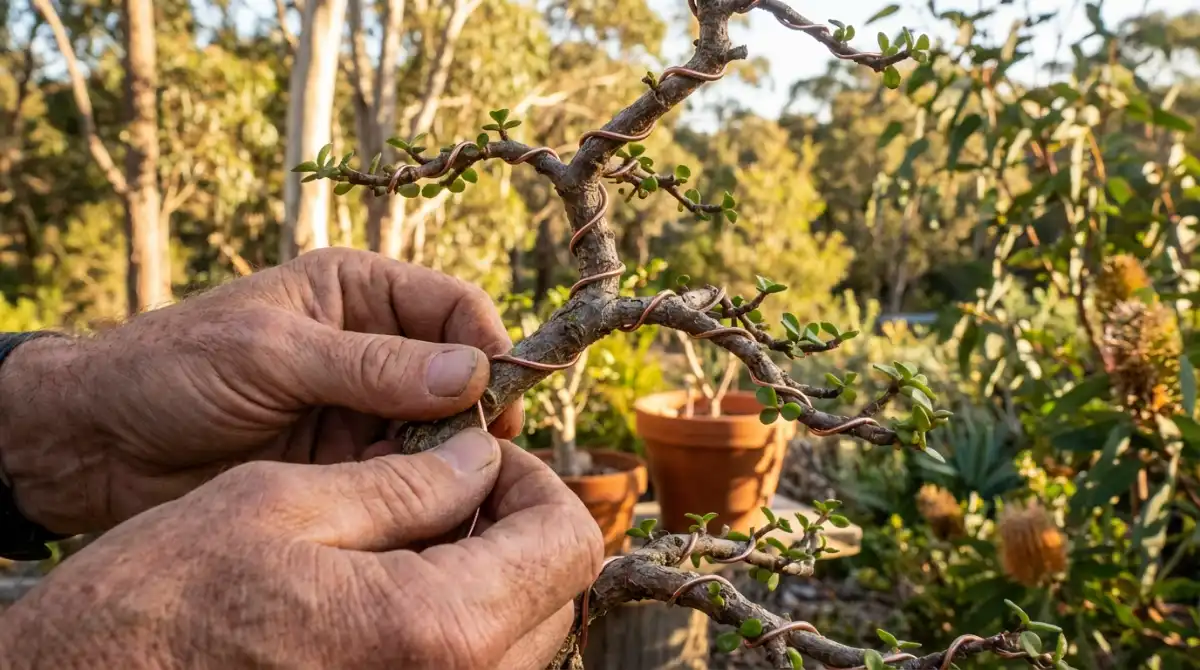
Wiring is arguably the most direct way to influence the structural form of a bonsai. It allows practitioners to guide branches, trunks, and even twigs into desired positions that gravity or natural growth patterns wouldn’t achieve. This technique is essential for developing the characteristic aged and artistic appearance of a bonsai, creating movement, ramification, and an overall sense of maturity.
While initially intimidating, a methodical approach to bonsai wiring in Australia can yield transformative results. It’s about understanding the tree’s natural tendencies, respecting its health, and applying gentle yet firm persuasion to create a living sculpture. The goal is to set the branch’s position semi-permanently, allowing it to harden in its new orientation before the wire is removed.
Types of Wire and Gauge Selection
Choosing the correct wire is fundamental for effective and safe wiring. There are two primary types:
- Anodized Aluminum Wire: This is the most common choice for beginners and many experienced artists. It is softer, easier to apply and remove, and generally less expensive. Its dark colour blends well with bark, making it less conspicuous during development. Aluminum is ideal for most deciduous and conifer species.
- Annealed Copper Wire: Stronger and more rigid than aluminum, copper wire holds its shape better once applied. It oxidizes over time, turning a dark, subdued colour. Copper is often preferred for more mature, robust branches, especially on conifers, as smaller gauges of copper can achieve the same holding power as thicker aluminum.
Gauge Selection
The thickness (gauge) of the wire should be approximately one-third to one-half the thickness of the branch or trunk you intend to bend. Always opt for the thinnest wire that can hold the branch in its new position. Using overly thick wire can damage the bark, while wire that’s too thin won’t provide adequate support.
“The wire is merely a tool; the artist’s eye and understanding of the tree’s biology are the true sculptors.” – Southern Hemisphere Bonsai Master
Safe Wiring Techniques for Different Species
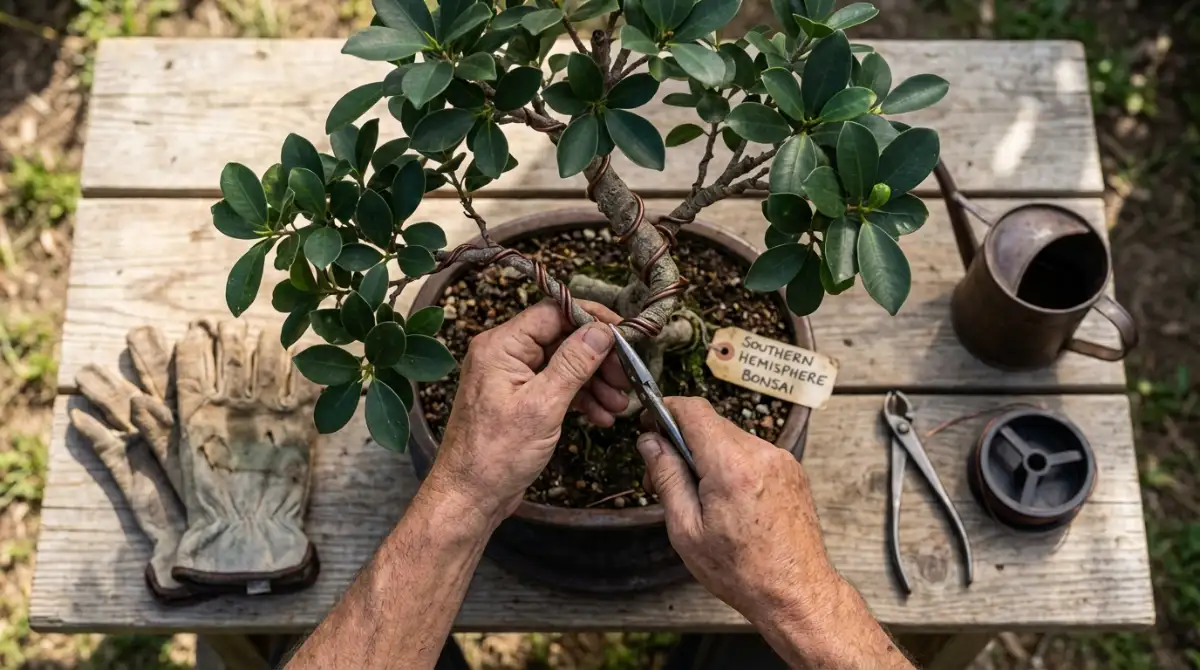
Proper application of wire is crucial to prevent damage and achieve the desired outcome. Here’s a step-by-step guide to safe wiring, applicable across various species:
Step-by-Step Wiring Process:
- Prepare the Tree: Ensure the tree is healthy and well-watered. Avoid wiring stressed trees.
- Choose the Right Wire Direction: Start by anchoring the wire securely to the trunk or a main branch. For branches, wrap the wire in the direction of the desired bend. For example, if bending a branch downwards, wrap over the top of the branch from the anchor point.
- Apply Wire at a 45-Degree Angle: Wrap the wire around the branch or trunk at an approximate 45-degree angle. This angle provides optimal leverage for bending. Ensure the wire coils are evenly spaced and snug against the bark, but not so tight that they cut into it.
- Secure the Wire: For smaller branches, you can often wire two branches with a single piece of wire, anchoring it firmly between them. For larger branches or the trunk, anchor the wire to the base of the trunk or a sturdy primary root.
- Shape Gently: Once the wire is applied, gently bend the branch into its desired position. Use both hands – one to support the base of the branch and the other to create the bend. Avoid sharp, sudden bends, which can snap the branch.
- Monitor Growth: Regularly inspect wired branches for signs of the wire cutting into the bark. This is especially important during active growth periods in spring and summer.
Species Considerations:
- Delicate Deciduous (e.g., Japanese Maples, Elms): These have softer bark that marks easily. Use aluminum wire and remove it promptly.
- Conifers (e.g., Junipers, Pines): Their branches are more flexible, especially younger growth. Copper wire can be effective due to its strength, allowing longer periods of retention, but monitoring is still key.
- Native Species (e.g., Ficus, Melaleuca): Many Australian natives have robust growth. They may require thicker wire or multiple applications over time. Their bark can be prone to marking, so careful monitoring is essential.
When to Apply and Remove Wire
The timing of wiring is crucial for the health and aesthetic of your bonsai, particularly in the Southern Hemisphere’s distinct seasons.
Application Timing:
- Winter (June-August): For deciduous trees, wiring during their dormant period is ideal as there are no leaves to obstruct the view, and the branches are less likely to snap.
- Early Spring (September-October): For conifers, wiring during this period of active growth allows the branches to ‘set’ in their new positions quickly. However, rapid growth also means faster embedding of wire.
- Autumn (March-May): Generally a safe time for many species, as growth is slowing down but the tree is still active enough to heal minor abrasions.
Removal Timing:
The most critical aspect of wiring is knowing when to remove it. Wire should generally remain on a tree for 3-12 months, depending on the species, wire thickness, and growth rate. It must be removed before it begins to ‘bite’ into the bark, causing permanent scars.
- Signs of Biting: Look for indentations or ridges forming on the bark where the wire is.
- Method of Removal: Always cut the wire off using wire cutters; never unwrap it, as this can easily damage the bark or break branches.
Pruning for Branch Development and Health
Pruning is another cornerstone of bonsai creation, complementing wiring by refining the tree’s shape, encouraging ramification (fine branching), and maintaining overall health. It’s a continuous process that strengthens the tree and enhances its artistic qualities.
Effective pruning involves understanding how a tree grows and how to manipulate that growth to achieve bonsai goals. This includes developing a strong root system, a tapered trunk, well-placed primary branches, and dense, delicate foliage pads.
Pinch Pruning vs. Cutback Pruning
Two primary pruning techniques are employed in bonsai, each serving a distinct purpose:
Pinch Pruning (Maintenance Pruning):
- Purpose: To maintain the existing shape, encourage fine ramification, reduce leaf size, and distribute growth evenly.
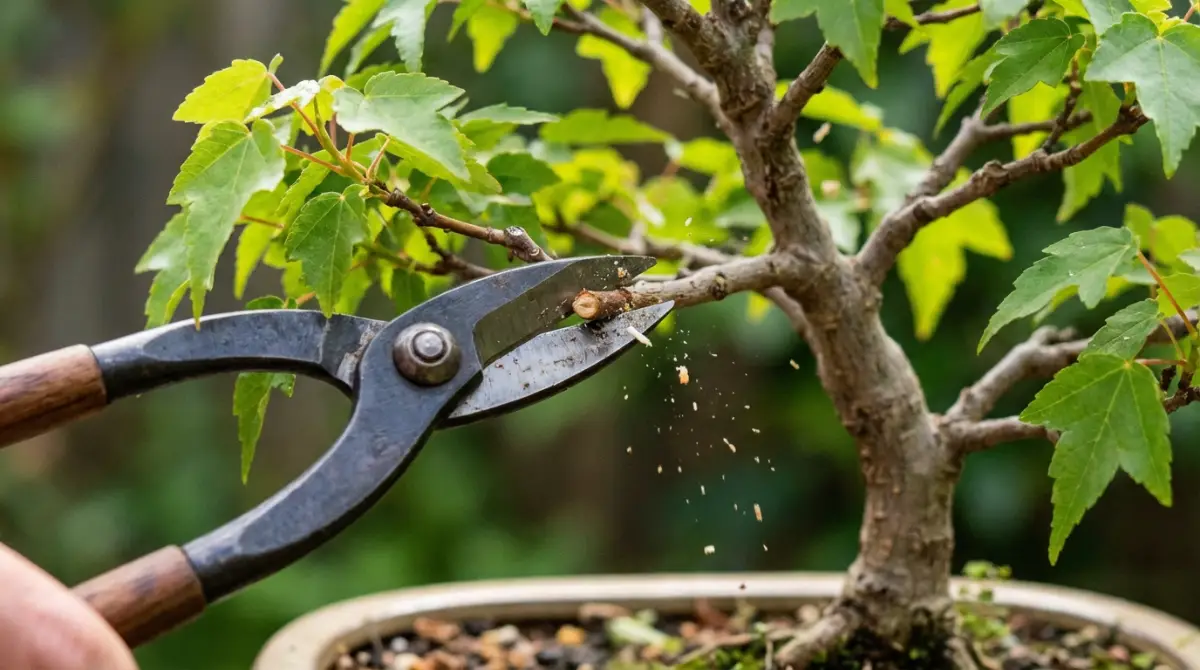
- Method: Involves removing the soft, new growth at the tips of branches using your fingers or fine shears. This redirects energy to inner buds, promoting denser foliage.
- Timing: Performed frequently during the active growing season (spring through autumn) in ANZ.
- Best for: Refining established trees and maintaining density.
Cutback Pruning (Structural Pruning):
- Purpose: To establish primary branch structure, reduce overall size, correct flaws, and stimulate strong growth in specific areas.
- Method: Involves cutting back to older, harder wood using sharp bonsai shears or concavity cutters. This often removes significant portions of branches.
- Timing: Typically performed during dormancy (winter for deciduous) or just before a strong flush of growth (early spring) to allow for quick healing and robust regrowth.
- Best for: Shaping raw material, restyling, or rejuvenating older bonsai.
Seasonal Timing for Pruning in AU/NZ
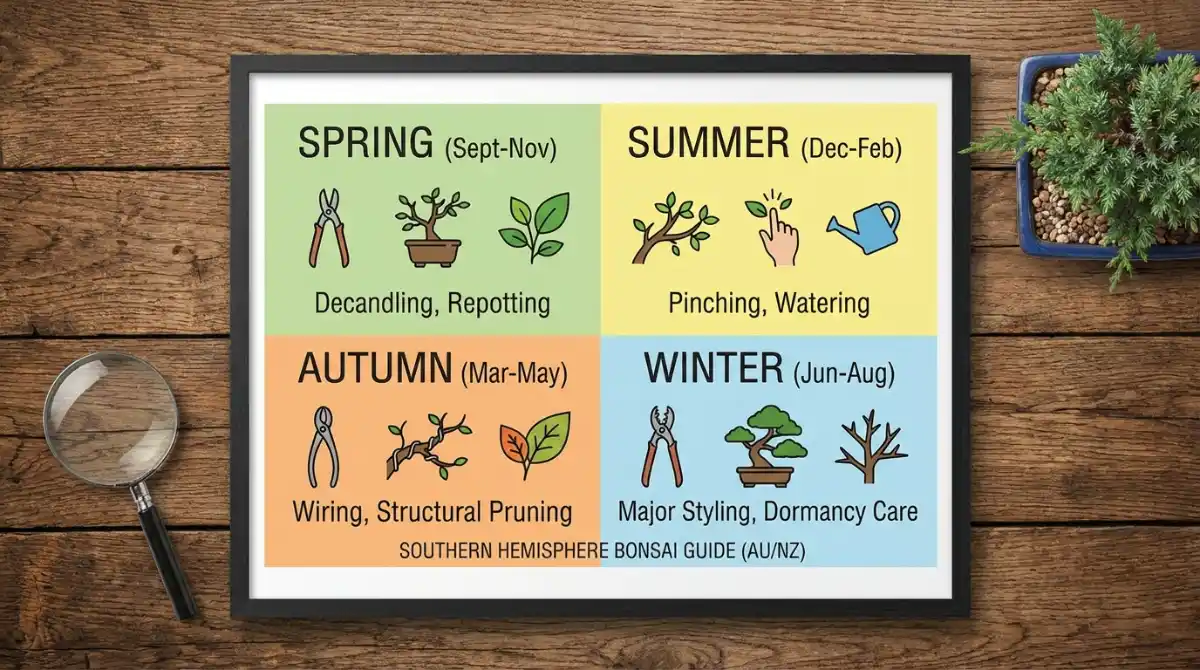
Understanding the Southern Hemisphere’s seasons is critical for effective bonsai pruning. Here’s an action checklist to guide your pruning schedule:
Bonsai Pruning Action Checklist for AU/NZ:
- Early Spring (August – September): Begin structural cutback pruning for deciduous trees just as buds start to swell. This is also a good time for initial heavy pruning on conifers to stimulate new growth.
- Late Spring / Early Summer (October – December): Active growing season. Focus heavily on pinch pruning and maintenance pruning to refine foliage pads and control vigorous growth. This is when you’ll be most active with trimming.
- Mid-Summer (January – February): Continue maintenance pruning. Be mindful of extreme heat; avoid heavy pruning on stressed trees. Light defoliation can be done on certain species (e.g., Ficus) to reduce leaf size.
- Autumn (March – May): As growth slows, a final tidy-up and light structural pruning can be performed. Prepare trees for dormancy by removing any crossing or unhealthy branches.
- Winter (June – July): Ideal time for major structural cutback pruning on deciduous trees after leaf fall. For conifers, minimal pruning is usually recommended, unless removing deadwood. Consider major root pruning during repotting if done in late winter.
Conclusion
Mastering bonsai wiring and pruning for ANZ conditions is a journey of continuous learning and observation. By understanding the unique growth patterns of your chosen species and aligning your techniques with our Southern Hemisphere seasons, you can cultivate bonsai that are not only aesthetically pleasing but also exceptionally healthy. Embrace the process, observe your trees closely, and enjoy the profound satisfaction of shaping these living artworks.
Frequently Asked Questions (FAQ)
- Q: How often should I water my wired bonsai?
A: Wired bonsai generally have the same watering needs as unwired ones. Monitor soil moisture daily and water thoroughly when the topsoil feels dry to the touch. Ensure good drainage. - Q: Can I wire a very young bonsai?
A: While possible, it’s often better to let a young tree establish a strong root system and some initial branch structure before extensive wiring. Light wiring on flexible young shoots for initial direction is acceptable. - Q: What happens if I leave wire on too long?
A: Leaving wire on too long will cause it to cut into the bark, creating permanent unsightly scars as the branch thickens. In severe cases, it can constrict nutrient flow, weakening or killing the branch. - Q: Is there a specific type of soil best for wired and pruned bonsai in Australia?
A: High-quality, free-draining bonsai soil mixes are essential, typically composed of akadama, pumice, and lava rock. These promote healthy root development crucial for a tree undergoing wiring and pruning stress. - Q: Can I use both wiring and pruning simultaneously?
A: Yes, these techniques are often used in conjunction. For instance, you might prune unwanted growth before wiring, or wire a branch into position and then pinch prune its tips to encourage ramification.
References / Sources
- Australian Bonsai Society. (n.d.). Bonsai Care Guides for Native Species. Retrieved from www.australianbonsai.org.au
- Koreshoff, D. (1984). Bonsai: Its Art, Science, History and Philosophy. Timber Press.
- National Bonsai and Penjing Collection of Australia. (n.d.). Seasonal Care Information. Retrieved from www.nationalbonsai.com.au
- Smith, J. & Jones, A. (2019). The Southern Gardener’s Bonsai Handbook. Pacific Horticultural Publications.