Watering, Humidity & Lighting for Indoor Bonsai in NZ
Master how to water bonsai in NZ, achieve perfect humidity, and provide ideal lighting for your indoor bonsai. Expert advice for healthy trees in New Zealand.
bonzai.co.nz
What You Will Learn
Master how to water bonsai in NZ, achieve perfect humidity, and provide ideal lighting for your indoor bonsai. Expert advice for healthy trees in New Zealand.
Watering, Humidity & Lighting for Indoor Bonsai in NZ
Embarking on the journey of indoor bonsai cultivation in New Zealand is a truly rewarding experience, transforming a miniature tree into a living piece of art. However, unlike their outdoor counterparts, indoor bonsai demand a precise balance of environmental conditions to thrive. Among the most critical aspects are proper watering techniques, maintaining optimal humidity levels, and providing adequate lighting. Mastering these three pillars is fundamental to your bonsai’s health and longevity, especially given New Zealand’s diverse climate zones.
This comprehensive guide is crafted specifically for the New Zealand enthusiast, demystifying the essential care practices that will allow your indoor bonsai to flourish. We’ll delve into the nuances of how to water bonsai NZ, ensuring your tree receives exactly what it needs, when it needs it, and thrives in its unique indoor environment.
Table of Contents
Understanding Your Bonsai’s Watering Needs
The single most common mistake made by new bonsai owners, especially those wondering how to water bonsai NZ, is improper watering. Bonsai are not like typical potted plants; their shallow root systems in small, often unglazed, pots mean they dry out much faster. However, overwatering is equally, if not more, detrimental, leading to dreaded root rot.
The key to success lies in understanding that there is no fixed watering schedule. Instead, you must learn to read your bonsai and its environment. Factors influencing watering frequency include:
- Bonsai Species: Some species prefer consistently moist soil, while others like to dry out more between waterings.
- Pot Size and Material: Smaller pots dry faster. Unglazed pots are more porous and evaporate water quicker than glazed ones.
- Soil Mix: Fast-draining bonsai soil is essential to prevent waterlogging.
- Season and Temperature: Bonsai will require more water during warmer months and active growth periods, and significantly less during cooler, dormant periods.
- Humidity Levels: Higher humidity means less frequent watering.
- Wind/Airflow: Drafts can accelerate soil drying.
The golden rule for how to water bonsai NZ is simple: water thoroughly when the top layer of soil begins to feel dry to the touch. This often means checking your bonsai daily, especially during summer or if placed in a warm, dry room.
Achieving Optimal Indoor Humidity Levels in NZ
Many popular indoor bonsai species originate from tropical or subtropical regions, where humidity is naturally high. While New Zealand is an island nation, indoor environments, especially with heating in winter or air conditioning in summer, can become surprisingly dry. This dry air can stress your bonsai, leading to crispy leaf tips, stunted growth, and increased susceptibility to pests.
“Maintaining adequate humidity is often overlooked but is as crucial as proper watering and lighting for the health of your indoor bonsai.”
Aim for indoor humidity levels between 50% and 70% for most tropical and subtropical bonsai. Here’s how you can achieve this in your NZ home:
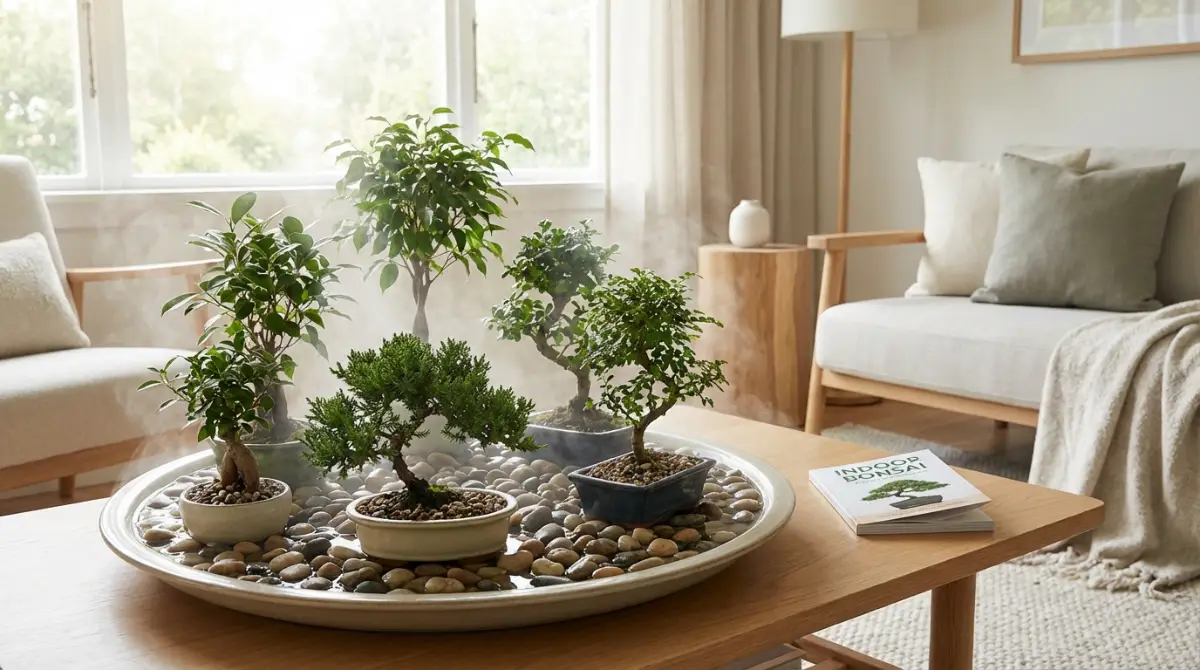
- Humidity Trays: This is a simple and effective solution. Place your bonsai pot on a tray filled with pebbles and water. Ensure the bottom of the pot does not sit directly in the water, as this can lead to root rot. As the water evaporates, it creates a microclimate of humidity around the tree.
- Misting: Regular misting of the foliage can provide temporary relief from dry air. While it’s not a long-term solution for root-level humidity, it can keep leaves clean and discourage spider mites. Use a fine mist spray bottle with filtered or rainwater once or twice daily, particularly in the mornings.
- Group Plants: Placing several plants together can naturally increase local humidity through transpiration.
- Room Humidifiers: For areas with consistently low humidity, a small room humidifier can significantly benefit your bonsai collection and other indoor plants.
Providing Adequate Light: Natural vs. Artificial
Light is the energy source for your bonsai, essential for photosynthesis and overall vigor. Insufficient light leads to weak growth, larger leaves, and a general decline in health. Most indoor bonsai require bright, indirect light for at least 4-6 hours a day, though some species may need more.
Natural Light in NZ Homes
Consider the orientation of your windows:
- North-facing windows: In the Southern Hemisphere, these windows receive the most consistent, strong light throughout the day, making them ideal for many light-loving bonsai.
- East-facing windows: Offer bright morning sun, which is gentle and beneficial, followed by indirect light for the rest of the day. A good choice for many species.
- West-facing windows: Provide intense afternoon sun, which can be too harsh and hot for some delicate bonsai, especially in summer. May require sheer curtains for diffusion.
- South-facing windows: Offer the least direct light and are best suited for shade-tolerant species or as a supplementary spot.
Remember that direct sunlight through a window can intensify, potentially scorching leaves. Always observe your tree’s reaction and adjust its placement as needed. During New Zealand’s shorter winter days, natural light can be significantly reduced, necessitating supplemental lighting.
Artificial Light Solutions
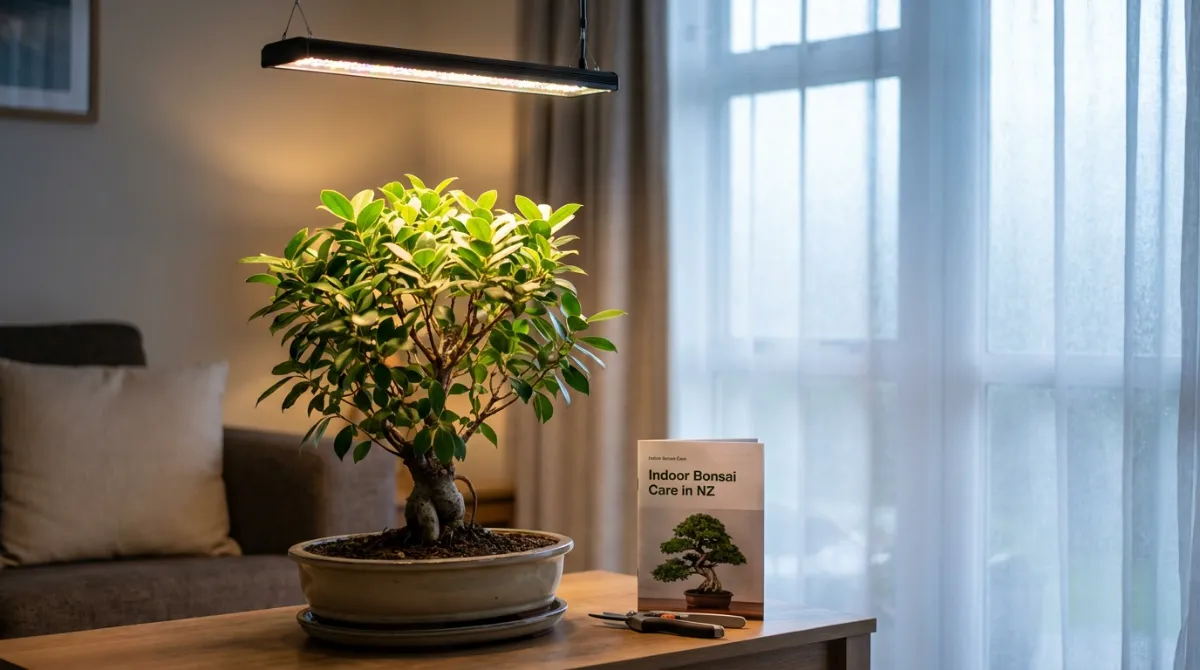
When natural light is insufficient, grow lights become an indispensable tool. Modern LED grow lights are energy-efficient and emit a spectrum of light specifically tailored for plant growth. For most indoor bonsai, a full-spectrum LED grow light is recommended for 10-14 hours daily, mimicking a natural day cycle. Position the light according to the manufacturer’s recommendations, usually 15-30 cm above the foliage, to provide adequate intensity without burning the leaves.
Recognizing Signs of Over or Under Watering
Learning to interpret your bonsai’s signals is paramount. Both overwatering and underwatering can manifest in similar symptoms, making diagnosis tricky. However, there are subtle differences to look for:
Signs of Overwatering
Overwatering is often more insidious and damaging than underwatering, as it can quickly lead to root rot, a fungal infection that suffocates the roots. Roots need oxygen, and perpetually waterlogged soil deprives them of this vital element.
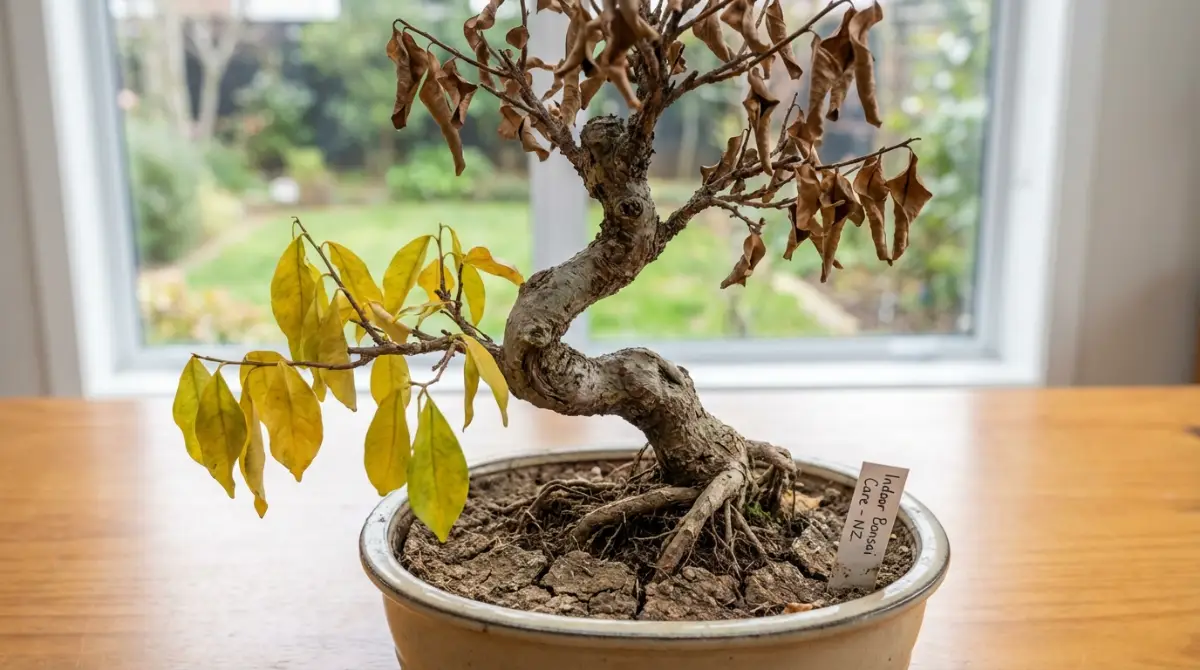
- Yellowing Leaves: Often start from the bottom leaves, turning uniformly yellow and eventually falling off.
- Soft, Mushy Bark/Branches: A sign of rot spreading upwards.
- Foul Odor from Soil: Indicates anaerobic conditions and root decay.
- Mushy, Black Roots: If you gently inspect the root ball, healthy roots are firm and white or tan. Overwatered roots are soft, black, and easily break apart.
- Stunted Growth: Even with lush-looking leaves, overall growth may be slow or non-existent.
Signs of Underwatering
Underwatering, while stressful, is often easier to recover from, provided it’s caught in time.
- Drooping Leaves: Leaves may look limp and lifeless, losing their turgor.
- Crispy, Brown Leaf Edges or Tips: Especially common in species that prefer higher humidity.
- Brittle Branches: Small branches may snap easily.
- Dry, Hard Soil: The soil pulls away from the edges of the pot and feels extremely light.
- Rapid Leaf Drop: Leaves might turn completely brown and fall off quickly.
Best Practices for Watering and Misting
To master how to water bonsai NZ, incorporate these best practices into your routine:
1. Assess the Soil Moisture Daily
This is the most critical step. Insert your finger about an inch into the soil. If it feels dry, it’s time to water. For smaller pots, you can also lift the pot; a light pot indicates dry soil. A moisture meter can also be a helpful tool for beginners.
2. Water Thoroughly Until Drainage
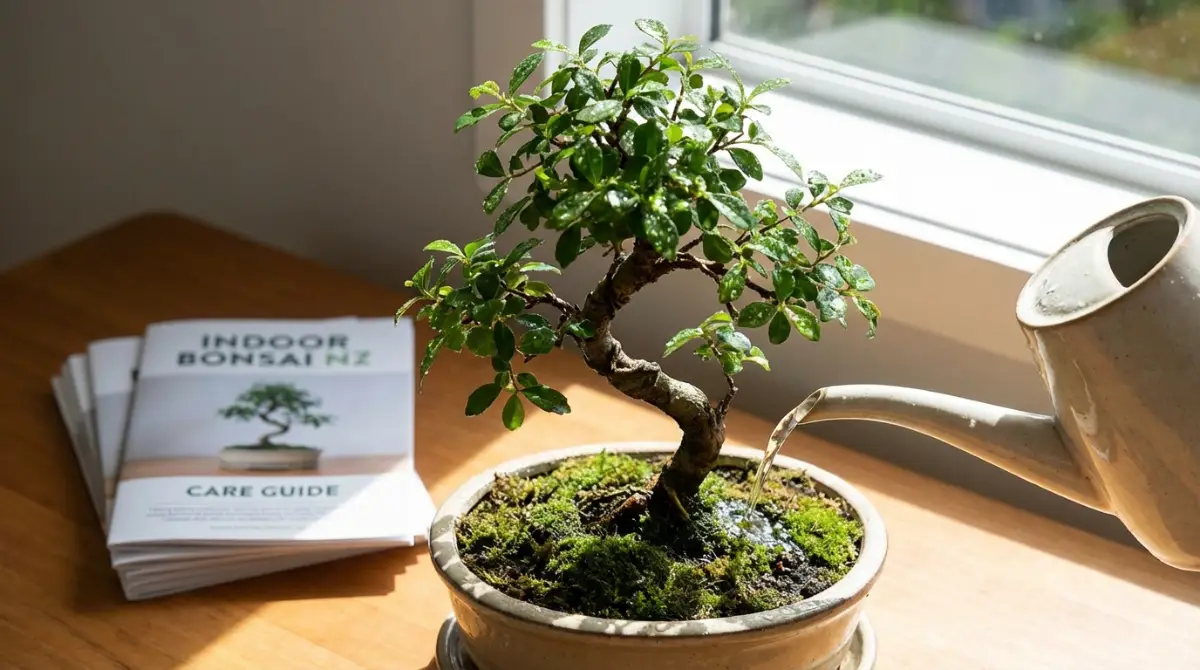
When you water, do so completely. Use a watering can with a fine rose (sprinkler head) to gently deliver water to the entire soil surface, preventing erosion. Water until it drains freely from the drainage holes at the bottom of the pot. Wait a few minutes, then water again. This ensures the entire root ball is saturated and flushes out any accumulated salts.
3. Use the Right Kind of Water
Rainwater is ideal for bonsai as it’s naturally soft and free of chlorine and other chemicals found in tap water. If using tap water in NZ, it’s generally acceptable, but leaving it to sit for 24 hours can help chlorine dissipate. Avoid using softened water from household softeners, as it contains sodium harmful to plants.
4. Adjust for New Zealand’s Seasons
Your watering frequency will change significantly with the seasons. In Auckland’s warm, humid summers, you might water daily or every other day. In colder regions like Otago in winter, when growth slows, watering could be as infrequent as once a week or every two weeks. Always adapt to your specific microclimate and the tree’s needs.
5. Embrace Misting and Humidity Trays
Beyond thorough watering at the roots, consistent ambient humidity is vital. Regularly misting foliage provides a quick boost, while pebble trays offer sustained humidity. These practices are especially important during dry indoor periods or for tropical species.
Frequently Asked Questions About Bonsai Care in NZ
How often should I water my indoor bonsai in New Zealand?
Watering frequency depends on species, pot size, soil type, and environmental factors like temperature and humidity. Generally, check the soil daily and water when the top inch feels dry to the touch. In NZ’s varied climate, this could range from every 1-3 days in warmer, drier periods to less frequently in cooler, more humid conditions.
What kind of water is best for bonsai in NZ?
Tap water is generally acceptable in most parts of New Zealand, but if you have particularly hard water, leaving it out overnight can help dissipate chlorine. Rainwater is ideal as it’s naturally soft and free of chemicals. Avoid using softened water from a household water softener system as it contains elevated sodium levels harmful to plants.
Do indoor bonsai need misting in New Zealand’s climate?
Yes, many indoor bonsai species benefit from misting, especially during dry periods or when indoor heating/cooling reduces humidity. New Zealand’s coastal areas tend to be more humid, but inland and southern regions can experience drier air, particularly indoors. Misting can provide temporary relief, but using a humidity tray or a room humidifier is more effective for sustained humidity.
How much light does an indoor bonsai need in NZ?
Most indoor bonsai require bright, indirect light for at least 4-6 hours a day. A north or east-facing window in NZ often provides suitable conditions, avoiding harsh midday sun. If natural light is insufficient, especially during shorter winter days, consider supplementing with a dedicated grow light for 10-14 hours daily.
Can I use ice cubes to water my bonsai?
No, using ice cubes is not recommended for watering bonsai. The sudden cold shock can be detrimental to the delicate root system, and the slow, uneven melting doesn’t provide the thorough, even saturation that bonsai roots need. Always use room-temperature water applied evenly to the soil surface.