Totara & Rimu Bonsai Styling
Master Totara bonsai care and Rimu styling with our expert guide. Learn seasonal care, wiring, soil mixes, and how to create ancient-looking NZ native bonsai.
bonzai.co.nz
What You Will Learn
Master Totara bonsai care and Rimu styling with our expert guide. Learn seasonal care, wiring, soil mixes, and how to create ancient-looking NZ native bonsai.
Totara & Rimu Bonsai Styling: Mastering NZ Native Conifers
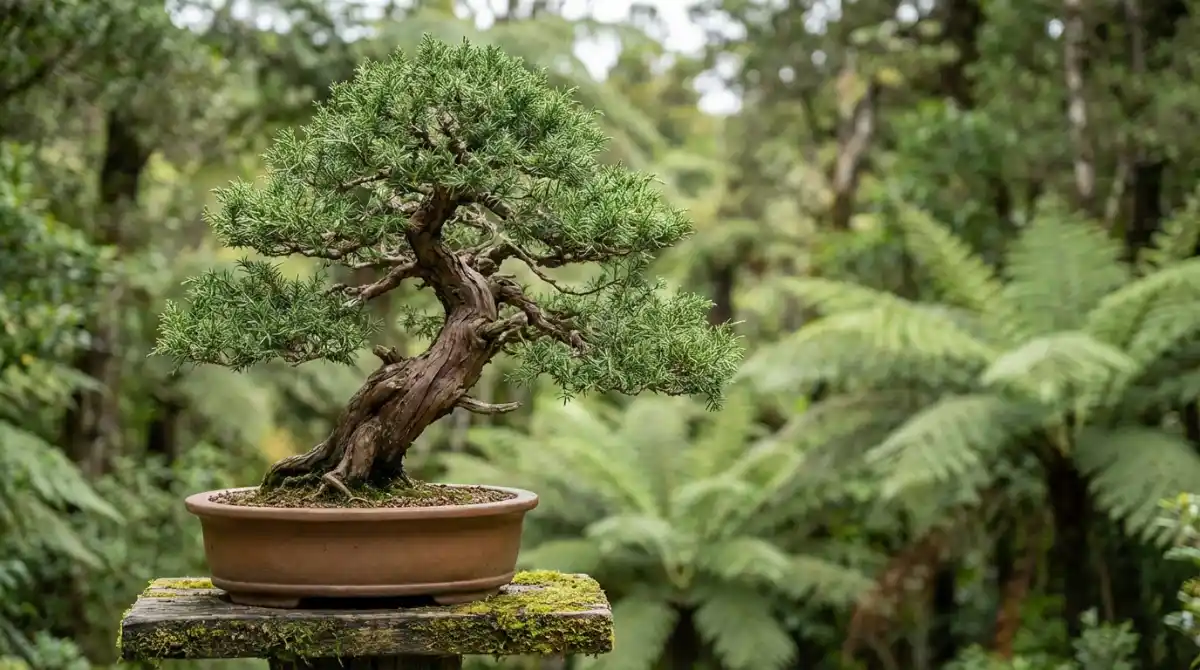
Dive into the world of New Zealand’s majestic native conifers, the Totara (Podocarpus totara) and Rimu (Dacrydium cupressinum), and discover how to transform these iconic trees into stunning bonsai. This comprehensive guide focuses on specific regional seasonality and modern, visual-first care practices, ensuring your totara bonsai care and Rimu cultivation thrive. Uncover the secrets to developing ancient-looking specimens that perfectly capture the essence of New Zealand’s unique forest aesthetics.
The art of bonsai allows us to bring the grandeur of nature into miniature form, and with Totara and Rimu, you’re working with species renowned for their longevity and distinctive character. While challenging, the rewards of cultivating these native gems are immense, yielding specimens that resonate with the wild beauty of Aotearoa.
Characteristics of Totara & Rimu for Bonsai
The choice of species is paramount in bonsai, and both Totara and Rimu offer distinct advantages for the Southern Hemisphere enthusiast. Totara (Podocarpus totara) is known for its relatively small, soft, linear leaves that scale down beautifully, and its fibrous, often reddish-brown bark that develops fantastic texture with age. It’s a remarkably resilient species, making it an excellent candidate for various styling techniques.
Rimu (Dacrydium cupressinum), on the other hand, presents a different aesthetic. Its unique drooping, scale-like foliage gives it a graceful, almost weeping appearance that can be artfully captured in cascading or semi-cascading bonsai styles. The bark on mature Rimu exfoliates in flakes, revealing a mottled texture that speaks of great age. Both species are long-lived and respond well to consistent, careful pruning, which is fundamental to successful totara bonsai care and Rimu cultivation.
Growth Habits & Branch Structure
Understanding the natural growth patterns of Totara and Rimu is crucial for effective bonsai styling. In their natural habitat, Totara can become massive trees with sturdy, often gnarled trunks and dense, upright branching. They tend to exhibit strong apical dominance, meaning growth is strongest at the top, which requires strategic pruning to encourage lower branch development and taper.
Rimu, in contrast, often displays a more conical, layered structure with a distinctive pendulous habit in its mature foliage. The branches can be more delicate, especially when young. Both species, being conifers, generally do not back-bud on old wood as readily as deciduous trees, emphasizing the need for careful branch selection and development from an early stage. Patience is key when working with these slow-growing natives.
“The secret to mastering NZ native conifers in bonsai lies in observing their ancient counterparts in the wild and patiently mimicking their natural resilience and form.”
Wiring & Shaping Conifers
Wiring is an indispensable technique for shaping the branches and trunk of your Totara and Rimu bonsai. Due to their evergreen nature and often brittle wood, timing and technique are critical to avoid damage and ensure effective shaping. Focus on gently guiding branches rather than forcing them into extreme positions.
1. Preparation & Timing
The ideal time for wiring Totara and Rimu is during late autumn or early spring when the tree’s growth is less vigorous, reducing the risk of wire cutting into the bark. Ensure your tree is healthy and well-hydrated before wiring. Gather all necessary tools: various gauges of anodized aluminum or copper wire, wire cutters, and concave cutters.
2. Wire Application Technique
Start with the thickest branches, using heavier gauge wire, and work down to finer branches. Anchor the wire securely around the trunk or a sturdy primary branch. Wrap the wire at a 45-degree angle, ensuring it’s snug but not too tight to allow for growth. Overlap wires on longer sections for stability. Always aim for two wires per branch to allow for greater control in shaping.
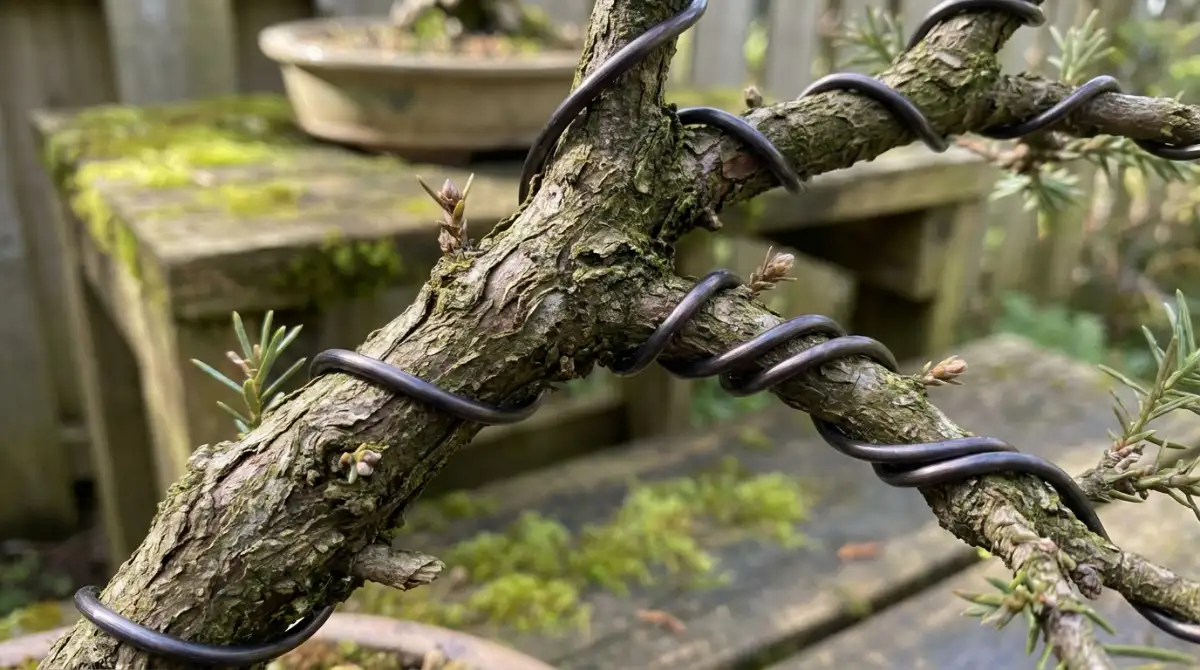
3. Gentle Bending & Positioning
Once wired, gently bend the branches into your desired position. Totara branches can be somewhat flexible, but Rimu can be more brittle; always support the branch with your free hand while bending. Avoid sharp bends that can snap the branch. Multiple, small adjustments over time are often more effective than one drastic bend.
4. Wire Removal & Monitoring
Monitor the wired branches regularly for signs of wire biting into the bark, especially during periods of active growth. Wire typically needs to be removed after 6-12 months, or sooner if scarring begins. Cut the wire off carefully with wire cutters, unwinding it in the reverse direction of application can cause damage. Timely wire removal is vital to prevent permanent marks on your beautiful totara bonsai care specimen.
Seasonal Care for Evergreen Natives
Caring for Totara and Rimu bonsai in the Southern Hemisphere requires an understanding of their unique needs throughout the year. While evergreen, their metabolic activity shifts with the seasons, impacting watering, feeding, and protection.
Spring (September – November)
As temperatures rise, new growth will emerge. This is the time for initial shaping, light pruning of undesirable growth, and the first application of a balanced slow-release fertilizer. Repotting, if needed, should also be done now. Ensure consistent moisture as the tree begins to actively grow.
Summer (December – February)
The hottest and driest period. Watering is paramount; check soil moisture daily, sometimes twice in extreme heat. Protect from harsh afternoon sun with partial shade cloth to prevent scorching. Monitor closely for pests and diseases, which can thrive in warm conditions. Avoid heavy pruning during peak summer heat.
Autumn (March – May)
Growth begins to slow. Reduce watering frequency as temperatures drop and the risk of rot increases. Light pruning can be done to refine shape. This is a good time for a final, lower-nitrogen fertilizer application to promote root hardening. Prepare for winter protection for vulnerable specimens.
Winter (June – August)
The dormant period. Significantly reduce watering, only watering when the soil is dry to the touch. Protect from severe frosts and cold winds, especially smaller or recently repotted trees. An unheated greenhouse or sheltered spot is ideal. Minimal intervention is best during this time for optimal totara bonsai care.
Seasonal Care Action Checklist:
- ✓ Spring: Apply slow-release fertilizer and conduct major repotting.
- ✓ Summer: Check soil moisture daily, provide afternoon shade.
- ✓ Autumn: Reduce watering, apply low-nitrogen fertilizer.
- ✓ Winter: Protect from frost, water sparingly, only when dry.
- ✓ Year-round: Regularly inspect for pests and diseases.
Soil Mixes & Repotting
The right soil mix and proper repotting are foundational to the health and vitality of your Totara and Rimu bonsai. These natives thrive in free-draining yet moisture-retentive substrates that mimic their natural forest floor environments.
1. Ideal Soil Composition
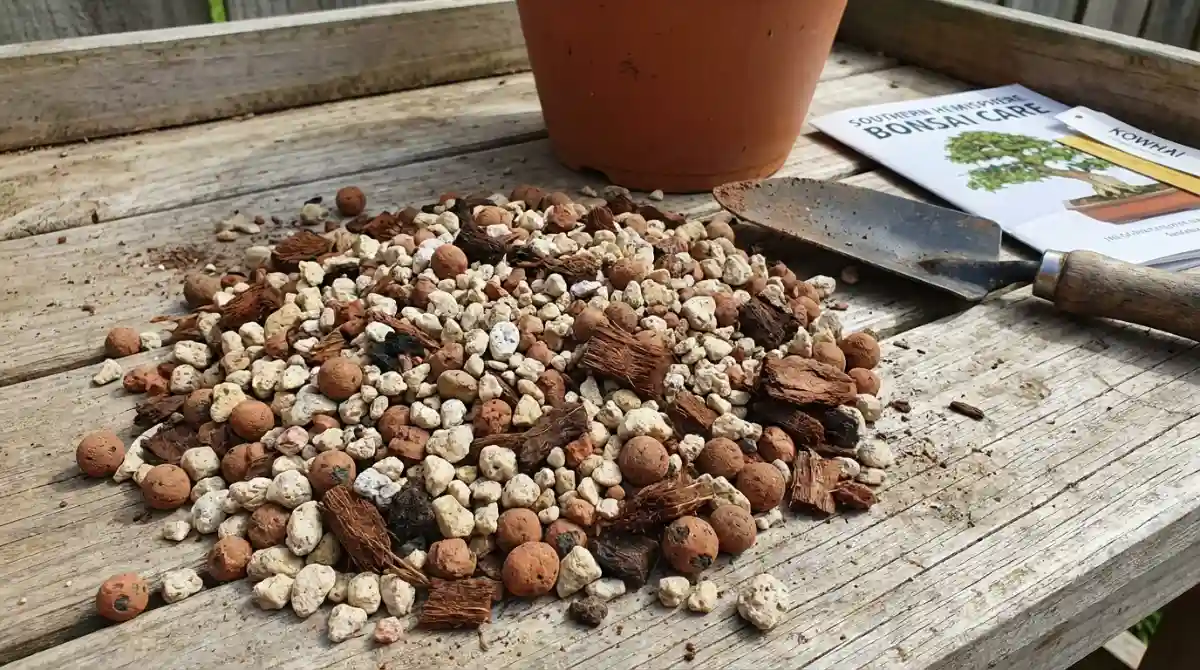
A fast-draining, aerated, and moisture-retentive soil mix is essential. A common blend for Totara and Rimu includes:
- 40% Pumice: Provides excellent drainage and aeration.
- 30% Akadama: Retains moisture and nutrients while offering good structure.
- 20% Bark (fine grade): Improves organic matter and moisture retention.
- 10% Zeolite or Scoria: Enhances drainage and nutrient exchange.
2. When to Repot
Young Totara and Rimu may need repotting every 1-2 years, while mature specimens can go 3-5 years between repots. The best indicator is when roots fill the pot, circling the root ball. Repotting should be performed in early spring, just before the first flush of new growth. This timing allows the tree to recover quickly.
3. The Repotting Process
Carefully remove the tree from its pot. Gently untangle and prune back about 20-30% of the older, thicker roots, focusing on removing circling roots. Leave a good amount of fine feeder roots intact. Place a layer of fresh soil mix at the bottom of the pot, position the tree, and backfill with more mix, ensuring no air pockets. Water thoroughly after repotting and place the tree in a sheltered, shaded location for several weeks to recover.
Developing Ancient-Looking Trunks
One of the most captivating aspects of mature bonsai is a thick, well-tapered trunk that conveys age and resilience. With Totara and Rimu, this is a long-term project, but highly rewarding. Techniques include allowing sacrificial branches to grow freely to thicken the trunk, then removing them once desired girth is achieved. Air layering can also create new trees with an already substantial base.
For an even more ancient aesthetic, consider incorporating deadwood techniques like Jin (stripped branches) and Shari (stripped trunk sections). These can dramatically enhance the character of your bonsai, mimicking the effects of time and harsh weather on old trees in the wild. Always apply wood hardener to deadwood to prevent rot and decay.
Showcasing NZ Forest Aesthetics
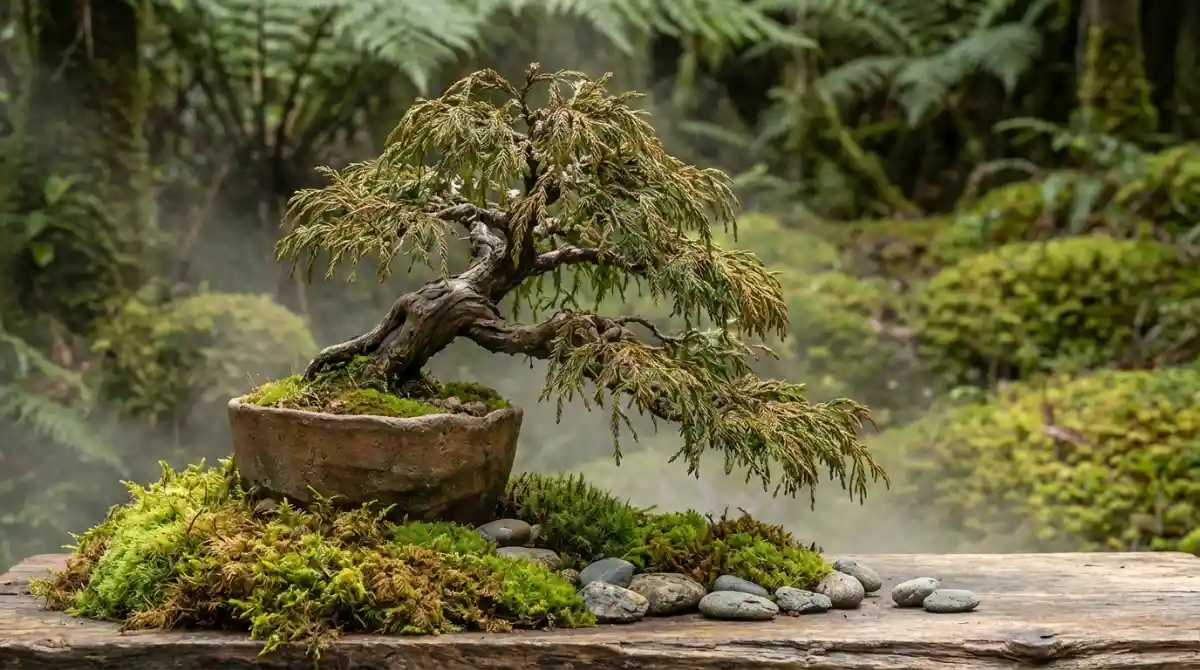
The ultimate goal for your Totara and Rimu bonsai is to evoke the distinctive beauty of New Zealand’s native forests. This means favoring naturalistic styling over overly formal or symmetrical designs. Consider cascading styles for Rimu to highlight its unique weeping foliage, or upright, gnarled forms for Totara to emphasize its strength.
Incorporating natural elements such as native rocks (pumice, greywacke) or moss can further enhance the sense of a miniature landscape. Group plantings (forests or saikei) featuring multiple Totara or Rimu trees can create a powerful illusion of scale and depth, truly bringing a piece of the Aotearoa wilderness into your garden. Remember that thoughtful totara bonsai care extends beyond just the tree; it encompasses the entire aesthetic presentation.
Frequently Asked Questions (FAQ)
How often should I water my totara bonsai?
Watering frequency depends on various factors: temperature, humidity, pot size, and soil mix. Generally, Totara bonsai prefer consistently moist but not waterlogged soil. During summer, this might mean daily watering, while in winter, it could be once a week or less. Always check the soil surface; water when the top inch or two feels dry to the touch.
What’s the best time to prune Rimu bonsai?
The best time for major structural pruning of Rimu bonsai is in early spring, just before new growth emerges. Light maintenance pruning, such as pinching back new shoots to maintain shape, can be done throughout the growing season (spring to early autumn), but avoid heavy pruning during peak summer or deep winter.
Can I grow Totara bonsai indoors?
Totara (and Rimu) are outdoor species native to temperate climates and generally do not thrive long-term indoors. They require a distinct seasonal cycle, ample airflow, and specific light conditions that are difficult to replicate inside a typical home. If brought indoors temporarily for display, ensure it’s a short period and the tree receives adequate light and humidity.
What pests commonly affect NZ native bonsai?
Common pests that can affect Totara and Rimu bonsai include aphids, scale insects, and spider mites. Regular inspection of your trees, especially under leaves and in branch axils, is key for early detection. Organic pest control methods like neem oil or insecticidal soap are often effective if applied consistently.
How do I know when to repot my totara bonsai?
The primary indicator for repotting is when the roots have filled the pot, often seen by roots circling the bottom or even emerging from drainage holes. Gently lift the tree from its pot; if the root ball holds its shape densely, it’s time for a repot. Young trees need repotting more frequently (1-2 years), while older, established trees can go 3-5 years.
References/Sources
- Bonsai Society of New Zealand. (Current Publication). Native Bonsai: A Cultivation Guide.
- Dawson, J. W., & Lucas, R. (2018). New Zealand’s Native Trees: An Illustrated Guide. Potton & Burton.
- Hagstrom, J. (2015). The Art of Bonsai: Design, Cultivation, and Care. Timber Press. (Adapted for Southern Hemisphere context).
- New Zealand Plant Conservation Network. (n.d.). Podocarpus totara and Dacrydium cupressinum species profiles. Retrieved from www.nzpcn.org.nz