Southern Hemisphere Bonsai Fundamentals
What You Will Learn
Master Southern Hemisphere bonsai for beginners! Learn about native species, seasonal care, watering, pruning, and essential tools in our expert guide.
Table of Contents
Southern Hemisphere Bonsai Fundamentals: Your Beginner’s Guide
Unlock the secrets of successful bonsai cultivation in the unique seasonal rhythm of the Southern Hemisphere. This guide is tailored for every southern hemisphere bonsai for beginners enthusiast.
Key Takeaways (TL;DR)
- Southern Hemisphere seasons are opposite to Northern, dictating unique care schedules.
- Start with native species for easier adaptation to local climates.
- Adjust watering, fertilising, pruning, and repotting based on local seasonal cues.
- Invest in essential beginner tools for proper care and shaping.
- Embrace patience and observation – key to your bonsai journey.
Embarking on the art of bonsai in the Southern Hemisphere presents a unique and rewarding journey. Unlike traditional bonsai literature that often assumes Northern Hemisphere seasons, your success hinges on understanding and adapting to our distinct climatic calendar. This comprehensive guide, specifically crafted for southern hemisphere bonsai for beginners, will equip you with the foundational knowledge to cultivate stunning miniature trees that thrive in your local environment.
Forget everything you thought you knew about traditional autumns in September or springs in March. For us, the cycle is beautifully reversed, and this reversal is the cornerstone of effective bonsai care. Let’s delve into the fundamentals, ensuring your first foray into bonsai is not just successful, but deeply enjoyable.
Understanding Southern Hemisphere Seasons for Bonsai
The most crucial adjustment for any southern hemisphere bonsai for beginners is to recalibrate their understanding of seasons. While the Northern Hemisphere experiences spring from March to May, our spring arrives from September to November. This fundamental difference dictates everything from watering schedules to repotting times, and ignoring it is a common pitfall for newcomers.
Here’s a quick overview of how our seasons align and what they generally mean for your bonsai:
- Summer (December – February): Peak growth, high watering needs, active feeding. Protection from intense midday sun might be necessary.
- Autumn (March – May): Growth slows, leaves may change colour and drop for deciduous species. Reduce feeding and gradually decrease watering. Prepare for dormancy for some species.
- Winter (June – August): Dormancy for many temperate species. Minimal watering, no feeding. Protection from severe frosts is vital, especially for less hardy species.
- Spring (September – November): Bud burst, rapid growth begins. Increase watering and fertilising. Repotting season for most species.
“The rhythm of the Southern Hemisphere is unique. Master its pulse, and your bonsai will flourish.”
Choosing Your First Native Bonsai Species
For southern hemisphere bonsai for beginners, selecting a native species is often the wisest choice. These trees are inherently adapted to your local climate, requiring less intervention to thrive and offering a higher chance of success. They understand the rainfall patterns, temperature fluctuations, and sunlight intensity of their homeland.
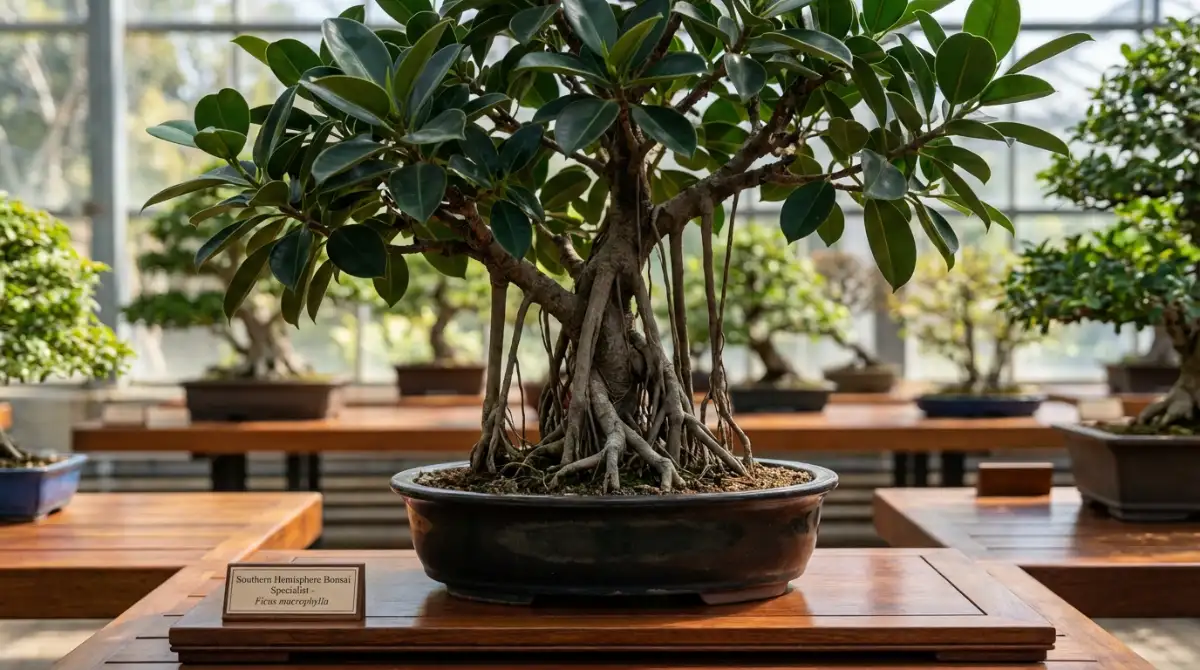
Consider these excellent native options:
- Australia: Many varieties of Ficus (e.g., Ficus macrophylla), Leptospermum (Tea Tree), Melaleuca (Paperbark), Callistemon (Bottlebrush), and certain Eucalypts make fantastic bonsai. They are generally robust and resilient.
- New Zealand: Podocarpus (Totara), Coprosma, and the iconic Metrosideros excelsa (Pohutukawa) are popular choices, offering diverse foliage and flowering potential.
- South Africa: Portulacaria afra (Spekboom or Elephant Bush) is incredibly forgiving, drought-tolerant, and excellent for beginners. Indigenous Ficus and Olea (Wild Olive) species are also strong contenders.
When choosing, look for healthy plants with a good trunk base, a strong root system, and compact growth. Avoid plants with yellowing leaves, pests, or signs of stress.
Basic Care Principles Adapted for Southern Climates
Consistent and appropriate care is paramount for your bonsai’s health. For southern hemisphere bonsai for beginners, adapting these principles to our seasons is critical. Here’s a step-by-step approach to essential care:
1. Watering in the Southern Hemisphere
Watering is the most frequent and often misunderstood aspect of bonsai care. The golden rule: water thoroughly when the topsoil feels slightly dry to the touch.
- Summer (Dec-Feb): Your bonsai will likely need daily, sometimes twice-daily, watering due to heat and active growth.
- Autumn (Mar-May): Gradually reduce frequency as temperatures drop and growth slows.
- Winter (Jun-Aug): Water sparingly, perhaps once a week or less, only when the soil is significantly dry. Overwatering in winter can lead to root rot.
- Spring (Sep-Nov): As growth resumes, increase watering frequency, monitoring closely for new shoots.
2. Fertilising Schedule
Bonsai in small pots quickly deplete nutrients. Fertilising replenishes these, but timing is everything.
- Active Growth (Spring & Summer): Fertilise regularly (e.g., every 2-4 weeks with liquid feed, or according to slow-release product instructions). Use a balanced fertiliser.
- Dormancy (Winter): Do not fertilise during dormancy.
- Autumn (Mar-May): Reduce or stop fertilising as growth slows to harden off new growth before winter.
3. Pruning & Shaping
Pruning maintains the bonsai’s shape, promotes ramification (branching), and encourages miniaturisation.
- Structural Pruning: Best done in late winter (August) or early spring (September) before major growth, or after leaf drop for deciduous trees.
- Maintenance Pruning: Throughout spring and summer (Sep-Feb) to control growth, pinch back new shoots, and maintain the desired silhouette.
- Wiring: Can be done throughout the growing season, but careful monitoring is needed to prevent wire biting into the bark.
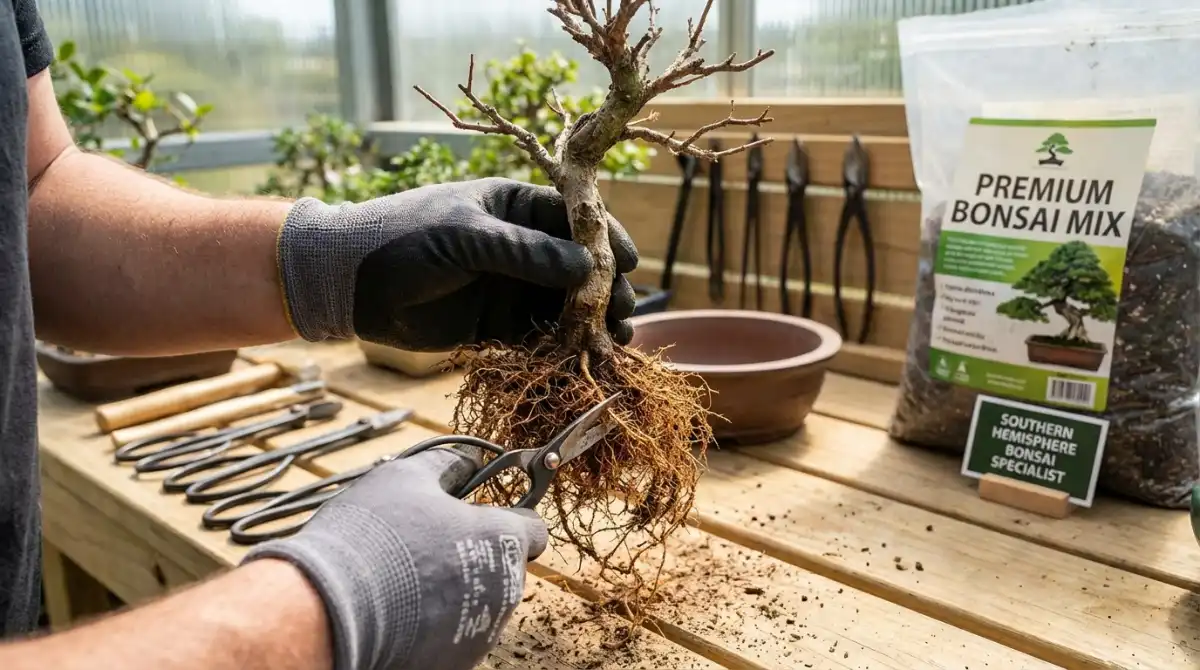
4. Repotting
Repotting refreshes the soil, trims roots, and encourages vigorous new growth. The timing is crucial.
- Timing: The ideal time for most species in the Southern Hemisphere is late winter to early spring (August-October), just as buds begin to swell.
- Frequency: Young, fast-growing trees might need repotting every 1-2 years; older, established trees every 3-5 years.
- Soil Mix: Use a fast-draining, air-retentive bonsai soil mix.
Essential Tools for Beginners
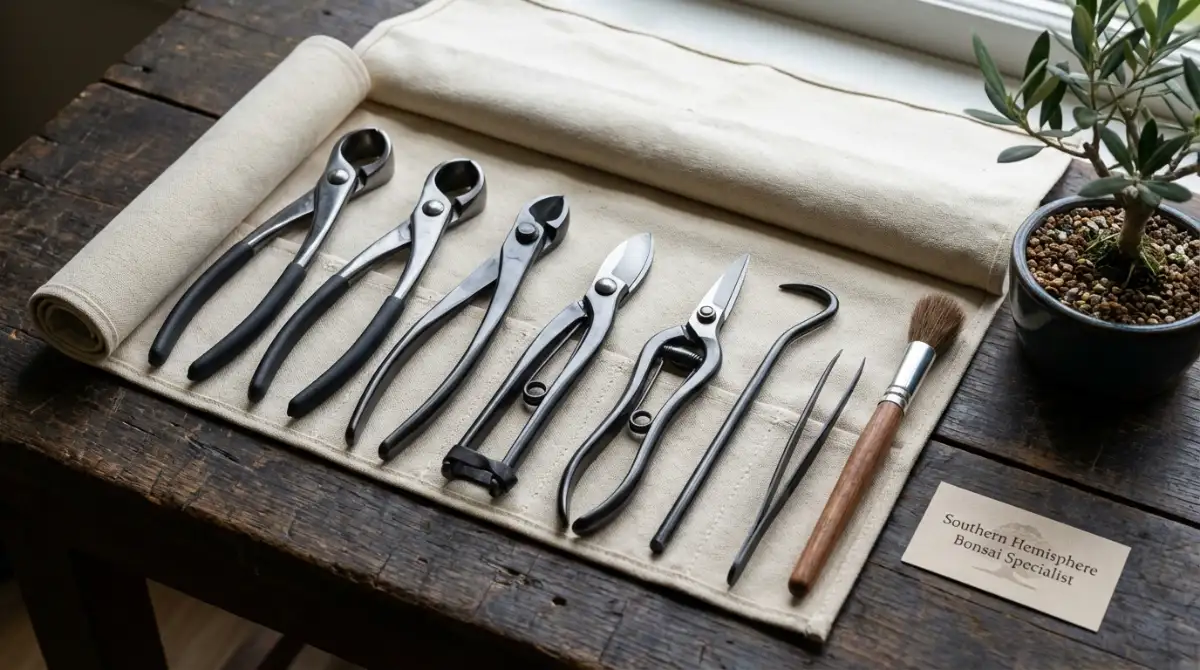
While you can start with basic garden shears, investing in a few specialised tools will greatly enhance your experience and the health of your bonsai. For southern hemisphere bonsai for beginners, quality tools make a big difference.
- Concave Cutters: Essential for making clean cuts that heal flush with the trunk, preventing ugly knobs.
- Wire Cutters: Designed to cut wire without damaging branches, crucial for safe wire removal.
- Bonsai Shears: Fine-tipped scissors for delicate leaf pruning and small branch trimming.
- Soil Scoop / Chopstick: For working soil into the roots during repotting and removing old soil.
- Watering Can with Fine Rose: Delivers gentle, even watering to avoid disturbing the soil.
Action Checklist: Your First Year Bonsai Journey
- ✅ Dec-Feb (Summer): Water daily, fertilise regularly, protect from extreme heat.
- ✅ Mar-May (Autumn): Reduce watering & fertilising, observe leaf drop, prepare for dormancy.
- ✅ Jun-Aug (Winter): Water sparingly, protect from frost, plan spring repotting/pruning.