Southern Hemisphere Bonsai Care

bonzai.co.nz
What You Will Learn
Unlock the secrets to thriving bonsai in the Southern Hemisphere with our comprehensive care calendar. Discover seasonal guides, regional species, and expert tips for summer, autumn, winter, and spring.
Southern Hemisphere Bonsai Care: Seasonal Guides & Regional Species
For dedicated bonsai enthusiasts and newcomers alike, understanding the unique rhythms of the Southern Hemisphere is paramount. Forget the traditional Northern calendar; your trees thrive on an inverted cycle. This guide provides an essential Southern Hemisphere bonsai care calendar, ensuring your botanical masterpieces flourish year-round, from the vibrant summer growth to the serene winter dormancy.
Table of Contents
Understanding Southern Hemisphere Seasons for Bonsai
The fundamental difference in Southern Hemisphere bonsai care lies in the seasonal reversal. When it’s summer in the Northern Hemisphere, it’s winter down south, and vice-versa. This inversion dictates everything from watering schedules to repotting times. Acknowledging this geographical shift is the first step toward successful bonsai cultivation, moving beyond generic advice to a truly localized and effective approach.
Seasonal Care Routines
Summer (December – February)
Southern Hemisphere summers are periods of intense growth and high energy. Trees require frequent watering, sometimes multiple times a day, especially during heatwaves. Fertilize regularly with a balanced formula. Protect sensitive species from the harshest midday sun and strong winds. Pruning for shape and maintenance can be done, but avoid heavy structural pruning that could stress the tree.
Autumn (March – May)
Autumn is a crucial transition period. Growth slows, and trees begin to prepare for dormancy. Reduce watering as temperatures drop. This is often the last opportunity for repotting hardy species, ensuring they have time to recover before winter. Continue light fertilization, switching to lower nitrogen formulas. Deciduous species will begin to display their beautiful autumnal colours.
Winter (June – August)
Winter is a time of rest. Deciduous trees will shed their leaves, while evergreens slow their metabolic rate. Watering should be significantly reduced, only when the soil surface is dry to the touch. Protect trees from frost, especially tender species. Avoid fertilization and heavy pruning during this dormant period, focusing instead on structural planning and wire removal.
Spring (September – November)
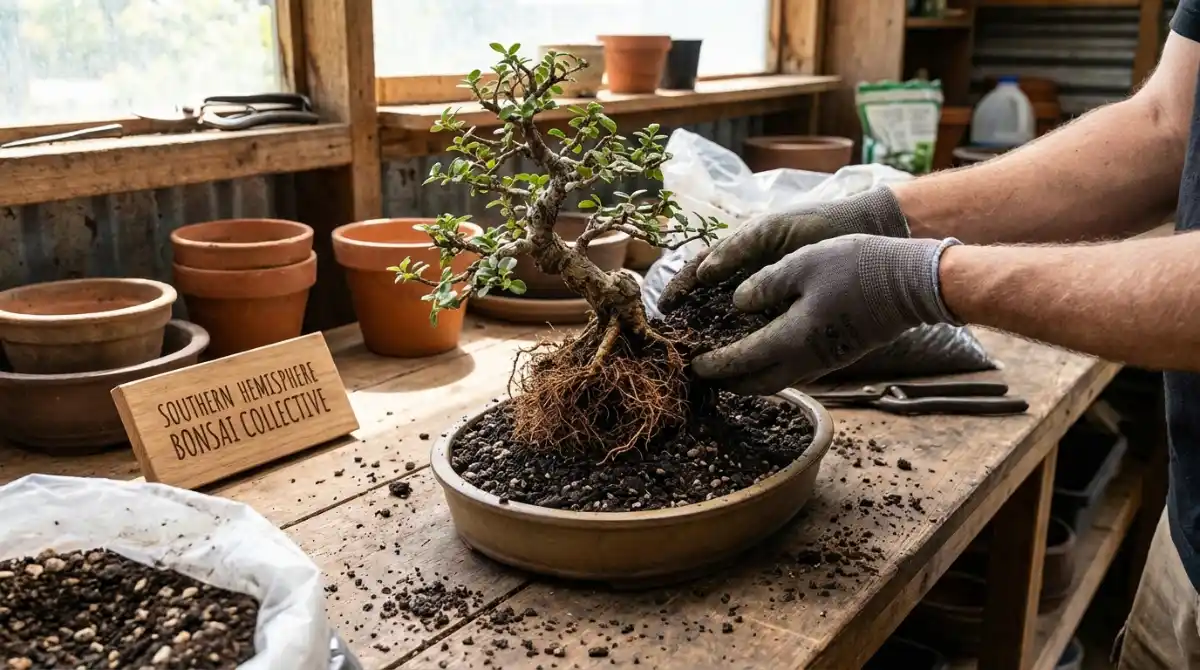
As temperatures rise, trees awaken from dormancy. This is the most active period for repotting and major structural pruning. New buds will swell and burst. Increase watering gradually and begin a regular feeding schedule with a higher nitrogen fertilizer to support new growth. Watch carefully for emerging pests as the weather warms.
Native Species for Southern Hemisphere Bonsai
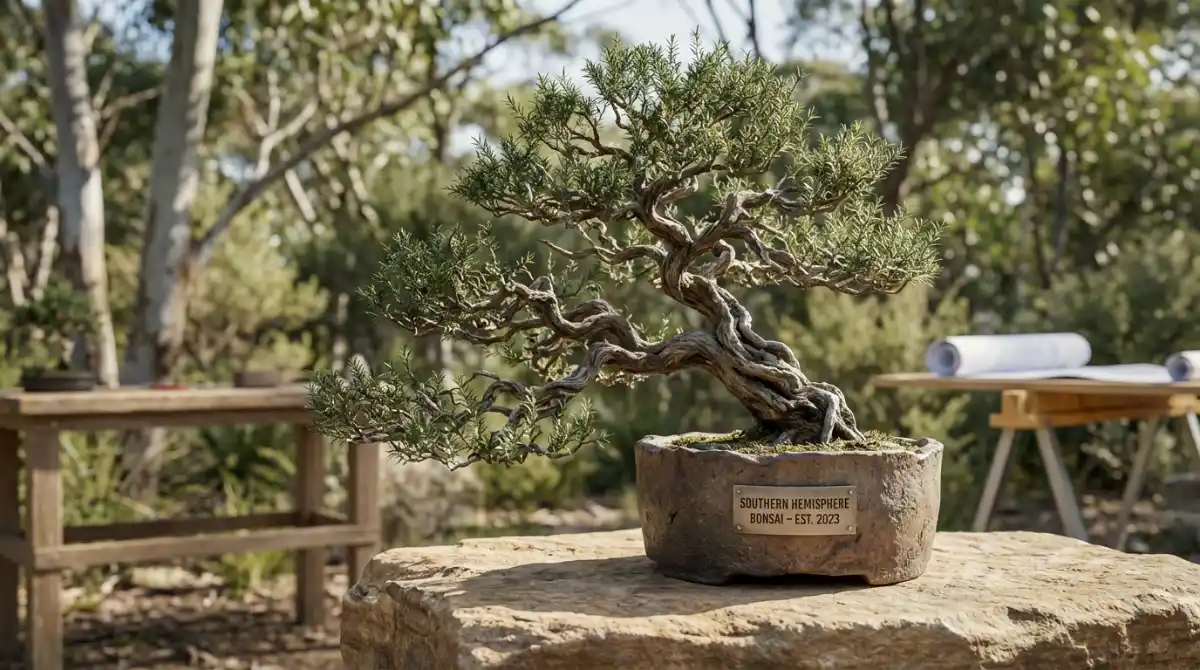
Embracing native species not only connects your bonsai practice to the local environment but also often results in more resilient and thriving trees. Consider species like the Australian Tea Tree (Leptospermum), Lilly Pilly (Syzygium), various Eucalypts, or the New Zealand Pohutukawa (Metrosideros excelsa). South Africa offers options like the Spekboom (Portulacaria afra), while parts of South America provide unique subtropical varieties. These species are naturally adapted to the local climate, simplifying care and enhancing the authentic aesthetic of your collection.
Pest and Disease Management in Southern Climates
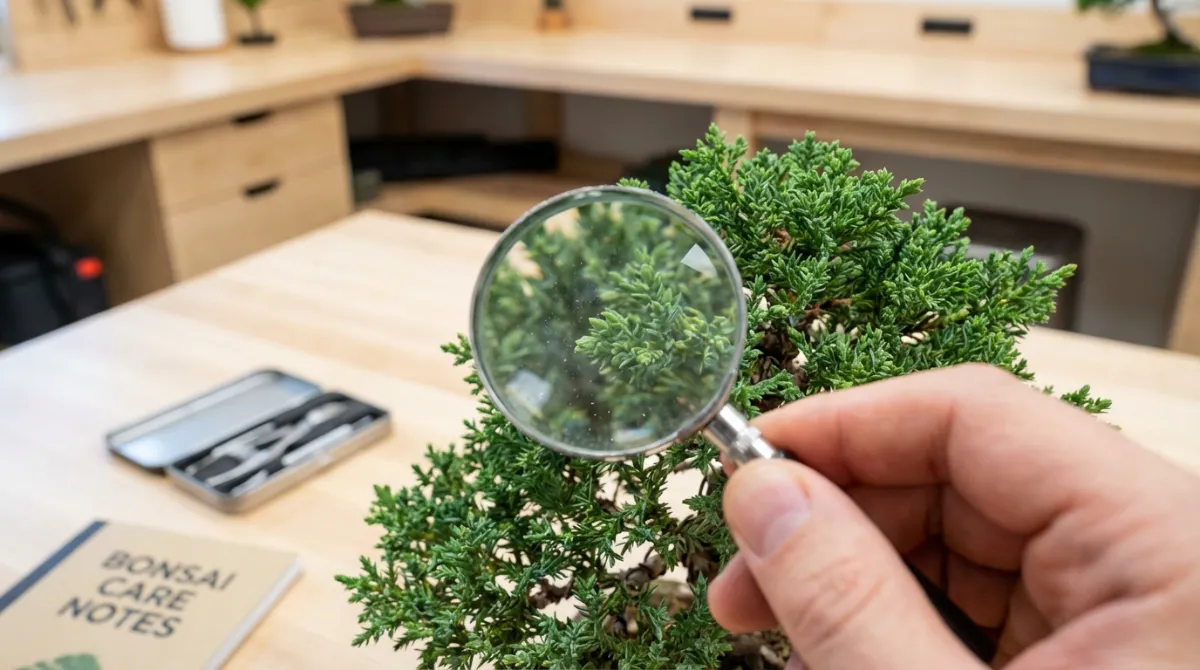
Vigilance is key to managing pests and diseases. Southern Hemisphere climates, with their varied conditions, can present unique challenges. In warmer, humid summers, fungal issues and sap-sucking insects like aphids or scale can proliferate. Dry winters might encourage spider mites. Regularly inspect your trees, especially during seasonal transitions. Utilize organic pest control methods where possible, such as neem oil or insecticidal soaps, and ensure good air circulation to prevent fungal problems. Proactive care is the best defense.
Mastering bonsai in the Southern Hemisphere is a rewarding journey that truly bridges traditional botany with a modern, maker-culture ethos. By following a tailored Southern Hemisphere bonsai care calendar and understanding your local environment, you can cultivate a thriving collection that reflects both artistry and resilience.