Mastering Your Pine Bonsai Watering Schedule for Optimal Health
Discover the art and science behind watering your pine bonsai. This comprehensive guide will equip you with the knowledge to maintain the health and beauty of your miniature pine trees, ensuring they thrive for years to come. To set yourself up for success, check out Bonsai Starter Kit Comparison: What to Look For. Before you dive in, learn about Choosing Your First Bonsai Tree to ensure a good start. Proper watering is the cornerstone of successful bonsai cultivation, vital for preventing both drought and waterlogging. For those just starting their journey, consider enrolling in Bonsai Workshops for Beginners: Where to Learn, or connect with fellow enthusiasts by Finding Local Bonsai Clubs and Societies.
The Pine Bonsai Watering Schedule is the specific routine for providing water to your miniature pine tree, crucial for its survival and growth. This involves assessing soil dryness, determining the right frequency, and using proper techniques to ensure the root system receives adequate moisture without becoming waterlogged or dehydrated, promoting vibrant health.
Understanding Pine Bonsai Watering Needs
Pine bonsai, like all living plants, require water for photosynthesis and nutrient transport. However, their specific needs differ significantly from other bonsai species due to their unique physiology and the shallow nature of their containers. The right Pine Bonsai Watering Schedule considers factors like soil composition, pot size, and climate. Neglecting these details can quickly lead to stress or decline, impacting the tree’s overall vigor and appearance.
Unlike garden plants with deep root systems, pine bonsai are confined to small pots, making them highly susceptible to both overwatering and underwatering. Their needles are adapted to conserve water, but the limited soil volume means they dry out faster than larger trees. Understanding these unique needs is the first step toward a successful watering regimen.

Substrates and Drainage
The type of soil mix you use is paramount. Pine bonsai thrive in well-draining, airy substrates that prevent waterlogging. Common mixes include akadama, pumice, and lava rock, often in specific ratios to optimize drainage and aeration. A good substrate allows water to pass through, yet retains enough moisture for the roots to absorb vital nutrients. Poor drainage is a leading cause of root rot, a fatal condition for pine bonsai roots, as it deprives them of essential oxygen.
Ensure your bonsai pot has adequate drainage holes. Some enthusiasts even place mesh over these holes to prevent soil loss while maintaining proper water flow. This setup is crucial for establishing an effective watering schedule. Without it, even perfect timing won’t save your tree from saturated roots, which can lead to fungal diseases and decay. Always use a high-quality, specialized Bonsai Soil, Fertilization & Nutrition tailored for pines.
Environmental Factors
Environmental conditions play a huge role in how frequently your pine bonsai needs water. Factors such as temperature, humidity, and wind exposure directly impact the rate of evaporation from the soil and transpiration from the needles. A hot, windy day will dry out the soil much faster than a cool, humid one, necessitating more frequent checks. Sunlight intensity also contributes; trees in full sun will need more frequent watering due to increased metabolic activity.
Indoor pine bonsai generally require less frequent watering than outdoor ones due to more stable temperatures and lower air circulation. However, indoor environments can also be very dry, especially with heating or air conditioning, necessitating careful observation. Adjusting your watering based on daily conditions and local weather forecasts is a skill developed over time and keen observation.
The Core Pine Bonsai Watering Schedule Strategy
The golden rule for watering pine bonsai is to water thoroughly when the soil surface starts to feel dry to the touch, and then allow it to dry out slightly before watering again. This approach prevents both overwatering and underwatering, creating a healthy cycle for your tree’s root system. Consistency is key, but rigid adherence to a calendar schedule can be detrimental as conditions change daily. Focus on the tree’s actual needs.
Assessing Soil Moisture
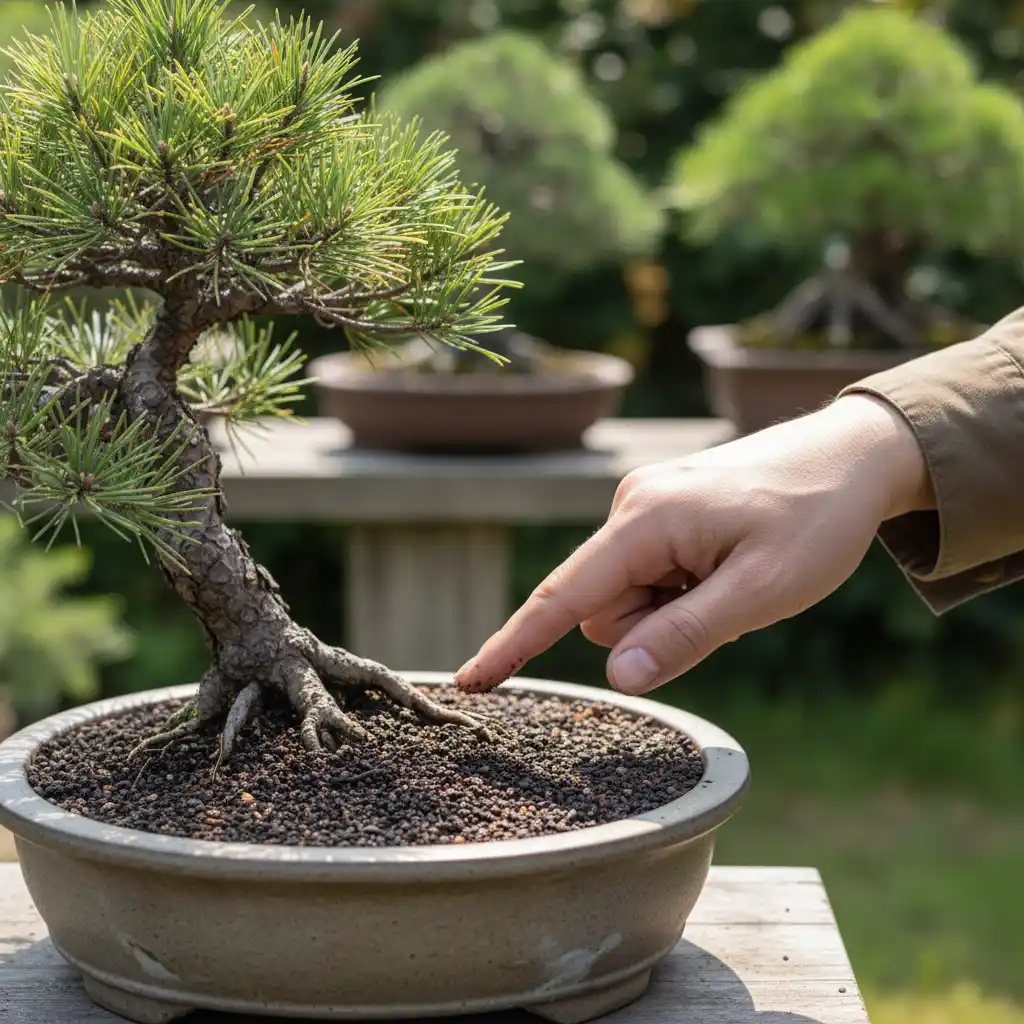
The best way to determine if your pine bonsai needs water is by feeling the soil. Insert your finger about an inch into the soil. If it feels dry, it’s likely time to water. For deeper assessment, especially with larger pots, a moisture meter can be helpful, but the ‘finger test’ remains a reliable method for experienced growers. Lift the pot to feel its weight; a light pot often indicates dry soil, while a heavy pot suggests it’s still moist.
Observing the color of the soil can also provide clues. Dry soil tends to be lighter in color than moist soil. Don’t just look at the very top layer; ensure the soil beneath has also dried sufficiently. This prevents the upper layer from drying out too quickly, giving a false sense of readiness for watering. Beginners might find it useful to keep a log of watering times and conditions to better learn their tree’s rhythm.
When and How to Water
When the soil indicates it’s time, water thoroughly until water drains freely from the bottom of the pot. Many experts recommend watering twice: once to wet the surface, waiting a few minutes for absorption, and then watering a second time to ensure deep penetration. This ensures the entire root ball is adequately hydrated and prevents dry pockets within the soil.
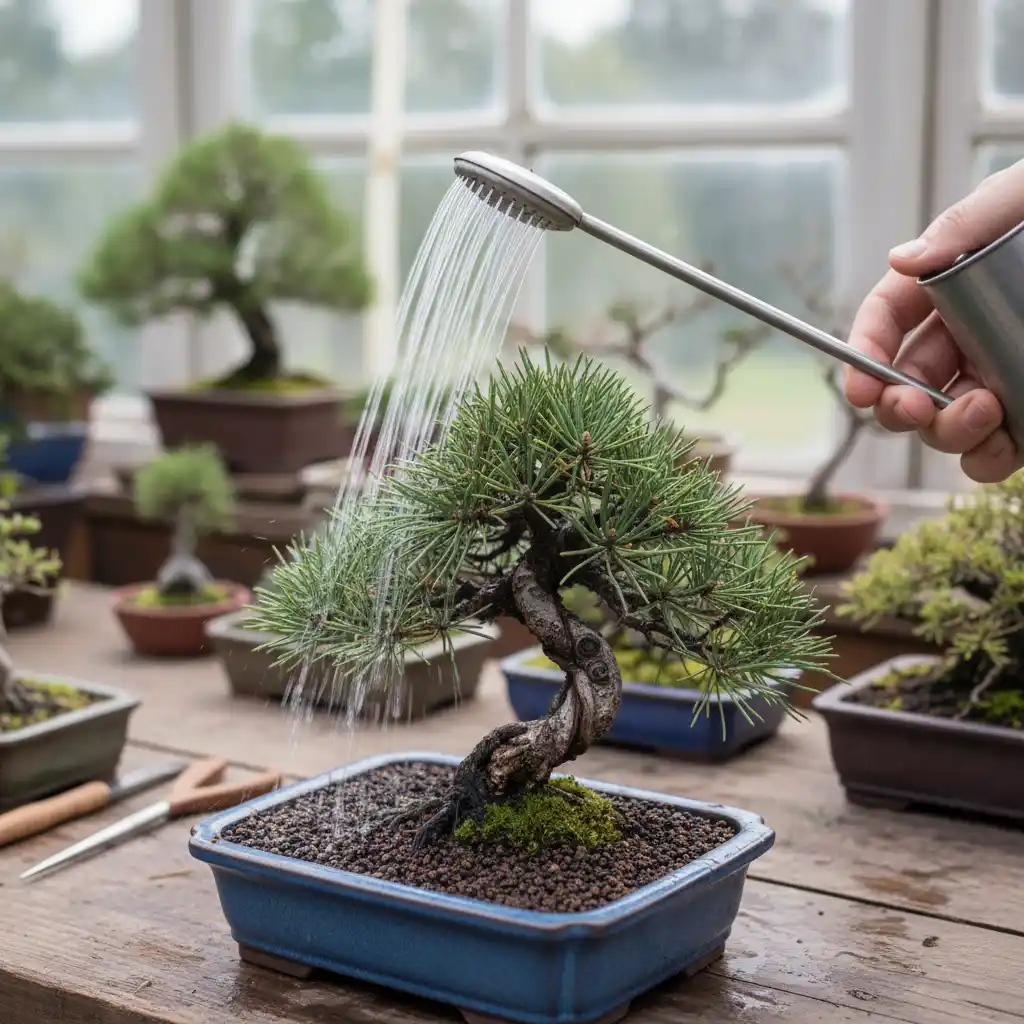
Use a fine-rosed watering can to avoid disturbing the soil or damaging delicate surface roots. Water the entire surface of the soil, not just around the trunk, to encourage a balanced root system. During warmer months, you might need to water daily or even twice a day. In cooler periods, watering might only be necessary every few days. The specific Pine Bonsai Watering Schedule will adapt significantly to seasonal changes, demanding your constant attention.
Seasonal Adjustments to Your Watering Routine
Bonsai trees respond to the seasons, and their watering needs change accordingly. It’s essential to modify your routine throughout the year to match their metabolic activity and environmental shifts. A static watering schedule will not yield the best results for your pine bonsai; flexibility and observation are key.
Spring and Summer Watering
These are periods of active growth for pine bonsai. Higher temperatures, increased sunlight, and greater transpiration mean your trees will need significantly more water. During peak summer, especially in hot climates, daily watering might be necessary. Check your soil twice a day if temperatures are consistently above 85°F (30°C) to prevent rapid dehydration.
New foliage and developing candles (new shoots) indicate a vigorous tree that is actively consuming water. Be generous but still ensure proper drainage. Water early in the morning or late in the afternoon to minimize water loss due to evaporation during the hottest part of the day. Consistent moisture during these growth phases supports strong development and needle health. For more detailed guidance on seasonal practices, review our comprehensive guide on Spring Care for Bonsai SH.
Autumn and Winter Watering
As temperatures drop and daylight hours shorten, pine bonsai enter a period of dormancy. Their metabolic rate slows down, and their water requirements decrease dramatically. Overwatering during these months can be particularly dangerous, as the roots are less active and more susceptible to rot due to prolonged wetness and colder temperatures.
During autumn, gradually reduce watering frequency as growth slows. In winter, especially if the tree is exposed to freezing temperatures, water only when the soil is dry to the touch, perhaps every few days or even once a week. If the soil is frozen, the tree cannot absorb water, so ensure adequate moisture before hard freezes. For trees stored in protected, unheated areas, continue to monitor soil moisture closely. Proper winter care is critical for their survival and health.
Common Watering Mistakes to Avoid
Even experienced bonsai enthusiasts can make watering mistakes. Awareness of these pitfalls is the first step to avoiding them and maintaining a healthy pine bonsai. The most common issues stem from either too much or too little water, both of which can lead to severe stress or death if not addressed promptly.
Overwatering Risks (Root Rot)
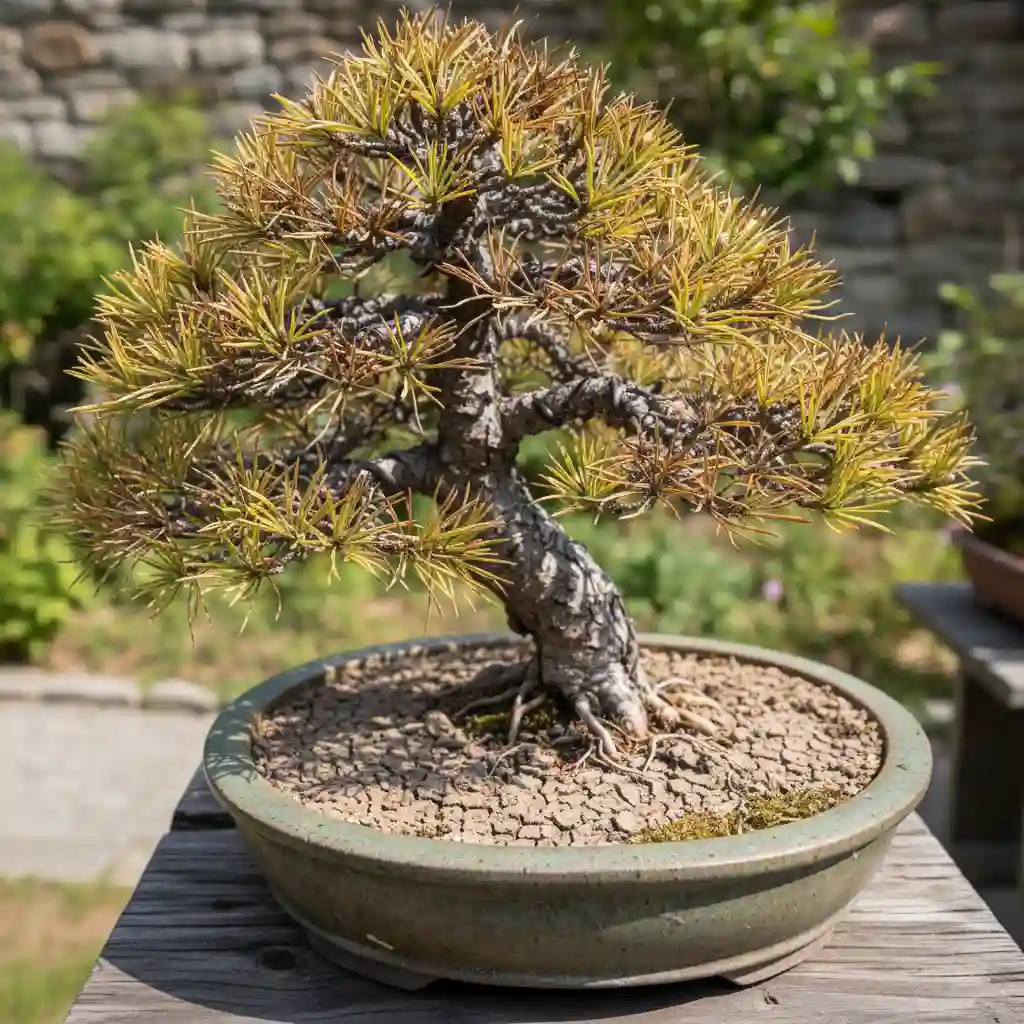
Overwatering is arguably the most common cause of death for bonsai, especially pines. When soil remains constantly saturated, oxygen is driven out, and the roots essentially drown and begin to rot. Signs of overwatering include yellowing needles, dropping needles, soft, mushy roots if examined during repotting, and a persistent musty smell from the soil. For more on preventing and treating such issues, including a wider range of threats, refer to Common Bonsai Pests & Diseases: Identification & Treatment. To prevent root rot, always ensure excellent drainage and allow the top layer of soil to dry out before watering again. If you suspect overwatering, temporarily reduce watering frequency and allow the soil to dry out more completely between waterings. Sometimes, repotting into a fresh, well-draining substrate might be necessary to save the tree and remove damaged roots. Implement a careful Pine Bonsai Watering Schedule to avoid this fatal error.
Underwatering Signs
While less common than overwatering, underwatering can also harm your pine bonsai. Signs include dry, brittle needles that may turn brown, stiff branches, and a general lack of vigor. The soil will be noticeably hard and pulling away from the sides of the pot. Severe underwatering can lead to irreversible damage, widespread needle drop, and ultimately, the death of the tree.
If you notice these signs, water your bonsai thoroughly immediately. For severely dry trees, you may need to submerge the entire pot in a basin of water for 15-30 minutes until air bubbles stop rising. This ensures complete rehydration of the soil. Adjust your Pine Bonsai Watering Schedule to prevent future dehydration by increasing frequency or volume as needed, especially during hot, dry periods.
Advanced Watering Techniques and Tips
Beyond the basic routine, several advanced techniques can further refine your watering strategy and contribute to the overall health and vigor of your pine bonsai. These methods address specific environmental challenges or enhance water absorption, giving your tree an extra edge. For those looking to optimize their routine, explore Advanced Bonsai Watering Systems & Tips.
Misting and Humidity
While misting doesn’t replace soil watering, it can be beneficial, especially for indoor pine bonsai or in very dry climates. Misting increases local humidity around the tree, which can help reduce transpiration stress and keep needles clean from dust and pests. Use distilled or rainwater for misting to avoid mineral buildup on needles and potential spotting.
However, misting too frequently without proper air circulation can also promote fungal issues, particularly in humid environments. It’s a supplementary practice, not a primary watering method. Consider placing your bonsai on a humidity tray filled with pebbles and water to passively increase ambient moisture around the plant, especially during dry indoor conditions.
Rainwater Collection
Rainwater is ideal for watering bonsai. It’s free of chlorine, fluoride, and other minerals often found in tap water that can accumulate in the soil over time and alter pH, potentially harming sensitive roots. Collecting rainwater is a simple and eco-friendly way to provide your pine bonsai with the best possible hydration source, mimicking its natural environment.
If rainwater isn’t available, tap water can be used, but allowing it to sit out for 24 hours can help dissipate chlorine. For very hard water, consider using filtered water or periodically flushing the soil with distilled water to prevent mineral buildup. Regularly monitor your tree’s health and adapt your water source if you notice any signs of mineral stress.
Conclusion and Ongoing Care Tips
Mastering the Pine Bonsai Watering Schedule is a journey of observation and adjustment. There’s no single, fixed schedule that works for every tree in every situation. By understanding your tree’s specific needs, monitoring soil moisture, and adapting to seasonal and environmental changes, you can provide the ideal conditions for your pine bonsai to flourish and display its full beauty.
Regularly inspect your tree for any signs of stress, and don’t be afraid to adjust your routine as needed. With consistent care and attention to detail, your pine bonsai will reward you with years of beauty and tranquility. For those interested in the broader evolution and regional significance of bonsai, consider exploring topics such as The Future of NZ Native Bonsai: Innovation, Sustainability & Global Recognition, or dive into specific species like the Pohutukawa Bonsai: Care & Styling for NZ’s Christmas Tree. Happy growing!
References
For more general information on bonsai care, you can visit: Bonsai Care on Wikipedia