Other NZ Natives (Manuka, Kowhai)
Discover comprehensive manuka bonsai care, Kowhai, Tōtara, and other NZ native species. Expert guides, styling tips, and seasonal care for stunning results.
bonzai.co.nz
What You Will Learn
Discover comprehensive manuka bonsai care, Kowhai, Tōtara, and other NZ native species. Expert guides, styling tips, and seasonal care for stunning results.
Exploring Other NZ Natives for Bonsai: Manuka, Kowhai & More
The art of bonsai truly shines when we look beyond traditional species and embrace the unique character of native flora. In the Southern Hemisphere, New Zealand offers a treasure trove of plants perfect for this ancient craft. From the delicate blossoms of Manuka to the vibrant golden bells of Kowhai, these indigenous species not only create stunning visual displays but also connect us deeply with the rich biodiversity of Aotearoa. This comprehensive guide will explore the specific regional seasonality and modern, visual-first care techniques to help you cultivate magnificent manuka bonsai care and other native NZ wonders.
Table of Contents
- Manuka (Tea Tree) Bonsai: Care & Floral Display
- Kowhai Bonsai: Golden Flowers & Pods
- Tōtara (Podocarpus totara) Bonsai
- Native Flax (Harakeke) as Bonsai Accent
- Other Promising NZ Species
- General Care for Diverse NZ Natives
- Unique Styling Opportunities
- Frequently Asked Questions (FAQ)
- References/Sources
Manuka (Tea Tree) Bonsai: Care & Floral Display
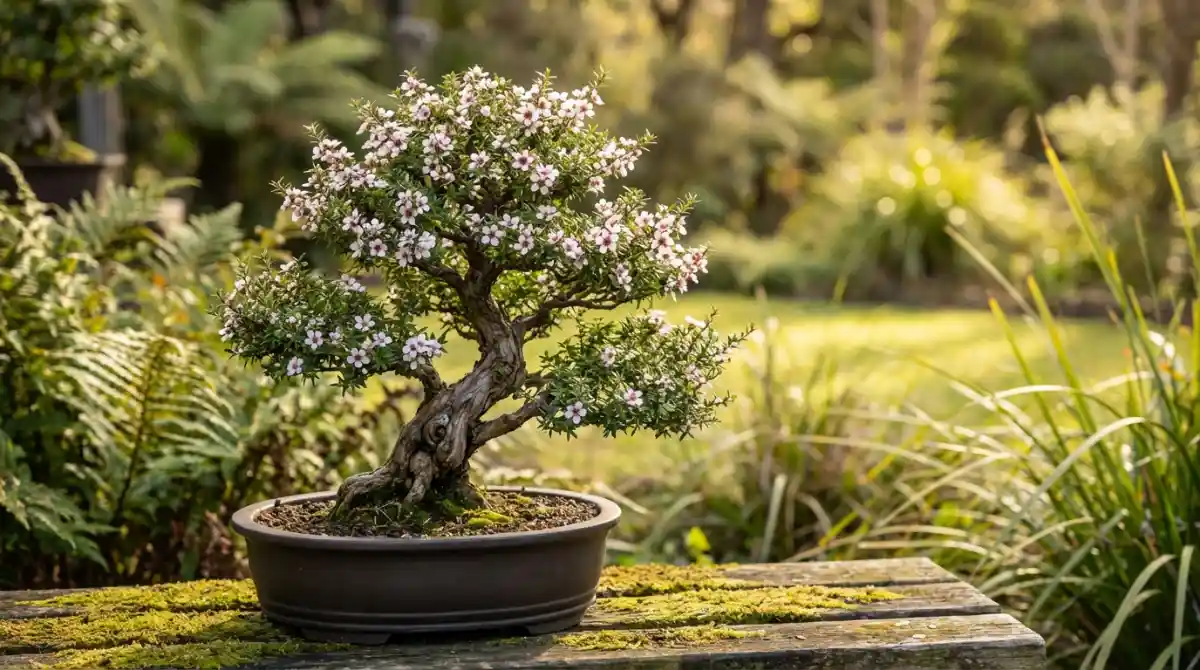
The quintessential New Zealand Manuka (Leptospermum scoparium) is a fantastic candidate for bonsai, renowned for its delicate, prolific flowers and rugged bark. These resilient shrubs can be shaped into beautiful, mature-looking specimens, offering a stunning display of white, pink, or red blooms, particularly from late winter through spring. Mastering manuka bonsai care is incredibly rewarding.
1. Light Requirements
Manuka thrive in full sun. Place your Manuka bonsai in a position where it receives at least 6-8 hours of direct sunlight daily. While it tolerates some partial shade, abundant flowering and compact growth are best achieved with maximum light exposure. In intense summer heat, some afternoon shade can prevent scorching, especially for younger plants.
2. Watering Protocol
Manuka prefer consistent moisture but do not like soggy roots. Water thoroughly when the top inch of soil begins to dry out. During hot, windy periods, this might mean daily watering, while in cooler seasons, it could be every few days. Reduce watering in winter when growth slows. Good drainage is paramount to prevent root rot.
3. Soil & Repotting
Use a well-draining, slightly acidic bonsai soil mix. A typical mix could be akadama, pumice, and lava rock in equal parts, with a small amount of organic matter. Repot young Manuka every 1-2 years in early spring before new growth begins. Older, established specimens may only need repotting every 3-5 years. Trim about 1/3 of the root ball and remove any circling or thick roots.
4. Pruning & Wiring
Manuka respond well to regular pruning. Shape your tree after flowering to encourage new growth and maintain compactness. Hard pruning should be done in early spring. Be mindful that Manuka can be somewhat brittle, so wire with care, especially younger branches. Remove wire before it bites into the bark, typically within 2-3 months. For branch selection, aim for a natural, often windswept aesthetic that complements its native habitat.
5. Feeding Manuka Bonsai
Feed Manuka with a balanced liquid fertilizer during the growing season (spring to late summer), reducing frequency in autumn and stopping in winter. Consider a slow-release granular fertilizer in spring for sustained nourishment. Reduce nitrogen if you want to promote flowering over vegetative growth.
Kowhai Bonsai: Golden Flowers & Pods
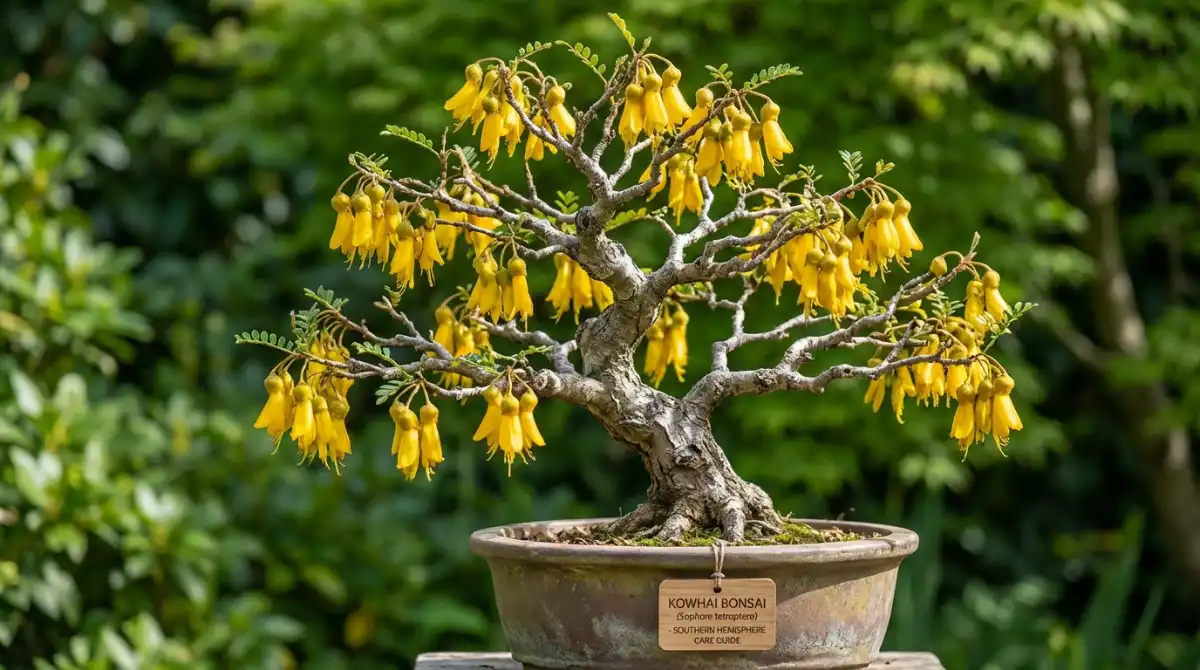
Kowhai (Sophora microphylla or Sophora tetraptera), with its iconic bright yellow, bell-shaped flowers, is another beloved New Zealand native that makes a striking bonsai. Known as a national symbol, its cascading blossoms and distinctive seed pods add immense character. Cultivating Kowhai as a bonsai offers a unique challenge and a beautiful reward.
1. Light & Temperature
Kowhai prefers a sunny to partially shaded position. While they appreciate ample light, protection from the harshest midday summer sun in warmer regions can prevent leaf scorch. They are generally hardy but need protection from severe frosts when young or newly repotted.
2. Watering Kowhai
Like Manuka, Kowhai requires consistent moisture but detests waterlogging. Water thoroughly when the surface of the soil dries. In summer, this might be daily; in winter, reduce significantly. Ensure excellent drainage. Kowhai can be prone to root rot if kept too wet.
3. Pruning & Shaping
Kowhai can be vigorous growers. Prune after flowering to shape the tree and encourage ramification. Harder structural pruning is best done in late winter or early spring before buds swell. Wiring can be applied, but branches are quite brittle, so use caution and ensure the wire doesn’t mark the bark. Frequent pinch-pruning of new shoots helps maintain a compact form.
Tōtara (Podocarpus totara) Bonsai
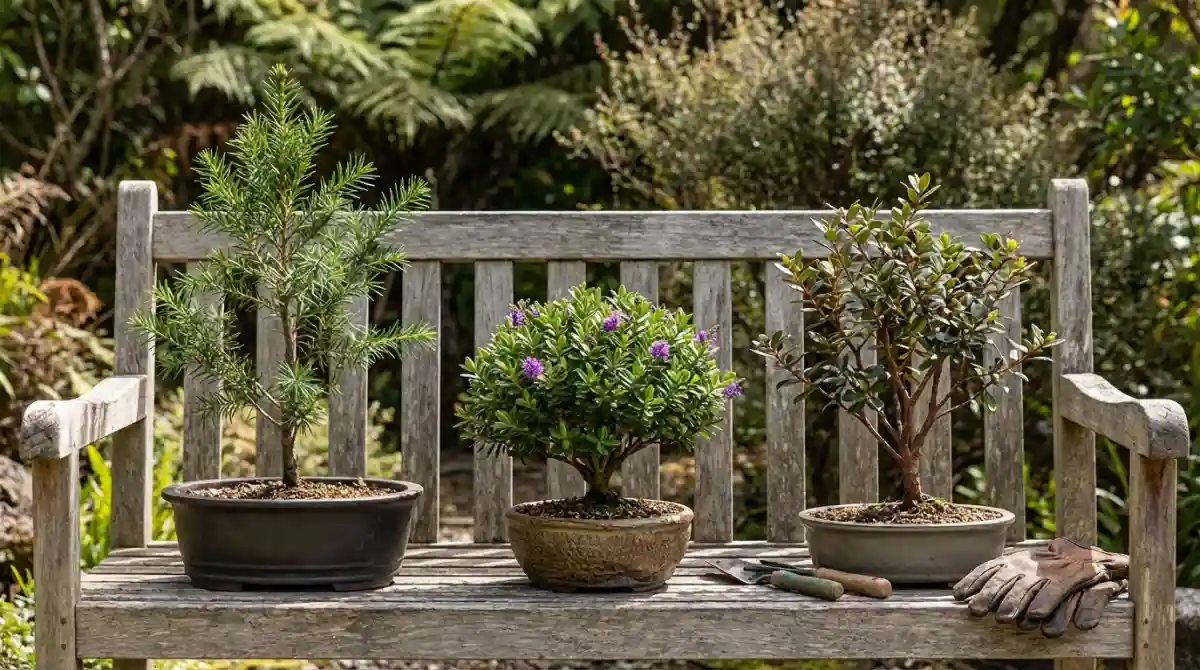
The mighty Tōtara, a revered native conifer, can be transformed into a majestic bonsai. Known for its durable timber and ancient presence in the NZ landscape, Tōtara bonsai develop a wonderfully rugged bark and dense foliage. They are slower growing but offer a profound sense of age and permanence. Provide full sun to partial shade, consistent moisture (avoiding wet feet), and protect from extreme winter winds. Repotting is less frequent than deciduous species, perhaps every 3-5 years.
Native Flax (Harakeke) as Bonsai Accent
While not a bonsai tree itself, Harakeke (Phormium cookianum or Phormium tenax), or Native Flax, makes an outstanding accent plant in bonsai displays. Its strong, architectural leaves provide a dramatic contrast to the woody forms of trees, embodying the spirit of the New Zealand landscape. Small specimens can be grown in shallow pots alongside your main bonsai, providing seasonal interest and a touch of realism to your compositions.
Other Promising NZ Species
Beyond Manuka, Kowhai, and Tōtara, many other NZ natives hold excellent potential for bonsai:
- Pōhutukawa (Metrosideros excelsa): Known for its vibrant red Christmas blossoms, it can be styled into a stunning flowering bonsai, though it requires warmth.
- Rimu (Dacrydium cupressinum): Another magnificent conifer, similar to Tōtara in its stately appeal, with fine, drooping foliage.
- Hebe species: Many smaller Hebe varieties can be cultivated as mame or shohin bonsai, offering delicate flowers and compact forms.
- Kauri (Agathis australis): While challenging due to its size and slow growth, young Kauri can be started as bonsai for a truly iconic native specimen.
General Care for Diverse NZ Natives
While each species has nuances, some universal principles apply to most New Zealand native bonsai:
- Climate Adaptation: Many NZ natives are adapted to temperate, often windy, coastal or montane conditions. Provide good air circulation.
- Watering: Consistent moisture is key, but never waterlog. Use free-draining bonsai soil.
- Sunlight: Most prefer full sun, though some appreciate partial shade during the hottest part of summer.
- Fertilisation: Regular feeding during the growing season with a balanced liquid fertilizer is beneficial.
- Pest & Disease: Keep an eye out for common pests like aphids or scale. Good hygiene and proper care boost natural resistance.
“Working with native species offers a profound connection to the landscape. It requires observation, patience, and respect for the plant’s natural tendencies to truly excel.”
Unique Styling Opportunities
New Zealand’s unique environment, shaped by strong winds, diverse landscapes, and ancient forests, provides a rich source of inspiration for styling native bonsai. Consider:
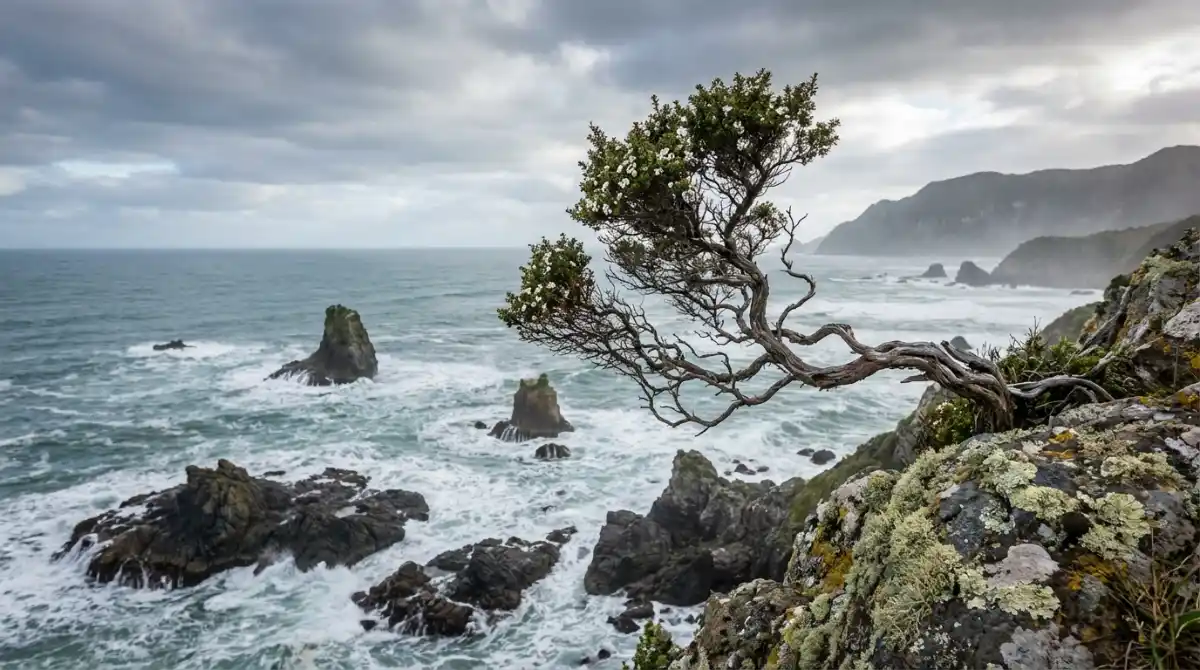
- Windswept (Fukinagashi): Mimic trees exposed to coastal gales. Manuka and Kowhai can excel in this style.
- Root-over-rock (Sekijoju): Utilize the strong root systems of species like Tōtara to cling to weathered stone, evoking a rugged mountain landscape.
- Literati (Bunjingi): For species with naturally elegant forms and sparse foliage, emphasizing the trunk’s line and character.
- Forest (Yose-ue): Create miniature forest scenes using multiple specimens of the same species, capturing the essence of an ancient native bush.
Embracing these native treasures for bonsai not only results in beautiful trees but also contributes to the appreciation and preservation of New Zealand’s unique botanical heritage. With careful attention to manuka bonsai care and the specific needs of other natives, you can cultivate living art that tells a story of the land.
Frequently Asked Questions (FAQ)
Q: How do I get Manuka to flower abundantly?
A: Abundant flowering in Manuka bonsai is encouraged by providing full sun (at least 6-8 hours daily), consistent watering without waterlogging, and fertilizing with a balanced or slightly phosphorus-heavy fertilizer during the growing season. Prune immediately after flowering to encourage new flower buds for the next season.
Q: Are NZ native bonsai suitable for beginners?
A: Many NZ natives, such as some Hebe species and robust Manuka, can be forgiving for beginners. However, others like Tōtara or Rimu require more patience due to slower growth rates. Starting with nursery stock rather than collected material is recommended for beginners.
Q: What is the best time to repot Kowhai bonsai?
A: The best time to repot Kowhai bonsai is in early spring, just before the new growth flush begins. This allows the tree to recover quickly and establish new roots during the active growing season. Ensure minimal root disturbance and use a well-draining soil mix.
Q: Can I grow native NZ bonsai indoors?
A: Most New Zealand native bonsai are outdoor species and require a period of dormancy or exposure to seasonal temperature fluctuations. While some may tolerate short periods indoors in very bright conditions, they will generally not thrive long-term indoors. Provide adequate airflow and light if bringing them inside temporarily.
References/Sources
- Dawson, J., & Lucas, R. (2000). New Zealand’s Native Trees. Craig Potton Publishing.
- The Bonsai Society of New Zealand. (n.d.). Growing Native Species as Bonsai. [Plausible resource on local bonsai techniques].
- Moore, L. B., & Edgar, E. (1970). Flora of New Zealand, Vol. II: Monocotyledones except Gramineae. Government Printer. [For botanical details on Harakeke].
- Royal Horticultural Society. (n.d.). Plant Factsheets & Care Guides. [General horticultural principles adapted for specific species].
- University of Waikato. (n.d.). Maori Plant Use: Kowhai and Manuka. [Ethnobotanical insights into native plants].