Melaleuca & Callistemon Bonsai: Styling & Maintenance
Master Melaleuca bonsai styling & Callistemon care with this expert guide. Learn species selection, wiring, seasonal maintenance, and repotting for native Australian bonsai.

Deep Dive
What You Will Learn
Master Melaleuca bonsai styling & Callistemon care with this expert guide. Learn species selection, wiring, seasonal maintenance, and repotting for native Australian bonsai.
Melaleuca & Callistemon Bonsai: Styling & Maintenance for Southern Hemisphere Natives
Embrace the vibrant beauty of Southern Hemisphere flora by cultivating Melaleuca and Callistemon species as bonsai. Known for their striking flowers and robust nature, these Australian and New Zealand natives offer unique styling opportunities and are remarkably resilient, making them ideal choices for both novice and experienced enthusiasts. This comprehensive guide will walk you through the essential techniques for successful melaleuca bonsai styling and callistemon care, transforming these beloved plants into living art.
Key Takeaways
- Species Selection: Opt for compact, small-leaf varieties of Melaleuca and Callistemon like M. armillaris or C. citrinus ‘Little John’ for best bonsai results.
- Styling Techniques: Both species respond well to wiring, clip-and-grow, and various styles including informal upright, slanting, and semi-cascade.
- Seasonal Care: Provide ample sunlight, consistent watering (especially in summer), and protect from severe frost. Fertilise during growing seasons.
- Repotting & Root Pruning: Repot young trees annually, older trees every 2-3 years, typically in late winter/early spring. Prune roots conservatively.
- Visual Learning: Observe your tree’s growth and adapt techniques for optimal health and aesthetic development.
Best Melaleuca & Callistemon for Bonsai
Selecting the right species is the cornerstone of successful bonsai cultivation, particularly for native plants like Melaleuca (Tea Tree) and Callistemon (Bottlebrush). Both genera offer diverse options, but for bonsai, focus on varieties known for their compact growth, smaller leaves, and vigorous ramification. These characteristics simplify the bonsai process and lead to more refined miniature trees.
- Melaleuca: Many species lend themselves well, but Melaleuca armillaris (Bracelet Honey Myrtle) with its fine foliage and weeping habit, Melaleuca linariifolia (Flax-leaf Paperbark) for its dense canopy, and Melaleuca decora (White Cloud Tree) are excellent choices. Look for cultivars with naturally smaller leaves. They often develop attractive fissured bark with age.
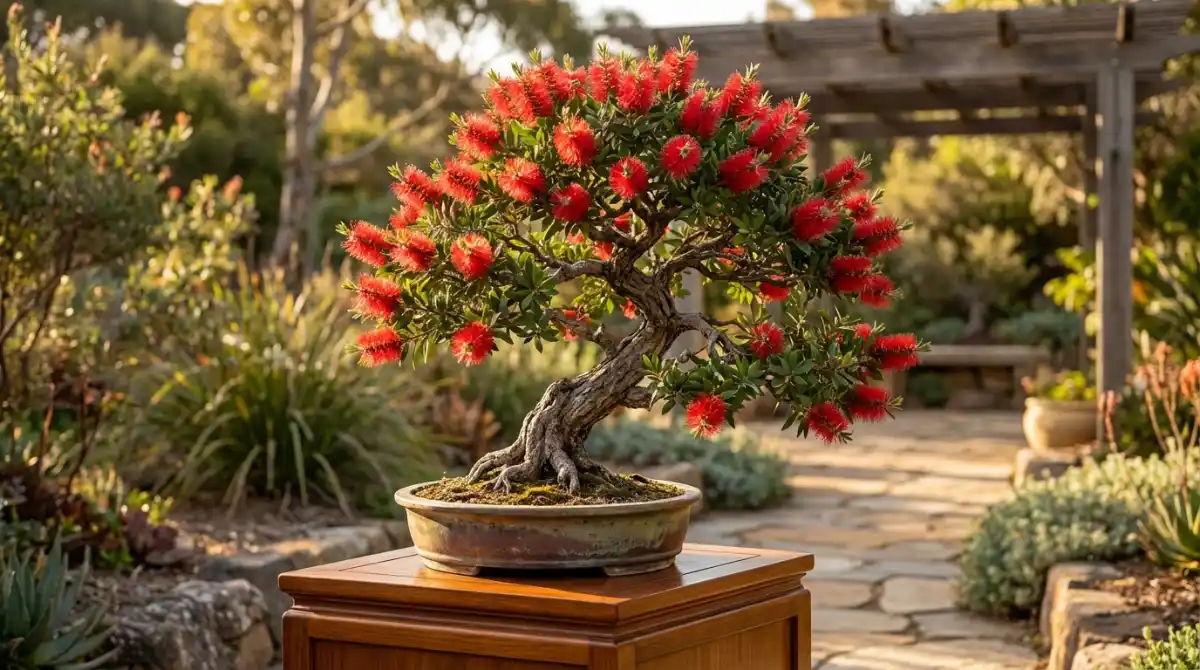
- Callistemon: Popular choices include Callistemon citrinus ‘Little John’ for its incredibly compact nature and small bottlebrush flowers, Callistemon salignus (Willow Bottlebrush) for its fine foliage and reddish new growth, and Callistemon viminalis (Weeping Bottlebrush) for its distinctive weeping form. The vibrant flowers of Callistemon are a major draw, adding seasonal interest.
When sourcing, prefer nursery stock that already shows some trunk thickness and interesting nebari (surface roots). This will give you a head start in developing a compelling bonsai form. Always inspect for pests and diseases before purchase.
Wiring & Shaping Techniques
Melaleuca bonsai styling and Callistemon shaping are rewarding processes that allow you to guide their natural growth into artistic forms. Both species are generally forgiving, but careful timing and technique are crucial to avoid damaging their pliable branches.
1. Preparing Your Tree for Wiring
- Timing is Key: The best time for wiring is during the cooler months (autumn through early spring) when the trees are less actively growing, or after a significant pruning session. Avoid wiring during peak heat or flowering.
- Prune First: Before wiring, perform an initial structural prune to remove unwanted branches, strong upright growth, or crossing branches. This clarifies your vision and reduces the amount of wiring needed.
- Observe Growth: Study your tree’s natural habit. Melaleucas often have a finer, more delicate branching structure, while Callistemons can be more upright and vigorous. Plan your desired style (e.g., informal upright, slanting, semi-cascade).
2. Applying Wire Correctly
- Material: Use anodised aluminium wire, as it’s softer and less likely to cut into the bark than copper wire, especially important for the delicate bark of some Melaleucas. Choose appropriate gauges for branch thickness.
- Anchoring: Always anchor your wire firmly, typically by wrapping it around the trunk or a stronger primary branch.
- Angle of Wrap: Wrap the wire at a 45-degree angle to provide optimal holding power. Avoid crossing wires or leaving large gaps. Ensure the wire is snug but not constricting.
- Working from Trunk Out: Start wiring thicker primary branches first, moving outwards to secondary and tertiary branches.
3. Shaping and Branch Placement
- Gentle Bending: Once wired, gently bend branches into their desired position. Melaleucas can be quite brittle, so proceed with caution. Callistemons are often more flexible.
- Branch Distribution: Aim for good branch distribution, avoiding “spokes” where branches emerge from the same point, and creating visual depth. Consider the front of your bonsai.
- Wire Removal: Monitor your wired branches closely. Melaleucas and Callistemons grow quickly, and wire can bite into the bark if left on too long. Remove wire when the branch holds its new position, typically within 2-6 months, depending on growth rate. Rewire if necessary after a period of rest.

Seasonal Care Schedule
Mastering the seasonal care of your Melaleuca and Callistemon bonsai is vital for their health and continued development. Being native to diverse Australian and New Zealand climates, these species generally appreciate warmth and sunlight but require protection from extreme conditions. This action checklist details year-round maintenance to ensure your native bonsai thrives.
Spring Checklist (Southern Hemisphere: Sep-Nov)
- ✅ Repotting: Perform main repotting and root pruning as new growth begins to swell.
- ✅ Pruning: Lightly prune new shoots to maintain shape and encourage ramification.
- ✅ Fertilising: Begin a balanced liquid or slow-release fertiliser program.
- ✅ Watering: Increase watering frequency as temperatures rise.
Summer Checklist (Southern Hemisphere: Dec-Feb)
- ✅ Watering: Water daily, sometimes twice, especially during hot, windy periods. Do not let the soil dry out completely.
- ✅ Sunlight: Ensure full sun exposure, but protect from extreme afternoon heat if scorching is observed.
- ✅ Pest Check: Regularly inspect for common pests like scale and spider mites.
- ✅ Pruning: Pinch back new growth to maintain form and encourage density.
Autumn Checklist (Southern Hemisphere: Mar-May)
- ✅ Fertilising: Reduce fertiliser strength or frequency, gradually ceasing by late autumn.
- ✅ Watering: Gradually reduce watering frequency as temperatures drop and evaporation slows.
- ✅ Structural Pruning: Good time for more substantial structural pruning if needed, but avoid heavy work.
- ✅ Winter Prep: Plan for winter protection, especially for younger or more sensitive specimens.
Winter Checklist (Southern Hemisphere: Jun-Aug)
- ✅ Protection: Protect from severe frosts. Unheated greenhouses or frost covers are ideal.
- ✅ Watering: Water sparingly, only when the top inch of soil is dry. Avoid waterlogging.
- ✅ Pest Check: Continue occasional pest checks, especially for overwintering pests.
- ✅ Styling: A good time for initial wiring or carving work if the tree is dormant and protected.
Repotting & Root Pruning
Repotting and root pruning are critical maintenance tasks for any bonsai, ensuring healthy root development and continued vigour. For Melaleuca and Callistemon, timing and technique are crucial to prevent stress and promote strong growth after the procedure.
1. When to Repot Your Native Bonsai
- Frequency: Young Melaleuca and Callistemon bonsai (under 5 years) typically require repotting annually to promote rapid root development. Older, established trees can be repotted every 2-3 years.
- Timing: The ideal time for repotting is in late winter to early spring, just as the buds begin to swell and before active growth fully commences. This allows the tree to quickly recover in warmer weather.
- Signs of Needing Repotting: Roots emerging from drainage holes, water sitting on the soil surface for too long, or reduced vigour are all indications that your tree is root-bound.
2. Preparing for Repotting
- Tools: Gather your bonsai tools: root hook, root scissors, concave cutters, and new pot.
- Substrate: Prepare a well-draining bonsai soil mix. A typical mix for Australian natives might include akadama, pumice, and a small amount of organic material, ensuring excellent drainage and aeration while retaining some moisture.
- Pot Preparation: Ensure your new pot (if changing) has drainage holes and screen, and that tie-down wires are ready to secure the tree.
3. Root Pruning Technique
- Remove from Pot: Carefully remove the tree from its old pot. Use a root hook to gently tease out the outer layer of roots and old soil.
- Conservative Pruning: Melaleucas and Callistemons can be sensitive to aggressive root pruning. Aim to remove about 20-30% of the root mass, focusing on thick, downward-growing roots and circling roots. Leave a healthy network of fine feeder roots.
- Nebari Development: Take the opportunity to improve the nebari by carefully arranging surface roots.
4. Post-Repotting Care
- Placement: Immediately after repotting, place the tree in a sheltered, semi-shaded location for 2-4 weeks to recover, protecting it from strong winds and direct harsh sun.
- Watering: Water thoroughly immediately after repotting, ensuring the new soil settles around the roots. For the first few weeks, keep the soil consistently moist but not waterlogged.
- No Fertiliser: Avoid fertilising for at least 4-6 weeks after repotting to allow the roots to heal and new growth to establish.

Cultivating Melaleuca and Callistemon as bonsai offers a unique connection to the natural beauty of Australia and New Zealand. By understanding their specific needs for melaleuca bonsai styling, thoughtful pruning, and consistent care, you can create stunning miniature landscapes that reflect their robust spirit and vibrant charm. Patience and observation are your greatest tools in this rewarding journey.
Frequently Asked Questions
A: Yes, many species of Melaleuca and Callistemon are considered excellent for beginners due to their vigorous growth, resilience, and ability to recover well from pruning. Their native hardiness makes them quite forgiving.
A: These species prefer consistent moisture but good drainage. During hot, dry periods, they may need watering daily or even twice a day. In cooler months, reduce frequency, watering only when the top inch of soil feels dry. Always check soil moisture before watering.
A: While they can tolerate short periods indoors, Melaleuca and Callistemon thrive with ample sunlight and fresh air. They are best grown outdoors year-round, ideally with protection from extreme elements like harsh frost or scorching summer sun.
A: Light maintenance pruning (clip-and-grow) can be done throughout the growing season to refine shape and encourage ramification. Heavier structural pruning is best performed in late winter or early spring before new growth emerges, or after flowering for Callistemons if you wish to enjoy their blooms.