Mastering Australian Native Bonsai
Master advanced Australian native bonsai care with our Southern Hemisphere guide. Learn seasonal techniques, specific species needs, and pest management for thriving native bonsai.

Deep Dive
What You Will Learn
Master advanced Australian native bonsai care with our Southern Hemisphere guide. Learn seasonal techniques, specific species needs, and pest management for thriving native bonsai.
Mastering Australian Native Bonsai: Advanced Southern Hemisphere Care
Embark on a journey to cultivate breathtaking miniature landscapes using Australia’s unique flora. This comprehensive guide will equip you with the advanced knowledge and specific techniques required for exceptional Australian native bonsai care, tailored for the Southern Hemisphere’s distinct seasons. Discover the secrets to nurturing these resilient beauties, transforming them into living works of art that capture the spirit of the bush.
Introduction to the World of Australian Native Bonsai
The art of bonsai, traditionally rooted in Asian horticulture, finds a unique and captivating expression when applied to Australia’s indigenous flora. Far from being a mere imitation, Australian native bonsai leverages the incredible diversity and resilience of species perfectly adapted to our continent’s varied climates. From the robust Ficus to the delicate Leptospermum, these plants offer a distinct aesthetic and a rewarding challenge for the dedicated enthusiast. Mastering Australian native bonsai care requires understanding their unique growth habits, environmental preferences, and how they differ from their traditional Asian counterparts.
Cultivating native species in miniature allows for the creation of bonsai that tell a distinctly Australian story, reflecting the rugged beauty of our landscapes. Their natural hardiness often translates into robust bonsai material, though specific care regimens are vital for optimal health and refined styling. This guide will delve into advanced techniques, ensuring your native bonsai not only survive but truly thrive, embodying the spirit of their wild origins.
Essential Seasonal Care for Southern Hemisphere Bonsai
Unlike many traditional bonsai species, Australian natives require a nuanced approach to seasonal care, especially when considering the Southern Hemisphere’s reversed cycles. Understanding these specific needs is fundamental to advanced Australian native bonsai care and achieving long-term success. We’ll outline critical tasks for each season, focusing on optimal health and development.
Spring: A Season of Growth and Renewal
As temperatures rise and days lengthen, Spring ignites vigorous growth in most Australian natives. This is a critical period for shaping and encouraging healthy development.
- Repotting (September – October): For deciduous natives and most evergreens, repotting is best done early in spring before vigorous new growth hardens. Inspect roots, trim as needed, and refresh soil with a well-draining, slightly acidic mix.
- Pruning for Structure: Heavy structural pruning can be performed now, as the plant has ample energy for recovery. Remove unwanted branches, wire where necessary to establish primary movement.
- Increased Watering: As growth accelerates, water frequency must increase. Monitor soil moisture daily.
- Fertilising: Begin a regular feeding schedule with a balanced, slow-release fertiliser or liquid feed, opting for lower phosphorus formulations to suit many Australian natives.
Spring Action Checklist:
- Repot appropriate species.
- Perform structural pruning and initial wiring.
- Increase watering frequency; monitor drainage.
- Initiate balanced, low-phosphorus fertilisation.
- Protect new growth from late frosts.
Summer: Thriving in the Heat
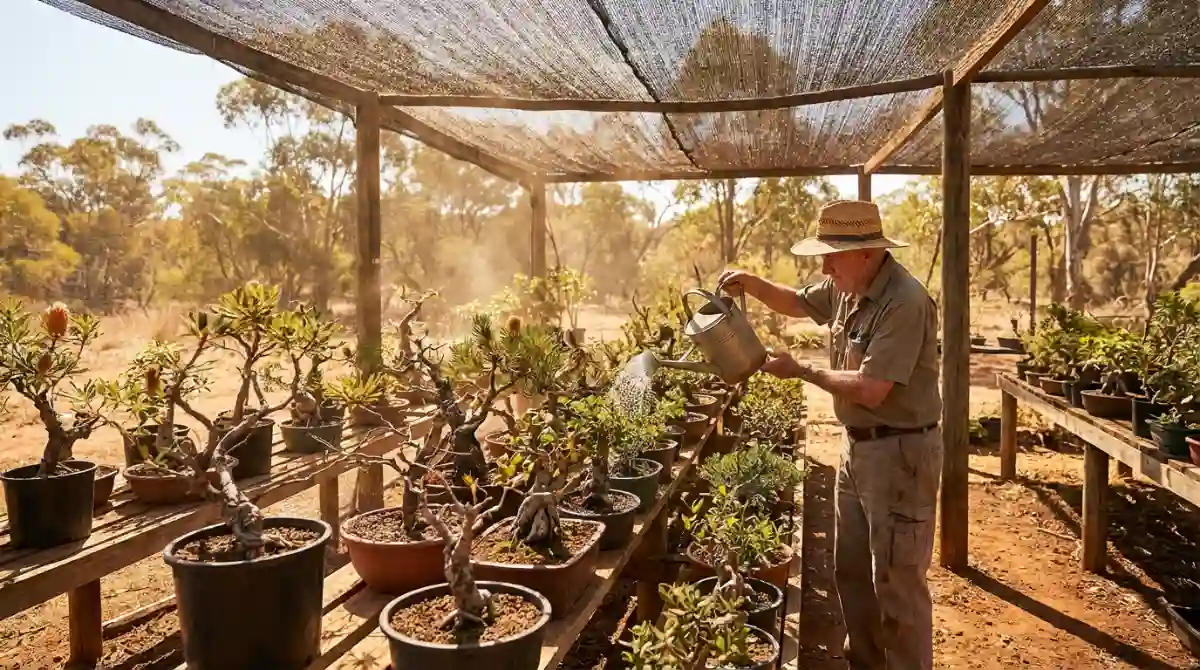
Australian summers can be harsh, requiring diligent attention to hydration and sun protection for your bonsai. Many natives are tough, but in a confined pot, they’re more vulnerable.
- Watering is Paramount: Daily, and often twice daily in extreme heat, is essential. Ensure water penetrates the root ball fully. Consider using larger drip trays with pebbles and water for humidity.
- Shade Protection: While many natives love sun, intense midday summer sun can scorch leaves and dry out pots too quickly. Provide afternoon shade, especially for younger or newly repotted specimens.
- Foliage Pruning: Light tip pruning can be done to maintain shape and encourage ramification, but avoid heavy defoliation during peak heat.
- Pest Monitoring: Warm weather can bring pests. Regularly inspect foliage and stems.
Autumn: Preparation and Protection
As temperatures cool, focus shifts from vigorous growth to preparing your bonsai for the cooler months. Root development is key during this period.
- Reduced Fertilising: Taper off high-nitrogen fertilisers. Switch to a lower-nitrogen, higher-potassium feed to harden off growth. Cease fertilising completely by late autumn for most species.
- Reduced Watering: As growth slows and evaporation decreases, reduce watering frequency. Overwatering in cooler temperatures can lead to root rot.
- Final Pruning: Light aesthetic pruning can tidy up the tree. Avoid heavy pruning that stimulates new growth that won’t have time to harden before winter.
- Site Selection: Start considering winter protection, moving sensitive species to sheltered locations.
Winter: Dormancy and Pruning
Winter is a period of slowed growth or dormancy for many natives, offering a chance for structural work without the immediate pressure of new foliage. Proper winter Australian native bonsai care ensures a strong start to spring.
- Minimal Watering: Water only when the soil surface is dry to the touch. Ensure excellent drainage to prevent waterlogging and frost damage to roots.
- Winter Protection: Protect less hardy species from severe frosts, especially coastal species. Move them indoors (in a cool, bright spot), to a greenhouse, or under eaves. Hardy species can remain outdoors in a sheltered spot.
- Dormant Pruning (Deciduous Natives): For deciduous Australian natives like some Ficus varieties, this is the ideal time for structural pruning and wiring while branches are bare.
- Wiring: Winter is a good time for applying and adjusting wiring as branches are less brittle and growth is minimal.
“The secret to truly mastering Australian native bonsai lies in respecting their inherent adaptability and providing consistent, thoughtful care that mirrors their natural cycles, even in miniature.”
Deep Dive: Specific Australian Native Bonsai Species Guides
While general principles apply, specific Australian native bonsai care varies significantly between species. Understanding these nuances is key to cultivating truly exceptional specimens.
Ficus Species (e.g., Ficus macrophylla, Ficus rubiginosa)
Australian native Ficus, such as the Moreton Bay Fig (F. macrophylla) and Port Jackson Fig (F. rubiginosa), are outstanding bonsai subjects. They are highly vigorous, form strong root systems, and readily produce aerial roots, creating dramatic styles. They are semi-deciduous to evergreen depending on climate and specific species.
- Watering: Abundant water during growth periods; slightly less in cooler months. They appreciate humidity.
- Pruning & Wiring: Respond extremely well to heavy pruning. Wire when branches are still young and pliable, checking frequently for wire bite due to rapid growth.
- Styling: Ideal for virtually any style, especially informal upright, banyan, and root-over-rock due to their aerial root development.
- Winter Care: Sensitive to frost. Must be protected from temperatures below 5-7°C.
Melaleuca Species (Paperbarks)
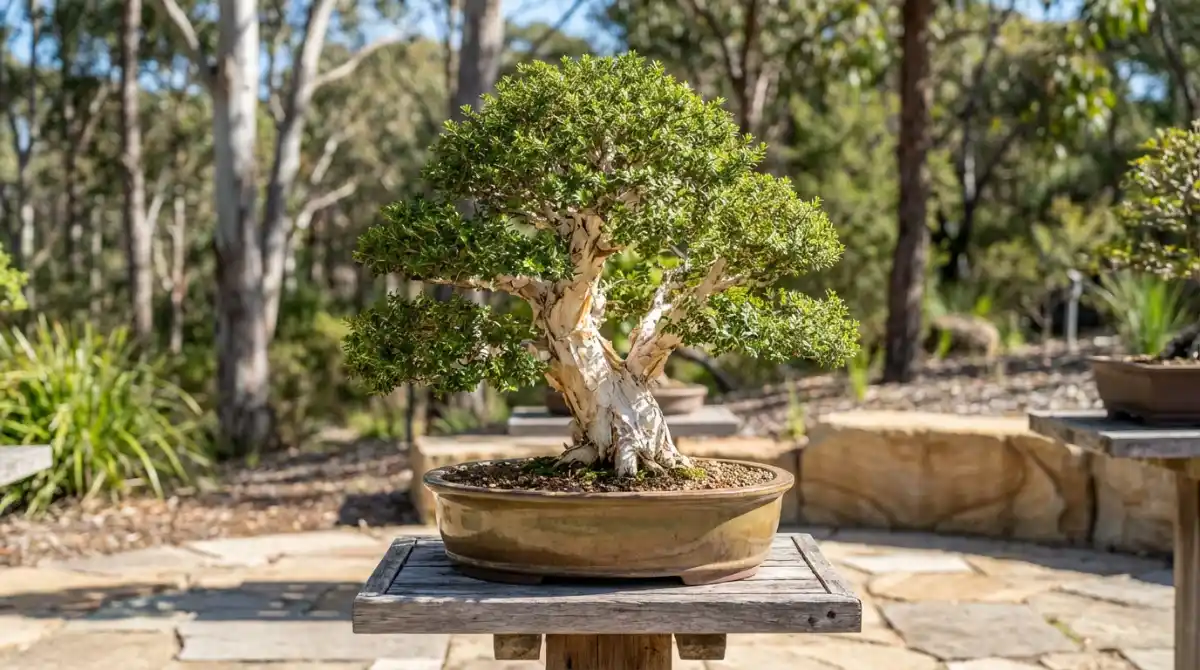
Melaleucas offer beautiful peeling bark, small foliage, and often vibrant bottlebrush-like flowers. Species like Melaleuca quinquenervia and M. armillaris are popular. They are extremely hardy and tolerate a wide range of conditions, including coastal exposure.
- Watering: Tolerate both wet and relatively dry conditions, but for bonsai, consistent moisture is best. Avoid prolonged waterlogging.
- Pruning & Wiring: Backbud readily on old wood. Can be pruned heavily. Branches are somewhat brittle, so careful wiring is needed; clip-and-grow is often preferred.
- Styling: Informal upright, windswept, and clump styles suit their natural forms.
- Winter Care: Generally frost-hardy, but protection from extreme, prolonged freezes is advisable for containerised plants.
Leptospermum Species (Tea Trees)
Leptospermums, with their small leaves and often profuse flowering, create delicate and refined bonsai. Species like Leptospermum scoparium and L. laevigatum are excellent choices. They appreciate good air circulation.
- Watering: Prefer consistently moist but well-drained soil. Can be susceptible to root rot if overwatered.
- Pruning & Wiring: Respond well to frequent tip pruning to encourage ramification. Wiring requires care as branches can be brittle.
- Styling: Informal upright, semi-cascade, and literati styles are often effective, highlighting their fine branching and delicate flowers.
- Winter Care: Most species are reasonably frost-tolerant, but protection from harsh, drying winds and severe freezes is beneficial.
Proactive Pest and Disease Management
Even the hardiest Australian natives are not immune to pests and diseases. Early detection and proactive management are crucial elements of advanced Australian native bonsai care. Regular inspection of your trees will prevent minor issues from escalating.
Common Pests and Solutions
- Aphids & Scale: These sap-sucking insects can weaken plants. Treat with horticultural oil, neem oil, or a gentle insecticidal soap. Scale often requires persistent manual removal.
- Mealybugs: Often found in leaf axils or under bark. Dab with an alcohol-soaked cotton swab, or use systemic insecticides for severe infestations.
- Spider Mites: Thrive in hot, dry conditions. Look for fine webbing and discoloured leaves. Increase humidity and spray with horticultural oil or specific miticides.
Disease Prevention
- Root Rot: The most common disease, caused by overwatering or poor drainage. Ensure your soil mix is free-draining and pots have adequate holes. Repotting into fresh, gritty media can save an affected tree.
- Fungal Spots: Less common but can appear in humid, still conditions. Improve air circulation and remove affected leaves. Fungicides are rarely needed if environmental factors are managed.
Good hygiene, proper watering, and appropriate fertilisation are your first lines of defense against most problems. Always ensure your tools are clean and sterilised between trees to prevent the spread of pathogens.

Frequently Asked Questions (FAQ)
What are the best Australian native species for beginners?
For beginners, resilient species like some Ficus (e.g., Ficus rubiginosa), Melaleuca (e.g., Melaleuca quinquenervia), and Waterhousia (e.g., Waterhousia floribunda) are excellent choices. They are generally forgiving of minor care mistakes and respond well to pruning, making them ideal for learning the fundamentals of Australian native bonsai care.
How often should I fertilise my Australian native bonsai?
During the active growing seasons (Spring and Summer in the Southern Hemisphere), fertilise every 2-4 weeks with a balanced liquid fertiliser or apply a slow-release granular product. Always opt for fertilisers with lower phosphorus levels, as many Australian natives are sensitive to high phosphorus. Taper off feeding in Autumn and cease entirely in Winter.
Can Australian native bonsai be kept indoors?
Most Australian native bonsai thrive outdoors where they receive adequate light, air circulation, and natural seasonal cues. However, some tropical Ficus species can be kept indoors in a very bright, well-ventilated spot, especially during colder months. Ensure they receive as much natural light as possible and are protected from extreme temperature fluctuations or dry indoor air. Periodically rotating them outdoors when weather permits is highly beneficial.
What type of soil is best for Australian native bonsai?
An ideal soil mix for Australian native bonsai is free-draining, aerated, and slightly acidic. A common mix includes akadama, pumice, and lava rock, often with a small percentage of organic material like high-quality composted pine bark. The key is excellent drainage to prevent root rot, which many natives are susceptible to if kept too wet.
When is the best time to prune an Australian native bonsai?
The best time for heavy structural pruning for most evergreen Australian native bonsai is early Spring (September-October in the Southern Hemisphere) as they are entering a period of strong growth and can recover quickly. Light maintenance pruning for shaping and ramification can be done throughout the active growing season. For deciduous natives, dormant pruning in winter is ideal.