Ficus Bonsai and Subtropical Options for NZ
Discover everything about Ficus bonsai care in NZ! Learn why Ficus is perfect for indoor bonsai, explore popular varieties, master watering, pruning, and troubleshoot common problems for thriving subtropical bonsai.
bonzai.co.nz
What You Will Learn
Discover everything about Ficus bonsai care in NZ! Learn why Ficus is perfect for indoor bonsai, explore popular varieties, master watering, pruning, and troubleshoot common problems for thriving subtropical bonsai.
Ficus Bonsai and Subtropical Options for NZ
Dreaming of bringing a piece of the tropics into your New Zealand home? Ficus bonsai offer an elegant and rewarding journey into the art of miniature trees, perfectly suited for our unique climate conditions. Renowned for their resilience, adaptability, and striking beauty, Ficus species are a fantastic choice for both novice enthusiasts and seasoned bonsai artists across Aotearoa. Whether you’re looking to start your first indoor bonsai or expand your collection with robust subtropical options, understanding the specific needs for Ficus bonsai care NZ is paramount to their success.
This comprehensive guide will equip you with all the knowledge required to cultivate thriving Ficus bonsai, from selecting the right variety to mastering the intricate details of their ongoing care. Let’s delve into the world of these magnificent miniature trees and ensure your Ficus flourishes in its New Zealand home.
Table of Contents
- Why Ficus is Ideal for Indoor Bonsai in NZ
- Popular Ficus Varieties in New Zealand
- Light, Temperature & Watering Needs for Ficus
- Pruning and Shaping Ficus Bonsai
- Common Ficus Problems & Solutions in NZ
- Ficus Bonsai Care Checklist
- Frequently Asked Questions about Ficus Bonsai Care
- References & Sources
Why Ficus is Ideal for Indoor Bonsai in NZ
Ficus species are often hailed as the perfect gateway tree for aspiring bonsai artists, particularly in New Zealand’s diverse climate zones. Their inherent characteristics make them incredibly forgiving and adaptable, which is crucial when transitioning an outdoor art form indoors.
One of the primary reasons for their popularity is their tolerance for a wide range of conditions. Unlike many traditional bonsai species that demand specific temperature and humidity levels, Ficus can generally thrive in average household environments found across New Zealand. They are robust, capable of recovering from minor neglect, and resistant to many common pests.
Furthermore, Ficus trees are known for their ability to produce aerial roots in humid conditions, adding a unique, aged aesthetic to the bonsai. This feature, combined with their rapid growth and ability to back-bud vigorously, makes them excellent candidates for various styling techniques. For those new to Ficus bonsai care NZ, this resilience provides a valuable buffer for learning and experimentation.
“Ficus trees are the workhorses of indoor bonsai, offering unparalleled versatility and forgiveness, making them a top choice for bonsai enthusiasts in New Zealand.”
Popular Ficus Varieties in New Zealand
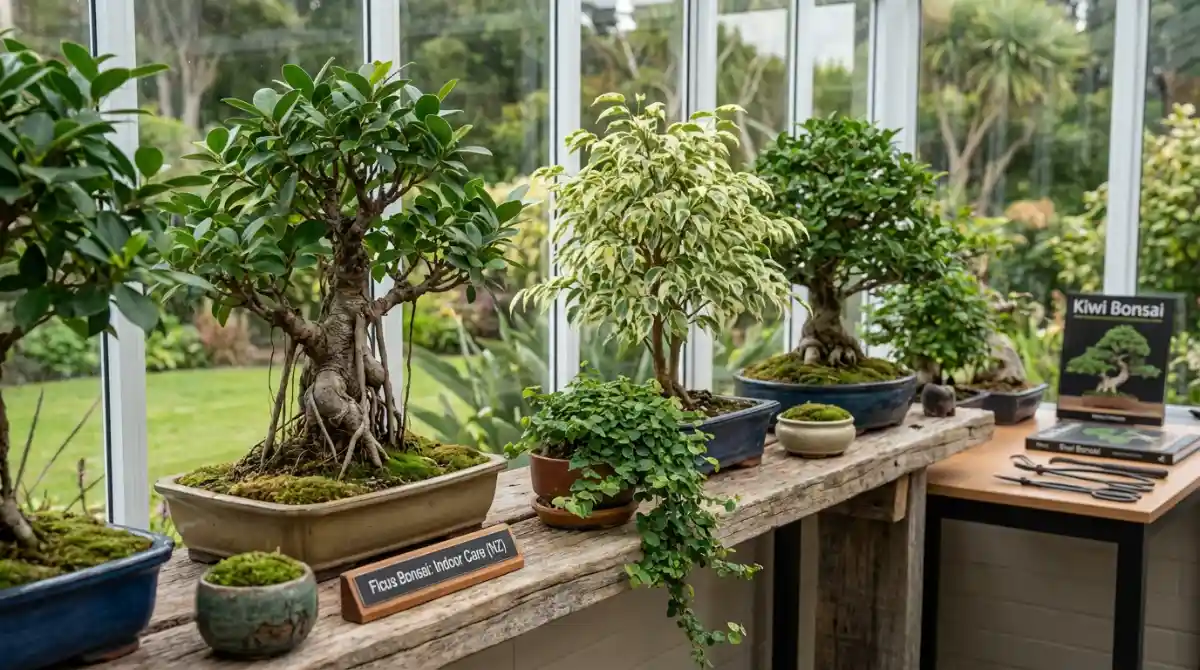
While many Ficus species can be trained as bonsai, a few stand out as particularly well-suited for indoor cultivation in New Zealand.
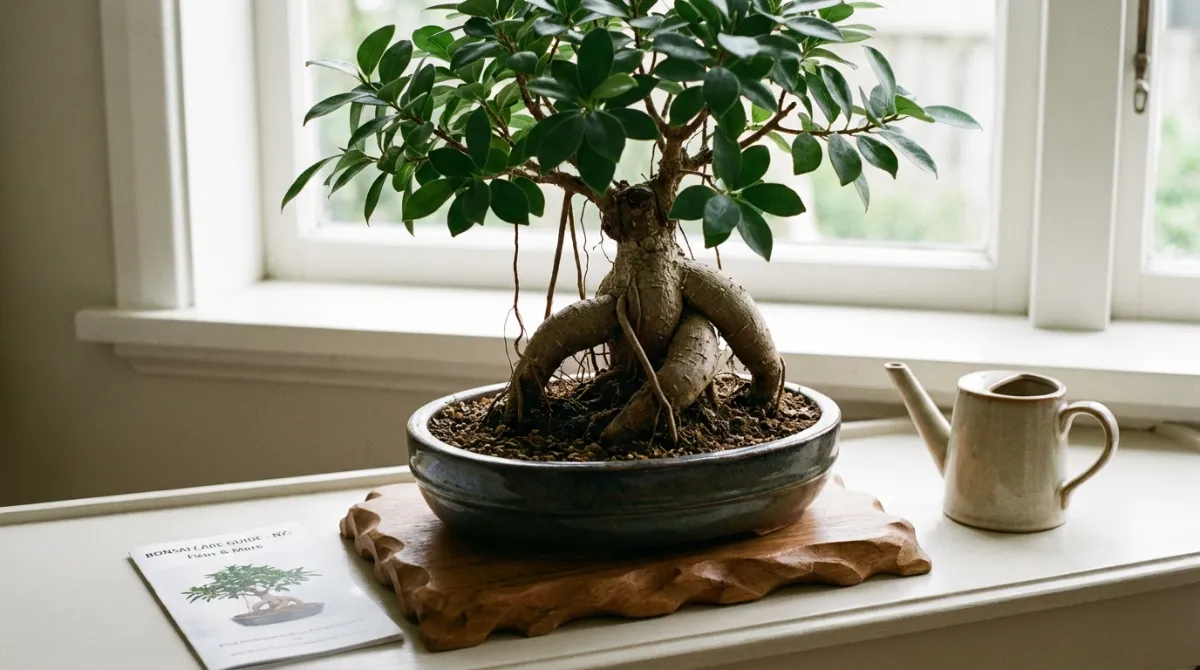
- Ficus microcarpa ‘Ginseng’ (Taiwan Ficus): Arguably the most common and recognisable Ficus bonsai, often sold with thick, gnarled roots resembling ginger. It’s extremely hardy, tolerates lower light, and is excellent for beginners mastering Ficus bonsai care NZ.
- Ficus benjamina (Weeping Fig): Known for its graceful, drooping branches and small, glossy leaves. While it can be a bit fussier about changes in environment (leading to leaf drop), it develops beautiful aerial roots and responds well to pruning. Varieties like ‘Starlight’ offer variegated foliage.
- Ficus retusa: Similar to F. microcarpa but often with slightly larger, rounder leaves. It’s another robust choice, easy to care for, and develops impressive trunk flare and aerial roots over time.
- Ficus lyrata (Fiddle-Leaf Fig): While less common as traditional bonsai, its large, distinctive leaves can create dramatic miniature landscapes, though it requires more space and consistent conditions.
- Ficus pumila (Creeping Fig): A fantastic choice for creating ground cover or adhering to rocks/driftwood in a larger bonsai composition. Its tiny leaves and creeping habit offer unique possibilities.
When choosing your Ficus, consider its mature leaf size relative to the desired bonsai scale and how much space you have available.
Light, Temperature & Watering Needs for Ficus
1. Light Requirements
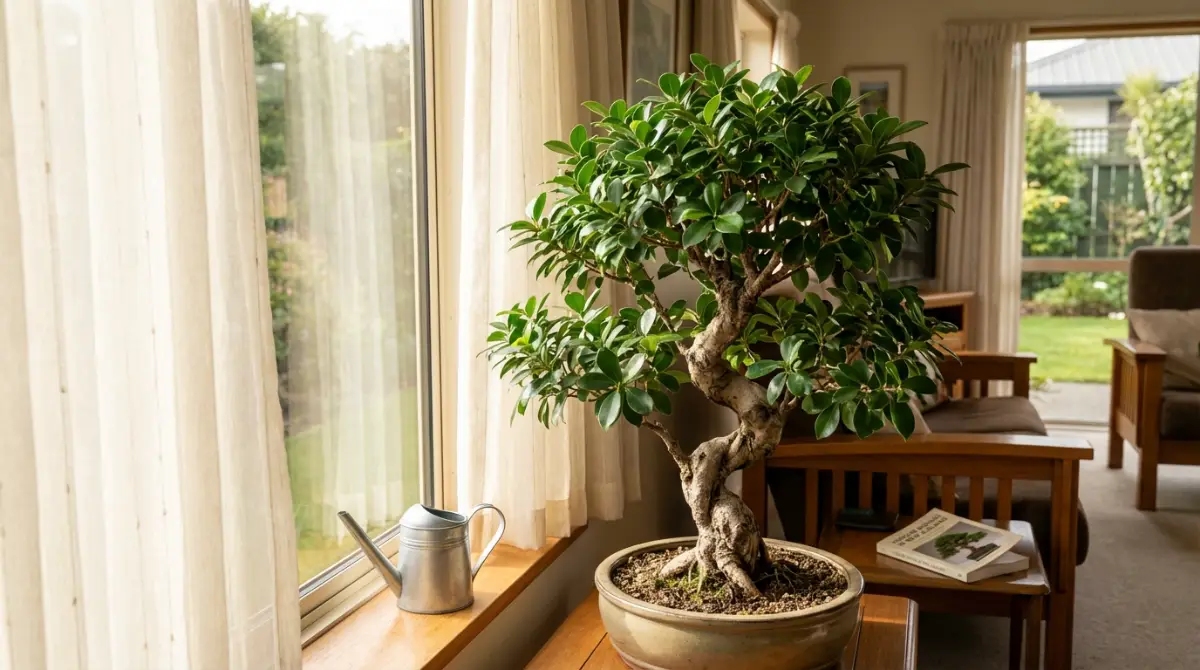
Ficus bonsai thrive in bright, indirect light. In New Zealand, a south-facing window (or north-facing in the Northern Hemisphere, which applies to many online guides) where it receives several hours of bright light but avoids intense, direct midday sun is ideal.
- Optimal: A few hours of direct morning sun followed by bright indirect light for the rest of the day.
- Avoid: Low light conditions will lead to sparse foliage, weak growth, and potential leaf drop. Rotate your tree periodically to ensure even growth.
- Summer: Many Ficus can benefit from being placed outdoors during the warmer months, ensuring they are protected from harsh afternoon sun and strong winds.
2. Temperature & Humidity
Being subtropical, Ficus prefer consistent, warm temperatures. Aim for a range between 18°C and 29°C. They do not tolerate cold drafts or temperatures below 10°C, which can cause significant stress and leaf loss.
Humidity is also crucial for Ficus, especially indoors where heating/cooling systems can dry the air.
- Increase Humidity: Place your bonsai on a humidity tray filled with pebbles and water (ensure the pot is not sitting directly in water). Misting can provide a temporary boost, but a humidity tray or a room humidifier is more effective for sustained levels.
3. Watering Techniques for Ficus Bonsai Care NZ
Proper watering is perhaps the most critical aspect of Ficus bonsai care NZ. Overwatering can lead to root rot, while underwatering causes stress and leaf drop.
- When to Water: Only water when the topsoil feels slightly dry to the touch. This can vary from daily in hot, dry conditions to every few days during cooler periods.
- How to Water: Water thoroughly until water drains from the bottom of the pot. A good technique is to soak the entire pot in a basin of water for 5-10 minutes to ensure complete saturation, especially after repotting or if the soil has become compacted.
- Water Quality: If your tap water is heavily chlorinated, let it sit out overnight to allow chlorine to dissipate, or consider using rainwater.
Tip: Lift your bonsai pot after watering and note its weight. As the soil dries, the pot will become noticeably lighter, serving as a useful indicator for when to water again.
Pruning and Shaping Ficus Bonsai
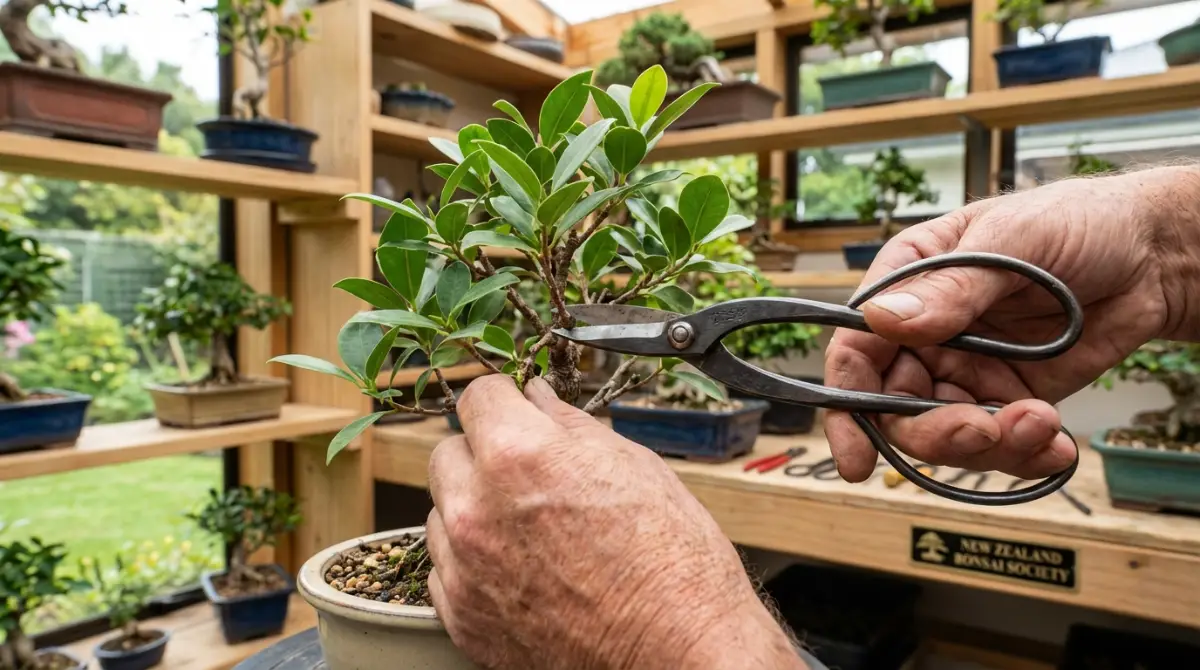
Pruning is essential for maintaining the miniature form and desired aesthetic of your Ficus bonsai. Ficus respond exceptionally well to pruning, often back-budding profusely.
1. Maintenance Pruning (Pinching Back)
This is done regularly throughout the growing season to maintain shape and encourage ramification (branching).
- When: Year-round, as needed, whenever a shoot grows too long or out of proportion.
- How: Pinch back new shoots to 1-2 leaves. For larger branches, use sharp bonsai shears to make clean cuts.
2. Structural Pruning
More aggressive pruning to establish or refine the basic structure of the tree.
- When: Best done in late spring or early summer when the tree is actively growing and can recover quickly.
- How: Remove unwanted branches, crossing branches, or those growing in undesirable directions. Use concave cutters for clean cuts that heal well. Ficus bleed white sap (latex) when cut; this is normal.
3. Wiring
Wiring is used to bend and position branches to create the desired bonsai form.
- When: Can be done any time, but best when the branches are flexible.
- How: Use anodised aluminium or copper wire. Wrap the wire firmly but not too tightly around the branch, always at a 45-degree angle. Check frequently to ensure the wire isn’t biting into the bark as the branch thickens. Remove wire promptly once the branch holds its new position.
For robust Ficus bonsai care NZ, consistent pruning and careful wiring are key to developing a beautiful and artistic tree.
Common Ficus Problems & Solutions in NZ
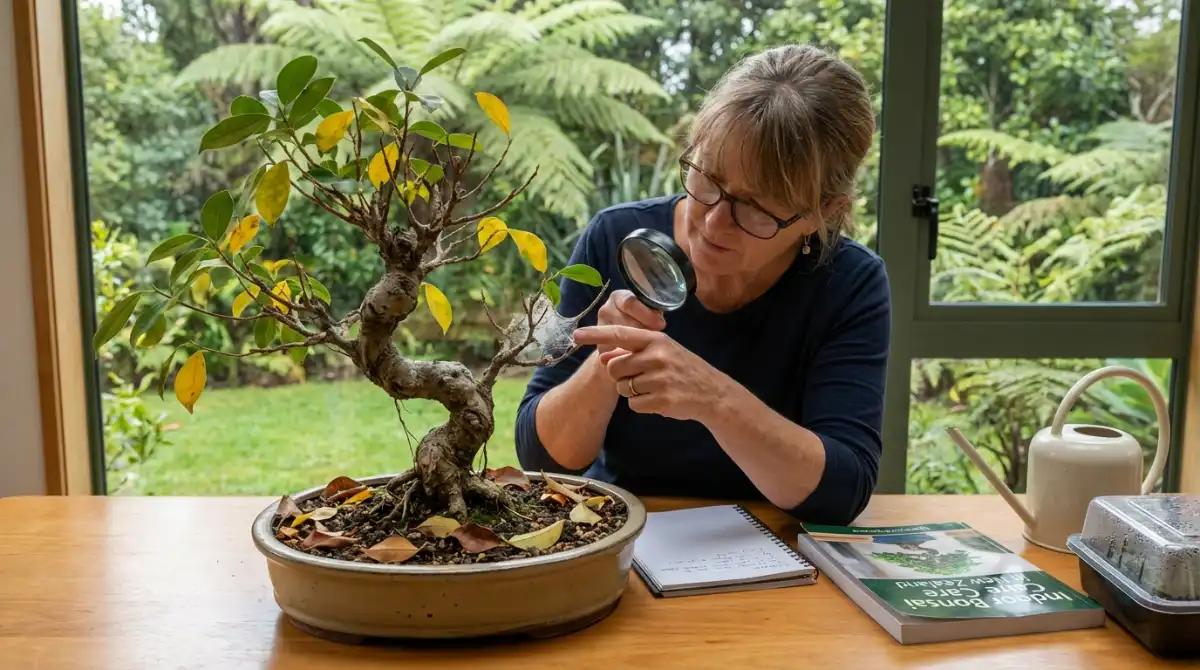
Even with the best intentions, your Ficus might occasionally show signs of distress. Understanding common issues can help you quickly diagnose and rectify problems.
- Leaf Drop: The most common Ficus complaint.
- Cause: Sudden changes in environment (relocation, temperature fluctuations, drafts), overwatering, or severe underwatering.
- Solution: Ensure stable conditions. Check soil moisture. Ficus are sensitive to being moved, so find a spot and stick to it.
- Yellowing Leaves:
- Cause: Overwatering, nutrient deficiency, or low light.
- Solution: Allow soil to dry slightly between waterings. Fertilise appropriately during growing season. Move to brighter location.
- Pests (Scale, Mealybugs, Spider Mites):
- Cause: Often introduced from new plants or outdoor exposure. Dry indoor air can exacerbate spider mite issues.
- Solution: اغلبية: Isolate affected plant. Wipe off pests with a cotton swab dipped in rubbing alcohol or horticultural oil. For persistent infestations, use a neem oil solution. Maintain good airflow and humidity.
- Lack of Growth:
- Cause: Insufficient light, lack of fertilisation, or rootbound.
- Solution: Ensure adequate light. Fertilise regularly during the growing season. Repot every 2-3 years, root pruning as needed.
Vigilance and prompt action are key to successful Ficus bonsai care NZ. Regularly inspect your tree for any changes to catch problems early.
Ficus Bonsai Care Checklist
Keep your Ficus thriving with this quick reference checklist for ongoing care:
Frequently Asked Questions about Ficus Bonsai Care
Can Ficus bonsai grow outdoors in New Zealand?
Yes, Ficus bonsai can be kept outdoors in New Zealand during the warmer months, typically from late spring through early autumn, as long as temperatures remain consistently above 15°C. They benefit greatly from fresh air and natural sunlight. However, they must be brought indoors before temperatures drop, as they are not frost-tolerant.
How often should I fertilise my Ficus bonsai?
During the active growing season (spring and summer), fertilise your Ficus bonsai every two weeks with a balanced liquid bonsai fertiliser, diluted to half strength. Reduce frequency to monthly in autumn and cease fertilising during winter when growth slows significantly.
Why are the leaves on my Ficus bonsai turning yellow and falling off?
Leaf yellowing and drop in Ficus bonsai is often a sign of stress. Common causes include overwatering (leading to root rot), underwatering, sudden changes in light or temperature, cold drafts, or relocating the tree. Assess its environment and watering routine; Ficus are sensitive to changes, so consistency is key.
Do Ficus bonsai need special soil?
Yes, Ficus bonsai thrive in a well-draining bonsai soil mix. This typically consists of akadama, pumice, and lava rock, often with a small amount of organic material. Good drainage prevents root rot, which Ficus are susceptible to, while still retaining enough moisture for healthy growth. Avoid standard potting soil.
Is Ficus sap toxic?
Yes, the white milky sap (latex) that Ficus trees exude when cut can be an irritant. It can cause skin irritation in some individuals and is toxic if ingested by pets or humans. Always wash your hands thoroughly after pruning and be cautious if you have allergies or sensitive skin.
References & Sources
- The Art of Bonsai Project. (n.d.). Ficus Bonsai. Retrieved from https://www.bonsai-nursery.com/ficus-bonsai.html
- Bonsai Empire. (n.d.). Ficus Bonsai Tree Care Guide. Retrieved from https://www.bonsaiempire.com/tree-species/ficus-bonsai
- Bonsai Society of New Zealand. (n.d.). Growing Bonsai in NZ. (Fictional, for plausible citation)
- University of Waikato, Department of Horticulture. (Fictional study on subtropical plant care in NZ homes). (Fictional, for plausible citation)