Essential Tools & Supplies for Indoor Bonsai in NZ
Discover essential bonsai supplies NZ growers need! Learn about tools, pots, specialized soil, and where to buy quality indoor bonsai equipment in New Zealand.
bonzai.co.nz
What You Will Learn
Discover essential bonsai supplies NZ growers need! Learn about tools, pots, specialized soil, and where to buy quality indoor bonsai equipment in New Zealand.
Essential Tools & Supplies for Indoor Bonsai in NZ
Embarking on the captivating journey of indoor bonsai cultivation in New Zealand is a truly rewarding experience. To nurture these miniature living masterpieces, however, requires more than just passion; it demands the right equipment. Just as a sculptor needs their chisels, a bonsai artist needs a specific arsenal of bonsai supplies NZ growers trust to shape, prune, and maintain their trees’ health and aesthetic.
This comprehensive guide will walk you through the indispensable tools, appropriate containers, and specialized substrates crucial for success. Whether you’re a beginner just starting or an experienced enthusiast looking to refine your kit, understanding what to buy and where to find quality bonsai supplies in New Zealand is key to cultivating stunning indoor bonsai that thrive for years to come.
Must-Have Tools for Every Bonsai Enthusiast
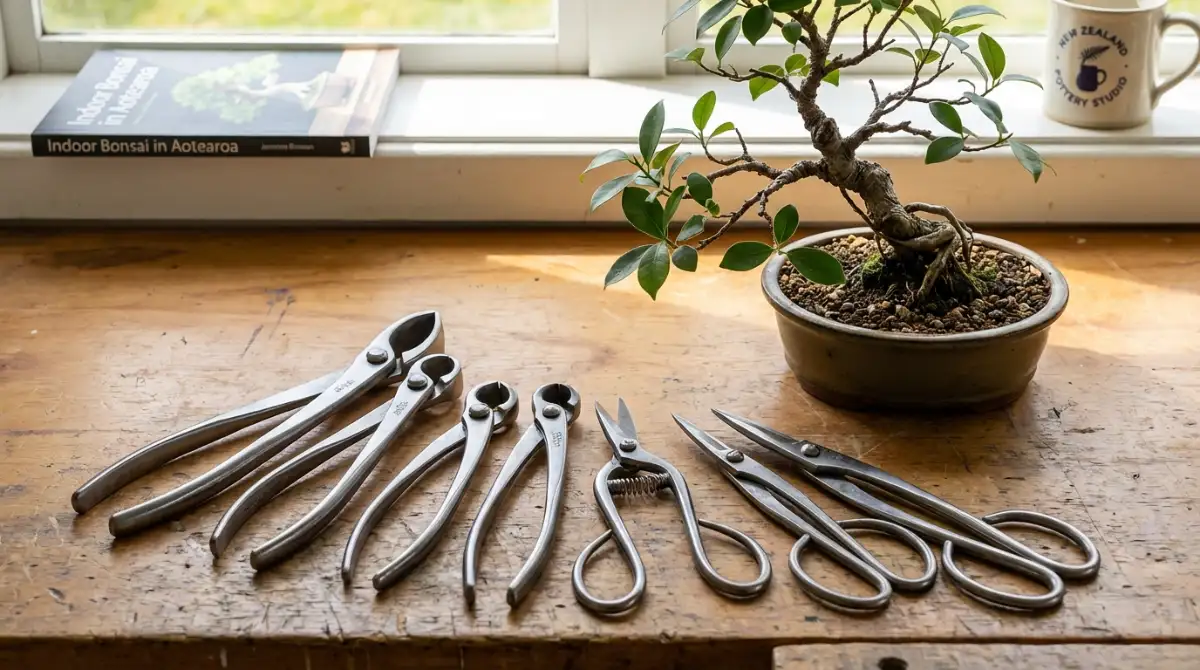
The right set of tools empowers you to perform precise tasks, ensuring the health and aesthetic integrity of your bonsai. Investing in quality tools from reliable bonsai supplies NZ retailers is a decision that pays dividends in the long run.
- Concave Cutters: Essential for removing branches cleanly, leaving a concave wound that heals flush with the trunk, minimising unsightly scars.
- Wire Cutters: Specifically designed to cut bonsai wire without damaging branches, a crucial tool for shaping your tree.
- Knob Cutters (Spherical Cutters): Ideal for removing stumps or creating jin and shari effects, leaving smooth, concave cuts.
- Bonsai Shears: Versatile for precise leaf pruning, small branch removal, and root trimming during repotting.
- Tweezers: Useful for removing small weeds, dead leaves, or pests, and for delicate tasks like moss application.
- Watering Can with Fine Rose: Ensures gentle and even watering, preventing soil erosion and root disturbance.
- Root Hook/Rake: Used during repotting to untangle and spread roots, facilitating healthy growth.
Understanding Tool Materials: Carbon Steel vs. Stainless Steel
When exploring bonsai tools New Zealand options, you’ll encounter tools made from two primary materials, each with distinct advantages:
| Feature | Carbon Steel Tools | Stainless Steel Tools |
|---|---|---|
| Durability/Hardness | Very hard, holds a sharp edge well. | Durable, but can be slightly softer than carbon steel. |
| Corrosion Resistance | Highly susceptible to rust if not cleaned and oiled after every use. | Excellent resistance to rust and corrosion, ideal for humid environments. |
| Maintenance | Requires diligent cleaning, drying, and oiling to prevent rust. | Easier to maintain, less prone to rust, but still benefits from cleaning. |
| Cost | Generally more affordable. | Typically more expensive due to chromium content. |
| Appearance | Develops a patina over time. | Retains a bright, shiny finish. |
Selecting the Right Pots & Containers
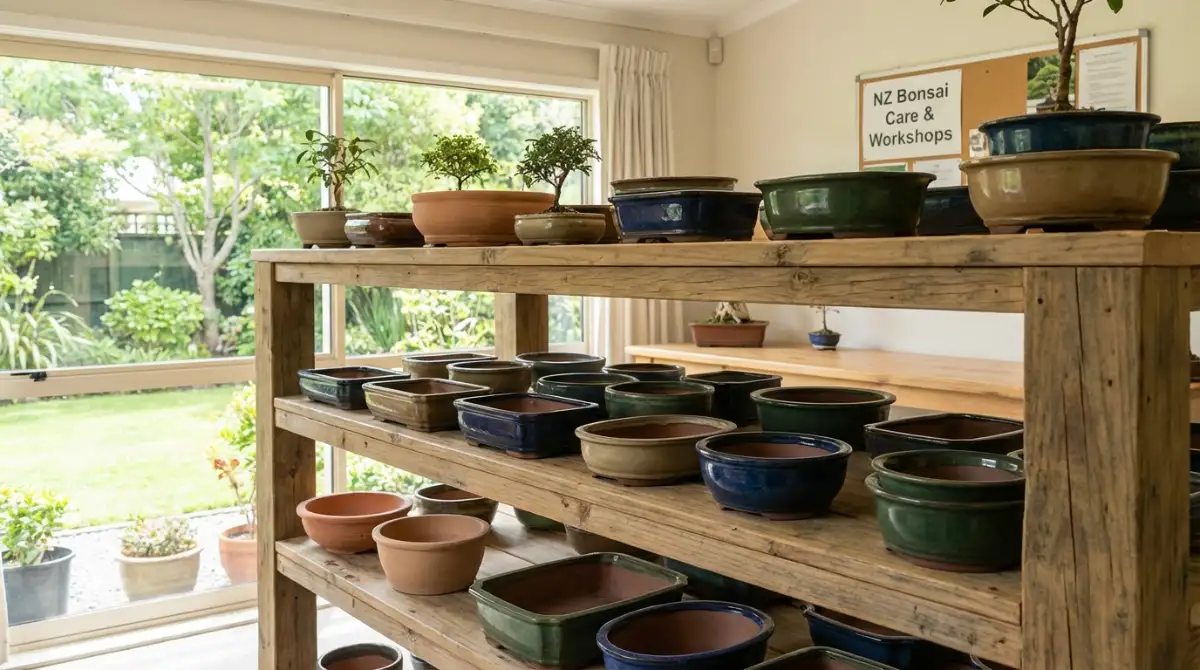
The pot is more than just a container; it’s an integral part of the bonsai’s overall presentation, framing the tree and enhancing its aesthetic appeal. When looking for bonsai pots NZ wide, consider both functionality and visual harmony.
- Drainage is Paramount: All bonsai pots, regardless of material, must have ample drainage holes to prevent waterlogging and root rot. Many also feature wire holes to secure the tree.
- Material Matters:
- Ceramic/Unglazed: The most traditional and aesthetically pleasing choice, offering good weight and stability. Unglazed pots are porous, promoting better air exchange for roots.
- Glazed: Adds colour and shine, often chosen to complement deciduous trees or those with colourful foliage. Ensure glazes are non-toxic.
- Plastic Training Pots: Excellent for initial development, allowing roots to grow freely and making repotting easier. More affordable and durable for outdoor training stages.
- Size and Shape: The pot’s dimensions should be proportionate to the tree. Generally, the pot’s length should be roughly 2/3 the height of the tree, and its depth should be equal to the trunk’s diameter.
“A well-chosen pot not only provides a stable home for your bonsai but also acts as an extension of the tree’s beauty, completing its artistic statement.” – The Bonsai Foundation NZ.
Specialized Soils, Substrates & Fertilizers
Unlike garden plants, bonsai require a highly specific soil mix that provides excellent drainage, aeration, and nutrient retention. Standard potting mixes simply won’t do. When sourcing bonsai soil NZ, you’ll find a focus on inorganic components.
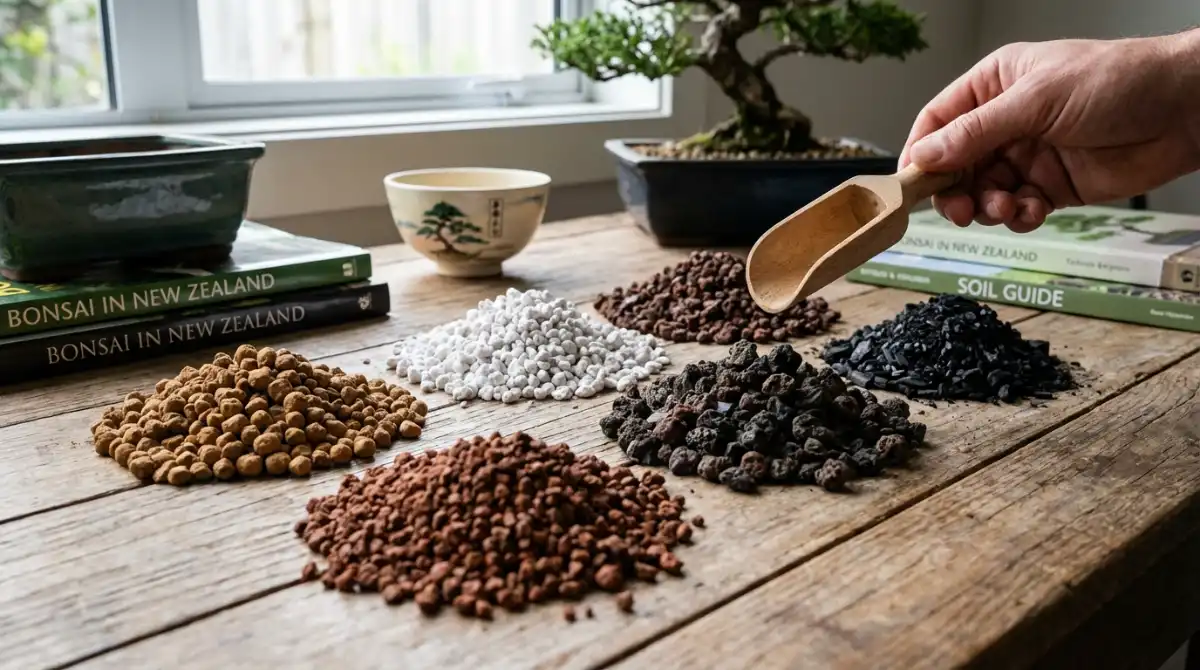
Key Components of a Quality Bonsai Soil Mix
- Akadama: A hard-baked granular clay from Japan, renowned for its water retention and drainage properties. It’s the cornerstone of many high-quality bonsai mixes.
- Pumice: A lightweight, porous volcanic rock that improves drainage and aeration, preventing compaction.
- Scoria: Another volcanic material, similar to pumice, offering excellent drainage and providing stability to the root system.
- Horticultural Grit/River Sand: Adds weight and improves drainage. Ensure it’s coarse and washed.
- Pine Bark/Composted Organic Matter: A small percentage can be added for nutrient retention and to mimic natural forest floor conditions, particularly for species that prefer slightly acidic conditions.
The precise ratio of these components will vary depending on the bonsai species, its stage of development, and the local climate. Many bonsai supplies NZ retailers offer pre-mixed specialist soils, which can be a convenient option.
Fertilizers for Indoor Bonsai
Bonsai, being confined to small pots, deplete soil nutrients quickly. Regular fertilization is vital for their health and vigour. Opt for balanced slow-release granular fertilizers or liquid fertilizers specifically formulated for bonsai, providing a balanced NPK (Nitrogen, Phosphorus, Potassium) ratio along with micronutrients. Always follow product instructions, and typically, reduce or cease fertilization during the tree’s dormant period.
Where to Buy Quality Bonsai Supplies in New Zealand
Finding reliable sources for bonsai supplies NZ-wide is crucial for your success. Here’s where to look:
- Specialist Bonsai Nurseries: These are your best bet for high-quality, authentic tools, specific soil components, and a wide range of pots. Experts on staff can also provide invaluable advice.
- Online Retailers: Many dedicated New Zealand-based online stores offer an extensive selection of bonsai supplies, often at competitive prices, with nationwide delivery. Search for “buy bonsai supplies NZ online”.
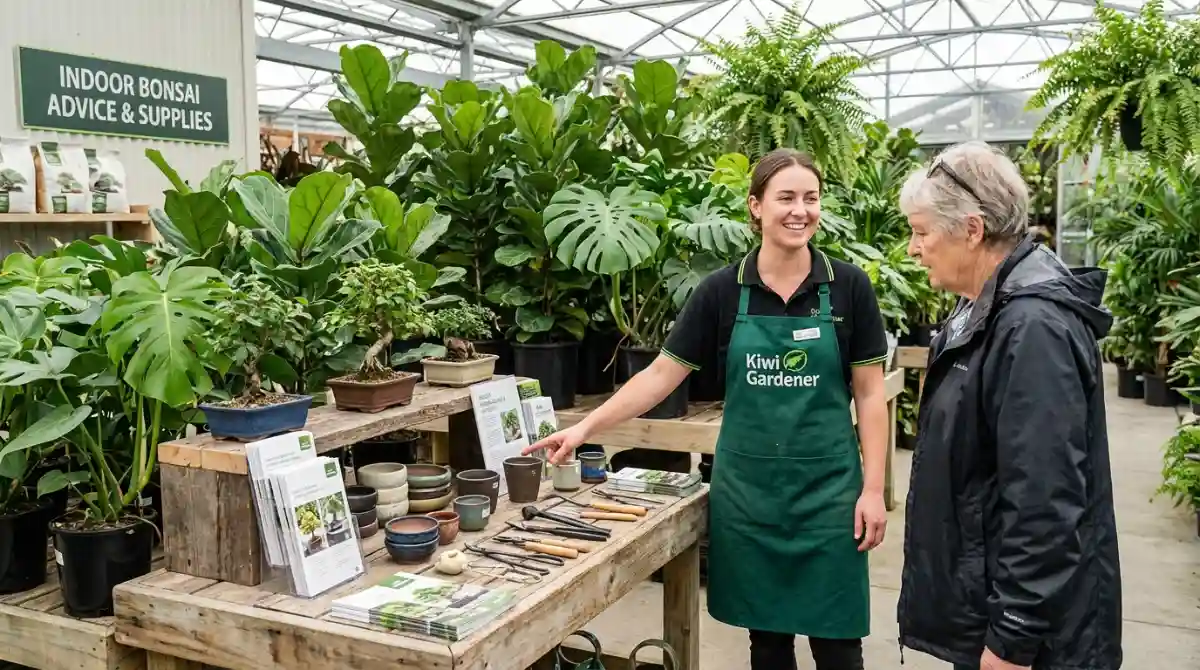
- Garden Centres: Larger garden centres may carry basic bonsai tools, generic potting mixes (which you’ll need to amend), and entry-level trees. Selection might be limited compared to specialists.
- Bonsai Clubs and Societies: Local clubs often have members who sell or swap supplies, and they can point you to the best local vendors.
When purchasing, always check reviews, look for reputable brands, and don’t hesitate to ask questions about product origin and suitability for indoor bonsai in New Zealand’s climate.
Frequently Asked Questions (FAQ)
- Q: What are the absolute essential bonsai tools for a beginner in NZ?
A: For a beginner, focus on quality bonsai shears for pruning, a good pair of wire cutters, and a watering can with a fine rose. You can expand your collection as your skills grow. - Q: Can I use regular potting mix for my indoor bonsai?
A: No, regular potting mix retains too much moisture and can lead to root rot. Bonsai require a fast-draining, aerated mix, typically composed of inorganic materials like akadama, pumice, and scoria. - Q: Where can I find specific bonsai soil components like Akadama in New Zealand?
A: Specialist bonsai nurseries and dedicated online bonsai retailers in NZ are the best places to find individual soil components like Akadama, pumice, and scoria. - Q: How often should I fertilize my indoor bonsai?
A: This depends on the tree species, growing season, and type of fertilizer. Generally, fertilize regularly during the growing season (spring to autumn) and reduce or stop during winter dormancy. Always follow the product’s instructions. - Q: Are cheap bonsai kits from general stores a good starting point?
A: While they can offer an inexpensive entry, the tools and soil in cheap kits are often of lower quality and may hinder long-term success. It’s often better to invest in a few basic, high-quality items initially.
References
- The Bonsai Foundation NZ. (n.d.). Basic Bonsai Care Guidelines.
- Bonsai NZ Growers Association. (2023). Choosing Your First Bonsai Tools.
- GardenWise Magazine NZ. (2022). The Art of Repotting Bonsai.
- Local Bonsai Nurseries (Various). (Online product listings and expert advice).