DIY Bonsai Benches & Display Stands
Unlock your bonsai’s potential! Discover expert DIY bonsai bench plans and learn how to build a bonsai stand that enhances health & display. Get comprehensive guides, material tips & more!
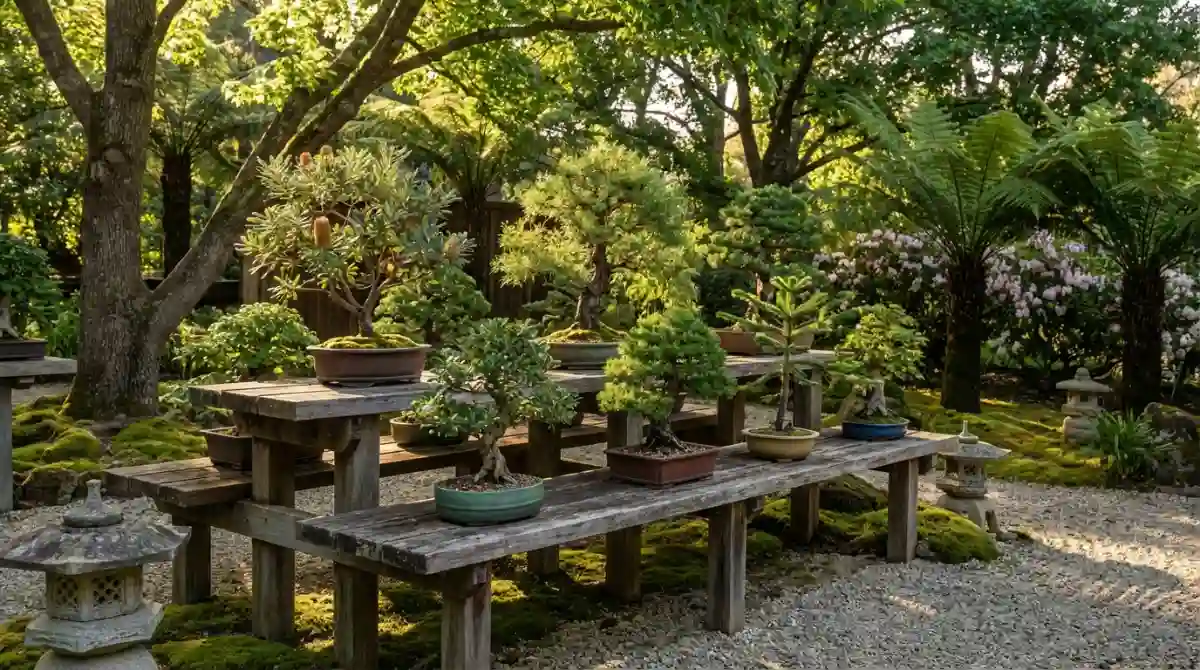
Deep Dive
What You Will Learn
Unlock your bonsai’s potential! Discover expert DIY bonsai bench plans and learn how to build a bonsai stand that enhances health & display. Get comprehensive guides, material tips & more!
Key Takeaways for Bonsai Bench & Stand Builders
- Benefit from cost savings, customization, and better plant health by building your own bonsai infrastructure.
- Prioritize stability, optimal height, excellent drainage, and appropriate sun exposure in your design for thriving trees.
- Follow detailed step-by-step guides to construct both sturdy outdoor bonsai benches and elegant indoor display stands.
- Select weather-resistant woods (cedar, redwood) or durable metals (galvanized steel) for longevity and low maintenance.
- Elevate your bonsai’s presentation with varied display heights and thoughtful aesthetic integration into your space.
Mastering Your Micro-Landscape: Expert DIY Bonsai Bench Plans & How to Build a Bonsai Stand
Creating and caring for bonsai is an art form, a journey of patience, precision, and profound connection with nature. Every element, from the soil composition to the pruning technique, plays a vital role. Yet, often overlooked is the foundation upon which your miniature trees thrive: their benches and display stands.
Far from mere furniture, a well-designed bonsai bench provides crucial support for your trees’ health and development, while a thoughtfully crafted display stand elevates their aesthetic appeal. This comprehensive guide will empower you with expert DIY bonsai bench plans and practical insights on how to build a bonsai stand that truly complements your artistry. Let’s delve into crafting the perfect stage for your living masterpieces.
Why Build Your Own Bonsai Bench?
Investing time into building your own bonsai infrastructure might seem like an extra step, but the benefits are profound. Custom-built benches and stands offer unparalleled advantages over generic store-bought options.
- Optimal Customization: Tailor dimensions, height, and layout to your specific collection and available space. This is crucial for different tree sizes and sun exposure requirements.
- Cost Efficiency: Often, building your own can be significantly more economical than purchasing high-quality, specialized bonsai furniture.
- Enhanced Plant Health: Design for superior drainage, air circulation, and pest control. Elevating pots off the ground reduces slug and pest access, while open designs prevent waterlogging.
- Aesthetic Integration: Create pieces that seamlessly blend with your garden or home decor, reflecting your personal style and enhancing the overall presentation of your bonsai.
- Durability & Longevity: Choose robust materials and construction methods that will withstand the elements and the weight of your growing collection for years to come.
“A thoughtfully designed display isn’t just about aesthetics; it’s an integral part of a bonsai’s care regimen, influencing everything from root health to nutrient uptake.” – Dr. Eleanor Vance, Horticultural Ethnobotanist.
Essential Bench Design Principles
Before you pick up a saw, consider these fundamental principles that govern effective bonsai bench and stand design.
- Stability is Paramount: Your bench must support significant weight without wobbling. Bonsai pots are heavy, especially after watering. Consider a wide base and sturdy joinery.
- Optimal Height: For outdoor benches, aim for a height that allows comfortable working (around 30-36 inches) and keeps trees at eye level. Indoor stands can vary, but generally position the tree to be admired from a seated or standing position.
- Drainage & Airflow: The bench surface should allow water to drain freely, preventing pooling which can lead to root rot and pest issues. Slats or mesh tops are ideal. Good airflow also inhibits fungal growth.
- Sun Exposure: Position your bench or stand to maximize appropriate sunlight for your specific bonsai species. Consider movability for seasonal adjustments if needed.
- Material Resilience: Choose materials suitable for your environment. Outdoor benches need to withstand rain, sun, and temperature fluctuations.
- Aesthetic Harmony: While functional, the design should also complement your bonsai and its surroundings. Clean lines and natural materials often work best.
Pro Tip: Calculate Load Bearing!
Before cutting, estimate the total weight of your largest potted bonsai plus the average weight of your smaller ones. Ensure your design and chosen materials can safely bear at least 1.5 to 2 times that total weight for safety and longevity.
Step-by-Step Construction Guides: Build Bonsai Stand & Bench
Step 1: Simple & Sturdy Outdoor Bonsai Bench (DIY Bonsai Bench Plans)
This guide focuses on building a robust, slatted wooden bench perfect for an outdoor collection. We’ll aim for a typical size of 48″ L x 24″ W x 32″ H.
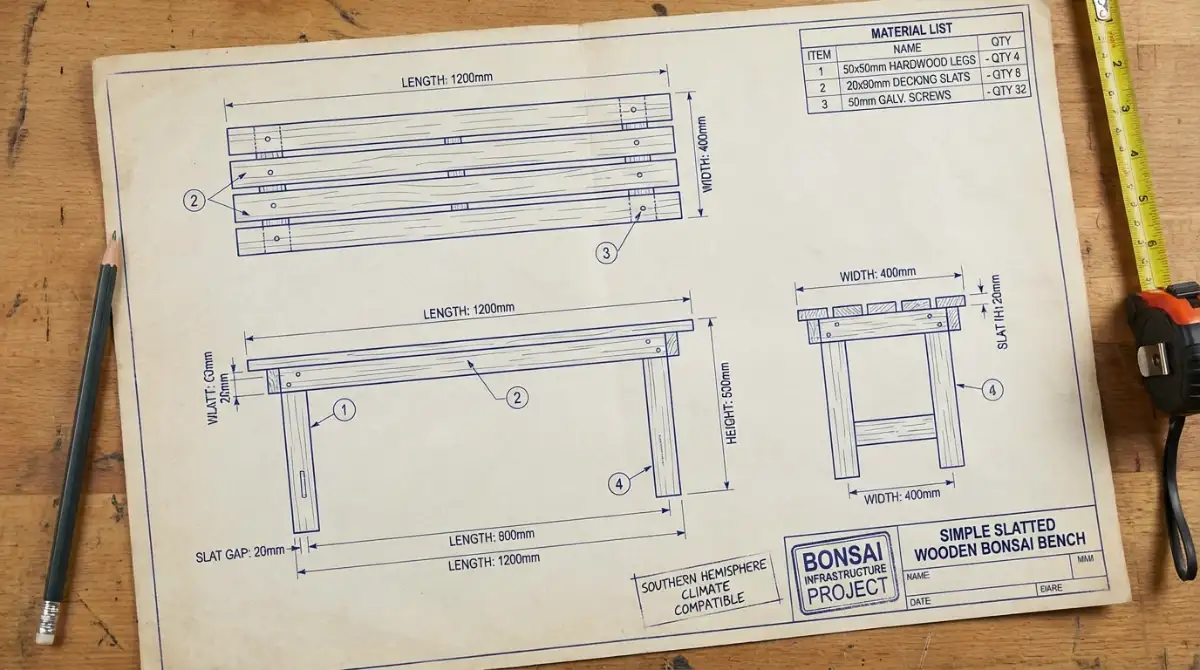
- Gather Materials & Tools:
- Pressure-treated lumber or cedar (e.g., 2x4s for frame, 1x3s for slats)
- Wood screws (exterior grade)
- Wood glue (waterproof)
- Miter saw, drill, tape measure, pencil, safety glasses
- Cut Your Lumber:
- Legs: 4 pieces @ 32″ (for 2x4s)
- Long Rails: 4 pieces @ 45″ (for 2x4s – these attach to legs, creating 48″ total length)
- Short Rails: 4 pieces @ 21″ (for 2x4s – these attach to legs, creating 24″ total width)
- Slats: Approx. 16-18 pieces @ 24″ (for 1x3s, adjust quantity based on desired spacing)
- Assemble the Leg Pairs: For each pair of legs, attach two short rails (one top, one bottom) flush with the outside edges of the legs. Use wood glue and two screws per joint. Repeat for the other leg pair.
- Connect the Leg Pairs: Stand the two assembled leg pairs upright. Attach the long rails to connect them, forming the rectangular frame. Ensure everything is square using a speed square.
- Add Support Beams (Optional but Recommended): For longer benches, add a central 2×4 support beam running lengthwise across the middle of the frame to prevent slat sagging.
- Attach the Slats: Lay your 1×3 slats across the top frame, leaving approximately 0.5-1 inch gaps for drainage. Secure each slat with two screws into the underlying frame rails.
- Finishing Touches: Sand any rough edges. Apply a weather-resistant stain or sealant to protect the wood and prolong its life.
Step 2: Elegant Indoor Bonsai Display Stand
This stand is designed for a single prize-winning bonsai, emphasizing aesthetics and presentation.
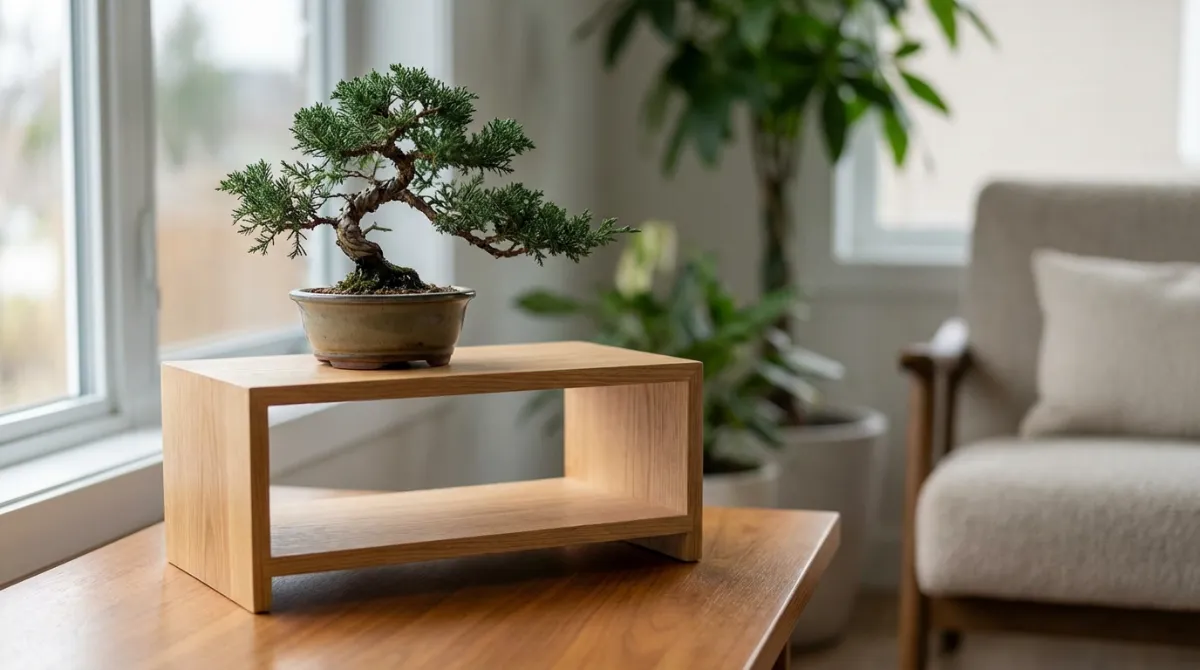
- Select Fine Wood: Opt for attractive hardwoods like oak, maple, or walnut for a premium look.
- Design & Cut Components:
- Base: 1 piece (e.g., 12″x12″x0.75″)
- Platform 1: 1 piece (e.g., 10″x10″x0.75″)
- Platform 2 (Optional, for tiered look): 1 piece (e.g., 8″x8″x0.75″)
- Support Posts: 2-4 pieces of dowel or square stock (e.g., 1.5″x1.5″x various heights like 4″, 8″)
- Assemble the Base & First Post: Secure the tallest support post centrally to the base using wood glue and a discreet screw from underneath (pilot hole essential).
- Attach First Platform: Glue and screw Platform 1 onto the top of the first support post.
- Add Second Tier (Optional): If creating a two-tiered stand, secure the shorter support post onto Platform 1, and then attach Platform 2.
- Finishing: Sand meticulously, then apply multiple coats of clear polyurethane or a fine wood oil to bring out the grain and protect the surface.
Pro Tip: The Rule of Thirds in Display!
When arranging multiple bonsai or a single tree on a stand, consider the “Rule of Thirds.” Place your main subject slightly off-center for a more dynamic and pleasing composition. Varying heights in display stands also adds visual interest and mimics natural landscapes.
Material Selection & Durability
The longevity and performance of your bonsai infrastructure heavily depend on your material choices.
- Woods:
- Cedar/Redwood: Naturally rot and insect resistant, excellent for outdoor use. Lightweight and beautiful grain.
- Pressure-Treated Pine: Economical and durable for outdoor use, but ensure it’s rated for ground contact. Be aware of chemicals if organic gardening is a priority.
- Oak/Maple/Walnut: Ideal for indoor display stands due to their hardness, fine grain, and aesthetic appeal. Require good sealing.
- Bamboo: Sustainable and aesthetically pleasing, but requires treatment for outdoor longevity.
- Metals:
- Galvanized Steel: Extremely durable, rust-resistant, and can bear heavy loads. Industrial aesthetic.
- Aluminum: Lightweight, rust-proof, and can be easily worked. More expensive than steel.
- Wrought Iron: Classic, elegant look, but heavy and requires regular rust treatment if not coated.
- Other Materials:
- Concrete Blocks/Pavers: Simple, robust, and cost-effective base for outdoor benches. Can be covered or used as-is.
- Composite Decking: Made from recycled plastics and wood fibers, highly weather-resistant and low maintenance.
Did you know? Surveys indicate that over 60% of serious bonsai enthusiasts prefer custom-built benches over mass-produced options, primarily citing better drainage and tailored dimensions.
Bonsai Bench Material Comparison
| Material | Pros | Cons | Best For |
|---|---|---|---|
| Cedar/Redwood | Naturally resistant to rot/pests, attractive, lightweight. | Higher initial cost than pine, can weather over time if untreated. | Outdoor benches, premium aesthetic. |
| Pressure-Treated Pine | Economical, very durable for outdoor use, widely available. | Less aesthetically pleasing without stain, chemical treatment concerns for some. | Cost-effective outdoor utility benches. |
| Galvanized Steel | Extremely strong, no rust, minimal maintenance, modern look. | Can be expensive, requires welding skills or specialized connectors. | Heavy-duty outdoor benches, long-term installations. |
Display Stand Ideas & Projects
Beyond the practical outdoor bench, consider creative ways to display your bonsai indoors or in dedicated garden spots.
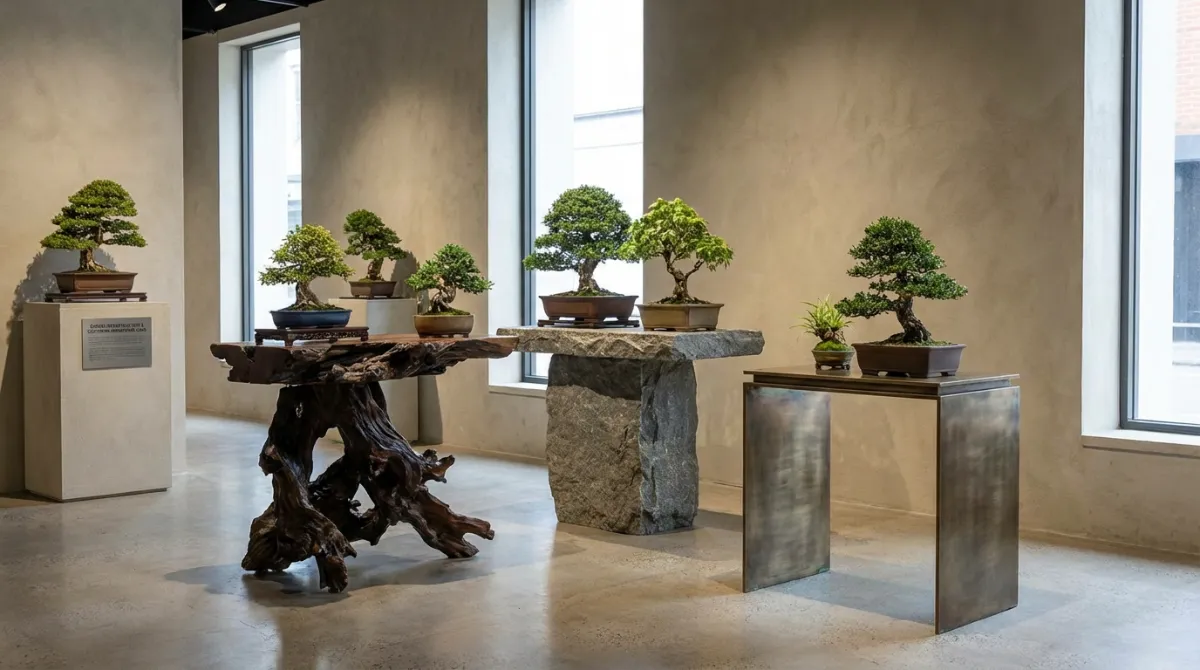
- Tiered Platforms: Create visual depth by using stands of varying heights for different trees. This mimics natural landscapes.
- Floating Shelves: For smaller bonsai, wall-mounted floating shelves can be a space-saving and modern display solution.
- Natural Wood Slabs: A polished cross-section of a tree trunk or a unique piece of driftwood can serve as a stunning, organic stand.
- Bonsai Table: A low, traditional Japanese-style table for a single, prominent bonsai can create a meditative focal point.
- Combined Displays: Integrate your bonsai stands with other elements like water features, moss gardens, or accent plants for a holistic scene.
Pros & Cons of Building Your Own Bonsai Furniture
The Pros ✅
- ✅ Complete Customization to your space and collection needs.
- ✅ Significant Cost Savings compared to specialty retailers.
- ✅ Choice of Superior, Durable Materials for longevity.
- ✅ Enhanced Plant Health through optimized drainage and airflow.
- ✅ Sense of Accomplishment and personal touch.
The Cons ❌
- ❌ Requires Basic Woodworking/Metalworking Skills and tools.
- ❌ Time Commitment for planning, cutting, and assembly.
- ❌ Potential for Initial Mistakes if inexperienced.
- ❌ Sourcing Specialty Materials might be challenging in some areas.
- ❌ Safety Risks associated with power tools.
Frequently Asked Questions About DIY Bonsai Benches & Stands
What is the ideal height for an outdoor bonsai bench?
Generally, an outdoor bonsai bench should be between 30 to 36 inches (76-91 cm) high. This height allows for comfortable working (pruning, wiring, watering) without excessive bending and brings the trees closer to eye level for appreciation.
What materials are best for a weather-resistant bonsai bench?
For weather resistance, pressure-treated pine, cedar, redwood, or galvanized steel are excellent choices. These materials naturally resist rot, insects, or rust. Always apply a quality exterior sealant or paint to wood for added protection.
How important is drainage for a bonsai bench?
Drainage is critically important. The bench surface should allow water to flow through freely, preventing it from pooling under pots. Good drainage prevents root rot, reduces humidity around the pots (which can encourage fungal diseases), and deters pests like slugs from congregating.
Can I use pallet wood to build a bonsai stand?
While pallet wood is a cost-effective option, it’s crucial to ensure it’s safe. Look for pallets stamped “HT” (Heat Treated) to avoid those treated with harmful chemicals (e.g., “MB” for Methyl Bromide). Clean and sand the wood thoroughly, and consider sealing it for outdoor use.
What tools do I need for basic bonsai bench construction?
For basic wooden bench construction, you’ll need a tape measure, pencil, miter saw (or hand saw), drill, wood screws, wood glue, and safety glasses. More advanced projects might require a router, sander, or specialized joinery tools.
Your DIY Bonsai Action Plan
Ready to embark on your bonsai furniture building journey? Follow this checklist to ensure success:
- ✅ Assess Needs: Determine the size of your collection, available space (indoor/outdoor), and specific environmental factors.
- ✅ Sketch & Plan: Draw out your design, including precise dimensions and material quantities. Don’t forget drainage!
- ✅ Research Materials: Choose materials based on durability, aesthetics, budget, and environmental exposure.
- ✅ Gather Tools & Supplies: Ensure you have all necessary cutting, drilling, and assembly tools, plus safety gear.
- ✅ Execute with Precision: Measure twice, cut once. Pay attention to joinery for maximum stability.
- ✅ Finish & Protect: Apply appropriate sealants, stains, or paints to prolong the life of your creation.
- ✅ Place & Enjoy: Position your new bench or stand optimally for your bonsai’s health and your viewing pleasure!