Mastering Chinese Elm Bonsai Care for Thriving Trees
bonzai.co.nz
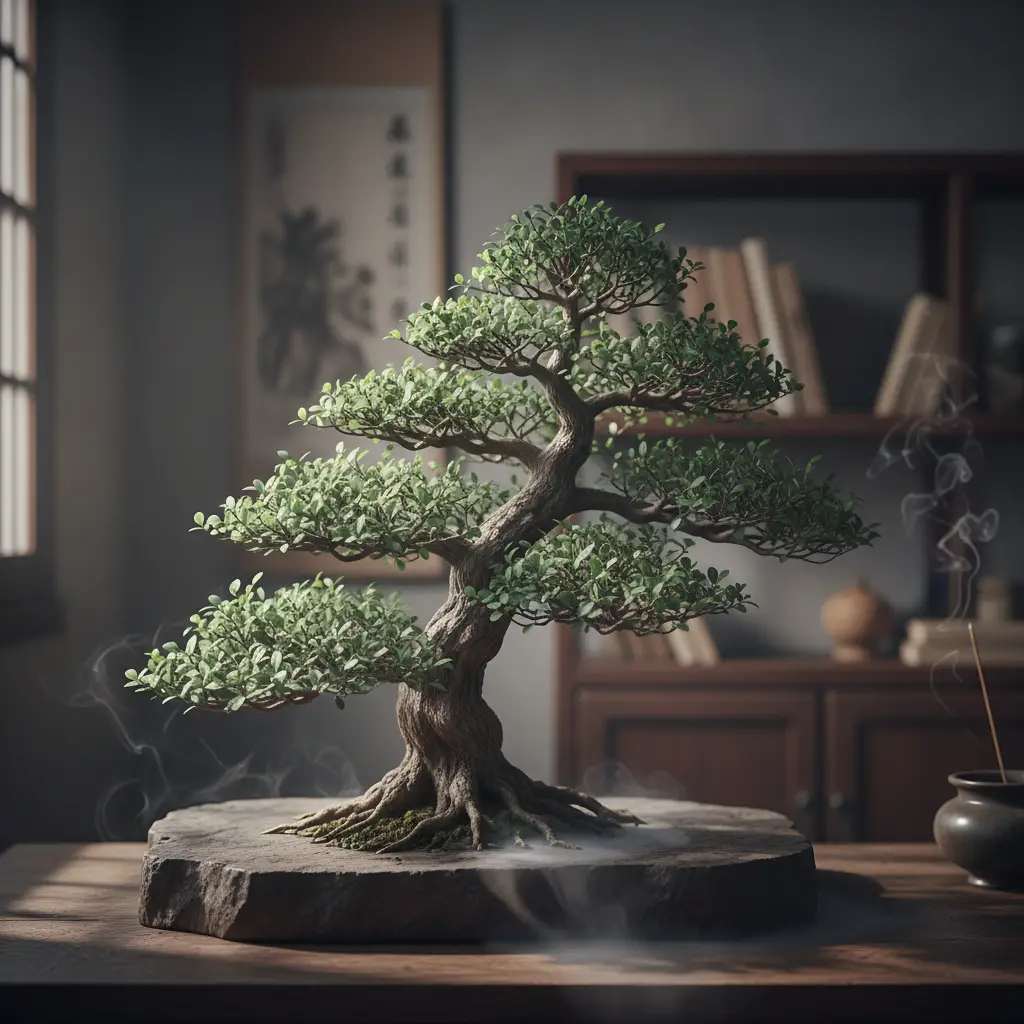
Chinese Elm Bonsai care involves understanding the specific needs of Ulmus parvifolia, a popular deciduous or semi-deciduous miniature tree. It encompasses consistent watering, ample sunlight, timely repotting, precise pruning, and vigilant pest management to ensure a healthy, aesthetically pleasing bonsai.
Understanding proper Chinese Elm Bonsai care is essential for cultivating a healthy and beautiful miniature tree. Chinese Elms (Ulmus parvifolia) are highly favored by bonsai enthusiasts for their adaptability, fine branching, and small leaf size, making them an excellent choice for both beginners and experienced growers. For those just starting their journey, our guide on Choosing Your First Bonsai Tree provides valuable insights.
Table of Contents
Understanding Your Chinese Elm Bonsai
The Chinese Elm is a deciduous or semi-deciduous tree, known for its resilience and graceful appearance. Its ability to tolerate a range of conditions makes it a forgiving species for bonsai cultivation. Originating from East Asia, this species has been a favorite for centuries due to its strong character and suitability for various bonsai styles, from informal upright to cascade. To delve deeper into artistic arrangements, explore Developing Bonsai Styles: Classic Forms & Modern Twists.
What Makes it Unique?
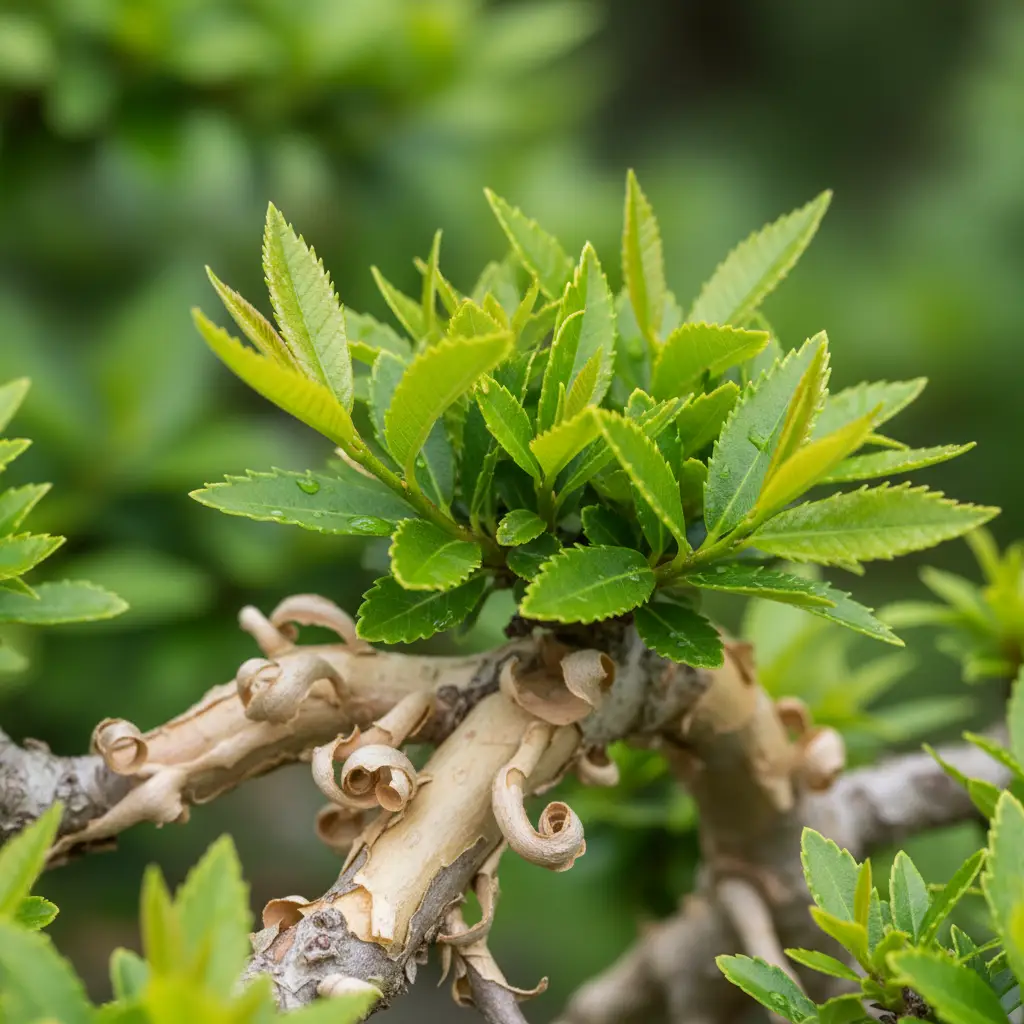
Ulmus parvifolia, the scientific name for the Chinese Elm, is celebrated for its small, oval leaves that turn yellow in autumn, adding seasonal beauty. Its fine root structure and rapid ramification of branches allow for intricate styling, making it a joy to work with. The bark also develops an attractive flaky texture with age, adding to its visual appeal.
Indoor vs. Outdoor Placement
While often sold as an indoor bonsai, the Chinese Elm thrives outdoors in most climates. It prefers a position with good air circulation and plenty of sunlight. Indoors, place it near a bright window and ensure adequate humidity, especially during the dry winter months. Consistent Chinese Elm Bonsai care involves adapting its environment to its natural needs. If keeping it indoors, rotate it occasionally to ensure even light exposure.
Essential Care Practices
Proper care is the cornerstone of a healthy Chinese Elm. These fundamental practices ensure your bonsai flourishes year after year, establishing a strong foundation for its growth and development.
Step 1: Watering
Watering is perhaps the most critical aspect of Chinese Elm Bonsai care. Chinese Elms prefer consistently moist soil but absolutely hate sitting in soggy conditions. Water thoroughly when the top inch of soil feels dry to the touch. This might mean daily watering during hot summer months and less frequently in cooler periods or winter.
Ensure good drainage to prevent root rot, and for specific guidance on Root Rot Treatment Bonsai, consult our specialized article. Misting can help increase humidity, especially for indoor trees, but it’s not a substitute for proper soil watering.
Step 2: Lighting
These trees love light. Provide your Chinese Elm with at least 4-6 hours of direct sunlight daily. If kept indoors, a south-facing window is ideal. For outdoor trees, a spot that receives morning sun and some afternoon shade in extreme heat can be beneficial to prevent leaf scorching. Insufficient light can lead to leggy growth and smaller, weaker leaves.
Step 3: Soil and Repotting
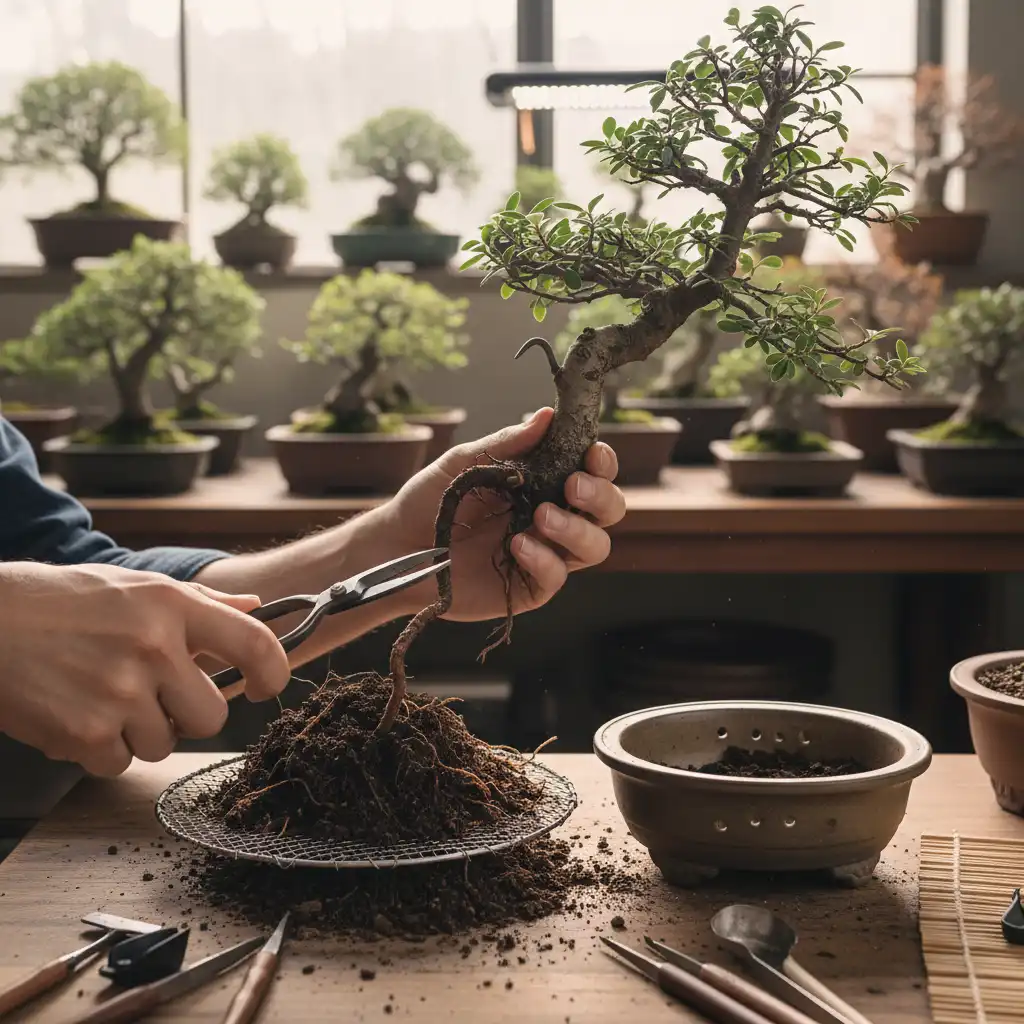
A well-draining bonsai soil mix is crucial. A typical mix includes akadama, pumice, and lava rock, or a good quality commercial bonsai substrate. Repotting is generally needed every 2-3 years for young trees and every 3-5 years for mature specimens, usually in early spring before new growth emerges.
During repotting, carefully untangle and prune about one-third of the root mass to encourage fresh root development. This process revitalizes the tree and allows it to absorb nutrients more efficiently, preventing it from becoming root-bound in its pot.
Step 4: Fertilizing
Fertilize your Chinese Elm throughout the growing season (spring to early autumn). Use a balanced liquid fertilizer, or an organic slow-release pellet fertilizer. Reduce or stop fertilizing during winter dormancy. Follow product instructions carefully to avoid over-fertilization, which can harm the roots and lead to leaf burn. Regular, light feeding is generally better than infrequent heavy doses. For comprehensive guidance on Bonsai Soil, Fertilization & Nutrition, consult our expert articles.
Pruning and Shaping Your Chinese Elm
Pruning is fundamental to maintaining the desired shape and size of your bonsai. It encourages ramification, which is the development of finer twigs and denser foliage, and keeps the tree healthy and vigorous.
Maintenance Pruning
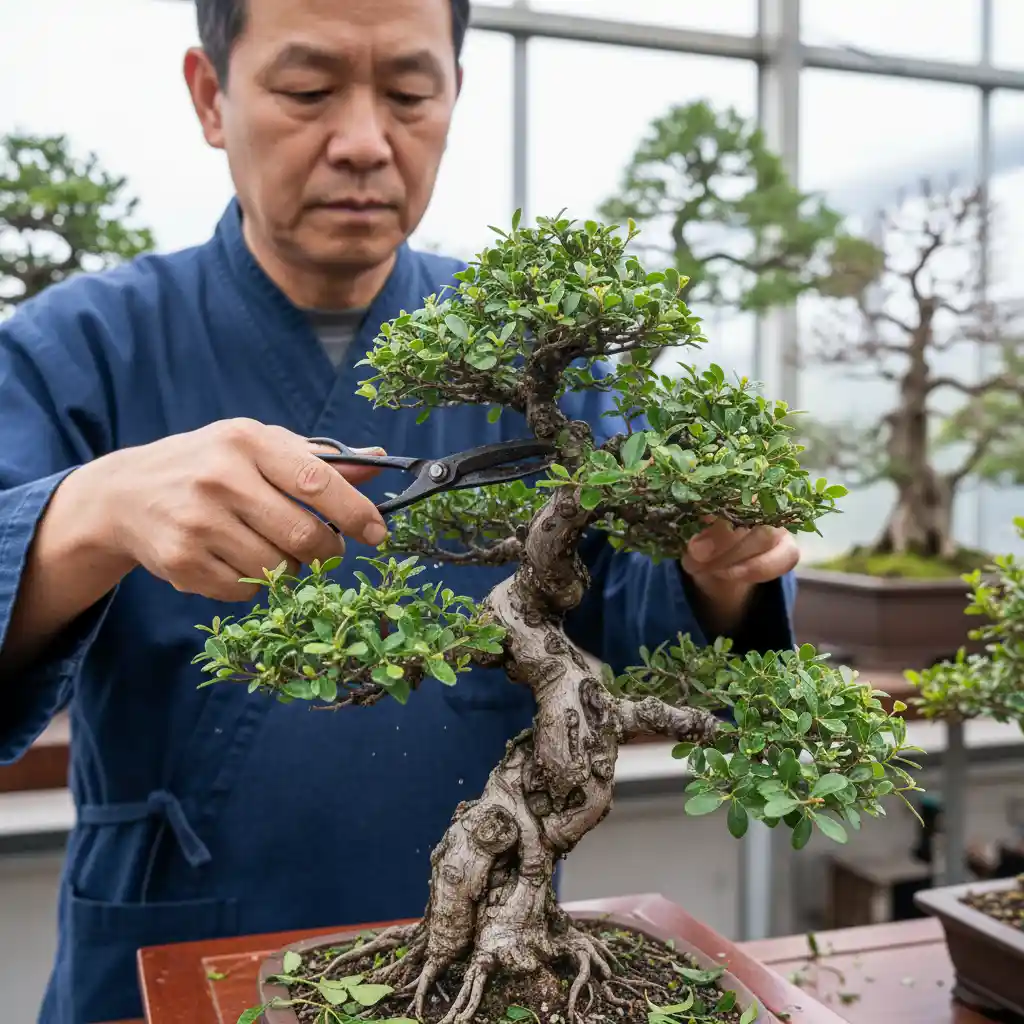
Regular maintenance pruning involves trimming new shoots back to 2-3 leaves once they have extended to 5-6 leaves. This promotes denser foliage and finer branching. Remove any upward-growing or downward-growing shoots that disrupt the tree’s silhouette. Always use sharp, clean bonsai shears to make precise cuts that heal quickly.
Structural Pruning
More extensive structural pruning, like removing larger branches or altering the main trunk line, should be done in early spring when the tree is dormant or just beginning to bud. This allows the tree to heal quickly and minimize stress. Always make clean cuts with sharp bonsai tools to promote proper wound closure and prevent disease entry. Apply cut paste to larger wounds for better healing. For those interested in advanced techniques for other popular species, such as Caring for Juniper Bonsai: Advanced Techniques, dedicated resources offer invaluable insights.
Wiring Techniques
Wiring is used to bend and position branches and the trunk into specific forms, guiding the tree’s development. Use anodized aluminum or copper wire, selecting a gauge appropriate for the branch thickness. Apply wire carefully, ensuring it does not cut into the bark as the branch grows. Remove wire before it causes damage, typically after 3-6 months. Check frequently, especially during periods of active growth, to prevent scarring. For a complete guide on Bonsai Pruning & Wiring Techniques, refer to our dedicated article.
Pest and Disease Management
Vigilance is key to preventing major infestations and maintaining the health of your Chinese Elm. Regularly inspect your bonsai for any signs of pests or diseases to catch problems early.
Common Pests
Chinese Elms can be susceptible to aphids, spider mites, and scale insects. Aphids are small, soft-bodied insects often found on new growth, causing distorted leaves. Spider mites create fine webbing and cause stippling (tiny dots) on leaves, leading to discoloration. Scale insects appear as small, stationary bumps on stems and leaves, feeding on sap and weakening the tree.
Preventative Measures
Good air circulation, proper watering, and regular inspection are the best defenses against pests and diseases. Isolate new trees for a few weeks to prevent introducing pests to your collection. Keeping your tree healthy through diligent Chinese Elm Bonsai care strengthens its natural resistance and makes it less appealing to pests.
Treatment Options
For minor infestations, a strong spray of water can dislodge pests. A solution of insecticidal soap or neem oil is often effective for more persistent problems. Always follow product instructions carefully and apply in a well-ventilated area, preferably in the evening, to avoid harming beneficial insects or burning leaves.
Winter Care and Dormancy
As deciduous trees, Chinese Elms require a period of dormancy during winter. This is a crucial part of their life cycle, allowing them to rest and gather energy for the next growing season. Proper winter care ensures their survival and vigor. For comprehensive preparation of your trees for renewed growth, consult our guide on Spring Care for Bonsai SH.
Indoor Winter Care
If your tree is kept indoors, it will still benefit from cooler temperatures during winter to encourage dormancy. Move it to a cooler room, ideally between 40-55°F (4-13°C), and reduce watering significantly. Ensure it still receives adequate light. Maintaining slightly higher humidity helps prevent excessive leaf loss, which can occur if the air is too dry.
Outdoor Winter Protection
Outdoor Chinese Elms are generally hardy but may need protection in regions with harsh freezes. Place them in an unheated garage, shed, or cold frame once temperatures consistently drop below freezing. Protect the pot with insulation, such as burlap or bubble wrap, or by burying it in the ground to prevent root damage. Continue to check soil moisture periodically, watering sparingly on warmer days.

Troubleshooting Common Problems
Even with the most meticulous Chinese Elm Bonsai care, issues can arise. Knowing how to identify and address these common problems will help you keep your tree healthy and thriving.
Yellowing Leaves
Yellowing leaves often indicate overwatering, insufficient light, or a nutrient deficiency. Check soil moisture and adjust your watering schedule. Ensure the tree gets enough light; move it to a brighter spot if necessary. If these aren’t the issue, consider applying a balanced fertilizer during the growing season, after ruling out root problems.
Leaf Drop
Sudden leaf drop can be caused by a drastic change in environment (e.g., moving an outdoor tree indoors), underwatering, or pest infestation. Assess recent changes and environmental conditions carefully. If it’s autumn, natural dormancy-related leaf drop is normal and nothing to worry about. For other cases, address the underlying cause promptly.
Lack of Growth
If your Chinese Elm isn’t growing, it might be due to insufficient light, poor soil, lack of nutrients, or root-bound conditions. Review your lighting, fertilizing, and repotting schedule. Ensure optimal Chinese Elm Bonsai care practices are in place. Sometimes, a period of rest or mild stress can temporarily halt growth, so observe other symptoms.
References
For more general information on the art and cultivation of bonsai, consider exploring these resources:
- Wikipedia: Bonsai
- Finding Bonsai Mentors & Clubs in NZ: Connect with Your Community
- For a broader context of local bonsai, explore the History of Bonsai in NZ: From Early Imports to Native Excellence.
- Additional credible sources could be listed here to further enhance knowledge on Chinese Elm bonsai care.
With consistent effort and attention to these detailed Chinese Elm Bonsai care guidelines, you can cultivate a magnificent miniature tree that brings beauty and tranquility to your space for many years. For more Inspirational Bonsai Display Ideas & Setups, explore our gallery. Happy growing!