Bonsai Pots, Soil & Wire for NZ Indoor Bonsai
Elevate your indoor bonsai in NZ! Discover the best bonsai pots NZ offers, ideal soil mixes for our climate, and essential wiring techniques. Expert guide for stunning results!
bonzai.co.nz
What You Will Learn
Elevate your indoor bonsai in NZ! Discover the best bonsai pots NZ offers, ideal soil mixes for our climate, and essential wiring techniques. Expert guide for stunning results!
Bonsai Pots, Soil & Wire for NZ Indoor Bonsai: Your Essential Guide
Embarking on the rewarding journey of indoor bonsai cultivation in New Zealand demands more than just a green thumb; it requires understanding the fundamental components that nurture and shape your miniature tree. From the perfect vessel to the ideal growing medium and the tools for artistic expression, every element plays a crucial role. This comprehensive guide will equip you with the knowledge to select the best bonsai pots NZ has to offer, formulate the right soil, and master wiring techniques to create stunning living art.
Whether you’re a seasoned enthusiast or just starting, optimising your choices for our unique climate is key to a thriving indoor bonsai collection. Let’s delve into the essentials that will help your bonsai flourish.
Table of Contents
- Choosing the Right Bonsai Pot: Size, Material & Drainage
- Types of Bonsai Soil Mixes & Components for NZ Climate
- Using Bonsai Wire for Shaping and Styling
- Decorative Elements and Accessories for Your Bonsai
- Local Suppliers for Bonsai Pots, Soil & Wire in New Zealand
- Frequently Asked Questions (FAQ)
- References & Sources
Choosing the Right Bonsai Pot: Size, Material & Drainage
The bonsai pot is much more than just a container; it’s an integral part of the artistic composition and a critical factor in your tree’s health. The right pot provides stability, aesthetic balance, and the necessary environment for root development.
Size Matters: The Right Fit for Your Tree
A common guideline suggests the pot’s length should be roughly two-thirds the height of the tree, and its depth about the same as the trunk’s diameter at its base. However, this is a starting point. Larger, more mature bonsai often require shallower pots to emphasise their age, while younger trees might benefit from deeper training pots to encourage vigorous root growth. Always ensure there’s enough room for the root ball without cramping it, allowing for future growth and essential repotting.
Material Matters: Ceramic, Plastic & More
When looking for bonsai pots NZ wide, you’ll encounter a variety of materials, each with unique properties and aesthetic appeals. Your choice will depend on your budget, your tree’s stage of development, and your personal style.
| Material | Pros | Cons | Best For |
|---|---|---|---|
| Unglazed Ceramic | Excellent breathability, natural aesthetic, robust | Can dry out quickly, heavier, more fragile than plastic | Traditional bonsai, mature trees, good drainage preferred |
| Glazed Ceramic | Vibrant colours, retains moisture better, decorative | Less breathable, heavier, colours can clash with tree | Flowering/fruiting bonsai, indoor tropical species, aesthetic focus |
| Plastic Training Pots | Lightweight, durable, inexpensive, good moisture retention | Less aesthetic, retains too much moisture if drainage is poor | Young trees, pre-bonsai, budget-conscious growers |
| Stone/Concrete | Extremely durable, unique rustic look, very heavy and stable | Very heavy, expensive, less common for indoor use | Large, old bonsai requiring maximum stability |
For indoor bonsai, glazed ceramic pots are often popular due to their ability to retain moisture in controlled indoor environments and their wide range of decorative finishes that can complement home décor.
Drainage: The Lifeblood of Healthy Roots
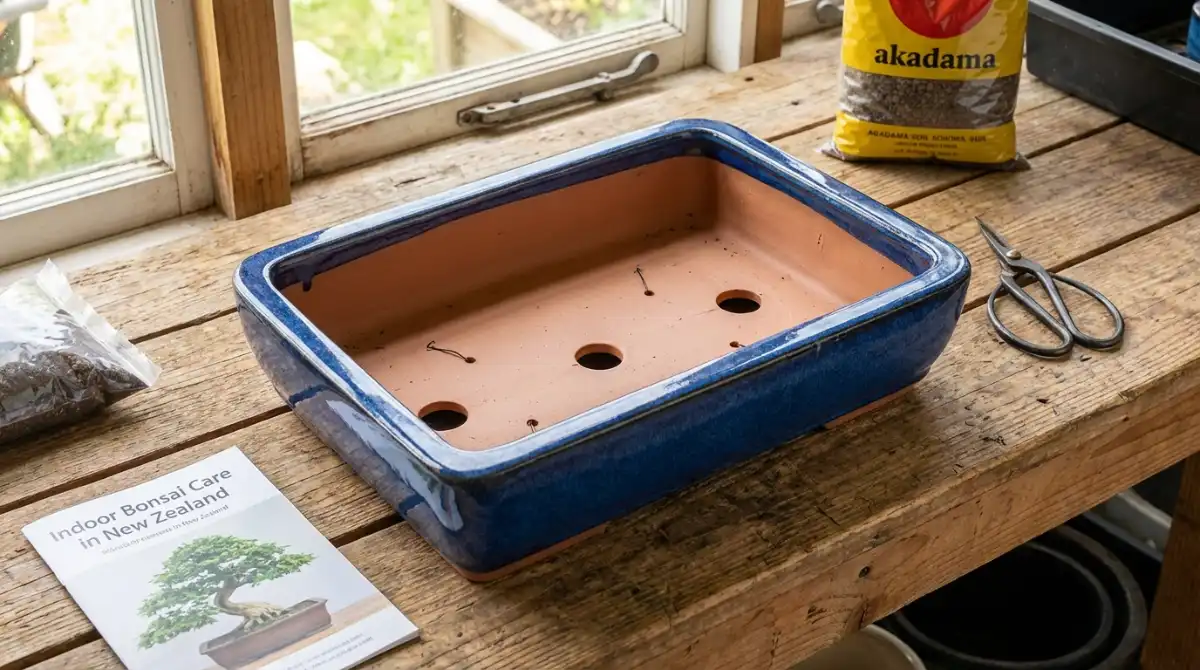
Adequate drainage is non-negotiable for bonsai health. Every bonsai pot must have drainage holes at the bottom to prevent waterlogging, which can quickly lead to root rot. Many pots also feature smaller wire holes through which you can secure your tree, preventing it from shifting during transport or repotting. Always use drainage screens over the holes to prevent soil loss while allowing water to pass freely.
Types of Bonsai Soil Mixes & Components for NZ Climate
Bonsai soil is fundamentally different from regular potting mix. It’s designed to provide aeration, drainage, and nutrient retention simultaneously, which is critical for the restricted root system of a bonsai. For New Zealand’s varied climate, selecting and mixing components appropriately is vital.
Why Specialized Bonsai Soil?
Unlike garden soil, bonsai mixes are gritty, fast-draining, and retain little organic matter. This structure prevents compaction, allows roots to breathe, and ensures that when you water, excess moisture quickly exits, preventing fungal diseases and root suffocation. Good bonsai soil supports healthy root development, which in turn supports a healthy tree.
Key Components for NZ Conditions
A typical bonsai soil mix is a combination of inorganic and organic materials. For bonsai soil New Zealand enthusiasts can adapt, here are common components:
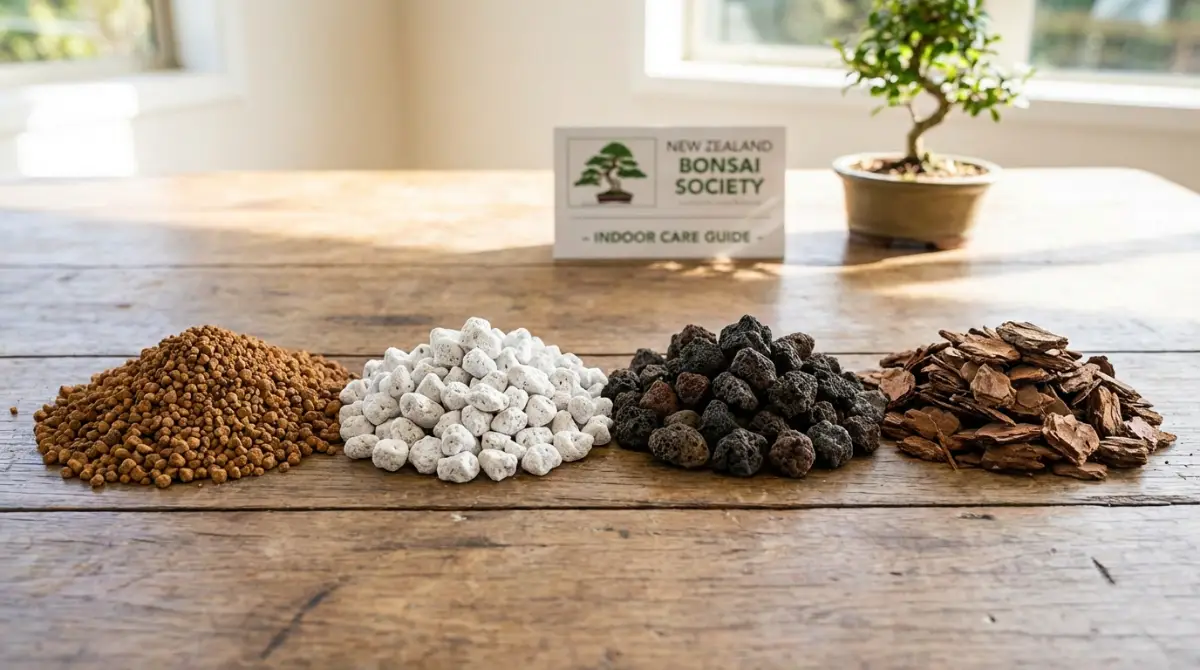
- Akadama: A hard-baked clay granular product from Japan. It absorbs water and releases nutrients slowly. It’s excellent for structure but can break down over time.
- Pumice: Lightweight volcanic rock, abundant in NZ. Provides excellent aeration and water retention, and is stable.
- Lava Rock (Scoria): Another excellent local volcanic material offering great aeration and trace minerals. Less water retention than pumice but very stable.
- Pine Bark (Horticultural Grade): Adds organic matter, retains some moisture, and helps with aeration. Ensure it’s screened to the appropriate particle size (3-6mm).
- Zeolite: A mineral that can improve nutrient retention and water holding capacity. Available in NZ.
- Coarse Sand/Grit: Provides excellent drainage and weight for stability.
A common starting point for an indoor bonsai soil mix might be 50% Akadama, 25% Pumice, and 25% Lava Rock, adjusting based on your specific tree’s needs and the indoor humidity. For trees that prefer more moisture, increase the Akadama or pine bark. For more drainage, increase pumice/lava rock.
DIY vs. Pre-Mixed Bonsai Soil
You can purchase pre-mixed bonsai soil specifically formulated for different types of trees (e.g., deciduous, coniferous, tropical). These are convenient, especially for beginners. However, many experienced growers prefer to mix their own to precisely control the ratios, tailoring the mix to their local climate, watering habits, and specific tree species. Regardless of your choice, ensure the components are of high quality and appropriate particle size (typically 2-6mm).
Using Bonsai Wire for Shaping and Styling
Wiring is an essential technique in bonsai cultivation, allowing you to gently bend and reposition branches and trunks to create the desired artistic form. It requires patience and a careful hand, but mastering it opens up immense creative possibilities for your indoor bonsai New Zealand masterpiece.
The Art of Wiring
Bonsai wire holds branches in their new positions until they grow enough to retain the shape naturally. It’s a temporary tool, typically left on for a few months up to a year, depending on the tree’s growth rate and the stiffness of the branch. The goal is to guide, not to constrict or damage.
Choosing the Right Wire
There are two primary types of bonsai wire:
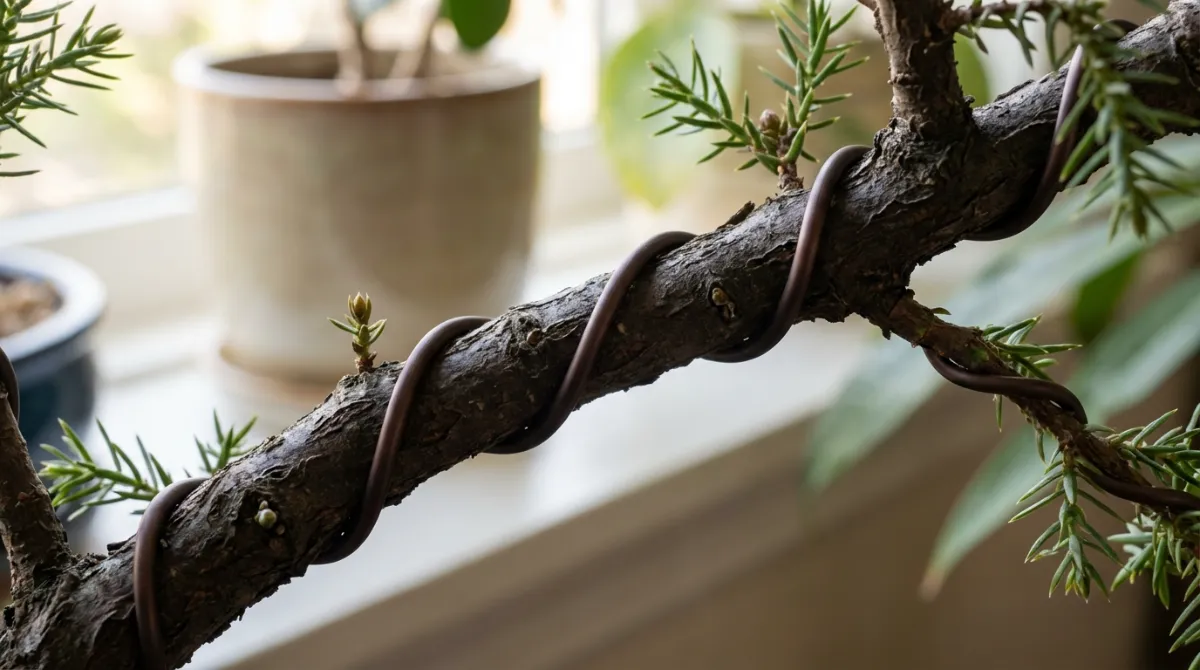
- Anodized Aluminium Wire: More common for beginners due to its flexibility, ease of application, and lower cost. It’s softer and less likely to damage bark if removed promptly. Available in various gauges (thicknesses).
- Annealed Copper Wire: Stronger and holds its shape better, making it ideal for thicker branches or coniferous trees. It’s harder to apply and more expensive, often preferred by experienced enthusiasts.
Always choose a wire gauge that is strong enough to hold the branch in place but not so thick that it damages the bark. A good rule of thumb is that the wire should be approximately one-third the thickness of the branch you are wiring.
Step-by-Step Guide to Basic Wiring
Follow these steps for effective and safe bonsai wiring:
1. Prepare Your Tree
Ensure your bonsai is healthy and well-watered a day or two before wiring. Avoid wiring during peak growth periods or immediately after repotting, as the tree will be more sensitive.
2. Select Wire Gauge
Estimate the thickness of the branch you intend to bend and select wire approximately 1/3 its diameter. It’s better to use two thinner wires side-by-side than one too-thick wire.
3. Anchor the Wire
Always anchor the wire firmly. This can be done by wrapping it around the trunk, around a thicker branch, or by pushing it into the soil. The anchor must be stable enough to withstand the tension of bending.
4. Wrap with Care
Wrap the wire around the branch at a 45-degree angle. This angle provides the best holding power. Ensure the wire coils are even, snug against the bark (but not tight), and do not cross. Work from the base of the branch towards the tip.
5. Shape and Refine
Once wired, gently bend the branch into the desired position using your thumbs and forefingers. Bend gradually, feeling for resistance. Never force a bend. If a branch is too stiff, it might need to be wired in stages over several months or years.
6. Monitor and Remove
Regularly inspect your wired branches. As the tree grows, the wire can begin to cut into the bark, leaving scars. Remove the wire *before* it starts to dig in, typically by cutting it off in small sections with wire cutters, rather than unwrapping it (which can damage the bark).
Decorative Elements and Accessories for Your Bonsai
Beyond the essential pots, soil, and wire, the world of bonsai extends to various decorative elements and accessories that enhance the overall presentation of your tree. These additions can transform a simple plant into a captivating miniature landscape.
Complementing Your Masterpiece
The goal of decorative elements is to support and enhance the tree’s beauty without overpowering it. They should contribute to the illusion of a larger, natural scene in miniature.
Figurines & Miniatures
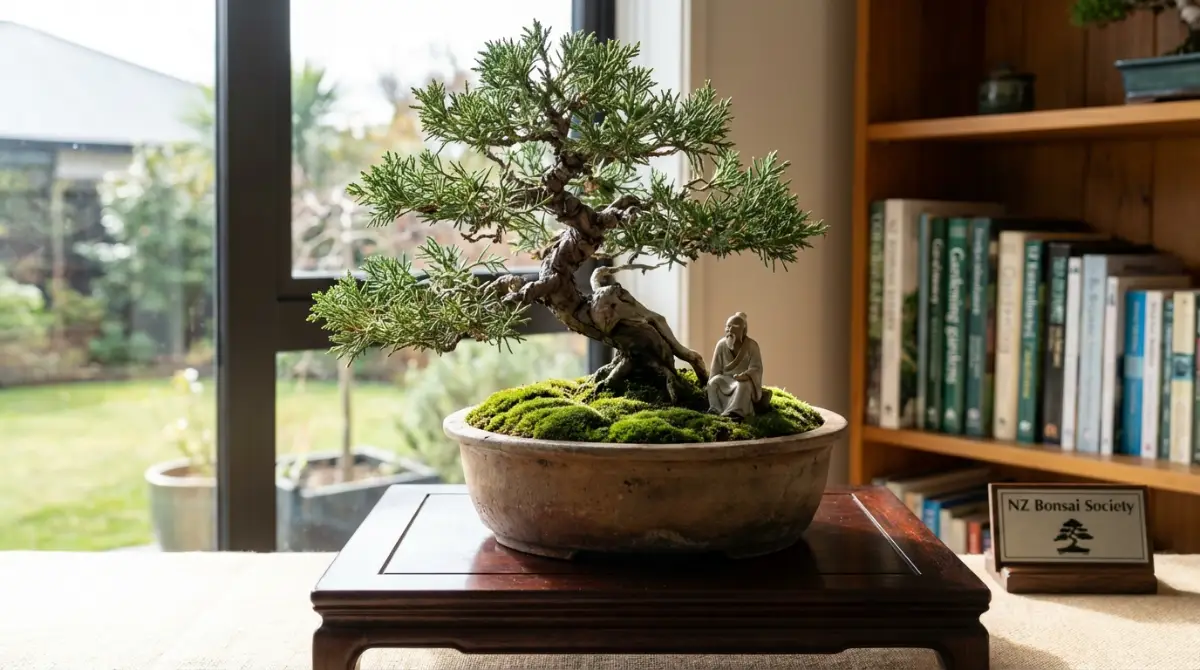
Small, scale-appropriate figurines of people, animals, or structures can add a sense of narrative and scale to your bonsai display. Choose items that fit the style and mood of your tree – a tiny fisherman by a cascading juniper, or a miniature pagoda next to a traditional pine. Ensure they are subtle and well-integrated.
Moss & Ground Covers
A lush carpet of moss adds a sense of age and natural beauty to the soil surface, reminiscent of a forest floor. Besides aesthetics, moss helps retain moisture. Other small ground covers like sedum or small ferns can also be used, provided they don’t compete with the tree for nutrients or water.
Display Stands & Tables
A good quality display stand or small table elevates your bonsai, literally and figuratively. It frames the tree, draws the eye, and completes the composition. Stands come in various heights, materials (wood, stone), and styles, allowing you to choose one that complements both your bonsai and your interior décor.
Local Suppliers for Bonsai Pots, Soil & Wire in New Zealand
Sourcing quality supplies is paramount for successful bonsai cultivation. Fortunately, New Zealand offers a growing number of options for acquiring bonsai pots NZ made or imported, as well as specialised soil components and wiring tools.
Finding Quality Supplies Locally
When seeking your bonsai essentials, consider the following avenues:
- Specialty Bonsai Nurseries: These are your best bet for high-quality, authentic bonsai pots, tools, and specific soil components like Akadama. They often have knowledgeable staff who can offer expert advice tailored to local conditions. Look for nurseries listed by the New Zealand Bonsai Association.
- Online Retailers: Several New Zealand-based online stores specialise in bonsai supplies, offering a convenient way to browse a wide range of products, including various bonsai pots NZ shipping options. This is particularly useful for finding specific wire gauges or less common soil components.
- Garden Centres & Hardware Stores: While less specialised, larger garden centres may carry basic plastic training pots, general potting mix components (like pumice or bark fines), and aluminium wiring. Always check the quality and suitability for bonsai before purchasing.
- Local Potteries & Artisans: Keep an eye out for local potters who might craft unique, handmade bonsai pots. These often boast exceptional quality and aesthetic appeal, offering something truly distinctive for your collection.
When purchasing, don’t hesitate to ask questions about the origin and quality of the products. For soil components, inquire about particle size and whether they are suitable for bonsai use. For pots, check for adequate drainage holes and overall craftsmanship. Supporting local businesses helps grow the bonsai community in New Zealand.
Frequently Asked Questions (FAQ)
1. Can I use regular garden soil for my indoor bonsai?
No, regular garden soil is entirely unsuitable for bonsai. It compacts easily, retains too much moisture, and lacks the necessary aeration for a bonsai’s restricted root system, leading to root rot and poor health. Always use a specialised bonsai soil mix.
2. How often should I water my bonsai in an indoor pot?
Watering frequency depends on many factors: your tree species, pot size, soil mix, and indoor humidity. A general rule is to water thoroughly when the top inch or two of soil feels dry to the touch. Ensure water drains freely from the bottom of the pot. Never let your bonsai sit in standing water.
3. When is the best time to apply wire to my indoor bonsai?
The best time to wire an indoor bonsai is typically during its dormant or slower growth periods, often in late autumn or winter. This reduces the risk of the wire cutting into the bark as the tree grows. Always monitor closely and remove wire before it causes damage, regardless of the season.
4. Are New Zealand-made bonsai pots as good as imported ones?
Absolutely! Many talented New Zealand potters create high-quality bonsai pots that are not only functional but also uniquely artistic. While imported Japanese or Chinese pots are classic, local artisans offer durable, well-draining options that can be equally beautiful and often specifically designed with local climate considerations in mind.
References & Sources
- Bonsai Empire. (n.d.). Bonsai Soil. Retrieved from bonsaiempire.com
- The Art of Bonsai Project. (n.d.). Wiring Basics. Retrieved from artofbonsai.org
- New Zealand Bonsai Association. (n.d.). Find a Club/Nursery. Retrieved from bonsai.org.nz
- International Bonsai. (n.d.). Choosing the Right Bonsai Pot. Retrieved from internationalbonsai.com