Bonsai Fertilization Guide: Best Practices & Bonsai Fertilizer Recommendations for Thriving Trees
Achieving vibrant, healthy bonsai trees requires careful attention to their nutritional needs. Our expert guide provides clear, actionable bonsai fertilizer recommendations to help your miniature trees flourish. Learn how to feed your bonsai correctly, understand different fertilizer types, and ensure they receive the vital nutrients for strong growth and stunning beauty.
Table of Contents
Understanding Bonsai Nutrition
Just like any living organism, your bonsai needs food to thrive. Fertilization is not about making your bonsai grow large, but rather about keeping it healthy and vigorous in a small container. The right nutrients promote strong roots, vibrant foliage, and resilience against disease. Without proper feeding, a bonsai will struggle to maintain its compact form and delicate balance. To achieve and maintain their exquisite forms, understanding techniques like Wiring & Pruning NZ Natives: Shaping for Optimal Health & Aesthetics or specific Oak Bonsai Pruning Techniques is equally important. To fully master these elements, explore our comprehensive guide on Bonsai Soil, Fertilization & Nutrition.
The Basics: N-P-K and Micronutrients
When you look at a fertilizer label, you’ll often see three numbers, like 10-10-10. These represent the N-P-K ratio:
- N (Nitrogen): Essential for healthy leaf growth and green color. Think lush foliage.
- P (Phosphorus): Crucial for root development, flowering, and fruit production. It supports the tree’s internal energy systems.
- K (Potassium): Boosts overall plant health, strengthens cell walls, and helps with disease resistance. It’s like the tree’s immune system.
Beyond N-P-K, bonsai also need micronutrients such as iron, magnesium, calcium, and boron. These are required in smaller amounts but are equally vital for specific plant functions. Most quality bonsai fertilizers include a balanced blend of these essential elements.
Beyond the science of nutrition, the art of bonsai encompasses many other crucial elements. To truly appreciate and enhance the beauty of your miniature trees, careful consideration of presentation is vital, including understanding various Bonsai Styles Explained: Upright, Slanting, Cascade and choosing the right Bonsai Pot Selection for Aesthetic Harmony, which both play significant roles in the overall visual impact.
Exploring Types of Bonsai Fertilizers
The market offers a wide variety of fertilizers, each with its own benefits. Choosing the right one depends on your bonsai’s specific needs, your climate, and your preferred care routine. Understanding the differences will help you make informed bonsai fertilizer recommendations for your collection.
Organic vs. Inorganic Fertilizers
Both types have their place in bonsai care:
Organic Fertilizers
Derived from natural sources like fish emulsion, bone meal, or cottonseed meal. They release nutrients slowly as microorganisms in the soil break them down. This slow release reduces the risk of burning roots and builds healthier soil long-term. They often have a slight odor and can attract pests if not applied correctly, but provide a gentle, steady food source.
Inorganic Fertilizers (Chemical)
Synthetically produced and provide nutrients in a readily available form for the plant. They act quickly and offer precise control over nutrient ratios. The downside is a higher risk of over-fertilization, which can damage roots. They are odorless and clean to use, making them popular for specific growth stages or quick corrections.
Liquid vs. Granular vs. Slow-Release
These refer to the form of the fertilizer:
- Liquid Fertilizers: Mixed with water and applied directly to the soil. They are fast-acting and allow for easy dilution, which is great for young or sensitive trees. Often applied weekly or bi-weekly.
- Granular Fertilizers: Small pellets or powders applied to the soil surface. They release nutrients slowly over time as they dissolve with watering. Less frequent application is needed, typically monthly or bi-monthly.
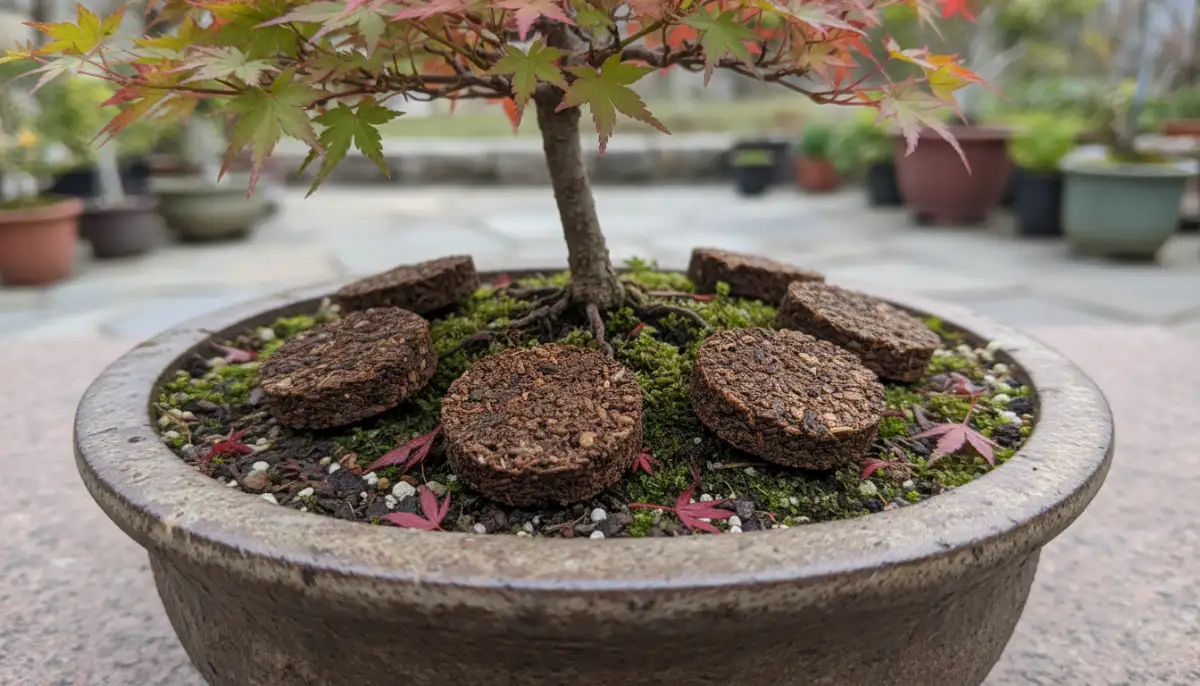
- Slow-Release Pellets/Cakes: Often organic cakes or coated inorganic pellets placed on the soil surface. They release nutrients very slowly over weeks or months, offering consistent feeding with minimal effort. This method is highly recommended for busy enthusiasts and provides excellent, long-term bonsai fertilizer recommendations.
Developing Your Bonsai Fertilization Schedule
The timing and frequency of feeding are just as important as the type of fertilizer you choose. A good schedule supports your tree’s natural growth cycles and avoids unnecessary stress. These strategies are particularly effective for 2025 and beyond.
When to Fertilize
Generally, you should fertilize your bonsai during its active growing season. For most species, this means spring, summer, and early autumn. For a comprehensive overview of seasonal tasks tailored to your region, including vital Spring Care for Bonsai SH, consult our Seasonal Care Calendar for NZ Bonsai: A Month-by-Month Guide. Avoid fertilizing:
- During winter dormancy.
- Immediately after repotting (wait 4-6 weeks for roots to heal).
- When the tree is stressed, sick, or infested with pests, as understanding Environmental Stressors Affecting Bonsai Health is key to prevention and recovery.
- If the soil is dry; always water thoroughly before applying fertilizer to prevent root burn. This attention to detail, alongside understanding Basic Bonsai Watering & Light Requirements and specifically Watering Bonsai Trees: How Often & How Much, forms the foundation of healthy bonsai cultivation.
Frequency and Application Tips
The frequency depends on the fertilizer type and your tree’s needs:
- Liquid Fertilizers: Typically applied every 1-2 weeks, diluted to half or quarter strength for bonsai. It’s better to feed weak and often than strong and rarely.
- Granular/Slow-Release: Applied every 1-2 months, or as directed by the product. These are placed on the soil surface and allowed to dissolve naturally.
Always follow the product instructions, but for bonsai, it’s generally safer to use a slightly weaker dilution than recommended. Observe your tree’s response and adjust accordingly. Different species may have unique requirements; for example, flowering bonsai might benefit from higher phosphorus during bloom periods. For species-specific guidance, such as Juniper Bonsai Care: Styling & Maintenance or Chinese Elm Bonsai Care, always consult specialized resources. Consistent, general care, however, forms the bedrock of a thriving bonsai collection.
Mastering bonsai care is an ongoing journey of learning and discovery. We encourage you to delve deeper into various aspects of this rewarding art form and connect with fellow enthusiasts. Explore our Bonsai Community & Events page to find local gatherings, workshops, and resources that can further enhance your bonsai experience.