Beginner-Friendly Indoor Bonsai for New Zealanders
Discover easy indoor bonsai NZ options for beginners! Learn to choose, care for, and troubleshoot your first bonsai with expert tips for New Zealand homes. Get started today!
bonzai.co.nz
What You Will Learn
Discover easy indoor bonsai NZ options for beginners! Learn to choose, care for, and troubleshoot your first bonsai with expert tips for New Zealand homes. Get started today!
Stepping into the world of bonsai can feel like embarking on a grand adventure, even from the comfort of your New Zealand home. These miniature trees, steeped in ancient tradition, offer a unique blend of horticulture and art. While often perceived as challenging, the truth is, with the right guidance and species, anyone can cultivate a thriving indoor bonsai. This guide is your first step towards finding the perfect easy indoor bonsai NZ variety and learning the foundational care to ensure its success.
Forget the myths of complex rituals and delicate demands. We’ll cut through the noise to provide New Zealanders with practical, approachable advice for selecting, nurturing, and even troubleshooting their first indoor bonsai. Prepare to transform a small space into a serene haven, all while connecting with nature on a miniature scale.
Table of Contents
- 1. Choosing Your First Indoor Bonsai in NZ
- 2. Low Maintenance Species Perfect for Beginners
- 3. Basic Tools and Setup for New Enthusiasts
- 4. First Steps in Bonsai Care: Watering, Light & Feeding
- 5. Troubleshooting for New Bonsai Owners
- 6. Frequently Asked Questions (FAQ)
- 7. References & Sources
1. Choosing Your First Indoor Bonsai in NZ
The journey to becoming a successful bonsai owner begins with selecting the right tree. For New Zealanders, this means considering our unique climate conditions, even for indoor plants. The key is to pick a species that tolerates indoor environments well and is forgiving of beginner mistakes.
When choosing your first easy indoor bonsai NZ, think about:
- Light Availability: How much natural light does your chosen spot receive? Most indoor bonsai prefer bright, indirect light.
- Temperature & Humidity: Indoor environments in NZ can vary. Some species prefer consistent temperatures and higher humidity.
- Watering Frequency: Are you diligent with watering, or do you need a tree that can handle a little neglect?
- Growth Habit: Some trees grow faster or are easier to prune and shape than others.
“The best indoor bonsai for a beginner in New Zealand is one that matches their lifestyle and home environment, not just their ambition.”
2. Low Maintenance Species Perfect for Beginners
To make your bonsai journey enjoyable and stress-free, start with species renowned for their resilience and adaptability. These are the champions for an easy indoor bonsai NZ experience:
- Ficus (Fig) Bonsai: Varieties like Ficus microcarpa (Ginseng Ficus) or Ficus retusa are incredibly popular. They are tolerant of varying light conditions, relatively forgiving if you forget to water occasionally, and can recover well from pruning mistakes. They thrive in New Zealand indoor conditions.
- Chinese Elm (Ulmus parvifolia): A classic bonsai choice, the Chinese Elm is robust and adapts well to indoor life. It has small leaves, making it ideal for miniature styling, and can even handle cooler temperatures, making it suitable for unheated rooms during milder NZ winters.
- Portulacaria afra (Dwarf Jade): Often mistaken for a succulent, the Dwarf Jade is incredibly drought-tolerant thanks to its fleshy leaves and stems that store water. It requires bright light and infrequent watering, making it perfect for those who tend to overwater or have busy schedules. It’s also very easy to prune and shape.
- Schefflera (Dwarf Umbrella Tree): This tropical plant is remarkably hardy indoors. It can tolerate lower light levels than many other bonsai and is quite resistant to pests. Its natural growth habit lends itself well to bonsai styling, providing a lush, green canopy.
Each of these species offers a unique aesthetic and growing experience, but all share the common trait of being forgiving, making them ideal for your first foray into the art of bonsai.
3. Basic Tools and Setup for New Enthusiasts
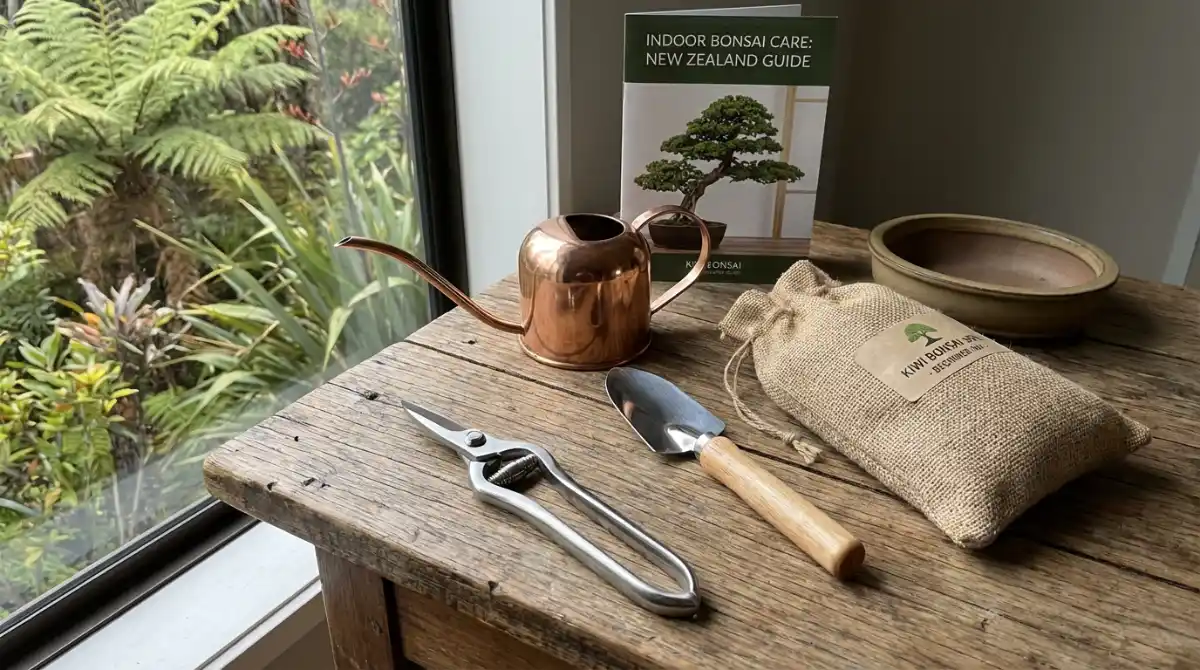
You don’t need an elaborate workshop to start with bonsai. A few essential items will set you up for success. Think of these as your basic adventurer’s kit for nurturing your miniature tree.
Action Checklist: Your Beginner Bonsai Kit
- Bonsai Pot: A shallow pot with good drainage holes is crucial. Ensure it has matching drainage screens to prevent soil loss.
- Bonsai Soil Mix: Regular potting mix is too dense. You need a fast-draining, airy mix specifically designed for bonsai. Local NZ garden centers often stock suitable options or components like pumice, akadama (if available), and scoria.
- Small Pruning Shears: Essential for shaping your tree and trimming excess growth. Look for sharp, clean shears that fit comfortably in your hand.
- Watering Can with Fine Spout: A fine, gentle spray is vital to avoid disturbing the soil and to ensure even watering.
- Small Trowel/Chopstick: Useful for working with soil, gently loosening roots during repotting, or aerating the soil surface.
- Drip Tray: To protect your surfaces from excess water after watering.
- Humidity Tray (Optional but Recommended): A tray filled with pebbles and water, placed beneath your pot, can help increase ambient humidity, especially beneficial in drier New Zealand homes.
4. First Steps in Bonsai Care: Watering, Light & Feeding
Mastering these three fundamental aspects of care is paramount to the health and longevity of your easy indoor bonsai NZ. Consistency and observation are your best allies.
1. Watering Your Bonsai
This is the most critical aspect of bonsai care. Overwatering leads to root rot, while underwatering causes desiccation. The key is to water thoroughly when the topsoil feels dry to the touch. In New Zealand, this might mean daily in summer and less frequently in winter.
- Check the Soil: Before watering, stick your finger about 1-2 cm into the soil. If it feels dry, it’s time to water.
- Water Thoroughly: Water until it drains freely from the bottom of the pot. Repeat this 2-3 times to ensure the entire root ball is saturated.
- Consider Rainwater: If possible, collect and use rainwater, as it’s free of chlorine and other chemicals found in tap water that can sometimes harm sensitive plants.
2. The Right Light for Indoor Bonsai
Most indoor bonsai need bright, indirect light for at least 4-6 hours a day. A north or east-facing window in New Zealand is often ideal. Avoid harsh, direct afternoon sun which can scorch leaves, especially during summer.
- Observe Your Tree: If leaves are yellowing or dropping excessively, it might be getting too little light. If leaves look bleached or have crispy edges, it might be getting too much direct sun.
- Rotate Regularly: Turn your bonsai every week or so to ensure all sides receive adequate light, promoting even growth.
- Supplement if Needed: If natural light is scarce, consider a grow light.
3. Feeding Your Miniature Tree
Bonsai pots offer limited nutrients, so regular feeding during the growing season is essential. Use a balanced liquid bonsai fertilizer or a general houseplant fertilizer diluted to half strength.
- Growing Season: Fertilize regularly (every 2-4 weeks) during spring and summer when the tree is actively growing.
- Dormancy: Reduce or stop fertilizing during autumn and winter when growth slows.
- Follow Instructions: Always follow the dilution and application instructions on your chosen fertilizer. Never fertilize a dry tree; always water first.

5. Troubleshooting for New Bonsai Owners
Even with the most beginner-friendly species, you might encounter issues. Don’t panic! Most problems are easily rectifiable with a bit of observation and adjustment. This section offers solutions for common problems faced by new easy indoor bonsai NZ owners.
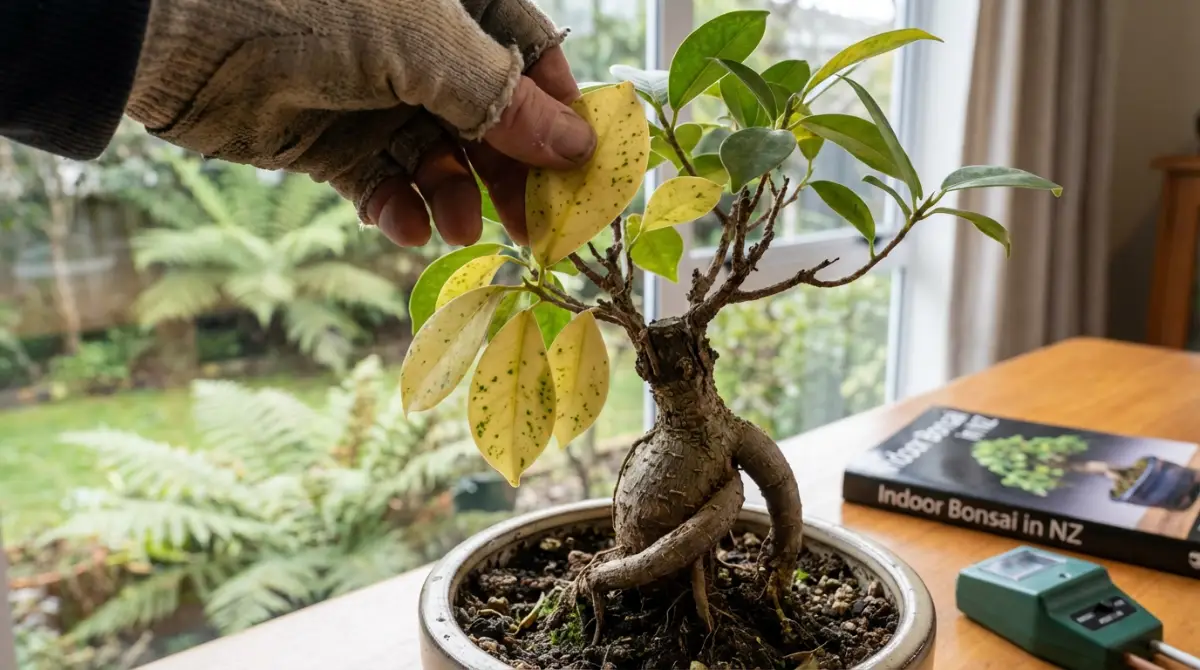
1. Yellowing Leaves
Yellowing leaves are a common indicator of stress and can be caused by several factors:
- Overwatering: The most common cause. Roots drown without oxygen. Allow the soil to dry out more between waterings. Ensure proper drainage.
- Underwatering: Leaves will often turn crispy and brown at the edges before yellowing and dropping. Increase watering frequency and thoroughness.
- Lack of Light: Move your bonsai to a brighter location, ideally near a window with indirect light.
- Nutrient Deficiency: If watering and light are fine, consider if it’s time to fertilize during the growing season.
2. Drooping Foliage
When leaves appear wilted or limp, it often points to a water-related issue:
- Severe Underwatering: The tree is desperate for water. Give it a thorough soak by placing the entire pot in a basin of water for 15-30 minutes until bubbles stop rising.
- Root Rot: If the soil is constantly wet and leaves are drooping, it could be root rot. Carefully remove the tree, inspect roots for mushy, black sections, and prune affected parts. Repot into fresh, dry bonsai soil.
- Temperature Shock: Sudden changes in temperature can cause temporary drooping. Try to keep the environment stable.
3. Pest Infestations
While less common indoors, pests can still be an issue. Regularly inspect your tree for tiny insects or sticky residue.
- Common Pests: Look for spider mites (fine webbing), aphids (small green/black insects on new growth), or mealybugs (white, cottony masses).
- Isolate: Immediately separate an infested tree from others to prevent spread.
- Clean Gently: For mild infestations, wipe leaves with a damp cloth or cotton swab dipped in rubbing alcohol.
- Neem Oil: A natural insecticide, neem oil diluted with water, can be sprayed on the leaves according to product instructions.
6. Frequently Asked Questions (FAQ)
Q: How often should I water my easy indoor bonsai in NZ?
A: It depends on the species, pot size, and environmental conditions. As a general rule, check the soil daily and water thoroughly when the top 1-2 cm of soil feels dry to the touch. This might be daily in summer and every few days in winter.
Q: Can I use regular potting mix for my bonsai?
A: No, regular potting mix retains too much water and can lead to root rot. Bonsai require a fast-draining, airy soil mix, often containing components like pumice, scoria, or akadama. Look for specialized bonsai soil at garden centers.
Q: Do indoor bonsai need direct sunlight in New Zealand?
A: Most indoor bonsai prefer bright, indirect light, ideally from a north or east-facing window. Harsh, direct afternoon sun, especially in summer, can scorch their leaves. Some species might tolerate a few hours of gentle morning sun.
Q: How do I know when to repot my bonsai?
A: Typically, young, fast-growing indoor bonsai need repotting every 1-2 years, while older, slower-growing trees can go 3-5 years. Signs include water taking too long to drain, roots circling the pot, or stunted growth. Repotting is best done in early spring.
7. References & Sources
- Bonsai Empire. (n.d.). Beginner’s Guide to Bonsai. Retrieved from https://www.bonsaiempire.com/basics/bonsai-care/beginners-guide
- New Zealand Plant Protection Society. (2023). Pest Management in Home Gardens. (General reference for pest control principles)
- The Bonsai Society of New Zealand. (n.d.). Care Sheets for Common Bonsai Species. (Plausible, representative source for NZ-specific advice)
- Royal Horticultural Society. (2024). Indoor Plant Care: Light and Water Requirements. (General horticultural principles)