Basic Bonsai Watering & Light Requirements
bonzai.co.nz
For a beginner bonsai watering light is key: Bonsai trees require careful watering when the topsoil feels dry, not on a fixed schedule. They also need bright, indirect sunlight for optimal growth, typically 6 hours daily, protecting them from harsh midday sun. Understanding these needs prevents common beginner mistakes.
Embarking on the journey of bonsai cultivation is a rewarding experience. These miniature trees bring beauty and tranquility to any space. However, success begins with understanding their fundamental needs. Two of the most critical aspects for any beginner bonsai watering light regimen are proper hydration and adequate sunlight. Getting these right lays the groundwork for a healthy, thriving bonsai.
Many new enthusiasts feel overwhelmed by bonsai care. Rest assured, with a clear understanding of basic principles and by exploring resources like Bonsai Workshops for Beginners: Where to Learn, you can provide your tree with everything it needs. We will break down watering frequencies, ideal light exposure, and the often-overlooked importance of humidity. This guide aims to simplify these crucial elements, helping you avoid common pitfalls and enjoy your miniature masterpiece for years to come.
Mastering Bonsai Watering Techniques
Watering is arguably the most vital part of bonsai care. It’s not about following a strict schedule, but rather responding to your tree’s specific needs. Overwatering can lead to root rot, while underwatering can quickly dehydrate and kill your bonsai. Finding the right balance is essential for strong Bonsai Repotting Techniques & Root Pruning.
When to Water Your Bonsai
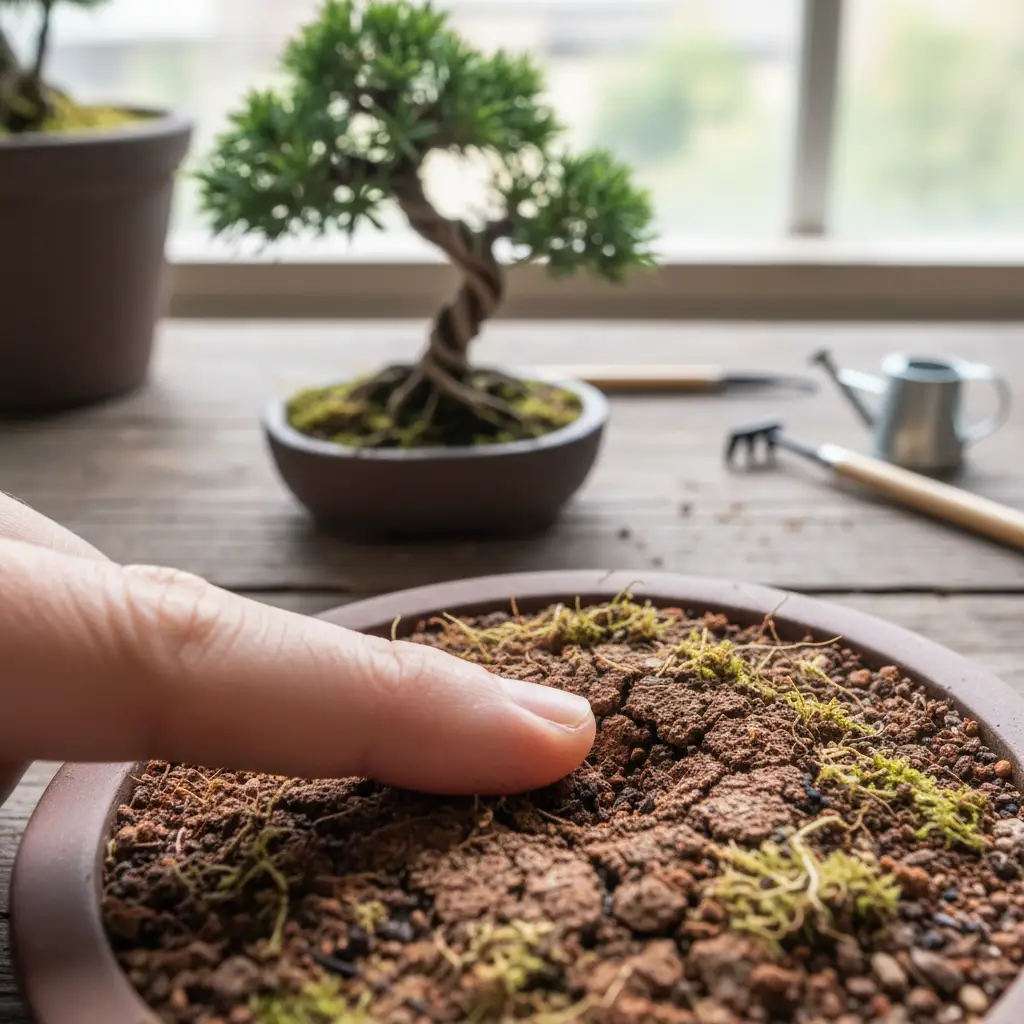
The golden rule for bonsai watering is to water when the soil surface begins to feel dry to the touch. This means checking your tree daily, especially during warmer months or if your tree is in a sunny spot. The “finger test” is a simple yet effective method: insert your finger about an inch into the soil. If it feels dry, it’s time to water.
Several factors influence watering frequency. The size of your pot, the type of bonsai tree species, and even the season play a significant role. Smaller pots dry out faster, as do deciduous trees during their growing season. Tropical bonsai often require more frequent watering than coniferous types. Always observe your specific tree and its environment.
How to Water Effectively
When you do water, do so thoroughly. The goal is to saturate the entire root ball. Pour water over the soil until it drains freely from the drainage holes at the bottom of the pot. Repeat this process two or three times to ensure all the soil is moistened. This also helps flush out accumulated salts.
Some prefer the “soaking method” for particularly dry bonsai. Place the entire pot into a basin of water, allowing it to soak for 10-20 minutes until air bubbles stop rising. This ensures full saturation. Proper drainage is crucial; never let your bonsai sit in standing water for extended periods, as this invites root rot.
Consider the quality of your water. Tap water is generally acceptable, but if you have very hard water or water treated with excessive chemicals, rainwater or filtered water can be beneficial. Understanding your local water conditions can contribute to long-term bonsai care success.
Providing Ideal Light Conditions for Your Bonsai
Light is the fuel for photosynthesis, the process by which your bonsai converts light energy into food. Without adequate light, your tree will struggle to grow, its leaves may become weak, and its overall vigor will decline. The right light ensures a vibrant, healthy miniature tree.
Understanding Light Needs
Most bonsai thrive in bright light, often preferring several hours of direct morning sun followed by indirect or filtered light in the afternoon. A general guideline is at least six hours of light per day. However, “direct sunlight” can be intense, especially during midday summers, and may scorch delicate leaves.
It’s important to differentiate between direct and indirect sunlight. Direct sunlight means the sun’s rays directly hit the leaves. Indirect light is bright light without the sun shining directly on the plant, often found near a bright window or under a shade cloth. Understanding this difference is key for optimal placement, particularly for a beginner bonsai watering light setup.
Indoor vs. Outdoor Placement
The ideal placement for your bonsai depends heavily on its species. Most traditional bonsai species are temperate climate trees and flourish outdoors. They require the natural cycles of Seasonal Inversion for Bonsai Care and ample light. For these, and to ensure proper Spring Care for Bonsai SH, a spot that receives morning sun and afternoon shade is often perfect. Remember to protect them from extreme heat or freezing temperatures.
For indoor bonsai, which are typically tropical or subtropical species, bright window placement is essential. A south-facing window is often ideal, but be mindful of intense summer sun. If natural light is insufficient, consider supplementing with grow lights. These provide the full spectrum of light necessary for healthy indoor growth and are an excellent tool for modern bonsai cultivation.
The Importance of Humidity for Bonsai
Humidity is often an overlooked aspect of bonsai care, especially for those grown indoors or in dry climates. Many bonsai species, particularly tropical ones, originate from humid environments. Replicating these conditions can significantly contribute to their health and vitality.
Why Humidity Matters
Low humidity can lead to several problems for your bonsai. Leaves may turn brown at the tips or edges, become crispy, and eventually drop prematurely. This “leaf crisping” is a sign that your tree is losing moisture too quickly through its foliage. Adequate humidity helps the leaves retain moisture, supporting efficient photosynthesis and overall plant vigor.
Consider the natural habitat of your bonsai tree species. Tropical species like Ficus or Fukien Tea will thrive in higher humidity. For species-specific guidance, such as detailed Maple Bonsai Care Tips, tailoring your care is vital. Temperate species, while more tolerant, can still benefit from increased humidity, especially when brought indoors for winter or when ambient air is very dry due to heating or air conditioning.
How to Increase Humidity
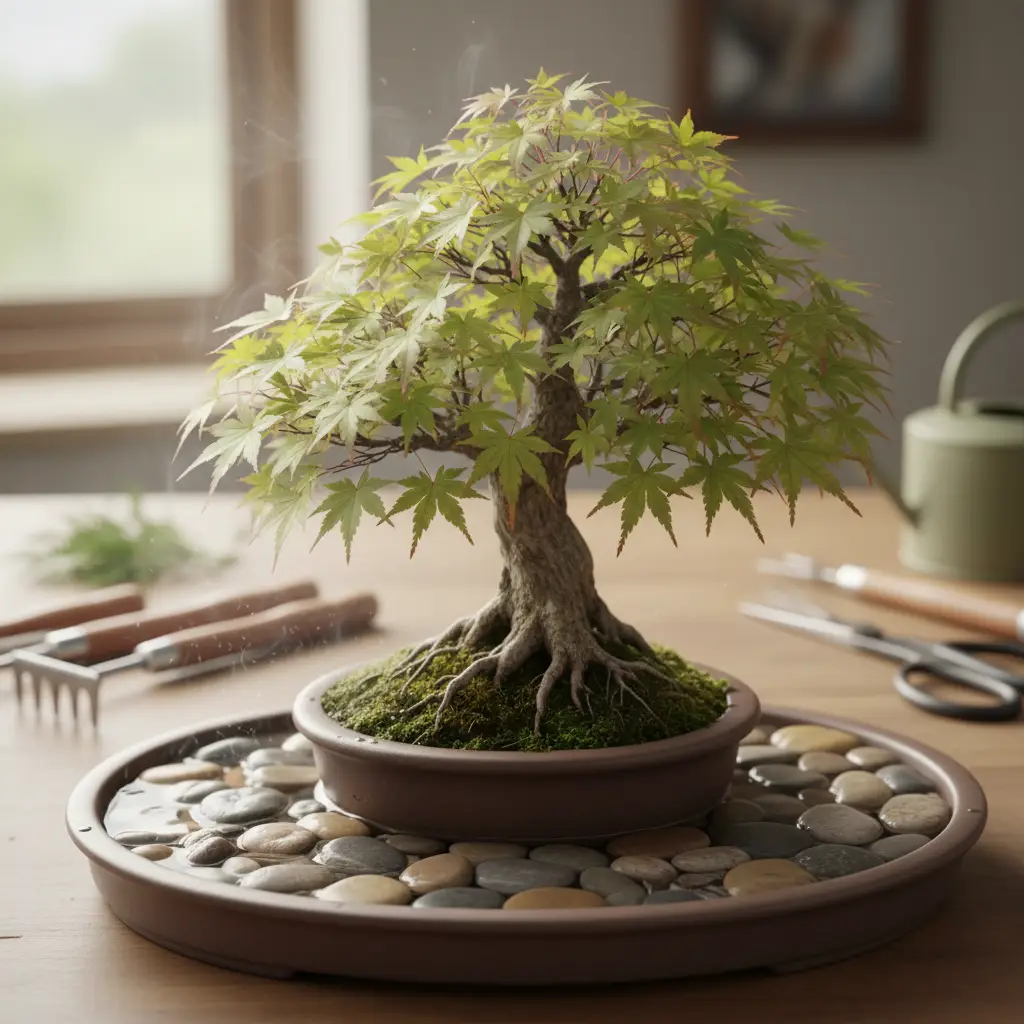
There are several effective ways to boost humidity around your bonsai. A popular method is using a humidity tray. This is a shallow tray filled with pebbles and water, placed beneath your bonsai pot. Ensure the pot sits on the pebbles, above the water level, so the roots don’t get waterlogged. As the water evaporates, it creates a humid microclimate around the tree.
Misting your bonsai leaves can provide a temporary boost in humidity. While it feels refreshing, the effects are often short-lived. It’s more effective when combined with other methods. Grouping several plants together can also naturally increase localized humidity. For advanced setups, a small room humidifier can provide consistent, optimal levels for a collection of miniature trees.
For more detailed information on the historical and artistic aspects of bonsai, consider exploring resources like History of Bonsai in NZ: From Early Imports to Native Excellence or external resources like Wikipedia’s Bonsai article.
Common Beginner Mistakes to Avoid
As a beginner bonsai watering light enthusiast, it’s easy to make mistakes. Recognizing and avoiding these common errors will significantly improve your chances of success and ensure the longevity of your miniature tree.
Overwatering and Underwatering
The most frequent mistake is improper watering. Overwatering suffocates the roots, leading to root rot, which is often fatal. Symptoms include yellowing leaves and a soft trunk. Underwatering, conversely, leads to dry, brittle leaves and a shriveling appearance. Always use the finger test and water thoroughly when needed, allowing excess water to drain completely.
Insufficient Light Exposure
Placing your bonsai in a spot with too little light is another common issue. Your tree will stretch, producing weak, leggy growth, and its leaves may become pale. Ensure your bonsai receives adequate bright, indirect light, and supplement with grow lights if necessary, especially for indoor plants. Observing your tree’s response to its light environment is crucial for proper bonsai cultivation.
Neglecting Drainage and Potting Mix
A good Bonsai Soil, Fertilization & Nutrition is essential, and understanding your Bonsai Fertilization Schedule will further enhance growth. Proper drainage holes are non-negotiable for bonsai health.
By understanding and applying these fundamental principles of watering, light, and humidity, you’ll be well on your way to successfully cultivating beautiful bonsai. It’s a journey of continuous learning, perhaps through Finding Local Bonsai Clubs and Societies, and observation, leading to a deeper connection with nature and the rewarding art of bonsai styling.