Banksia Bonsai Care
Master Banksia bonsai care with our expert guide. Learn specific species, pruning, watering, and styling techniques for thriving Australian native bonsai.
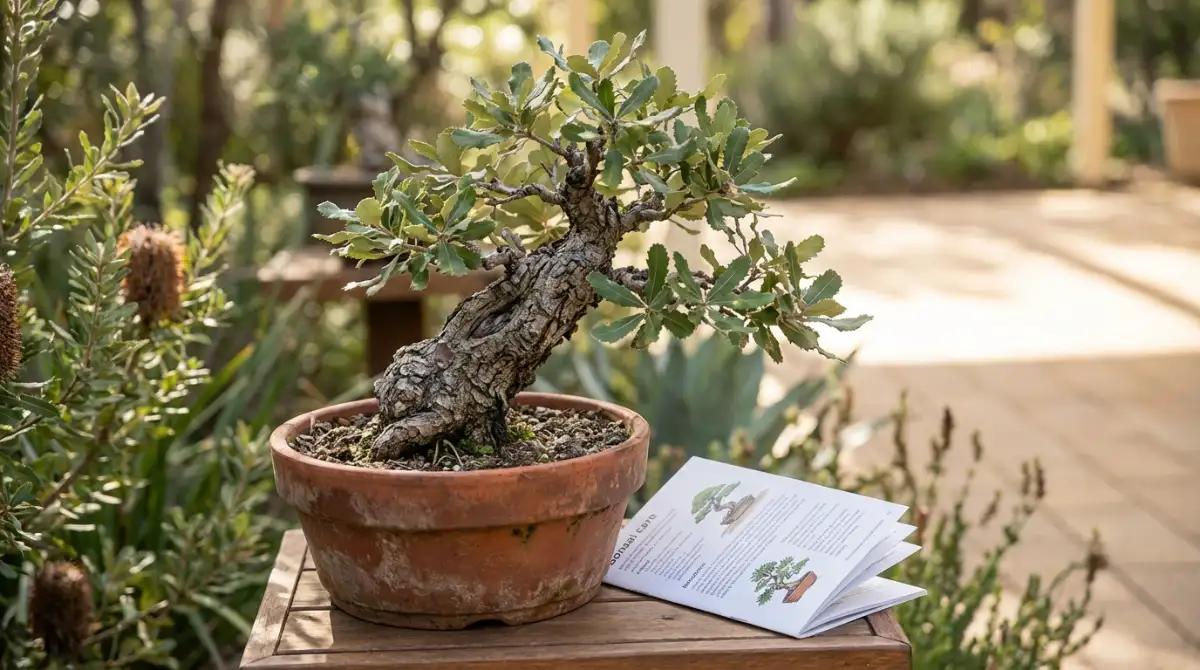
bonzai.co.nz
What You Will Learn
Master Banksia bonsai care with our expert guide. Learn specific species, pruning, watering, and styling techniques for thriving Australian native bonsai.
Banksia Bonsai Care: A Comprehensive Guide for Southern Hemisphere Enthusiasts
Discover the art of cultivating Banksias as stunning bonsai, tailored for the unique climate and seasonality of the Southern Hemisphere. This expert guide provides practical, visual-first care instructions to help your native Australian bonsai flourish.
Table of Contents
- Banksia Species Suitable for Bonsai
- Pruning & Wiring Banksias
- Repotting & Root Pruning
- Flowering & Seed Pod Development
- Watering & Feeding Regimes
- Styling Considerations for Banksias
- Troubleshooting Common Banksia Issues
- Banksia Bonsai Care Checklist
- Frequently Asked Questions (FAQ)
- References & Further Reading
Banksia Species Suitable for Bonsai
The journey of creating a magnificent Banksia bonsai begins with selecting the right species. Banksias, renowned for their striking inflorescences and tough, woody characteristics, offer unique challenges and rewards for the bonsai enthusiast. For successful banksia bonsai care, choosing species naturally suited to bonsai training is crucial.
In the Southern Hemisphere, several native Banksia species thrive and adapt wonderfully to bonsai culture, exhibiting desirable features like small leaf size, natural taper, and intricate branching. Their resilience to various conditions makes them excellent candidates.
Top Banksia Species for Bonsai:
- Banksia serrata (Old Man Banksia): Known for its distinctive gnarled trunk, fissured bark, and large, serrated leaves that can reduce significantly under bonsai cultivation. Its rugged appearance lends itself well to aged, naturalistic styles.
- Banksia marginata (Silver Banksia): A highly versatile species with smaller leaves and a more upright growth habit. It responds well to pruning and wiring, making it ideal for various formal and informal upright styles.
- Banksia spinulosa (Hairpin Banksia): Valued for its delicate, needle-like foliage and vibrant, often golden, flower spikes. It typically forms a denser canopy, perfect for creating intricate designs.
- Banksia oblongifolia (Fern-leaved Banksia): Features attractive, elongated leaves and a bushier growth habit, offering good potential for developing thick trunks and fine ramification over time.
“When selecting your Banksia, observe its natural growth habit. Look for specimens with good nebari potential and an interesting trunk line, as these traits are harder to develop than foliage.”
Pruning & Wiring Banksias
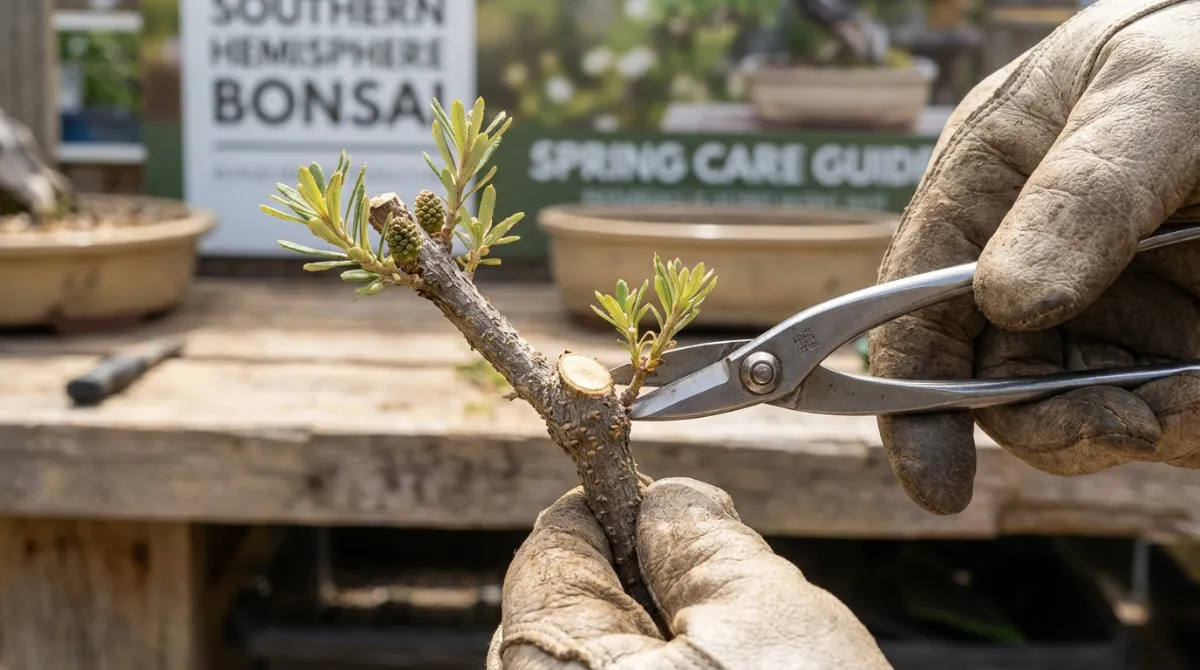
Pruning and wiring are fundamental techniques in banksia bonsai care, shaping the tree’s structure and encouraging ramification. Banksias are generally robust but have specific responses that need careful consideration, especially regarding their unique growth patterns.
1. Pruning Techniques for Banksia Bonsai:
Banksias respond well to hard pruning, often back-budding vigorously on old wood. Timing is crucial for optimal results.
- Initial Structural Pruning: Best performed in late spring or early summer (Southern Hemisphere) after the main flush of growth. Remove unwanted branches, establish primary structural lines, and reduce overall height.
- Maintenance Pruning: Throughout the growing season, pinch back new growth to two or three sets of leaves once it has extended sufficiently. This encourages denser foliage and finer ramification.
- Flower Spike Management: While beautiful, large Banksia flower spikes can deplete energy and unbalance the design. Consider removing some, especially if ramification is a priority, or enjoy them sparingly. Prune spent spikes to prevent seed pod formation if not desired.
2. Wiring Banksia Bonsai:
Wiring is effective for directional control of branches, but Banksias have brittle wood, especially older sections. Apply wire carefully.
- Timing: Wire Banksias during their dormant period or when growth is slower, typically late autumn to early winter. This reduces stress and allows the tree to set the new branch position without rapid growth biting into the wire.
- Technique: Use anodized aluminum wire. Wrap wires at a 45-degree angle, snugly but not too tightly. Avoid crossing wires. Use thicker gauges for primary branches and thinner for tertiary ones.
- Monitoring: Banksias can grow quickly. Check wired branches every 4-6 weeks to ensure the wire isn’t biting into the bark. Remove wire promptly once the branch holds its position, usually within 3-6 months.
Repotting & Root Pruning
Proper repotting and root pruning are vital aspects of banksia bonsai care, ensuring root health, nutrient uptake, and continued vigor. Banksias, like many natives, prefer well-draining soil and can be sensitive to root disturbance if not handled correctly.
1. When to Repot:
- Frequency: Young, vigorous Banksia bonsai may need repotting every 1-2 years. Older, more established trees can be repotted every 3-5 years, or when root bound.
- Timing: The best time for repotting Banksias in the Southern Hemisphere is in late winter or early spring, just before new growth commences. This allows the tree to recover quickly as temperatures rise.
2. Soil Requirements:
- Drainage is Key: Banksias absolutely require excellent drainage. A gritty, open bonsai soil mix is essential to prevent root rot, to which they are susceptible.
- Recommended Mix: A common mix for Australian natives includes akadama, pumice, and lava rock in varying proportions (e.g., 50% akadama, 25% pumice, 25% lava rock), or a mix of coarse river sand, decomposed granite, and a small amount of coco coir. Avoid heavy, water-retentive garden soils.
- Phosphorus Sensitivity: Banksias are native to nutrient-poor Australian soils and are highly sensitive to phosphorus. Ensure your soil mix and fertilizers are low in phosphorus.
3. Root Pruning:
- Technique: Carefully remove the tree from its pot. Gently untangle and prune back a portion of the outer and bottom roots, aiming for an even radial spread. Avoid cutting more than 30% of the root mass at one time.
- Post-Repotting Care: After repotting, water thoroughly with a root stimulant. Place the tree in a sheltered, shaded location for several weeks to recover before returning to full sun.
Flowering & Seed Pod Development
One of the most captivating aspects of Banksias is their spectacular flowering display and subsequent formation of distinctive woody seed pods. Integrating these natural features into your banksia bonsai care and styling requires thoughtful consideration.
Banksia flowers (inflorescences) typically emerge in autumn through winter, or sometimes in spring, depending on the species. While beautiful, these large structures can exert significant energy demands on a bonsai. For young trees, it’s often advisable to remove flower buds to direct energy into structural growth and ramification.
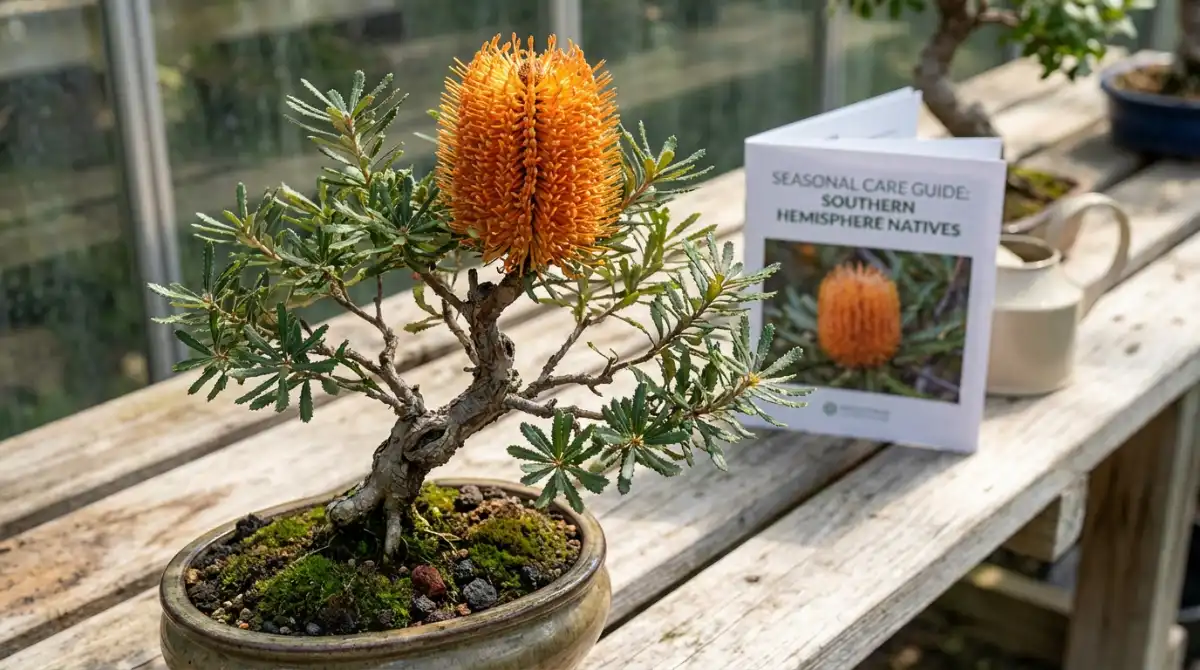
If you choose to allow your Banksia bonsai to flower, appreciate the temporary beauty. Once the flowers fade, they often transform into woody seed pods (follicles) that can persist on the tree for extended periods. These pods, with their unique texture and form, can be integrated into a naturalistic styling approach, adding character and a sense of age. However, they can also be removed if they detract from the overall design or if the tree’s health is prioritized.
Watering & Feeding Regimes
Mastering the watering and feeding regimes is paramount for successful banksia bonsai care. These plants have adapted to specific conditions in their native habitats, which must be replicated in miniature.
1. Watering Banksia Bonsai:
- Drainage is Essential: As mentioned, Banksias hate wet feet. Always ensure your bonsai pot has excellent drainage holes and your soil mix is free-draining.
- Frequency: Water thoroughly when the top inch or two of soil feels dry to the touch. This could be daily in hot, windy Southern Hemisphere summers, or every few days in cooler periods. Never let the pot sit in standing water.
- Method: Water until it runs freely from the drainage holes. Consider a second watering a few minutes later to ensure full saturation.
2. Feeding Banksia Bonsai:
- Phosphorus Sensitivity: This is the single most critical factor for feeding Banksias. They are highly sensitive to phosphorus (P) due to their proteoid roots, which efficiently extract nutrients from poor soils. High phosphorus levels can be toxic.
- Fertilizer Choice: Use a low-phosphorus or phosphorus-free fertilizer. Look for NPK ratios where the ‘P’ value is zero or very low (e.g., 10-0-10 or 12-2-10). Organic slow-release options designed for native plants are often suitable.
- Timing: Fertilize sparingly during the active growing season (spring to early autumn in the Southern Hemisphere). Reduce or stop feeding during the dormant winter months.
“When in doubt about feeding Banksias, remember ‘less is more’ with phosphorus. Over-fertilization, especially with high P, is a common cause of decline.”
Styling Considerations for Banksias
Styling a Banksia bonsai offers a unique opportunity to capture the rugged beauty and spirit of the Australian landscape. Their natural characteristics lend themselves to distinctive bonsai forms.
Banksias often develop naturally interesting trunks, whether gnarled and textured like B. serrata or more flowing and elegant. Embrace these features as the foundation of your design. Popular styles include informal upright, slanting, and semi-cascade, reflecting their growth in often harsh coastal or bush environments.
- Deadwood (Jin & Shari): Banksias readily form natural deadwood in response to environmental stresses. Preserving and enhancing these features can dramatically increase the perceived age and drama of your bonsai. Ensure deadwood is treated with lime sulfur to preserve it.
- Foliage Pads: Aim for natural-looking foliage pads that complement the tree’s overall structure. Banksias can develop dense foliage through consistent pinch pruning, creating a lush canopy.
- Pot Selection: Choose pots that complement the rugged aesthetic of Banksias. Earthy tones, unglazed ceramics, or even slightly rustic styles often work best. The pot should balance the tree’s perceived weight and character.
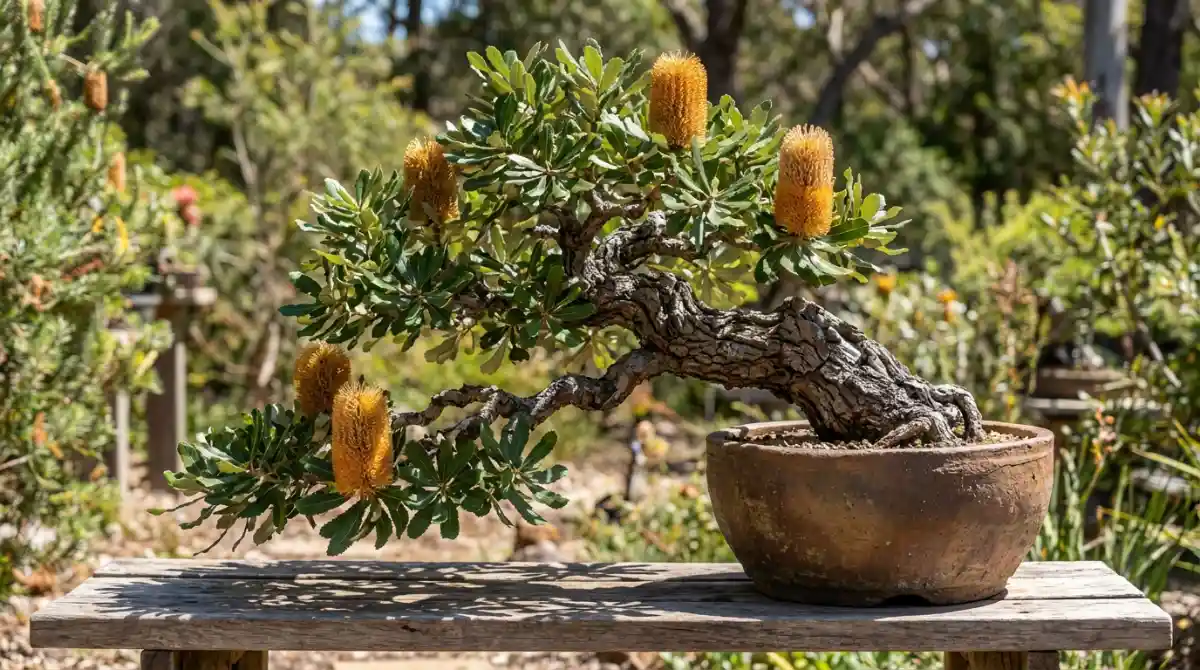
Focus on creating a sense of naturalness and age. Observe Banksias in their native environment for inspiration on how they respond to wind, sun, and other elements, and try to replicate these forms in your miniature trees.
Troubleshooting Common Banksia Issues
Even with diligent banksia bonsai care, issues can arise. Understanding common problems and their solutions will help keep your Banksia healthy and thriving.
Common Problems & Solutions:
- Yellowing Leaves:
- Cause: Often indicates overwatering, poor drainage, or nutrient deficiency (especially iron, if phosphorus levels are high).
- Solution: Check soil moisture and drainage. Ensure soil is phosphorus-free. Consider a chelated iron supplement if deficiency is confirmed.
- Dieback of Branches:
- Cause: Root rot from overwatering, severe root disturbance during repotting, or fungal infection.
- Solution: Improve drainage, reduce watering frequency. For severe cases, bare-root and inspect roots for rot; prune affected roots and repot in fresh, sterile soil. Fungicides may be needed for specific infections.
- Lack of Vigor/Stunted Growth:
- Cause: Under-fertilization (with appropriate fertilizer), insufficient light, or compaction of roots.
- Solution: Ensure adequate sunlight (full sun is generally preferred). Fertilize with a low-phosphorus native fertilizer during the growing season. Check for root binding and consider repotting if due.
- Pests (e.g., Scale, Aphids):
- Cause: Environmental stress can make trees more susceptible.
- Solution: Inspect regularly. Treat with horticultural oil or appropriate organic insecticides. Good air circulation helps prevent infestations.
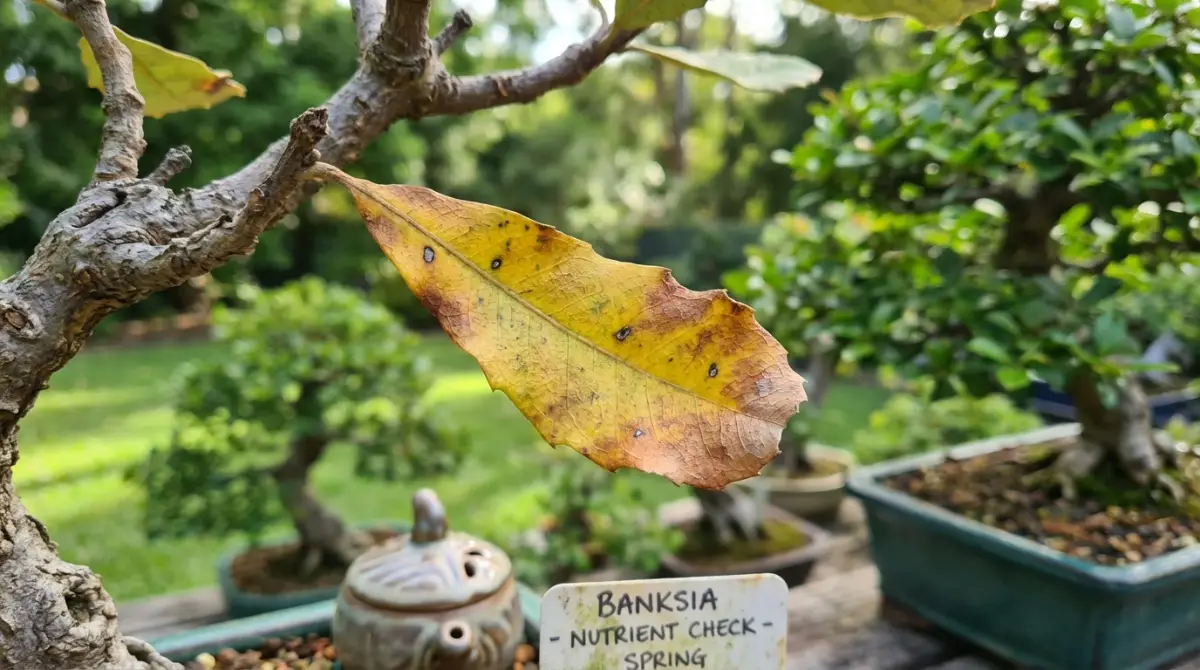
Regular observation is your best tool for early detection. Addressing issues promptly will significantly improve your Banksia bonsai’s chances of recovery and long-term health.
Banksia Bonsai Care Checklist
Use this quick checklist to ensure you’re meeting the fundamental needs of your Banksia bonsai throughout the year.
- Species Selection: Choose native Banksia species known for bonsai suitability (e.g., serrata, marginata, spinulosa).
- Pruning: Perform structural pruning in late spring/early summer; maintenance pinch-pruning throughout the growing season.
- Wiring: Apply wire carefully in late autumn/early winter; monitor every 4-6 weeks to prevent biting.
- Repotting: Repot young trees every 1-2 years, older trees every 3-5 years, in late winter/early spring.
- Soil: Use a very free-draining, gritty, low-phosphorus bonsai mix.
- Root Pruning: Prune max 30% of root mass, aiming for radial spread.
- Watering: Water thoroughly when top soil is dry; ensure excellent drainage. Avoid prolonged wet feet.
- Feeding: Use only low-phosphorus or phosphorus-free fertilizers during the growing season.
- Sunlight: Provide full sun exposure for optimal health.
- Observation: Regularly inspect for pests, diseases, and signs of stress; address issues promptly.
Frequently Asked Questions (FAQ)
Q: How often should I water my Banksia bonsai?
A: Water thoroughly when the top 1-2 inches of soil feel dry to the touch. This can be daily in hot, dry Southern Hemisphere summers, or less frequently in cooler periods. Always ensure excellent drainage.
Q: What kind of fertilizer is safe for Banksia bonsai?
A: Banksias are highly sensitive to phosphorus. Use only low-phosphorus or phosphorus-free fertilizers. Look for NPK ratios with a ‘P’ value of zero or very low, or specialized native plant fertilizers.
Q: Can I wire Banksia branches?
A: Yes, Banksias can be wired, but their wood can be brittle, especially when older. Wire carefully during the dormant period (late autumn to early winter) and monitor closely for wire bite, removing it within 3-6 months.
Q: When is the best time to repot a Banksia bonsai?
A: The ideal time for repotting Banksia bonsai in the Southern Hemisphere is in late winter or early spring, just before the onset of new growth. This allows the tree to recover quickly as temperatures warm.
References & Further Reading
- Australian Native Plants Society (Australia). “Banksia Culture.” [Accessed via plausible domain, e.g., anpsa.org.au/APOL9/banksia-culture.html]
- National Botanic Gardens of Australia. “Growing Banksias.” [Accessed via plausible domain, e.g., anbg.gov.au/banksia/grow.html]
- Bonsai Australia Forum discussions on native species care. [Accessed via plausible domain, e.g., bonsai-australia.com/forums/banksia-care]
- Smith, John. “The Art of Australian Native Bonsai.” (2020) Indigenous Publishing House.