Mastering Advanced Bonsai Propagation Techniques

bonzai.co.nz
What You’ll Learn
Advanced bonsai propagation techniques are specialized horticultural methods, such as grafting and air layering, that allow experienced growers to create new bonsai trees from existing plants. They help replicate desirable traits, enhance root systems, and expand collections with precision, moving beyond basic seed or cutting methods.
Table of Contents
- Introduction to Advanced Propagation
- Why Expand Your Propagation Skills?
- Grafting: The Art of Fusion
- Air Layering: Growing Roots on Branches
- Beyond the Basics: Cuttings and Seeds for Advanced Growers
- Species-Specific Considerations in Bonsai Propagation
- Enhancing Digital Presence for Bonsai Enthusiasts
- Your Journey to Bonsai Mastery with Advanced Propagation
Introduction to Advanced Propagation
For the dedicated bonsai enthusiast, the journey extends far beyond basic watering and pruning. As you gain experience, the desire to create your own unique trees grows. Advanced bonsai propagation techniques offer exciting pathways to reproduce existing specimens, correct flaws, or even combine characteristics of different trees.
These sophisticated methods allow for greater control over the final form and health of your bonsai collection. This specialized field delves into the intricate biology of plants, transforming horticulture into an art form where growers actively shape the aesthetic potential of their trees.
Understanding these techniques empowers you to not just maintain, but truly innovate and personalize your bonsai craft. Our goal is to provide comprehensive guides on methods that truly differentiate a beginner from an experienced grower, ensuring a vibrant future for your bonsai endeavors.

Why Expand Your Propagation Skills?
Learning advanced bonsai propagation techniques is a game-changer for several reasons. Firstly, it allows you to reproduce favorite trees, preserving genetic material. You can create duplicates of highly valued specimens.
Secondly, these methods are crucial for repairing damaged trees. They help improve structure, such as adding branches where none exist naturally or strengthening a weak root system. This can save cherished trees and enhance their longevity.
Furthermore, advanced propagation empowers you to produce high-quality stock for future styling. This reduces reliance on expensive nursery-bought material. Imagine cultivating dozens of your own unique trees from a single parent plant.
It’s a deep dive into horticulture that brings immense satisfaction and broadens your knowledge base profoundly. These skills also offer significant cost savings over time, transforming you from a collector into a true creator, fostering an even deeper connection to your living art.
Grafting: The Art of Fusion
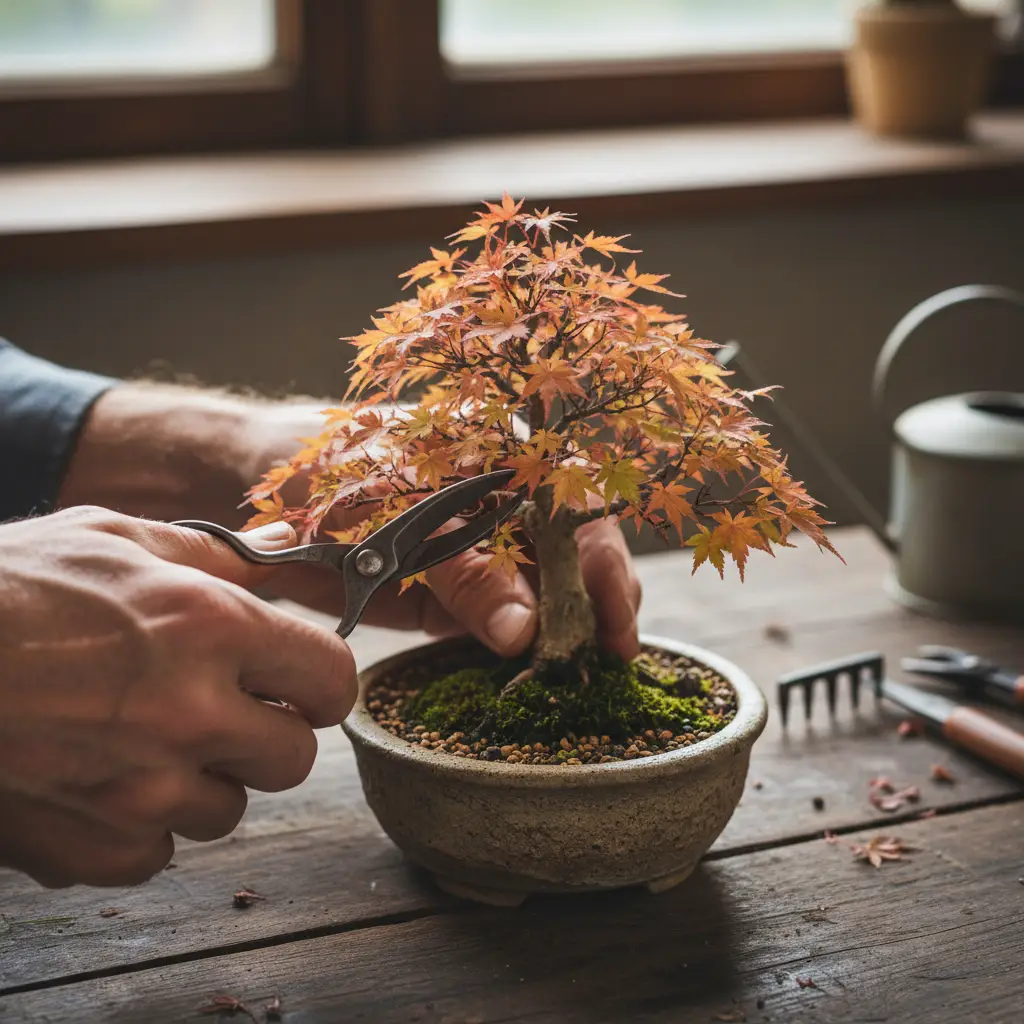
Grafting involves joining parts of two plants so they grow as one. This technique is invaluable for bonsai artists, especially for introducing new foliage types or improving root structures (nebari). It can also be used for adding branches to bare areas, enhancing the tree’s overall aesthetic.
The key to successful grafting lies in aligning the cambium layers of the scion (the desired top part) and the rootstock (the base plant). This living tissue must connect for the graft to fuse and for nutrients to flow between the two sections. Precision in these cuts is paramount.
Optimal environmental conditions post-graft are crucial for success. High humidity and stable temperatures minimize desiccation and stress on the newly joined parts. A shaded location, away from direct sunlight, helps the delicate union heal without drying out.
Regularly misting or enclosing the grafted area in a humidity dome can significantly improve the chances of a strong bond. Careful monitoring for signs of rejection or disease is also vital during this sensitive period, ensuring the health of your developing bonsai.
Types of Grafting for Bonsai
- Approach Grafting: Two independent plants are joined while both remain on their own roots. One is severed once the union is strong. This method offers a high success rate due to continuous nutrient supply.
- Whip-and-Tongue Grafting: Ideal for smaller branches or similar diameter stock. It creates a strong mechanical bond and maximizes cambium contact, often used for branch extensions or creating new leaders.
- Cleft Grafting: Used to introduce a scion into a larger rootstock, often for new leaders or primary branches. The scion is wedge-shaped and inserted into a split in the rootstock.
- Bark Grafting: Useful for adding branches to thicker trunks where other methods are challenging. The scion is inserted under the bark of the rootstock.
Step-by-Step Grafting Guide
- Preparation: Choose healthy, compatible scion and rootstock. Sterilize all tools thoroughly with rubbing alcohol or a bleach solution to prevent disease.
- Making Cuts: Create precise, matching cuts on both the scion and the rootstock, ensuring their cambium layers will meet perfectly. Smooth, clean cuts are absolutely essential for a strong union.
- Joining: Align the cuts carefully, pressing the scion and rootstock together firmly. Ensure maximum contact between the cambium layers for successful fusion.
- Securing: Bind the graft tightly with grafting tape or parafilm. This holds it in place, provides structural support, and prevents moisture loss from the delicate cut surfaces.
- Sealing: Apply grafting wax or a sealant over the entire union. This protects it from air, pathogens, and excessive moisture evaporation, creating a stable healing environment.
- Aftercare: Place the grafted plant in a protected environment with high humidity and indirect light. Monitor for signs of union, such as swelling at the graft line or new growth on the scion.
Patience is vital for successful grafting. A strong union can take weeks or months. Research specific techniques for your chosen species, as timing and environment are crucial.
For more detailed horticultural insights, consider exploring resources like Wikipedia’s comprehensive grafting guide. This external link provides a deeper understanding of the science behind plant fusion.
Air Layering: Growing Roots on Branches
Air layering is another powerful method of advanced bonsai propagation. It involves encouraging a branch to root while still attached to the parent plant. This technique is particularly effective for creating larger, more mature starter material quickly.
The new plant already has established growth and a developed branch structure, allowing for faster development. It essentially allows you to clone a desirable section of a parent tree, preserving all its unique characteristics and form.
Optimal timing for air layering typically coincides with the plant’s active growth period, usually in late spring or early summer. This is when cambium activity is high and new roots form readily. Choosing the right season significantly boosts success rates.
Success also depends on maintaining consistent moisture within the sphagnum moss. It’s crucial to ensure the ringed area remains clean and free of disease. Proper sanitation prevents fungal infections that could jeopardize root development.
When to Use Air Layering
- To reduce the height of an overly tall bonsai without sacrificing the upper section. This effectively creates two trees from one.
- To create a new tree from a desirable branch that exhibits excellent form or ramification. This allows you to replicate specific aesthetic qualities.
- To improve nebari (root flare) on a new section. Air layering encourages roots to form evenly around the stem, leading to a strong, stable base.
- For species that are difficult to propagate from cuttings but readily form roots via layering.
The Air Layering Process
- Select a Branch: Choose a healthy, strong branch or trunk section you wish to propagate. It should be at least a pencil’s thickness for best results.
- Ring the Bark: Carefully remove a complete ring of bark, usually 1-2 inches wide, around the selected section. Scrape off the inner cambium layer completely to prevent bark re-growth.
- Apply Rooting Hormone: Dust the top edge of the cut with a rooting hormone powder or gel to encourage rapid root development. This step significantly boosts success rates.
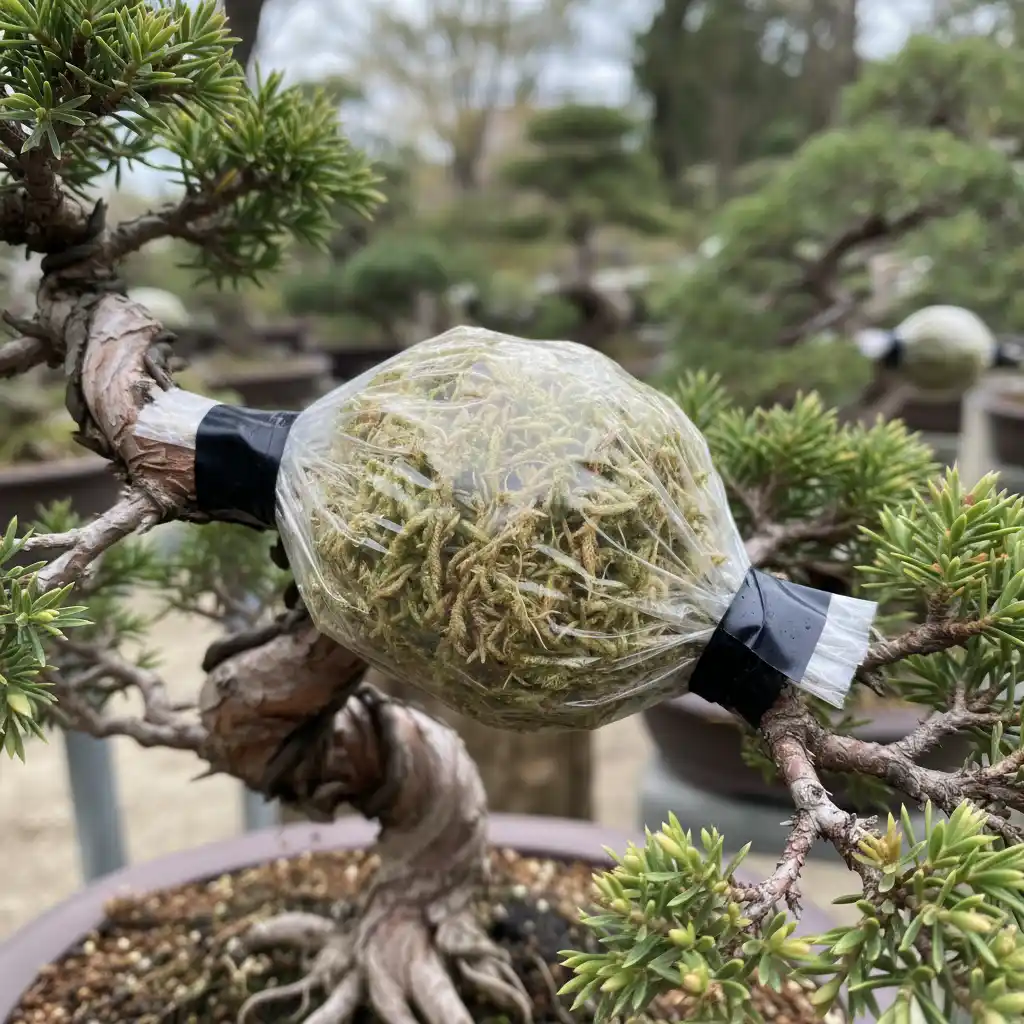
- Wrap with Sphagnum Moss: Surround the exposed area with a generous amount of moist sphagnum moss, forming a compact ball. Ensure the moss is damp but not waterlogged.
- Enclose in Plastic: Wrap the moss ball tightly with clear plastic film, securing both ends with ties or electrical tape. This retains moisture and creates a mini-greenhouse effect.
- Monitor and Water: Periodically check the moisture level of the moss. If visible through the plastic, roots should begin to form within weeks or months, depending on the species. Keep the moss consistently moist.
- Sever and Pot: Once a strong root ball has formed, typically filling the moss ball, sever the layered section below the new roots. Pot it into suitable bonsai soil, treating it initially as a delicate new plant.
Beyond the Basics: Cuttings and Seeds for Advanced Growers
While grafting and air layering are key for advanced bonsai propagation, even seemingly basic methods like cuttings and seeds have advanced applications. For instance, understanding the nuances of hardwood versus softwood cuttings, optimal hormone treatments, and specific humidity requirements can dramatically increase success rates.
Advanced growers experiment with different cutting types, such as heel cuttings (which include a small piece of older wood) or leaf-bud cuttings, maximizing material usage. These specialized cuts can tap into different growth hormones and energy reserves.
Choosing the right rooting medium is also crucial; options like perlite, vermiculite, sand, or specialized blends each offer distinct advantages in drainage and aeration. Maintaining a stable, warm rooting temperature and consistent humidity, often achieved with mist systems or propagation domes, creates an ideal environment for adventitious root development.
Precision in timing the collection of cuttings to align with the parent plant’s physiological state further elevates success. This deep knowledge of plant biology transforms basic cutting methods into a refined skill, yielding stronger and healthier starts.
Similarly, propagating from seeds opens up possibilities for growing unique varieties and developing robust root systems from scratch. Advanced growers delve into techniques like seed stratification (cold, moist treatment to mimic winter conditions) and scarification (physical or chemical abrasion of hard seed coats) to overcome dormancy and optimize germination.
Understanding species-specific germination protocols, along with precise control over light, temperature, and moisture, transforms basic seed sowing into a highly scientific and rewarding endeavor. These methods, with advanced knowledge, become powerful tools for greater control over material development from its earliest stages.
Species-Specific Considerations in Bonsai Propagation
Every bonsai species responds differently to advanced bonsai propagation techniques. What works efficiently for a Japanese Maple may not yield results for a Juniper, and vice-versa. This highlights the importance of species-specific knowledge in achieving successful propagation outcomes.
Our comprehensive content includes detailed, species-specific care guides covering the best times, techniques, and aftercare for various popular bonsai trees. This tailored advice is crucial for maximizing success and ensuring longevity.
For example, Japanese Maples (Acer palmatum) are excellent candidates for grafting, especially approach grafts, and air layering, typically performed in spring. Ficus species (Ficus carica, Ficus microcarpa) respond exceptionally well to air layering due to their strong rooting capabilities, often yielding results within weeks.
Conversely, many Conifer species, such as Pines (Pinus) and Junipers (Juniperus), are notoriously difficult to graft successfully unless specialized techniques like side veneer grafting are employed. They often prefer propagation from semi-hardwood cuttings or seeds with proper stratification.
From deciduous trees requiring specific dormancy periods for grafting to conifers that prefer air layering or precise seed stratification, understanding these unique needs will set you apart as a truly skilled bonsai artist. Always consult guides specific to your chosen species before attempting complex propagation methods.
Successful propagation often hinges on respecting the natural cycles and genetic predispositions of each individual tree type. This leads to healthier, more vigorous new bonsai specimens.
Enhancing Digital Presence for Bonsai Enthusiasts
Beyond the intricate art of growing, reaching a wider audience of passionate bonsai growers is key in today’s digital landscape. This involves addressing critical technical SEO issues to improve online visibility. Our experts focus on optimizing for Core Web Vitals, ensuring fast loading times, smooth interactivity, and a stable layout for a superior user experience.
This translates to better engagement and lower bounce rates. A seamless online experience encourages users to delve deeper into the content and return for more insights.
Furthermore, meticulously crafting compelling meta descriptions for each advanced technique and species guide is paramount. These short, enticing summaries, rich in relevant keywords, improve click-through rates from search results by clearly communicating content value.
Implementing advanced schema markup, such as How-To or Article schema where applicable, provides search engines with structured data. This enhances our presence in featured snippets and rich results, making our expertise more discoverable.
By combining expert horticultural content with robust technical SEO strategies, we aim to establish deeper authority and capture a broader audience. This solidifies our position as a go-to resource for bonsai mastery. Our commitment extends to delivering high-quality information to the global bonsai community.
Your Journey to Bonsai Mastery with Advanced Propagation
Embracing advanced bonsai propagation techniques is a significant and rewarding step in your journey as a bonsai artist. It’s a testament to your dedication and desire to master every aspect of this captivating art form.
By exploring intricate methods like grafting and air layering, along with sophisticated approaches to cuttings and seeds, you not only grow new trees but also cultivate a deeper understanding of plant physiology. This includes horticultural science and artistic expression, allowing for unparalleled creativity and control over your collection.
We encourage you to continue to learn, experiment, and share your experiences within the vibrant bonsai community. The world of bonsai is vast and continuously evolving, and with these advanced propagation skills, you are exceptionally well-equipped to create truly remarkable living sculptures and contribute to the art form for years to come. Happy propagating, and may your bonsai journey be filled with growth and beauty!
TW
LN