Understanding Overwatering Bonsai Symptoms: Your Guide to a Healthy Tree
Learn to identify the crucial signs of overwatering in your bonsai and discover effective strategies for recovery and prevention. Protecting your miniature masterpiece is key to its longevity.
Overwatering Bonsai Symptoms indicate your tree receives too much water, causing its roots to be deprived of oxygen and leading to root rot. Key signs include yellowing leaves, wilting, and premature leaf drop. Recognizing these indicators quickly is vital for the health of your beloved bonsai.
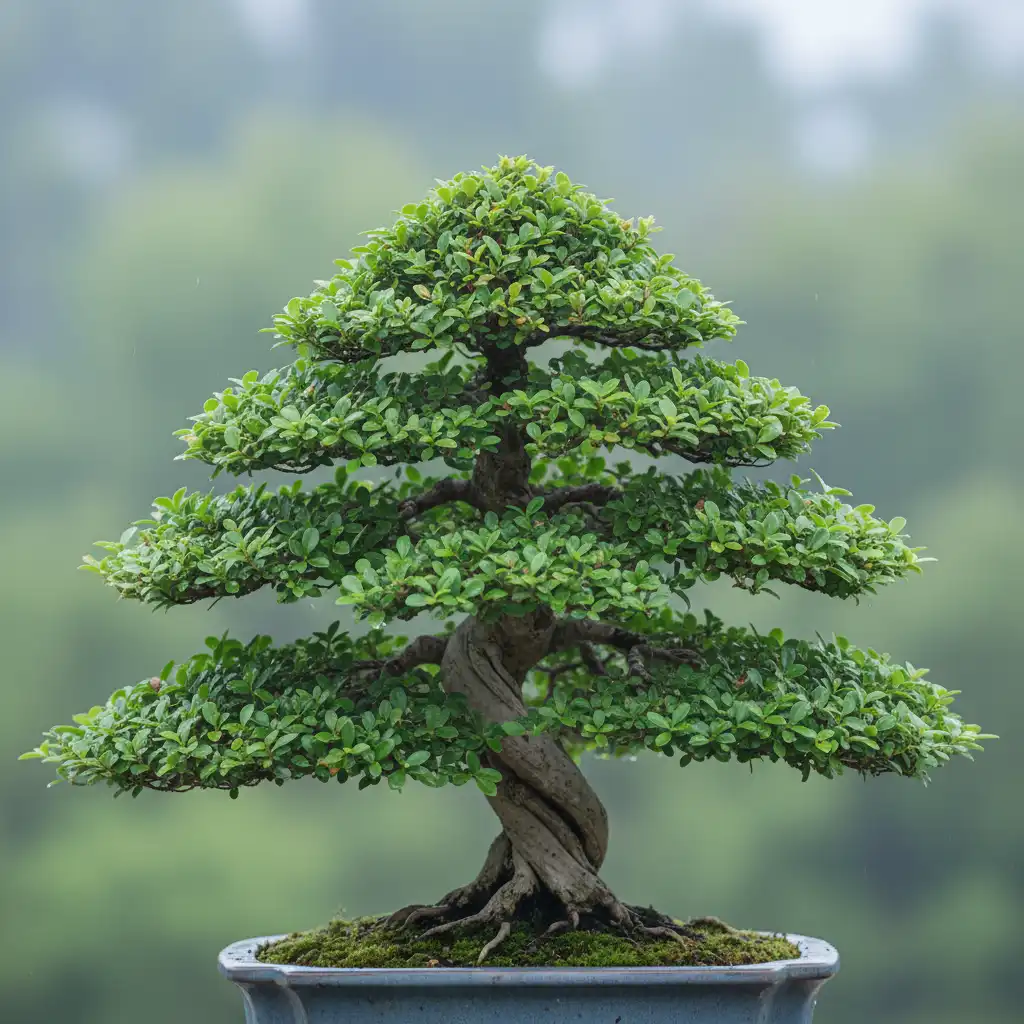
Why Overwatering is a Silent Killer for Bonsai
Many new bonsai enthusiasts often believe that more water equals a healthier plant. However, for the delicate ecosystem of a bonsai, this belief can be detrimental. Bonsai trees, like most plants, require a careful balance of moisture and essential air pockets around their root systems. When the soil remains consistently saturated, these vital air pockets are eliminated.
The absence of air means the roots are deprived of oxygen, a process known as root suffocation. Oxygen is critical for cellular respiration in roots, allowing them to absorb water and nutrients. Without it, the roots cannot function. This creates anaerobic conditions where beneficial microbes die off, and harmful bacteria and fungi flourish.
These destructive pathogens aggressively attack the weakened roots, causing them to decay. This widespread decay is what we call root rot, the most common and dangerous consequence of overwatering. Recognizing Overwatering Bonsai Symptoms early is absolutely critical to prevent this silent killer from taking hold of your tree.
Visible Signs on Your Bonsai’s Leaves
Your bonsai’s leaves act as vital indicators of its health, often displaying the first visible signs of stress. Paying close attention to changes in leaf color, texture, and quantity can provide crucial early warnings, especially when it comes to improper watering.
Yellowing Leaves (Chlorosis)
One of the most telling Overwatering Bonsai Symptoms is the yellowing of its leaves, a condition known as chlorosis. Unlike underwatering, which typically causes leaves to turn crispy brown, overwatered leaves often develop a pale, dull yellow hue. For situations involving Underwatering Bonsai Recovery, different symptoms and care methods apply. This discoloration can appear uniformly across the leaf, or start at the tips and edges before spreading.
This yellowing indicates that the roots, damaged by excess moisture, are struggling to absorb essential nutrients like nitrogen, which are crucial for producing chlorophyll. Even if nutrients are present in the soil, the compromised root system cannot take them up effectively.
Dropping Leaves (Defoliation)
If your bonsai begins to shed a significant number of healthy or slightly discolored leaves prematurely, it is a strong signal of severe stress from overwatering. This process, known as defoliation, is the tree’s drastic attempt to conserve energy and reduce its metabolic demands. By shedding leaves, the tree tries to reduce its overall water uptake and transpiration, hoping to survive the adverse conditions.
Wilted or Limp Appearance
Surprisingly, an overwatered bonsai can often look as though it’s thirsty, displaying a wilted or droopy appearance. This happens because the root system, damaged by a lack of oxygen and the onset of root rot, is unable to efficiently transport water to the foliage, despite the soil being completely saturated. The leaves will feel soft, heavy, and lifeless, rather than crisp or brittle as they would with underwatering.
Soft, Mushy Trunks or Branches
In advanced stages of overwatering, particularly with severe root rot, the decay can extend beyond the roots into the base of the trunk or even up into the lower branches. This appears as soft, mushy spots or discoloration on the bark. If you notice this, it’s an extremely serious sign, indicating widespread tissue breakdown and very difficult recovery.
What’s Happening Below the Surface?
While visible symptoms provide clues, the true extent of the damage from overwatering occurs out of sight, beneath the soil. Understanding these internal issues can help you grasp the urgency of addressing Overwatering Bonsai Symptoms promptly.
Root Rot: The Primary Danger
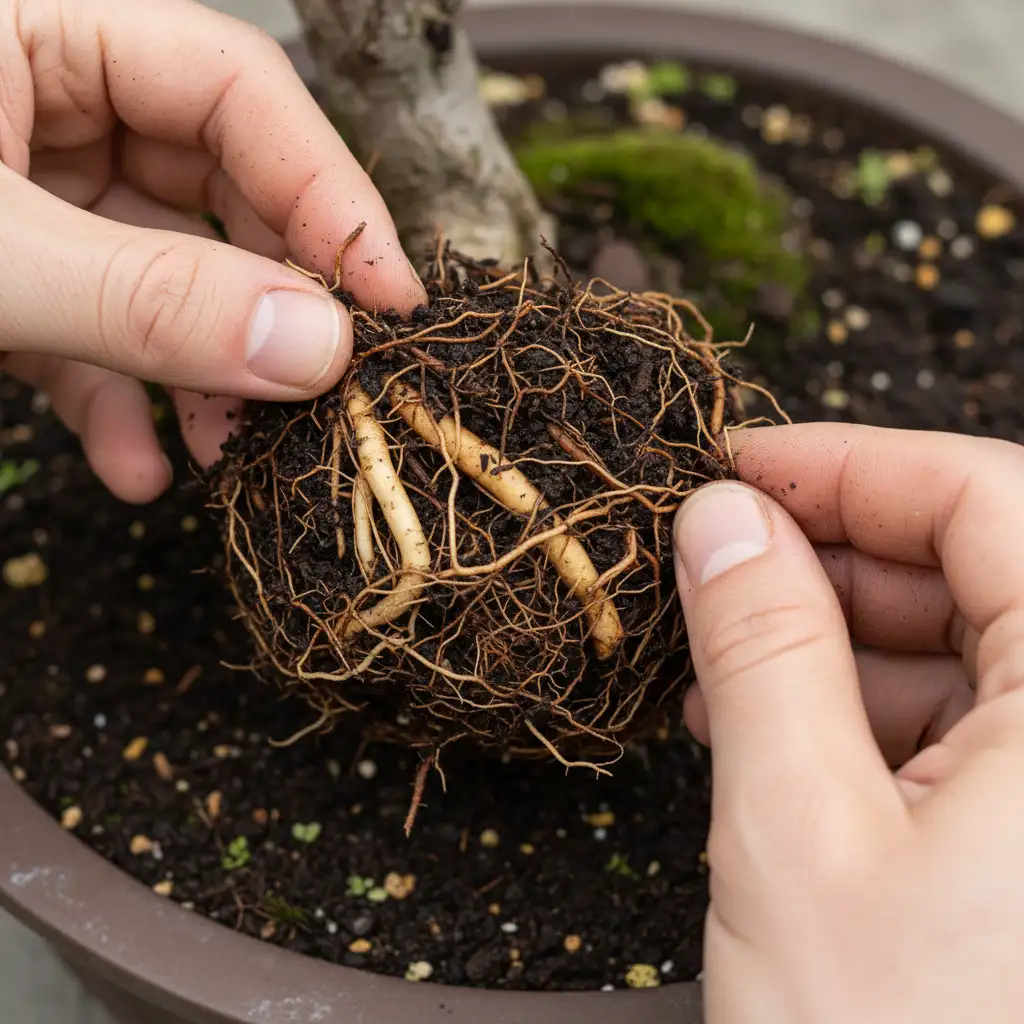
As highlighted, root rot is the most devastating consequence of excessive moisture. Healthy bonsai roots are typically firm, pliable, and range in color from white to tan, spreading vigorously through the soil. This healthy root structure is also fundamental for developing a strong Nebari: The Root Flare, an important aesthetic feature. In stark contrast, roots suffering from rot become dark brown or black, turn soft and mushy, and often detach easily from the main root structure. They lose their ability to absorb any water or nutrients, effectively starving the entire tree from the ground up.
Mushy, Foul-Smelling Roots
When you carefully remove an overwatered bonsai from its pot, one of the clearest and most alarming indicators is a distinctly foul, stagnant, or sewage-like odor emanating from the root ball. This potent smell is a definitive sign of anaerobic decay and intense bacterial activity in the oxygen-deprived soil. Combined with the mushy texture of the roots, this indicates that the tree is in a critical state and needs immediate intervention.
Stunted Growth and Weakness
Even if a bonsai tree doesn’t succumb immediately to severe root rot, prolonged overwatering will invariably lead to severely stunted growth. New shoots will be noticeably weaker, smaller, and less frequent. The tree’s overall vigor will decline significantly, leaving it with reduced energy reserves and a compromised immune system. This makes it far more susceptible to common pests (like those discussed in Common Pests of NZ Native Bonsai: Identification & Organic Solutions), diseases, and environmental stresses.
Fungal and Bacterial Infections
The consistently damp and oxygen-poor environment created by overwatering is an ideal breeding ground for various fungal and bacterial pathogens. These organisms thrive in such conditions, attacking the already weakened root system and accelerating its decay. You might observe mold growth on the soil surface or visible fungal spots on the trunk and branches, further indicating an unhealthy, overly wet environment.
Understanding Your Bonsai’s Soil and Drainage
The characteristics of your bonsai’s soil and the effectiveness of its pot’s drainage system are paramount in both preventing and identifying overwatering issues. Inadequate drainage significantly intensifies all Overwatering Bonsai Symptoms, making good soil and proper pots indispensable.
Consistently Wet Soil
The most straightforward indicator of overwatering or poor drainage is soil that never truly dries out between watering sessions. If the top inch or two of the soil remains damp to the touch for several days, or if the soil feels excessively heavy and waterlogged, it’s a clear sign of a problem. Healthy bonsai soil should feel lighter as it dries, indicating good aeration.
Proper soil for bonsai should allow water to pass through quickly, retaining just enough moisture while ensuring plenty of air circulation. If your soil stays boggy, it’s a recipe for root suffocation.
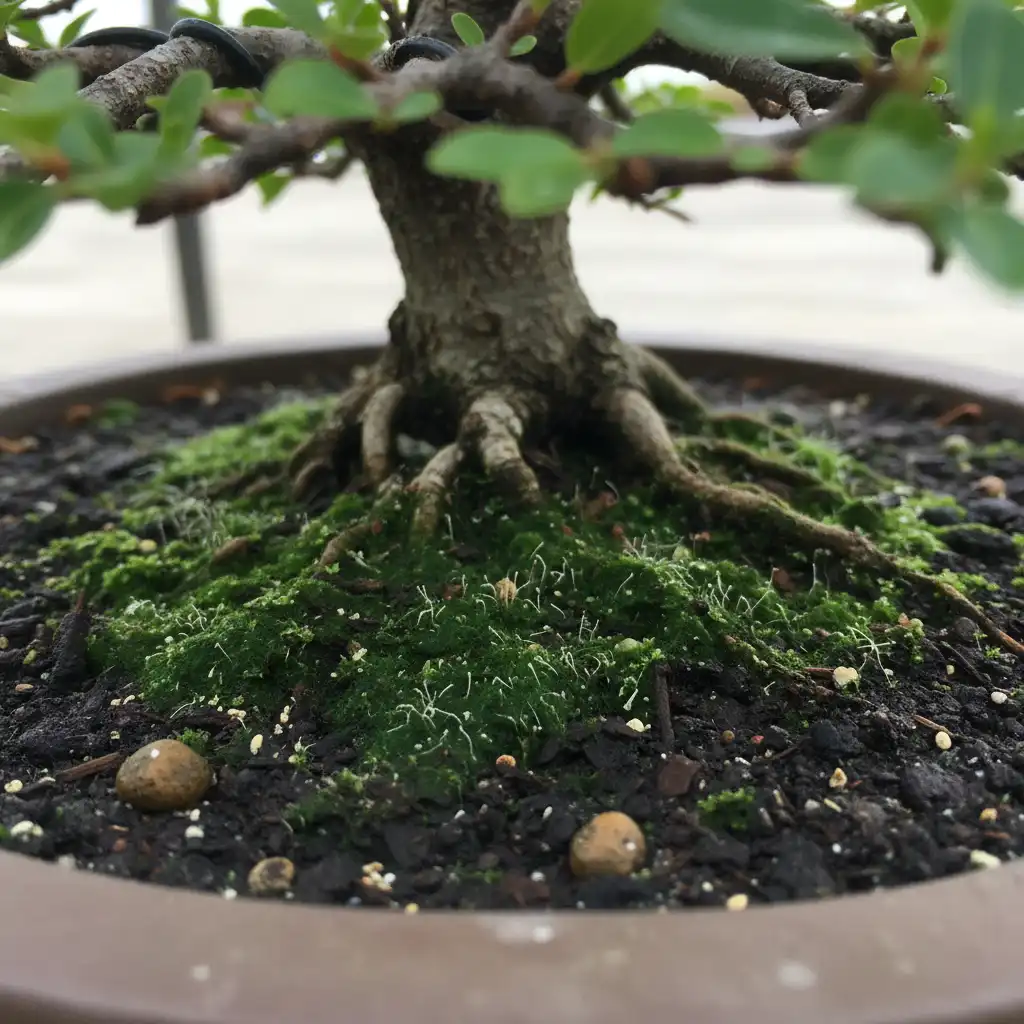
Algae Growth on Soil Surface
Persistent moisture on the soil surface, particularly when combined with adequate light, frequently leads to the formation of a green layer of algae. While algae itself is generally not directly harmful to the bonsai tree, its presence is a very strong visual cue. It unequivocally signals that the soil is staying excessively wet for too long, creating a prime environment for more serious underlying problems like root rot to develop.
Inadequate Drainage Holes
A common mistake, especially for beginners, is using pots with insufficient or blocked drainage holes. Bonsai pots are specifically designed with large drainage holes to facilitate rapid water exit. If these holes are too small, few in number, or become clogged with soil and roots, water will accumulate at the bottom of the pot. This creates a stagnant, anaerobic zone that rapidly leads to root damage and contributes to Overwatering Bonsai Symptoms.
How to Diagnose and Recover an Overwatered Bonsai
If you’ve identified Overwatering Bonsai Symptoms in your tree, immediate and decisive action is crucial. A timely intervention, coupled with careful technique, can often bring your cherished bonsai back from the brink of collapse.
Immediate Action: Stop Watering
The very first and most critical step is to completely cease all watering. Do not water again until you are certain the soil has dried out significantly. To help expedite this process, gently tilt the pot to encourage any excess standing water to drain from the bottom holes. If possible, move the tree to a brighter, airier location with good air circulation, which will help increase evaporation from the soil surface.
Inspecting the Roots
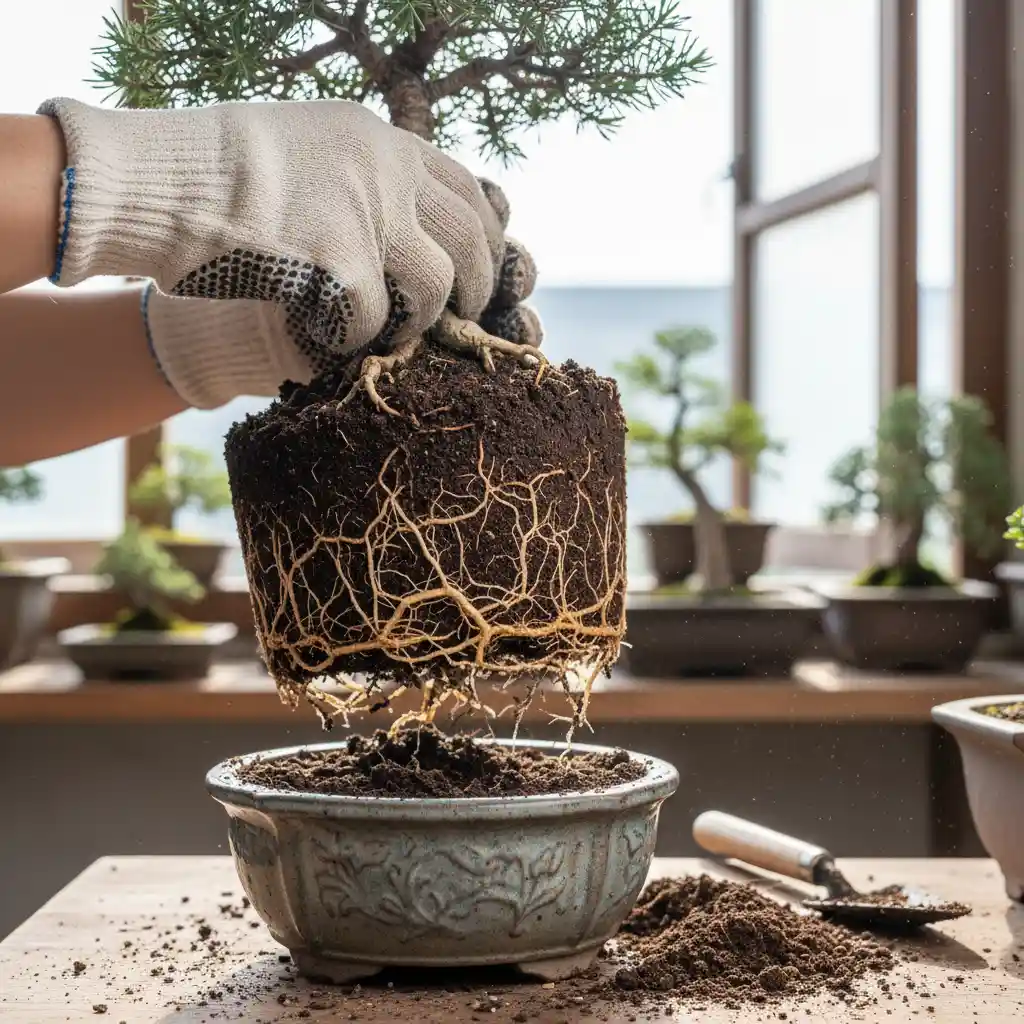
After allowing the soil to dry somewhat (usually a day or two), carefully remove the bonsai from its pot. Gently shake off as much of the old, soggy soil as possible to expose the entire root system. Take your time during this step to avoid causing further damage. Healthy roots should appear light-colored (white, tan, or even reddish depending on species), firm, and show a vigorous network. Diseased roots, however, will be dark brown or black, feel soft and mushy, and may have a pungent, rotting odor.
Repotting and Pruning Damaged Roots
If root rot is clearly evident, use a pair of clean, sharp, sterilized scissors or root pruners to meticulously cut away all the damaged, mushy, and foul-smelling roots. Be thorough, removing all compromised tissue. After root pruning, it’s wise to trim back a corresponding amount of foliage from the tree’s canopy. This balances the reduced root system’s ability to support the leaves, preventing further stress. Beyond this critical recovery step, understanding Pruning for Bonsai Shape and Health, and exploring Wiring Techniques for Bonsai Branches are key for long-term tree aesthetics and vitality. Repot the bonsai into a pot with proven excellent drainage, using a fresh, high-quality, fast-draining bonsai soil mix.
Post-Repotting Care and Monitoring
After repotting, avoid watering the tree immediately. Give the freshly pruned roots a day or two to heal before their first new watering. When you do water, do so thoroughly, ensuring water drains from the bottom. Place the tree in a protected spot, out of direct harsh sun and strong winds, to aid its recovery. Monitor it closely for any new signs of distress or improvement.
Establishing a Proper Watering Schedule
The most crucial step in long-term recovery and future prevention is establishing a proper watering schedule. Do not water on a fixed calendar schedule. Instead, always check the soil moisture before watering. A reliable technique is to use your finger: if the top inch or two of soil feels dry, it’s time to water. Consider investing in a simple moisture meter for added accuracy, especially as you learn your tree’s unique needs.
Prevention is Key: Best Practices for Watering
Preventing overwatering is always preferable to attempting to cure an ailing bonsai. By implementing these best practices consistently, you can ensure your miniature tree thrives for many years to come.
The “Finger Test” Method
As discussed, the “finger test” remains the most intuitive and reliable method for determining when your bonsai truly needs water. Simply insert your index finger about an inch or two into the soil. If the soil feels dry to the touch at that depth, it’s time to water thoroughly. If it still feels damp or cool, refrain from watering and check again later. This method helps you tailor watering to your specific plant’s needs, rather than following a rigid timetable.
Considering Potting Mix and Pot Size
The quality of your bonsai’s potting mix is paramount. Always use a specialized, fast-draining bonsai soil mix (for optimal Bonsai Soil, Fertilization & Nutrition), typically composed of akadama, pumice, and lava rock. Avoid dense, moisture-retentive garden soil. The pot size also plays a role; smaller pots with a larger surface area to volume ratio tend to dry out faster than larger ones. Always ensure your bonsai pot has ample drainage holes that remain unobstructed.
Seasonal Adjustments
Your bonsai’s water requirements are not constant; they fluctuate significantly throughout the year. During the hot, active growing season of summer, your tree will likely need daily or even twice-daily watering. In contrast, during the cooler, dormant winter months, its water needs will be drastically reduced. Always adjust your watering schedule based on the season (e.g., consider specific needs for Spring Care for Bonsai SH) and your tree’s current growth cycle.
Environmental Factors
Beyond seasons, other environmental factors play a crucial role. Humidity levels, ambient temperature, and the amount of sunlight exposure your bonsai receives all impact how quickly its soil dries out. A tree in a sunny, breezy spot will dry faster than one in a shaded, still environment. Consistently observe these factors and adjust your watering routine accordingly to prevent Overwatering Bonsai Symptoms.
Conclusion: Mastering Bonsai Watering
Successfully identifying and expertly addressing Overwatering Bonsai Symptoms is an indispensable skill for anyone dedicated to the art of bonsai cultivation. By diligently observing the signs on the leaves, recognizing the dangers of root rot beneath the soil, and consistently implementing appropriate watering techniques, you are empowering your bonsai to thrive and maintain its exquisite beauty for many prosperous years.
Remember, patience, consistent observation of your tree, and a keen understanding of its environmental needs are your most valuable assets in this incredibly rewarding hobby. To further enhance your experience, you might also be interested in Bonsai Photography Tips for Sharing Your Trees. Embrace the learning process, and enjoy cultivating healthy bonsai for years to come! For those just beginning their journey, exploring Beginner-Friendly Bonsai Tree Species or considering a Bonsai Starter Kit Comparison: What to Look For can be an excellent first step.
References
For more extensive information on general bonsai care, plant physiology, and advanced horticultural techniques, you can consult authoritative resources such as Wikipedia’s comprehensive entry on Bonsai.