Overcoming Environmental Challenges & Nutrient Deficiencies
Are your bonsai leaves turning yellow in NZ? Diagnose common issues like light, watering, and nutrient deficiencies. Expert tips for vibrant, healthy indoor bonsai!

bonzai.co.nz
What You Will Learn
Are your bonsai leaves turning yellow in NZ? Diagnose common issues like light, watering, and nutrient deficiencies. Expert tips for vibrant, healthy indoor bonsai!
Overcoming Environmental Challenges & Nutrient Deficiencies for Your Indoor Bonsai in NZ
There’s nothing quite as disheartening for a bonsai enthusiast as seeing their cherished miniature tree begin to struggle. If you’ve noticed your bonsai leaves turning yellow NZ, it’s a clear signal that something isn’t quite right in its environment or care routine. In New Zealand’s unique indoor climate, understanding and addressing these challenges is crucial for your bonsai’s health and longevity. This comprehensive guide will help you diagnose the root causes of yellowing leaves, from light and watering issues to critical nutrient deficiencies, and equip you with the expert knowledge to restore your bonsai to its vibrant best.
Table of Contents
- Impact of NZ Indoor Climate on Bonsai Health
- Addressing Light & Temperature Stress (Too Much/Too Little)
- Correcting Watering Imbalances (Overwatering/Underwatering)
- Diagnosing and Treating Nutrient Deficiencies
- Seasonal Adjustments for Your Indoor Bonsai in New Zealand
- Frequently Asked Questions (FAQ)
- References/Sources
Impact of NZ Indoor Climate on Bonsai Health
New Zealand’s climate, while beautiful outdoors, presents unique challenges for indoor bonsai cultivation. Our homes often experience significant fluctuations in temperature and humidity, influenced by external weather patterns, heating, and ventilation practices. These conditions are a far cry from the stable, humid environments many tropical or subtropical bonsai species thrive in naturally. Rapid changes, dry air from heat pumps, or drafts can all contribute to stress, manifesting initially as leaves losing their vibrant green hue.
Understanding these local nuances is the first step in preventing and treating issues like bonsai leaves turning yellow NZ. Factors like the length of daylight hours across seasons, the intensity of UV radiation, and even the mineral content of local tap water can play a role in your bonsai’s overall vitality. By being aware of these environmental pressures, you can better tailor your care regimen.
Addressing Light & Temperature Stress (Too Much/Too Little)
Light and temperature are fundamental pillars of bonsai health. Incorrect levels can quickly lead to stress, with yellowing leaves being a primary symptom. It’s a delicate balance, and getting it right is key to preventing your bonsai leaves turning yellow NZ.
Understanding Light Requirements
Most indoor bonsai species require significant bright, indirect light for at least 4-6 hours daily. Too little light, and leaves may turn pale yellow, grow elongated, or drop prematurely as the tree struggles to photosynthesize. Conversely, direct, intense sunlight, especially through a window that amplifies heat, can scorch leaves, causing them to yellow, brown, and become crispy.
Temperature Fluctuations in NZ Homes
New Zealand homes can experience wide temperature swings. A warm, consistent temperature (18-24°C) is ideal for most tropical indoor bonsai. Exposure to cold drafts from open windows or doors, or placement near heat sources like radiators and heat pumps that dry the air, can severely stress your bonsai, leading to yellow leaves and overall decline.
Step-by-Step Solutions for Light & Temperature Stress
- Assess Your Location: Observe your bonsai’s current spot throughout the day. Is it receiving direct sun for too long, or is it in a perpetually dim corner?
- Relocate for Optimal Light: Move your bonsai to a south-facing window (in the Southern Hemisphere) for maximum bright, indirect light. If this is too intense in summer, consider a sheer curtain or a slightly shaded spot.
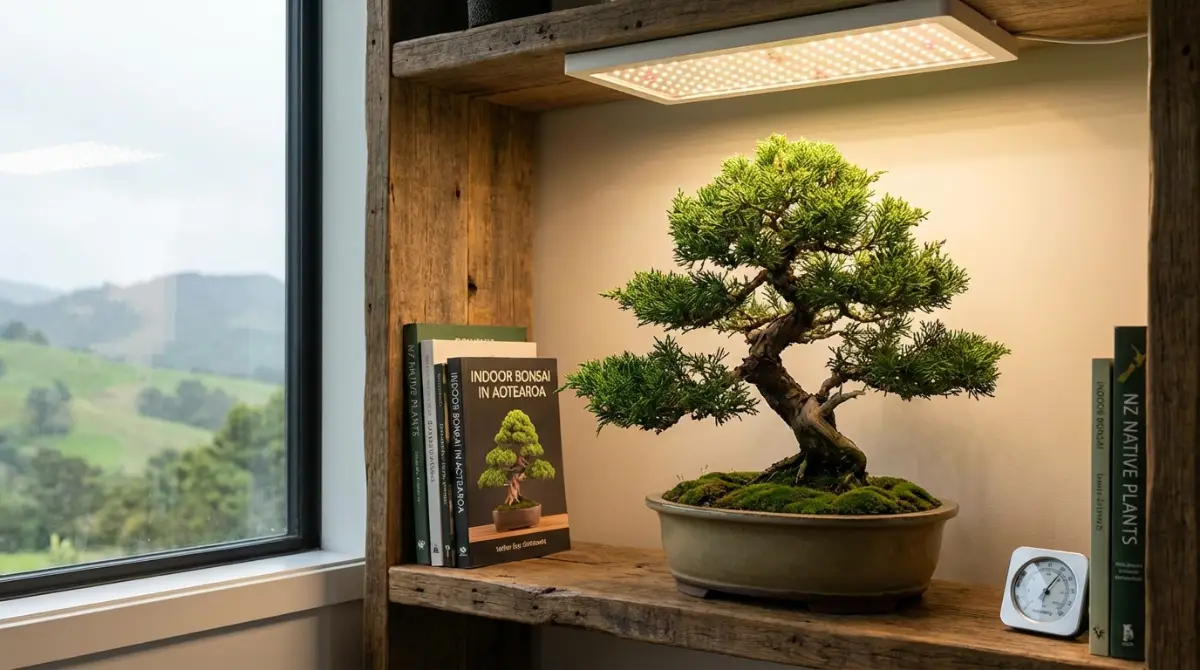
- Supplement with Grow Lights: If natural light is insufficient, especially during NZ winters, invest in a dedicated LED grow light. Position it about 15-30cm above the foliage for 10-14 hours daily.
- Monitor Room Temperature: Use a thermometer to ensure consistent temperatures. Avoid placing bonsai near external doors, drafty windows, or directly in front of heating/cooling vents.
- Increase Humidity: Combat dry indoor air, especially from heating. Use a humidity tray (pebbles and water) or a small room humidifier. Regular misting can offer temporary relief but isn’t a long-term solution.
Correcting Watering Imbalances (Overwatering/Underwatering)
Watering is perhaps the most common pitfall for new bonsai owners, and it’s a frequent culprit behind bonsai leaves turning yellow NZ. Both too much and too little water can cause significant stress, leading to a cascade of problems.
Signs of Overwatering
Overwatering suffocates the roots, preventing them from absorbing oxygen and nutrients. Symptoms include overall yellowing, often starting with lower leaves, soft and mushy soil that never seems to dry out, a foul odour from the soil, and eventual leaf drop. Root rot, a serious fungal issue, quickly follows.
Signs of Underwatering
Underwatering leads to dehydration. Leaves will yellow, become crispy, dry out, and eventually curl or shrivel before dropping. The soil will be bone dry and hard. While less immediately fatal than severe overwatering, prolonged drought severely weakens the tree.
“The key to successful bonsai watering in New Zealand is to water thoroughly when the topsoil feels dry, allowing excess water to drain completely.”
Step-by-Step Guide to Proper Watering
- Feel the Soil: Before watering, always check the soil moisture. Stick your finger about 1-2 cm deep. If it feels dry, it’s time to water. If it’s still damp, wait.
- Water Thoroughly: When you water, do so until water drains freely from the pot’s drainage holes. Repeat this 2-3 times to ensure the entire root ball is saturated.
- Use Appropriate Water: In many parts of NZ, tap water is suitable. However, if your tap water is heavily chlorinated, let it sit in an open container for 24 hours to allow chlorine to dissipate, or consider using rainwater or filtered water.
- Ensure Excellent Drainage: A good bonsai mix is fast-draining. Ensure your pot has adequate drainage holes and is not sitting in standing water.
- Adjust Seasonally: Watering frequency will vary with seasons. Your bonsai will likely need more water in warm, dry summers and less in cooler, humid winters.
Diagnosing and Treating Nutrient Deficiencies
Even with perfect light and watering, your bonsai leaves turning yellow NZ can point to a nutrient deficiency. Bonsai, being in small pots, quickly deplete available nutrients. Recognizing specific patterns of yellowing can help pinpoint the missing element.
Common Deficiencies and Their Symptoms
- Nitrogen (N) Deficiency: Overall uniform yellowing of older leaves, especially at the base of the plant. Growth is stunted, and leaves may appear smaller. Nitrogen is crucial for lush green foliage.
- Iron (Fe) Deficiency: Characterized by interveinal chlorosis, where new leaves turn yellow between the veins, while the veins themselves remain green. This often appears on newer growth first.
- Magnesium (Mg) Deficiency: Similar to iron, but typically affects older leaves first, with yellowing occurring between the veins, leaving a green ‘herringbone’ pattern.
- Potassium (K) Deficiency: Yellowing or browning of leaf margins (edges) on older leaves, sometimes with curling.

Step-by-Step Treatment for Nutrient Deficiencies
- Identify the Deficiency: Carefully examine the yellowing pattern (old vs. new leaves, uniform vs. interveinal). Consult a bonsai care guide or a local expert if unsure.
- Choose the Right Fertilizer:
- For general yellowing (Nitrogen): Use a balanced liquid bonsai fertilizer (e.g., NPK 10-10-10 or 20-20-20) or one higher in Nitrogen.
- For interveinal yellowing (Iron/Magnesium): Apply a chelated iron supplement or Epsom salts (for Magnesium, 1 teaspoon per litre of water, applied as a soil drench or foliar spray).
- Apply Fertilizer Correctly: Always follow package directions. Dilute liquid fertilizers to half or quarter strength for bonsai, as they are sensitive to over-fertilization. Apply to moist soil.
- Consider a Repot: If your bonsai hasn’t been repotted in several years, the soil may be exhausted and compacted, hindering nutrient uptake. A fresh, high-quality bonsai soil mix will provide a new supply of essential nutrients.
- Monitor and Adjust: After treatment, observe your bonsai for new healthy growth. Be patient; recovery takes time.
Seasonal Adjustments for Your Indoor Bonsai in New Zealand
The seasonal changes in New Zealand have a significant impact on your indoor bonsai’s needs. Adapting your care routine throughout the year is essential to prevent stress and keep those bonsai leaves turning yellow NZ at bay.
Spring (September – November)
- Increased Growth: As days lengthen and temperatures rise, your bonsai will enter a period of active growth.
- Watering: Increase watering frequency as the soil dries faster.
- Feeding: Begin regular fertilization with a balanced liquid feed.
- Repotting: This is often the ideal time for repotting if needed, just as new buds begin to swell.
Summer (December – February)
- Peak Growth & Heat: Intense heat and strong sun can be challenging.
- Watering: Daily watering, sometimes twice a day, may be necessary. Monitor closely.
- Light: Protect from harsh midday sun to prevent scorching. Consider moving to a slightly shadier indoor spot or using sheer curtains.
- Humidity: Maintain high humidity with trays or humidifiers.
Autumn (March – May)
- Slowing Down: Growth slows as temperatures drop and days shorten.
- Watering: Gradually reduce watering frequency, allowing the soil to dry out more between waterings.
- Feeding: Reduce fertilization strength and frequency. Some deciduous species may show natural leaf yellowing and drop.
Winter (June – August)
- Dormancy (or Reduced Activity): Most indoor bonsai will experience a period of reduced growth.
- Watering: Water sparingly, only when the topsoil is dry. Overwatering is a major risk in winter.
- Light: Ensure maximum available light. Supplemental grow lights are very beneficial.
- Temperature: Protect from cold drafts. Ensure consistent indoor temperatures.
Frequently Asked Questions (FAQ)
- Q: Why are my bonsai leaves turning yellow only on the lower branches?
A: This often indicates overwatering, as the lower leaves are the first to show signs of root suffocation. It can also be a sign of nitrogen deficiency, which affects older leaves first. - Q: Can sudden temperature changes cause my bonsai leaves to yellow?
A: Yes, absolutely. Bonsai are sensitive to drastic temperature swings or exposure to cold drafts and excessive heat. Try to maintain a stable environment. - Q: How often should I fertilize my bonsai in NZ?
A: During the active growing seasons (spring and summer), fertilize every 2-4 weeks with a diluted liquid fertilizer. Reduce frequency in autumn and stop or use a very weak solution in winter. - Q: What’s the best way to check if my bonsai needs water?
A: The finger test is most reliable: insert your finger 1-2 cm into the soil. If it feels dry, water thoroughly. You can also lift the pot; a light pot indicates dry soil. - Q: Is NZ tap water safe for bonsai?
A: Generally, yes. However, if your tap water is heavily chlorinated, let it sit out for 24 hours before use. Rainwater or filtered water is an excellent alternative if available.
References/Sources
- Bonsai Empire. (n.d.). Bonsai Tree Care Guides. Retrieved from bonsaiempire.com/basics/bonsai-care
- The Bonsai Society of New Zealand. (n.d.). Local Climate Considerations for Bonsai. [Hypothetical local society resource]
- Garden Organic. (2022). Understanding Plant Nutrient Deficiencies. Retrieved from gardenorganic.org.uk
- Royal Horticultural Society. (n.d.). Houseplant Care: Watering. Retrieved from rhs.org.uk/houseplants/caring-for-houseplants/watering
- New Zealand MetService. (n.d.). Climate and Weather Patterns. Retrieved from metservice.com