Identifying & Treating Bonsai Pests and Diseases in NZ
Discover how to identify and effectively treat common bonsai pests in NZ, including aphids, spider mites, and fungal diseases. Learn organic, chemical, and preventative methods to keep your bonsai healthy.
bonzai.co.nz
What You Will Learn
Discover how to identify and effectively treat common bonsai pests in NZ, including aphids, spider mites, and fungal diseases. Learn organic, chemical, and preventative methods to keep your bonsai healthy.
Nurturing a bonsai is a journey of patience, artistry, and connection with nature. However, even in the serene environment of New Zealand homes, these miniature trees can face unwelcome challenges: pests and diseases. Identifying these threats early and applying the right treatments is crucial for the health and longevity of your cherished bonsai. This comprehensive guide will equip you with the knowledge to protect your trees, focusing specifically on common bonsai pests NZ enthusiasts might encounter.
Table of Contents
- Common Bonsai Pests in New Zealand Homes
- Identifying Fungal Infections and Bacterial Diseases
- Organic and Natural Pest Control Methods
- Safe and Effective Chemical Treatments
- Preventative Measures to Keep Your Bonsai Healthy
- Frequently Asked Questions
- References
Common Bonsai Pests in New Zealand Homes
New Zealand’s temperate climate can still harbour a variety of pests that pose a threat to indoor bonsai. Early detection is your best defence against these tiny invaders. Here are some of the most frequently encountered bonsai pests NZ growers should be aware of:
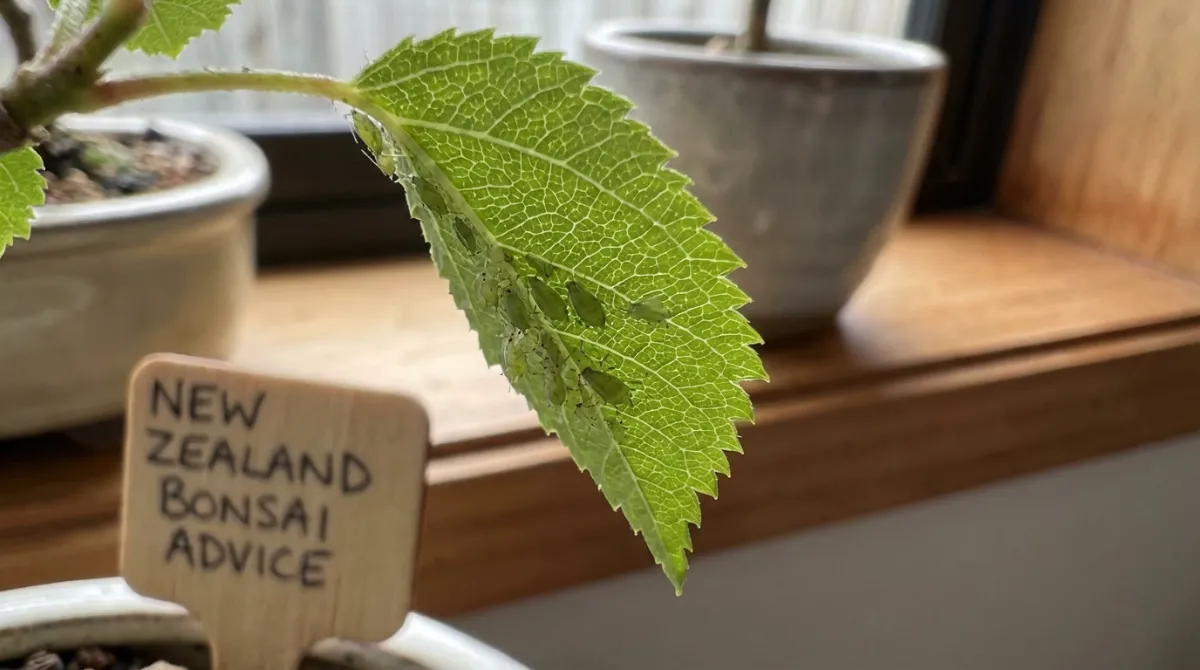
1. Aphids
Small, pear-shaped insects, often green, black, or red, found clustered on new growth, leaf undersides, and flower buds. They suck sap, causing distorted leaves, stunted growth, and a sticky residue called honeydew, which can lead to sooty mould.
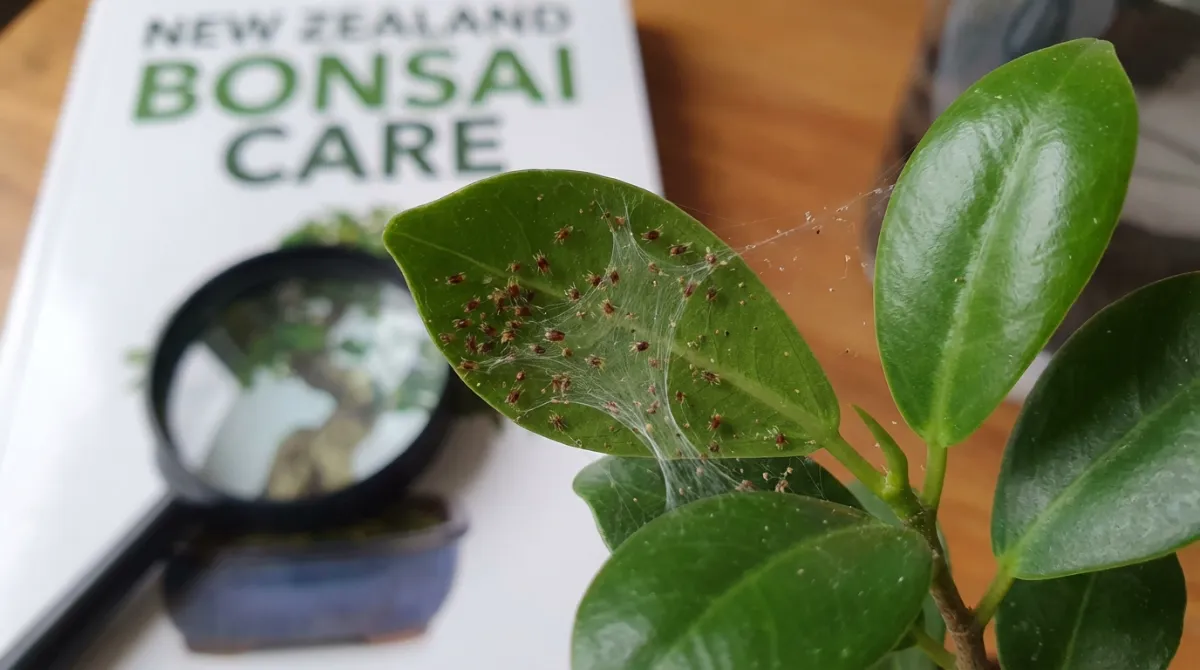
2. Spider Mites
Tiny arachnids, barely visible to the naked eye. They thrive in dry conditions. Look for fine webbing on leaves and stems, and tiny yellow or silver speckles on foliage. Leaves may turn bronze or yellow and drop prematurely.
3. Mealybugs
Soft-bodied, oval insects covered in a white, cottony wax. They cluster in leaf axils, on stems, and under leaves, sucking sap and exuding honeydew. Infestations can severely weaken a bonsai.
4. Scale Insects
These look like small, oval, dome-shaped bumps (brown, black, or grey) firmly attached to stems and leaf undersides. They are protected by a waxy shell, making them tough to treat. Like aphids and mealybugs, they produce honeydew.
Identifying Fungal Infections and Bacterial Diseases
Beyond insect pests, bonsai trees can also fall victim to various pathogens. Proper identification is key to effective treatment.
1. Powdery Mildew
Appears as white, powdery patches on leaves, stems, and flowers. It thrives in high humidity and poor air circulation, inhibiting photosynthesis and weakening the plant.
2. Rust
Characterized by orange, yellow, or reddish-brown pustules (rust-like spots) on leaf undersides, often with corresponding yellow spots on the upper surface. Can cause premature leaf drop.
3. Root Rot
A severe and often fatal condition caused by overwatering and poorly draining soil, leading to fungal or bacterial growth in the roots. Symptoms include wilting, yellowing leaves, and a general decline in vigour. The roots will appear soft, black, and mushy.
4. Cankers
Localized areas of dead tissue on stems or branches, often sunken and discoloured. Caused by fungi or bacteria entering through wounds. If encircling a branch, it can kill the part beyond the canker.
Organic and Natural Pest Control Methods
For those seeking an eco-friendly approach to managing bonsai pests NZ, several organic solutions are highly effective, especially for mild infestations.
1. Manual Removal
Step 1: Inspect Thoroughly. Regularly check your bonsai, especially new growth and leaf undersides. Step 2: Physically Remove. For larger pests like mealybugs or scale, gently scrape them off with a fingernail, cotton swab dipped in rubbing alcohol, or a soft brush. For aphids, a strong jet of water can dislodge them.
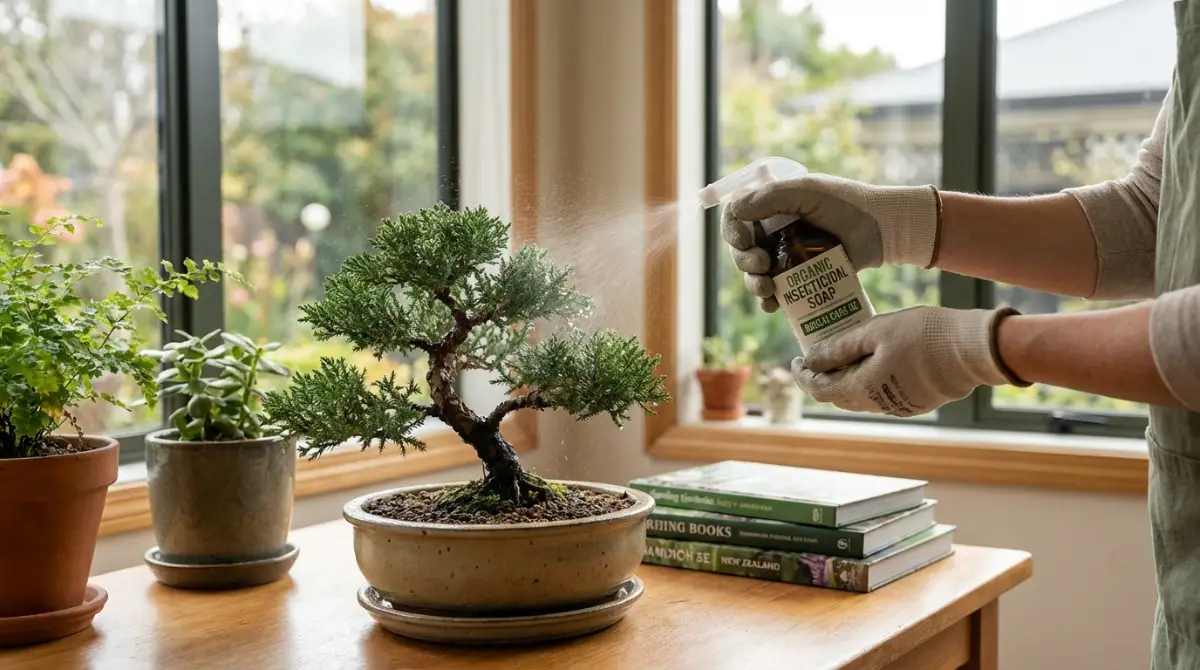
2. Insecticidal Soap
Step 1: Prepare Solution. Mix a horticultural soap specifically for plants (not dish soap) with water according to package directions. Step 2: Apply Evenly. Spray all affected areas, ensuring complete coverage, including undersides of leaves. Repeat every 5-7 days until pests are gone. This suffocates soft-bodied pests.
3. Neem Oil
Step 1: Dilute. Mix pure, cold-pressed neem oil with water and a small amount of emulsifier (like a few drops of mild liquid soap) as per instructions. Step 2: Spray Foliage. Apply to all leaf surfaces, stems, and soil surface. Neem oil acts as an anti-feedant, growth regulator, and suffocant. Reapply every 7-10 days as needed.
4. Horticultural Oil
Step 1: Mix. Dilute horticultural oil (often mineral oil-based) with water. Step 2: Cover Plant. Spray thoroughly, ensuring complete coverage. It smothers pests like scale, mites, and mealybugs. Use with caution on heat-stressed plants or in direct sunlight.
Expert Tip: Always test any new spray on a small, inconspicuous part of your bonsai first to ensure there’s no adverse reaction before treating the entire plant.
Safe and Effective Chemical Treatments
While organic methods are preferred, severe infestations of bonsai pests NZ may necessitate the use of chemical pesticides. Always use these as a last resort and with extreme caution.
1. When to Consider Chemicals
If organic methods have failed after consistent application, or if the infestation is rapidly spreading and threatening the bonsai’s life. Choose products specifically labelled for indoor plants or ornamental trees, and ensure they are approved for use in New Zealand.
2. Types of Pesticides
Systemic insecticides are absorbed by the plant and kill pests that feed on it. Contact insecticides kill pests on contact. Fungicides are available for fungal diseases like powdery mildew or rust. Always match the chemical to the specific pest or disease.
3. Application Safety Protocol
- Read Labels Carefully: Follow all instructions regarding dilution rates, application frequency, and safety precautions.
- Protective Gear: Wear gloves, eye protection, and a mask to avoid exposure.
- Ventilation: Apply in a well-ventilated area, preferably outdoors on a still day, or in a garage with open doors.
- Isolate Treated Plants: Keep treated bonsai away from other plants and pets for the recommended period.
- Avoid Overuse: Chemical resistance can develop if pesticides are used excessively or incorrectly.
Preventative Measures to Keep Your Bonsai Healthy
The best defence against bonsai pests NZ is a strong offence – proactive care. Healthy trees are more resilient to infestations and diseases.
Action Checklist for Bonsai Health:
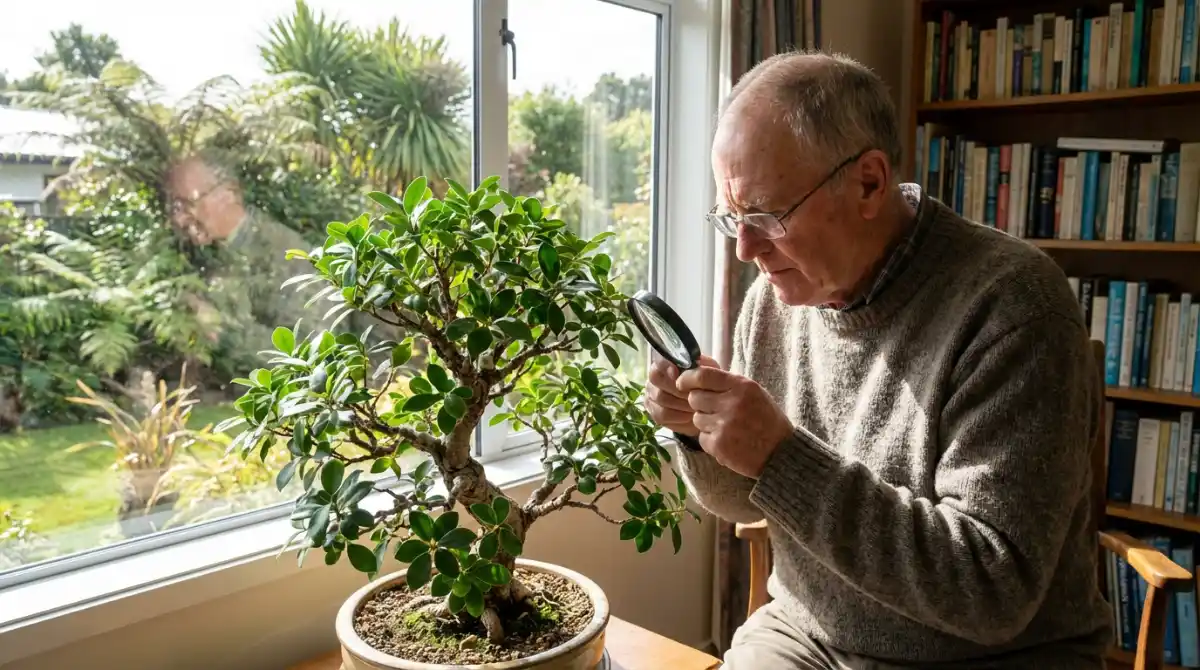
- Regular Inspection: Make it a habit to inspect your bonsai weekly. Check the tops and undersides of leaves, stems, and soil for any signs of trouble.
- Quarantine New Plants: Always isolate new bonsai or plants for at least 2-4 weeks before introducing them to your existing collection.
- Optimal Growing Conditions: Provide adequate light, appropriate watering, and good air circulation for your specific bonsai species. Stressed plants are pest magnets.
- Proper Watering: Avoid both overwatering (leads to root rot) and underwatering (stresses the plant). Water when the topsoil feels slightly dry.
- Good Air Circulation: Ensure good airflow around your bonsai, especially indoors, to deter fungal growth.
- Maintain Cleanliness: Remove fallen leaves, debris, and weeds from the pot surface to eliminate hiding spots for pests.
- Sterilise Tools: Always clean and sterilise your pruning tools between uses and between different trees to prevent the spread of diseases.
Frequently Asked Questions
Q: How often should I check my bonsai for pests?
A: Weekly inspections are recommended. The earlier you spot a problem, the easier it is to treat before it becomes a major infestation.
Q: Can I use dish soap for pest control on my bonsai?
A: It is strongly advised against using regular dish soap. Dish soaps contain degreasers and other additives that can strip a plant’s protective waxes, causing more harm than good. Always use an insecticidal soap specifically formulated for plants.
Q: What’s the best way to prevent root rot?
A: The primary prevention for root rot is proper watering and well-draining soil. Ensure your pot has drainage holes, use an appropriate bonsai soil mix, and only water when the top inch or two of soil feels dry to the touch.
Q: Are there any natural predators for bonsai pests in NZ?
A: Yes, for indoor environments, introducing beneficial insects like ladybugs (for aphids) or predatory mites (for spider mites) can be an effective biological control method. Ensure you source these from reputable suppliers in NZ.
References
- Ministry for Primary Industries (MPI) New Zealand – Plant Health & Biosecurity Information.
- Horticulture New Zealand – Pest and Disease Management Guides.
- Various academic articles on integrated pest management in ornamental horticulture.
- Leading bonsai cultivation guides and expert horticultural publications.