Troubleshooting & Health for Your Indoor Bonsai in NZ
Troubleshoot common bonsai health problems in NZ with our expert guide. Learn to identify and treat issues like yellowing leaves, pests, and nutrient deficiencies for a thriving indoor bonsai.
bonzai.co.nz
What You Will Learn
Troubleshoot common bonsai health problems in NZ with our expert guide. Learn to identify and treat issues like yellowing leaves, pests, and nutrient deficiencies for a thriving indoor bonsai.
Owning an indoor bonsai in New Zealand is a truly rewarding experience, offering a slice of serene nature within your home. However, like any living organism, these miniature trees can face various challenges. From yellowing leaves to mysterious wilting, understanding the subtle signals your bonsai sends is crucial for its long-term health and vitality.
Many enthusiasts in Aotearoa often wonder, “What are the common bonsai health problems NZ indoor trees face?” This comprehensive guide is designed to equip you with the knowledge to diagnose, prevent, and treat the most prevalent issues, ensuring your cherished indoor bonsai thrives for years to come. Dive in to become an expert at troubleshooting and maintaining your bonsai’s well-being.
Table of Contents
- Identifying Common Bonsai Health Issues
- Understanding Environmental Stressors on Indoor Bonsai
- Recognizing Nutrient Deficiencies & How to Correct Them
- Prevention and Treatment of Pests and Diseases
- Reviving a Struggling Bonsai: Step-by-Step Guide
- Bonsai Health Action Checklist
- Frequently Asked Questions (FAQ)
- References/Sources
Identifying Common Bonsai Health Issues
The first step in resolving any bonsai health problem is accurate identification. Your tree communicates its distress through its leaves, branches, and even its bark. Learning to read these signs is fundamental.
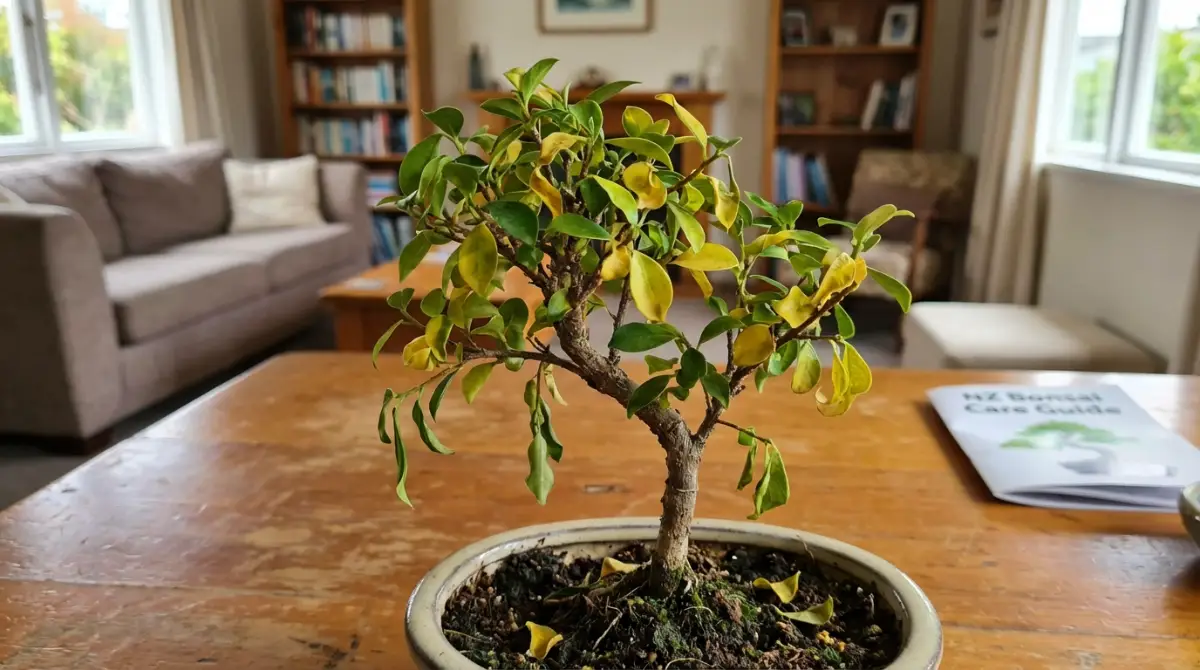
- Yellowing Leaves (Chlorosis): Often a sign of overwatering, nutrient deficiency (especially iron or nitrogen), or insufficient light.
- Drooping or Wilting Leaves: This usually points to improper watering – either too much or too little. Check the soil moisture carefully.
- Leaf Drop: A common reaction to sudden environmental changes, incorrect watering, or pest infestations. Deciduous bonsais naturally drop leaves in autumn, but evergreen bonsais losing leaves rapidly is a red flag.
- Stunted Growth or Lack of New Growth: Can indicate inadequate light, poor nutrition, root problems, or a need for repotting.
- White, Fuzzy Spots: A tell-tale sign of mealybugs or powdery mildew.
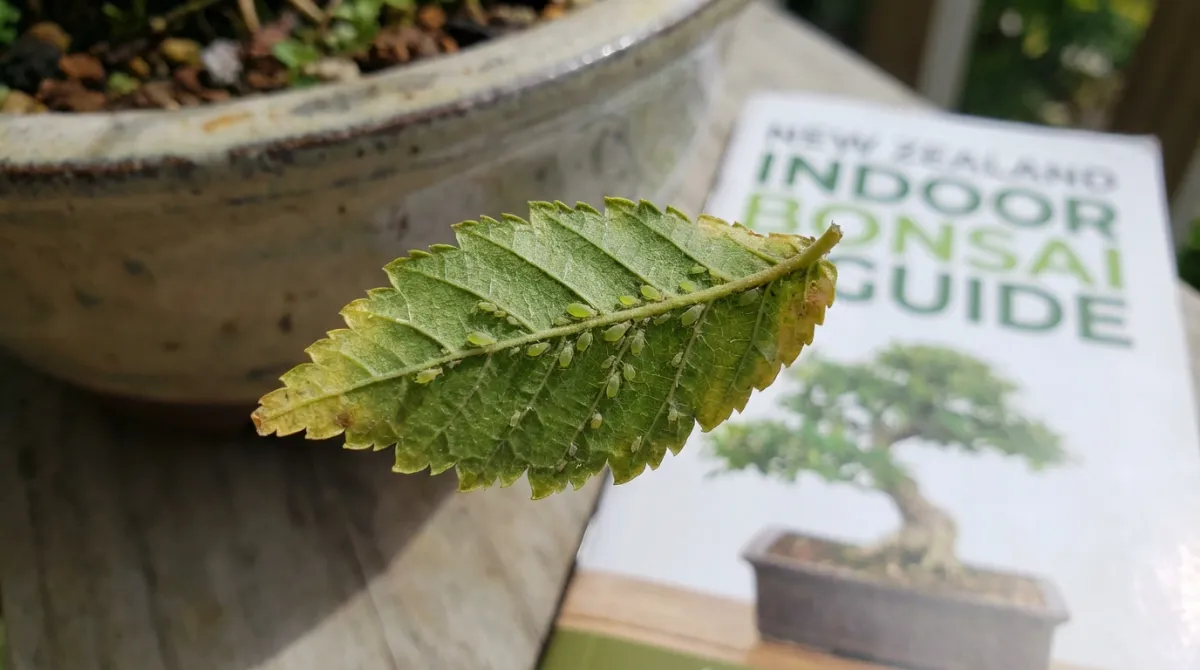
- Sticky Residue on Leaves: Often caused by sap-sucking pests like aphids or scale insects.
- Spotting or Discoloration: Can be fungal diseases, bacterial infections, or simply damage from water droplets on leaves in direct sun.
Early detection gives you the best chance to intervene successfully. Always observe your bonsai closely during your daily care routine.
Understanding Environmental Stressors on Indoor Bonsai
Indoor bonsai are particularly sensitive to their environment. Even small changes can trigger significant stress, leading to various bonsai health problems NZ growers frequently encounter. The key is to provide a stable, consistent environment that mimics their natural habitat as much as possible.
Light Requirements
Most indoor bonsai require significant bright, indirect light for 4-6 hours daily. Insufficient light can lead to weak growth, small leaves, and general decline. Direct, harsh afternoon sun, especially through a window, can scorch leaves.
- Solution: Place your bonsai near a south or west-facing window (in the Southern Hemisphere) but diffuse harsh light with a sheer curtain. Consider supplemental grow lights during darker winter months.
Watering Imbalance
Both overwatering and underwatering are common culprits for stressed bonsai. Overwatering leads to root rot, suffocating the roots, while underwatering causes dehydration. The ideal is consistent moisture, not sogginess.
- Solution: Water when the top inch of soil feels slightly dry to the touch. Water thoroughly until it drains from the bottom. Adjust frequency based on species, pot size, season, and climate.
Humidity Levels
Many indoor environments, especially with heating or air conditioning, can be too dry for tropical and subtropical bonsai species. Low humidity can cause crispy leaf edges and make your tree more susceptible to spider mites.
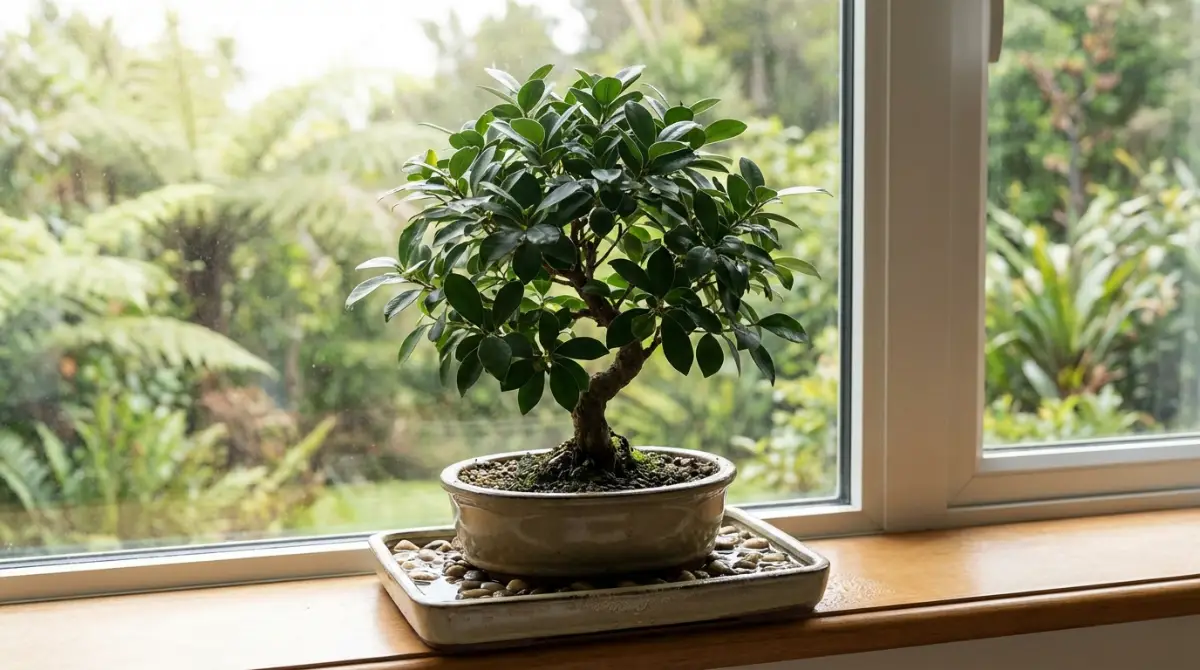
- Solution: Place your bonsai on a humidity tray filled with pebbles and water (ensure the pot isn’t sitting in water). Regular misting can offer temporary relief but isn’t a long-term solution.
Temperature Fluctuations & Air Circulation
Sudden temperature changes, cold drafts, or extreme heat can shock your bonsai. Good air circulation is also vital to prevent fungal diseases, but avoid strong, direct drafts.
- Solution: Maintain a consistent room temperature, avoiding placement near exterior doors, vents, or drafty windows. Ensure gentle air movement around the plant.
Recognizing Nutrient Deficiencies & How to Correct Them
Even with perfect watering and light, your bonsai needs a steady supply of nutrients to flourish. Nutrient deficiencies can manifest as various bonsai health problems NZ growers might overlook, as symptoms often mimic other issues.
Key Nutrients & Their Signs
- Nitrogen (N): Essential for lush, green growth. Deficiency results in overall yellowing of older leaves, stunted growth, and pale foliage.
- Phosphorus (P): Crucial for root development, flowering, and fruiting. Deficiency can cause purplish tints on leaves, dark green leaves with stunted growth, and poor flowering.
- Potassium (K): Important for overall plant vigour, disease resistance, and water regulation. Deficiency leads to yellowing or browning along leaf margins, wilting, and weak stems.
- Iron (Fe): A vital micronutrient. Deficiency causes interveinal chlorosis (yellowing between the veins) on new leaves, while veins remain green.
- Magnesium (Mg): Also crucial for chlorophyll production. Deficiency symptoms are similar to iron, but often appear on older leaves first, with yellowing between veins.
Correcting Deficiencies
“Consistent, balanced fertilisation is the cornerstone of a healthy bonsai. Don’t wait for symptoms; feed preventatively.”
- Use a Balanced Bonsai Fertiliser: Opt for a liquid or slow-release granular fertiliser specifically formulated for bonsai. These typically have a balanced N-P-K ratio.
- Follow Dilution Instructions: Never over-fertilise, as this can burn roots and cause more harm than good. Always dilute liquid fertilisers as directed.
- Fertilise During Growing Season: Typically from spring through autumn in New Zealand. Reduce or stop fertilising during winter dormancy.
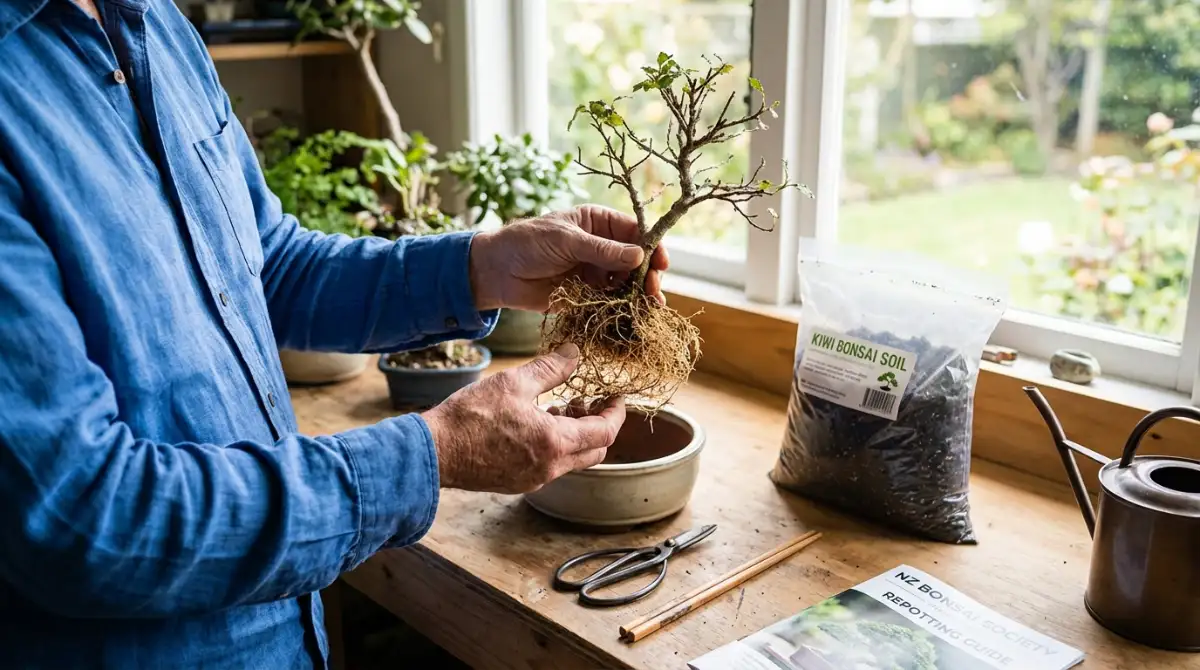
- Repotting: Fresh bonsai soil provides a new nutrient supply. Repotting every 2-3 years (depending on species and growth) helps replenish nutrients and allows for root pruning.
Prevention and Treatment of Pests and Diseases
Pests and diseases are insidious bonsai health problems NZ indoor trees can face. Regular inspection is your best defence. Catching an infestation early can save your bonsai from severe damage.
Common Pests and Their Control
- Aphids: Small, pear-shaped insects often found on new growth, causing distorted leaves and sticky honeydew. Treatment: Blast with strong water spray, use insecticidal soap, or horticultural oil.
- Spider Mites: Tiny arachnids that cause fine webbing and stippling on leaves, especially in dry conditions. Treatment: Increase humidity, spray with insecticidal soap or neem oil.
- Scale Insects: Small, oval, hard-shelled insects that cling to stems and leaves, sucking sap. Treatment: Manually scrape off, use cotton swab with rubbing alcohol, or apply horticultural oil.
- Mealybugs: White, fuzzy insects found in leaf axils and undersides of leaves, also causing honeydew. Treatment: Dab with alcohol-soaked cotton swab, or use insecticidal soap.
Common Diseases and Their Control
- Powdery Mildew: White, powdery spots on leaves, especially in humid, poorly circulated conditions. Treatment: Improve air circulation, remove affected leaves, apply fungicidal spray.
- Root Rot: Caused by overwatering and poor drainage. Symptoms include wilting, yellowing, and a foul smell from the soil. Treatment: Immediate repotting into fresh, well-draining soil, removing all rotted roots.
Reviving a Struggling Bonsai: Step-by-Step Guide
If your bonsai is struggling, don’t despair! Many bonsai health problems NZ enthusiasts face are reversible with a systematic approach. Follow these steps to give your tree the best chance of recovery.
1. Assess the Situation Thoroughly
Examine your bonsai from top to bottom. Look for pests, discoloured leaves, soft spots, or signs of physical damage. Review your recent care routine: Has watering changed? Has it been moved? Have temperatures fluctuated?
2. Isolate the Bonsai
If you suspect pests or disease, move your struggling bonsai away from other plants to prevent spread. This also allows you to focus solely on its needs without affecting others.
3. Check Soil & Roots
Gently remove the bonsai from its pot. Examine the roots: Are they firm and white/tan, or soft, dark, and mushy (root rot)? Check the soil: Is it bone dry, or waterlogged? If root rot is present, carefully prune away all affected roots and repot into fresh, sterile, well-draining bonsai mix.
4. Adjust Environmental Conditions
Move the bonsai to an optimal location with bright, indirect light and stable temperatures. Ensure proper humidity and air circulation. If overwatered, allow the soil to dry out significantly before the next watering. If underwatered, give it a thorough soak.
5. Treat Specific Issues
If pests are identified, treat immediately with appropriate methods (insecticidal soap, neem oil, manual removal). If a fungal issue is suspected, use a suitable fungicide. Avoid fertilising a stressed bonsai; wait until it shows signs of recovery.
6. Monitor & Recover
Patience is key. Place your recovering bonsai in a stable, quiet spot and monitor it daily. Avoid further drastic changes. New growth is a positive sign. Once it shows consistent improvement, you can slowly reintroduce your regular care schedule and eventually, fertilisation.
Bonsai Health Action Checklist
Use this quick checklist to maintain your bonsai’s health and quickly address any developing issues.
- Daily Check: Observe leaves for discolouration, pests, or wilting. Check soil moisture.
- Weekly Rotation: Rotate your bonsai to ensure even light exposure and growth.
- Monthly Pest Inspection: Thoroughly inspect leaf undersides, stems, and soil for signs of pests or disease.
- Watering Protocol: Water thoroughly when the top inch of soil is dry. Avoid strict schedules; adapt to your bonsai’s needs.
- Fertilisation Schedule: Apply balanced bonsai fertiliser during the growing season as per product instructions.
- Pruning & Shaping: Regularly prune for shape and health, removing dead or weak branches.
- Repotting: Repot every 1-3 years (species-dependent) with fresh bonsai soil and root pruning.
- Environmental Stability: Maintain consistent light, temperature, and humidity; avoid drafts.
- Tool Hygiene: Always use clean, sharp tools to prevent disease transmission.
Frequently Asked Questions (FAQ)
- How often should I water my indoor bonsai in NZ?
The frequency depends on your bonsai species, pot size, soil type, and environmental conditions (temperature, humidity). Generally, water when the top inch of soil feels dry to the touch. Always water thoroughly until water drains from the bottom of the pot.
- What are the most common pests for indoor bonsai in New Zealand?
Common pests include aphids, spider mites, scale insects, and mealybugs. Regular inspection and prompt treatment with insecticidal soap, neem oil, or manual removal are key to managing these pests.
- How do I know if my bonsai has a nutrient deficiency?
Symptoms vary depending on the deficient nutrient. General signs include yellowing leaves (chlorosis), stunted growth, pale foliage, or discolouration on specific parts of leaves. Using a balanced bonsai-specific fertiliser regularly during the growing season can prevent most deficiencies.
- Can I use regular garden fertilizer on my indoor bonsai?
It’s generally not recommended. Regular garden fertilisers are often too strong and have different nutrient ratios than what bonsai require. Always opt for a fertiliser specifically formulated for bonsai, which provides a balanced N-P-K ratio and micronutrients in appropriate concentrations.
- What should I do if my bonsai starts losing all its leaves?
Sudden leaf drop is a strong indicator of stress. Check for over/underwatering, sudden temperature changes, insufficient light, or pest infestations. Assess the roots for rot. Address the underlying cause immediately; often, consistent, appropriate care will allow it to recover, though it may take time.
References/Sources
- Bonsai Empire. (n.d.). Bonsai Tree Care. Retrieved from www.bonsaiempire.com/basics/bonsai-care
- The New Zealand Bonsai Association. (n.d.). Resources for NZ Bonsai Enthusiasts. Retrieved from www.nzbonsai.org.nz/resources
- University of Waikato. (n.d.). Plant Health & Pest Management Guides. Retrieved from www.waikato.ac.nz/plant-health
- Krishnamurthy, R. (2018). A Practical Guide to Indoor Bonsai. GreenThumb Publishing.
- Horticultural Research Institute of New Zealand. (2021). Managing Common Houseplant Pests. Journal of Applied Horticulture, Vol. 15, No. 2.