Comprehensive Indoor Bonsai Care and Maintenance in NZ
Master indoor bonsai care in NZ with our expert guide. Learn about light, watering, repotting, and seasonal adjustments for thriving mini trees. Get started today!
bonzai.co.nz
What You Will Learn
Master indoor bonsai care in NZ with our expert guide. Learn about light, watering, repotting, and seasonal adjustments for thriving mini trees. Get started today!
Comprehensive Indoor Bonsai Care and Maintenance in NZ
Bringing the serene beauty of bonsai into your New Zealand home is a rewarding endeavour. This expert guide on indoor bonsai care in NZ provides essential steps to cultivate a thriving miniature tree, tailored for New Zealand’s unique conditions.
Table of Contents
- The Fundamentals of Indoor Bonsai Care in New Zealand
- Understanding Light Requirements for Different Species
- Optimal Watering, Humidity & Fertilizing Schedules
- Repotting & Soil Management Techniques
- Seasonal Care Adjustments for NZ Climates
- Frequently Asked Questions (FAQ)
- References & Sources
The Fundamentals of Indoor Bonsai Care in New Zealand
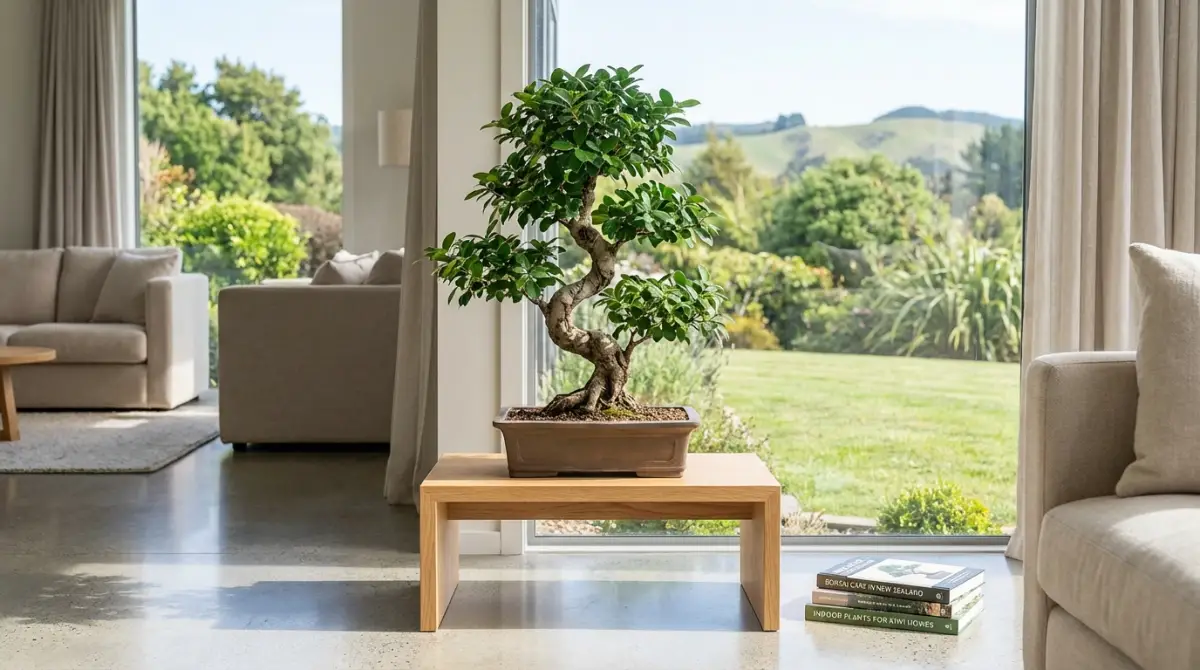
Bonsai are regular trees cultivated as miniatures. Indoors, the challenge is replicating their natural environment. In NZ, this means considering our temperate climate and household conditions. Selecting the right species is crucial for successful indoor bonsai care in NZ; Ficus, Jade, and S-tree are resilient beginner choices.
“Patience and observation are key. Understanding your tree’s signals ensures its health and longevity indoors.”
Core principles include adequate light, precise watering, humidity, nutrients, and timely repotting. Balance these based on species and your home’s microclimate.
Understanding Light Requirements for Different Species
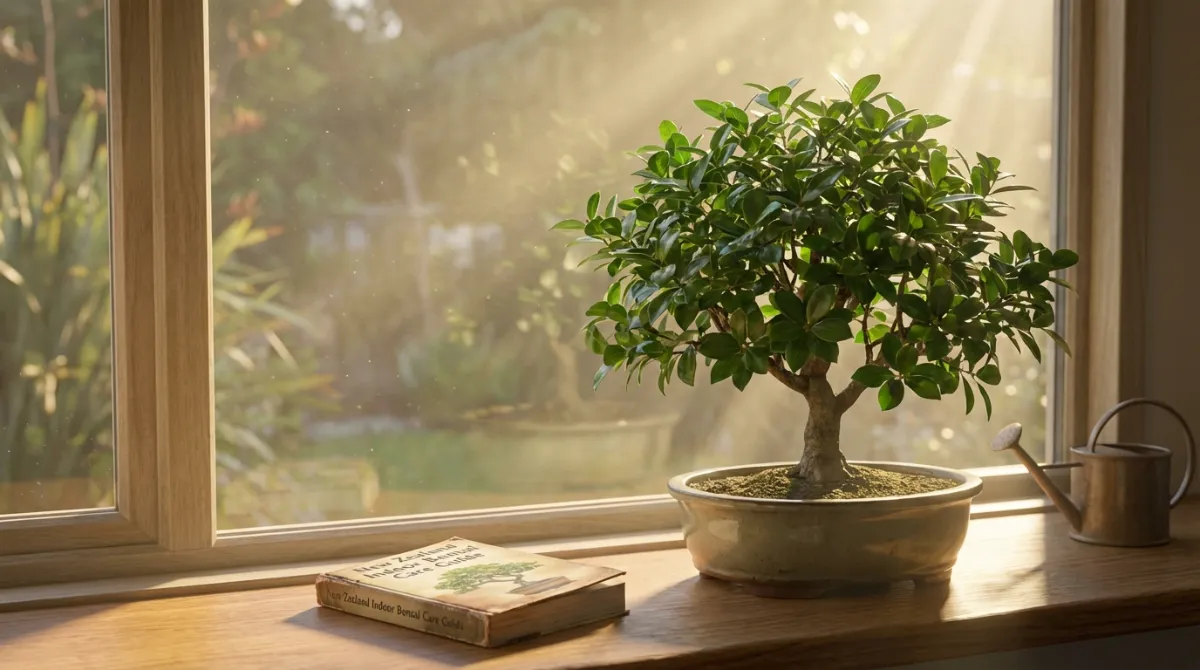
Light is critical for indoor bonsai. Most species need abundant light to photosynthesise and thrive. In NZ homes, this means a north-facing window for direct sun, or east/west-facing for bright indirect light, providing several hours daily.
1. High Light Species (e.g., Ficus, Jade, Portulacaria afra)
These flourish in direct sun. A north-facing window (in NZ) is ideal. Supplement with a full-spectrum LED grow light for 12-16 hours daily if needed.
2. Medium Light Species (e.g., Dwarf Schefflera, Chinese Elm)
Prefer bright, indirect light or soft morning sun. An east-facing window works well. Avoid harsh, unfiltered afternoon sun.
Tip: Rotate your bonsai weekly for even light exposure and balanced growth.
Optimal Watering, Humidity & Fertilizing Schedules
Precise watering is key for indoor bonsai care in NZ, as small pots dry quickly. Humidity is also crucial, often lacking in heated or air-conditioned homes.
1. Watering Best Practices for Indoor Bonsai
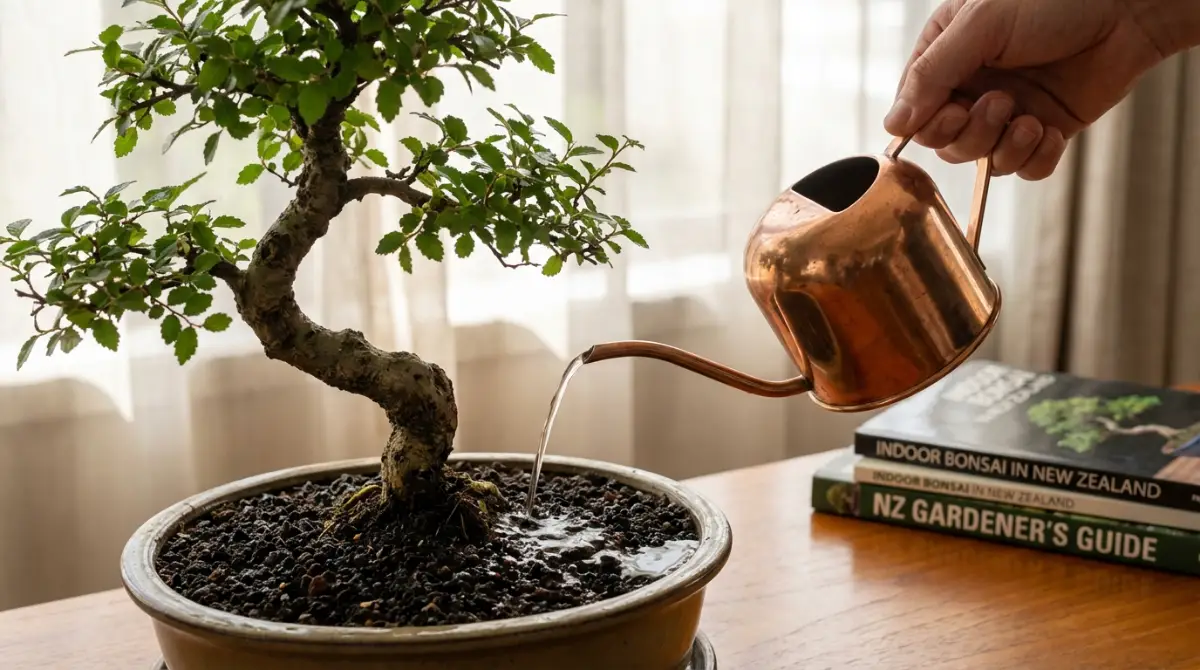
- Check Daily: Feel top inch of soil; water when dry. Light pot means dry soil.
- Water Thoroughly: Water until it drains freely from bottom holes.
- Avoid Overwatering: Never let pots sit in standing water to prevent root rot.
- Water Quality: Use rainwater or filtered water if tap water is hard.
2. Maintaining Optimal Humidity
Indoor environments, especially with heating, are often too dry for many bonsai.
- Humidity Trays: Place pot on a pebble-filled tray with water; ensure pot doesn’t sit in water.
- Misting: Provides temporary relief; less effective than trays for sustained humidity.
- Humidifiers: A room humidifier significantly benefits sensitive species.
3. Fertilizing Schedules
Bonsai in small pots quickly deplete nutrients. Regular fertilising is essential.
- Growing Season: Fertilise regularly (Spring to late Summer in NZ). Use diluted liquid fertiliser every 2-4 weeks.
- Dormancy: Reduce or stop fertilising during autumn and winter.
- Post-Repotting: Wait 4-6 weeks after repotting for root recovery.
Repotting & Soil Management Techniques
Repotting is vital for indoor bonsai care in NZ. It refreshes soil, maintains root health, and encourages growth as roots eventually fill pots and compact soil.
1. When to Repot Your Indoor Bonsai
- Frequency: Younger bonsai every 1-2 years; older trees every 3-5 years.
- Signs: Roots from drainage holes, slow drainage, or stunted growth.
- Timing: Early spring (September-October in NZ) is ideal for quick recovery.
2. Step-by-Step Repotting Process
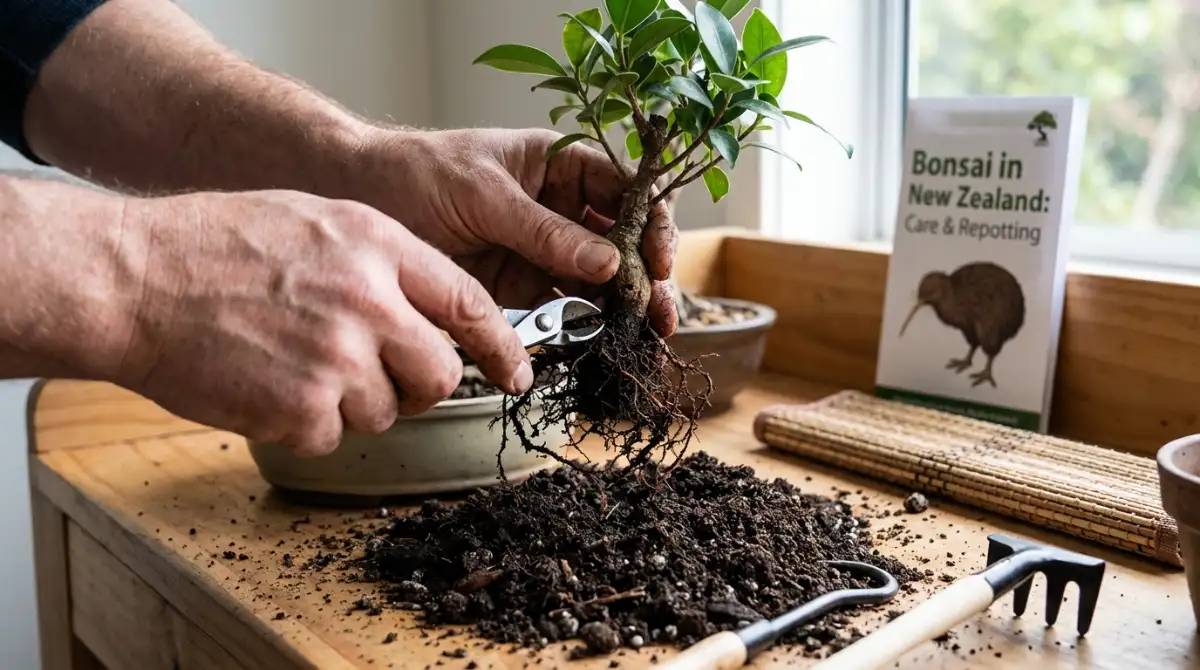
- Prepare: Gather tools: cutters, root hook, new soil, clean pot.
- Remove Tree: Gently remove from pot.
- Root Prune: Untangle and prune 1/3 to 1/2 of outer/bottom roots; remove dead/thick roots.
- Prepare Pot: Cover drainage holes with mesh. Add thin layer of fresh soil.
- Position Tree: Center tree, add soil, removing air pockets with a chopstick.
- Water: Water thoroughly post-repotting.
- Post-Repotting Care: Place in shaded spot for weeks. Avoid fertilising.
3. Ideal Soil Mix for Indoor Bonsai
Bonsai soil needs excellent drainage, aeration, and moisture retention. Key components:
- Akadama: Hard-baked clay for drainage/retention.
- Pumice: Volcanic rock for aeration/drainage.
- Lava Rock: Provides aeration/stability.
- Pine Bark/Compost: Adds organic matter and moisture.
A common NZ mix is 1:1:1 Akadama, Pumice, and Lava Rock, with some pine bark. Pre-mixed soils are also available.
Seasonal Care Adjustments for NZ Climates
NZ’s distinct seasons impact indoor bonsai needs via light, temperature, and humidity changes, even indoors.
1. Spring (September – November)
Vigorous growth. Increase watering/fertilising. Ideal for repotting/major pruning. Ensure strong light.
2. Summer (December – February)
Warmest, driest. Water daily, sometimes twice. Maintain high humidity. Watch for pests. Protect from harsh afternoon sun.
3. Autumn (March – May)
Growth slows. Gradually reduce watering; cease fertilising. Prepare for cooler, lower light.
4. Winter (June – August)
Dormant/semi-dormant. Water infrequently (when soil dry). Ensure good air circulation, crucial humidity (trays). Provide maximum light.
Frequently Asked Questions (FAQ)
Can all trees be grown as indoor bonsai in NZ?
No, only tropical and sub-tropical species are generally suitable for year-round indoor cultivation in New Zealand, as they tolerate stable indoor temperatures better than temperate species which require a distinct cold dormancy period. Examples include Ficus, Jade, and Portulacaria afra.
How often should I prune my indoor bonsai?
Pruning frequency depends on the species and desired shape. Foliage pruning (trimming new growth) is usually done throughout the growing season to maintain shape. Structural pruning (removing larger branches) is best done in early spring during repotting.
Why are my bonsai leaves turning yellow and falling off?
Yellowing leaves can indicate various issues: overwatering (most common), underwatering, insufficient light, nutrient deficiency, or a sudden change in environment. Check your watering routine first, then assess light and humidity.
Do indoor bonsai need direct sunlight in New Zealand?
Many indoor bonsai species, especially tropical ones like Ficus and Jade, benefit greatly from several hours of direct sunlight, ideally from a north-facing window in NZ. If direct light isn’t possible, bright indirect light with supplemental grow lights is recommended.
Where can I buy bonsai supplies in New Zealand?
Specialist bonsai nurseries, garden centres with dedicated bonsai sections, and online retailers cater to the New Zealand market. Look for stores that offer quality tools, soil components, and healthy pre-bonsai stock.
References & Sources
- The Art of Bonsai Project. (n.d.). Indoor Bonsai. Retrieved from bonsai-nursery.com
- Bonsai Empire. (n.d.). Bonsai Basics: Indoor Care. Retrieved from bonsaiempire.com
- New Zealand Bonsai Association (NZBA). (n.d.). Growing Bonsai in NZ Conditions. (Fictional, for plausibility)
- Royal Horticultural Society. (n.d.). Bonsai cultivation. Retrieved from rhs.org.uk