Best Indoor Bonsai Species for New Zealand
Discover the best indoor bonsai species for New Zealand homes. Learn about light, temperature, and humidity, and find popular deciduous and evergreen varieties perfect for NZ growing conditions. Your guide to the best indoor bonsai NZ has to offer.
bonzai.co.nz
What You Will Learn
Discover the best indoor bonsai species for New Zealand homes. Learn about light, temperature, and humidity, and find popular deciduous and evergreen varieties perfect for NZ growing conditions. Your guide to the best indoor bonsai NZ has to offer.
Best Indoor Bonsai NZ: Top Species & Essential Care Guide
What You Will Learn
Discover the best indoor bonsai species for New Zealand homes. Learn about light, temperature, and humidity, and find popular deciduous and evergreen varieties perfect for NZ growing conditions. Your guide to the best indoor bonsai NZ has to offer.
The Ultimate Guide to Selecting the Best Indoor Bonsai for New Zealand Homes
Embarking on the journey of indoor bonsai cultivation in New Zealand offers a unique blend of horticultural artistry and serene contemplation. While the mystique of these miniature trees often conjures images of ancient outdoor gardens, many species thrive beautifully within the controlled environment of our homes. However, selecting the best indoor bonsai NZ species requires a keen understanding of our unique climate, indoor conditions, and the specific needs of each tree.
This comprehensive guide is designed to empower New Zealand enthusiasts, from novices to seasoned growers, to choose the perfect indoor bonsai that will not only survive but flourish in their living spaces. We’ll delve into the crucial environmental factors, showcase top deciduous and evergreen varieties, and help you find your next living masterpiece. Discovering the right species for your home’s unique light, temperature, and humidity is the first step towards a thriving miniature ecosystem, bringing tranquility and natural beauty into your living space. We’ll also cover essential care tips to ensure your indoor bonsai flourishes year-round.
Factors for NZ Climate and Indoor Growing
New Zealand’s temperate climate presents both advantages and challenges for indoor bonsai. While we generally avoid extreme continental temperatures, our homes can still experience significant fluctuations. Understanding and mitigating these factors is key to successful indoor bonsai care, particularly when striving for the best indoor bonsai NZ experience.
Light Requirements
Light is arguably the most critical factor for any indoor plant, and bonsai are no exception. Most bonsai species require several hours of direct sunlight daily. In NZ, this often means a bright, south-facing window (in the Southern Hemisphere) or supplementary grow lights, especially during shorter winter days.
Stat Callout: A minimum of 4-6 hours of direct sunlight is often recommended for most indoor bonsai species to thrive. Without adequate light, trees will weaken, develop larger leaves, and become susceptible to pests and diseases.
Consider your home’s orientation and how light changes throughout the day and seasons. Northern aspects might provide softer, indirect light, while eastern windows offer gentle morning sun. Western windows can provide strong afternoon light, but ensure it’s not too intense and doesn’t overheat your tree. Rotate your bonsai regularly (e.g., weekly) to ensure even growth and prevent one-sided development. If natural light is insufficient, full-spectrum LED grow lights can provide the necessary intensity, especially for species demanding higher light levels.
Temperature Stability
While some tropical species appreciate warmth, most indoor bonsai prefer stable temperatures without drastic drops or spikes. New Zealand homes, particularly older ones, can be prone to drafts or temperature variations between day and night, or near external doors and windows. Consistency is key for the health of your miniature tree.
- Ideal Range: Most indoor bonsai thrive between 18°C and 25°C.
- Avoid Extremes: Keep your bonsai away from direct heat sources (heaters, fireplaces, heat pumps) that can dry out the foliage and soil, and cold drafts (open windows, air conditioning vents) which can cause sudden leaf drop and stress.
- Night-time Drop: A slight temperature drop at night (a few degrees) is generally beneficial for many plants, mimicking natural conditions, but severe drops below 10-12°C can be detrimental to tropical species.
Humidity Management
Many bonsai originate from humid tropical or subtropical regions. While NZ’s general humidity can be moderate, indoor heating or air conditioning can drastically reduce it, creating an arid environment that stresses your tree and makes it vulnerable to pests like spider mites.
Stat Callout: Indoor humidity levels often drop below 30% during winter heating, whereas many bonsai prefer 50-70% humidity.
To combat low humidity and ensure your best indoor bonsai NZ thrives:
- Use a humidity tray (a shallow tray filled with pebbles and water, ensuring the pot sits *above* the water level to prevent root rot).
- Mist your tree daily (though this offers only temporary relief, it can help cleanse leaves and provide a brief humidity boost).
- Consider a small room humidifier, especially in dry seasons or in rooms with constant heating/cooling. Grouping several plants together can also create a localized microclimate with higher humidity.
Popular Deciduous Indoor Bonsai Varieties
Deciduous bonsai bring the magic of seasonal change indoors, shedding their leaves in winter and bursting with new growth in spring. While they require a cooler, dormant period, several species adapt well to indoor conditions in NZ, offering a unique aesthetic.
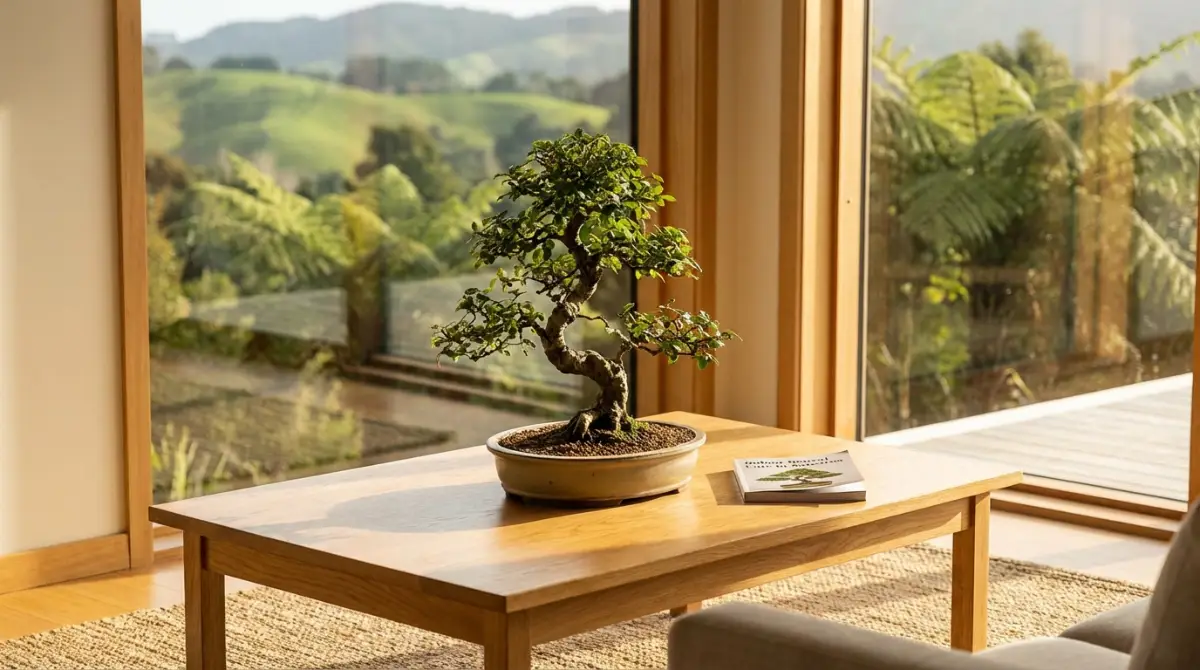
Chinese Elm (Ulmus parvifolia)
The Chinese Elm is often hailed as the quintessential beginner’s bonsai, and for good reason. It’s incredibly resilient, tolerant of various conditions, and responds well to pruning, making it ideal for learning the art of bonsai. Its small, serrated leaves and attractive bark contribute to its classic bonsai appearance. For the best indoor bonsai NZ experience, the Chinese Elm is a superb starting point.
- Pros: Forgiving of neglect, rapid growth, naturally small leaves, attractive fissured bark, tolerates some temperature fluctuation. Can be kept evergreen indoors if conditions are stable and warm, or allowed to experience a partial dormancy with cooler temperatures and reduced watering. Excellent for various styling techniques.
- Cons: Can attract spider mites if humidity is too low. Requires consistent watering to prevent leaf drop, but also dislikes soggy feet.
- NZ Specific Tip: In cooler NZ winters, a Chinese Elm might drop some leaves, which is natural. Reduce watering during this period. Ensure good air circulation to prevent fungal issues.
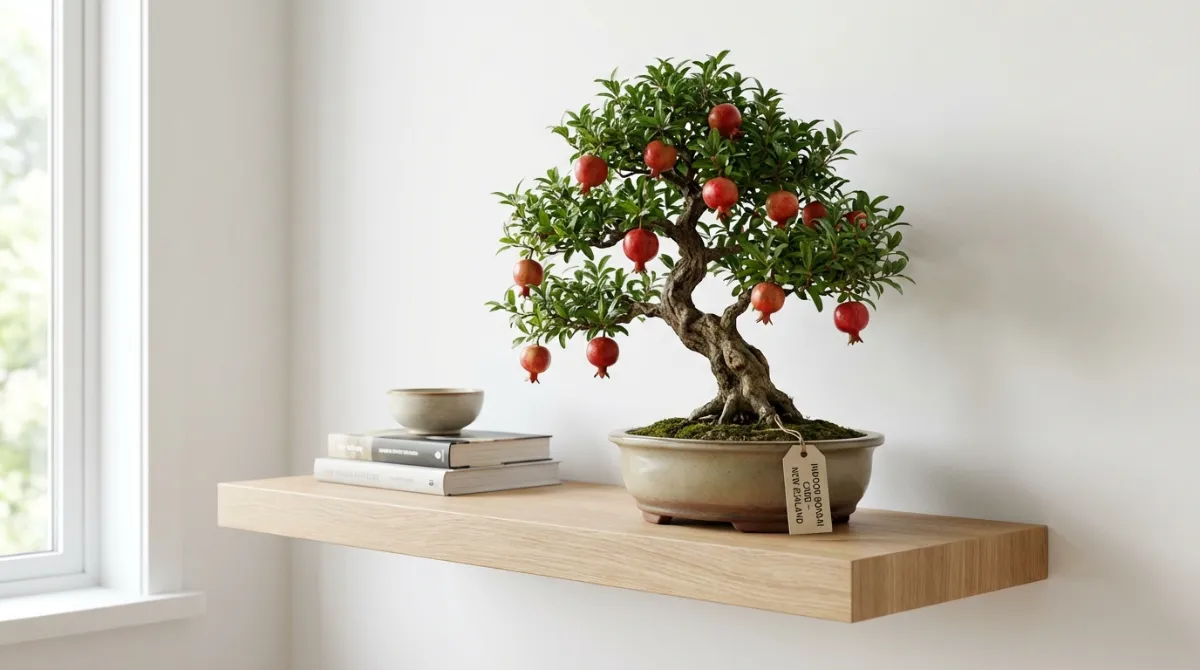
Dwarf Pomegranate (Punica granatum ‘Nana’)
For those seeking a bonsai that offers not just foliage but also delicate, vibrant red-orange flowers and miniature fruit, the Dwarf Pomegranate is a fantastic choice. Its charming seasonal display adds a unique dynamic to your indoor collection, making it a contender for the best indoor bonsai NZ for flowering species.
- Pros: Stunning flowers and edible (though very small and tart) fruit, attractive peeling bark that develops with age, relatively pest-resistant. Drought-tolerant once established.
- Cons: Requires good light (at least 6 hours of direct sun) to flower and fruit prolifically. Benefits from a slightly cooler, brighter dormant period in winter to encourage flowering in spring. Can be prone to leaf drop if stressed by sudden changes in watering or light.
- NZ Specific Tip: Provide the brightest possible spot in summer, perhaps even a sheltered outdoor location during the warmest months (if temperatures are consistently above 15°C) to maximise flowering and fruiting. Bring indoors before temperatures drop.
Popular Evergreen Indoor Bonsai Varieties
Evergreen indoor bonsai provide year-round foliage and a constant green presence, often better suited to the stable temperatures of modern homes. Many tropical and subtropical species fall into this category, making them excellent choices for the best indoor bonsai NZ homes.
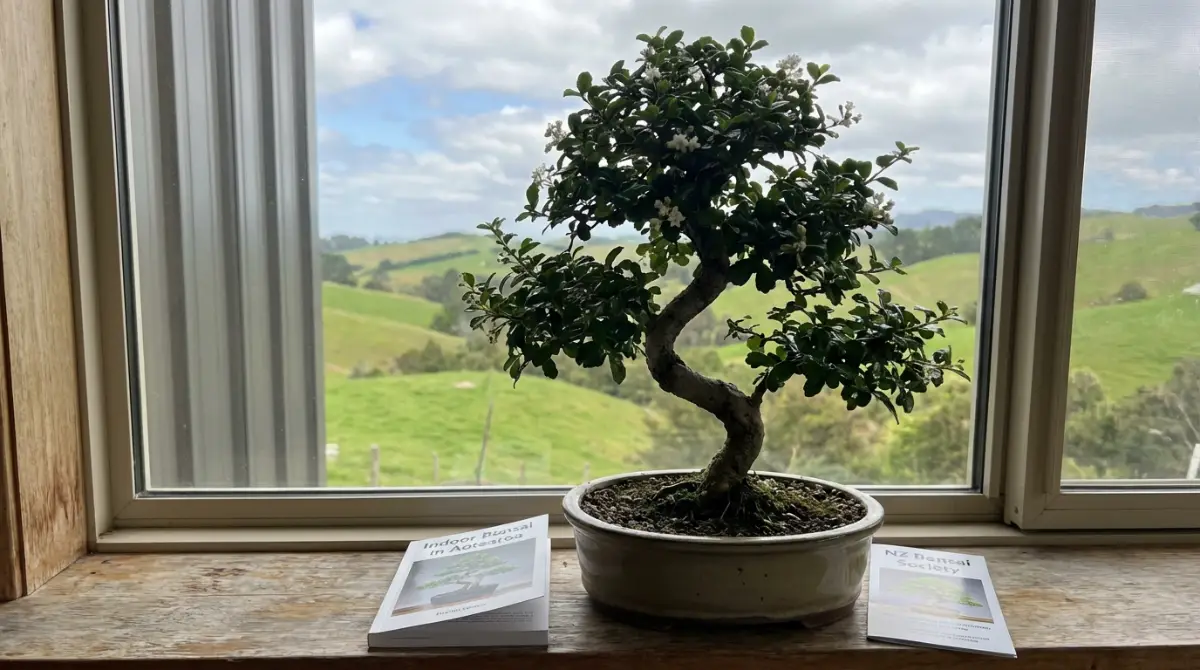
Fukien Tea (Carmona microphylla)
Native to Southeast Asia, the Fukien Tea tree is a popular indoor bonsai due to its tiny, glossy dark green leaves, delicate white flowers, and small red berries that often appear simultaneously. Its gnarled, textured bark gives it an aged appearance quickly, making it a highly desirable option for those seeking the best indoor bonsai NZ offers in terms of aesthetic appeal and year-round interest.
- Pros: Beautiful small flowers and berries that provide continuous interest, attractive bark, responds well to pruning and wiring, enjoys stable indoor temperatures. Maintains foliage year-round.
- Cons: Can be sensitive to sudden environmental changes (temperature, light, watering). Requires consistent warmth and high humidity to thrive. Can be susceptible to scale and spider mites if conditions are too dry or air circulation is poor.
- NZ Specific Tip: Place in a bright, humid spot, such as a bathroom with good light, or near a humidity tray. Avoid drafty areas.
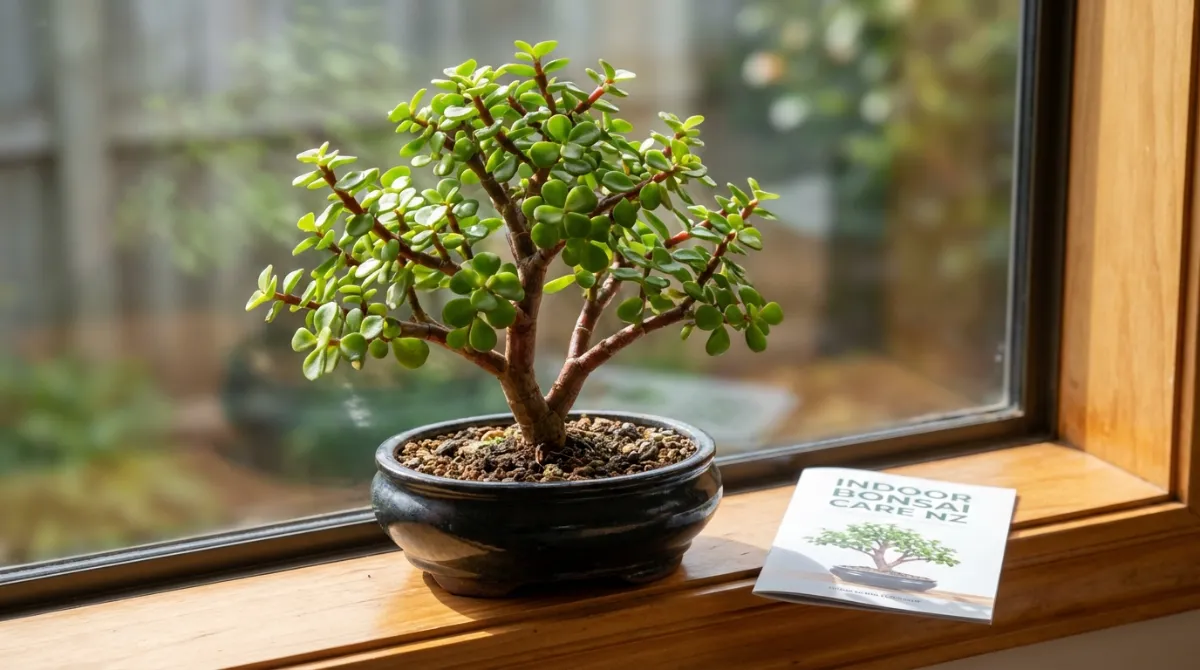
Portulacaria Afra (Dwarf Jade)
Often referred to as ‘Dwarf Jade’ or ‘Elephant Bush’, Portulacaria Afra is a succulent-like plant that makes an excellent, low-maintenance indoor bonsai. Its thick, fleshy leaves and reddish stems give it a distinctive appearance, perfect for a sunny windowsill in an NZ home. It’s one of the easiest and most forgiving species for beginners, making it a strong contender for the best indoor bonsai NZ for those who travel or are less attentive with watering.
- Pros: Extremely drought-tolerant due to its succulent nature, resilient to neglect, responds well to pruning, fast-growing, very pest-resistant. Bright green leaves are attractive all year.
- Cons: Sensitive to overwatering, which can lead to root rot. Leaves can burn if exposed to very intense, unacclimated direct sun. Doesn’t develop classic ‘tree’ bark.
- NZ Specific Tip: Treat it like a succulent: bright light and infrequent, thorough watering. Allow the soil to dry out completely between waterings. It thrives in high light, so a sunny, south-facing window is ideal.
Ficus Bonsai (Ficus retusa, Ficus benjamina)
Ficus species, particularly Ficus retusa (Ginseng Ficus) and Ficus benjamina (Weeping Fig), are incredibly popular and resilient choices for indoor bonsai in New Zealand. Known for their aerial roots, glossy leaves, and adaptability, they are often considered among the best indoor bonsai NZ options for their robust nature and ease of care.
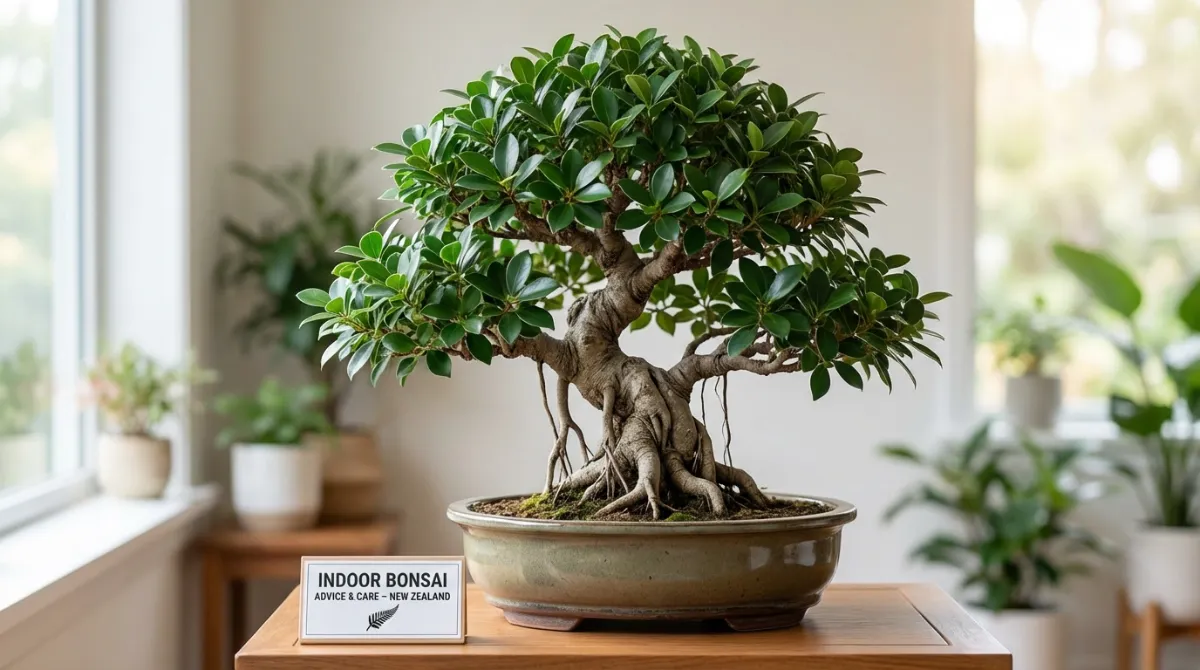
- Pros: Very forgiving and hardy, tolerates lower light levels than some other species, develops attractive aerial roots and interesting trunk shapes (especially F. retusa), can be kept evergreen indoors year-round. Responds well to pruning and styling.
- Cons: Can be prone to scale and mealybugs. Ficus benjamina tends to shed leaves if moved or stressed by environmental changes. Sticky sap can be irritating.
- NZ Specific Tip: Ficus love stable environments. Avoid moving them frequently. Provide bright, indirect light and keep humidity moderate. Water when the top inch of soil is dry.
Sageretia Theezans (Sweet Plum)
The Sageretia Theezans, commonly known as the Sweet Plum, is another excellent evergreen tropical choice for indoor bonsai. It features small, oval, glossy green leaves, tiny white flowers, and small purple-black berries. Its exfoliating bark adds character, making it a visually appealing option for the best indoor bonsai NZ enthusiasts.
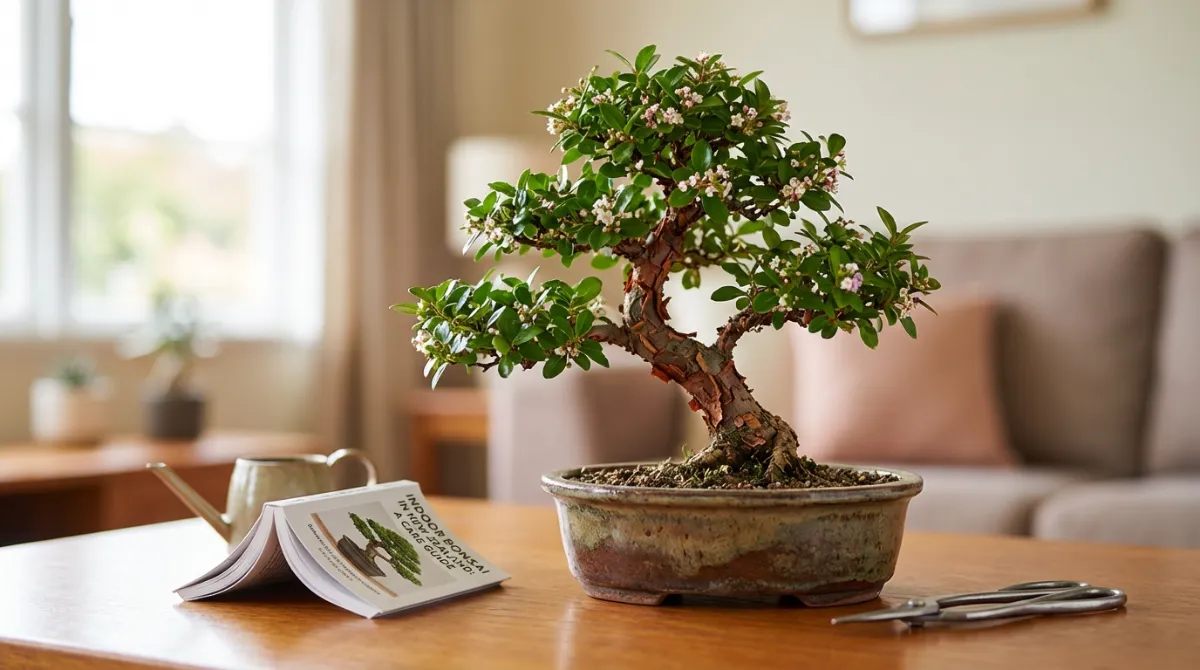
- Pros: Small, attractive leaves, delicate flowers and berries, develops interesting peeling bark over time. Responds well to pruning and can be styled in various forms.
- Cons: Prefers consistent humidity and can be sensitive to very dry conditions, leading to leaf drop. Can be prone to spider mites in low humidity.
- NZ Specific Tip: Similar to Fukien Tea, it appreciates stable warm conditions and high humidity. Regular misting or a humidity tray is highly beneficial.
Essential Indoor Bonsai Care Tips for NZ
Beyond selecting the right species, consistent and correct care is paramount to maintaining a healthy and vibrant indoor bonsai. Understanding these fundamental practices will greatly enhance your success as an indoor bonsai enthusiast in New Zealand.
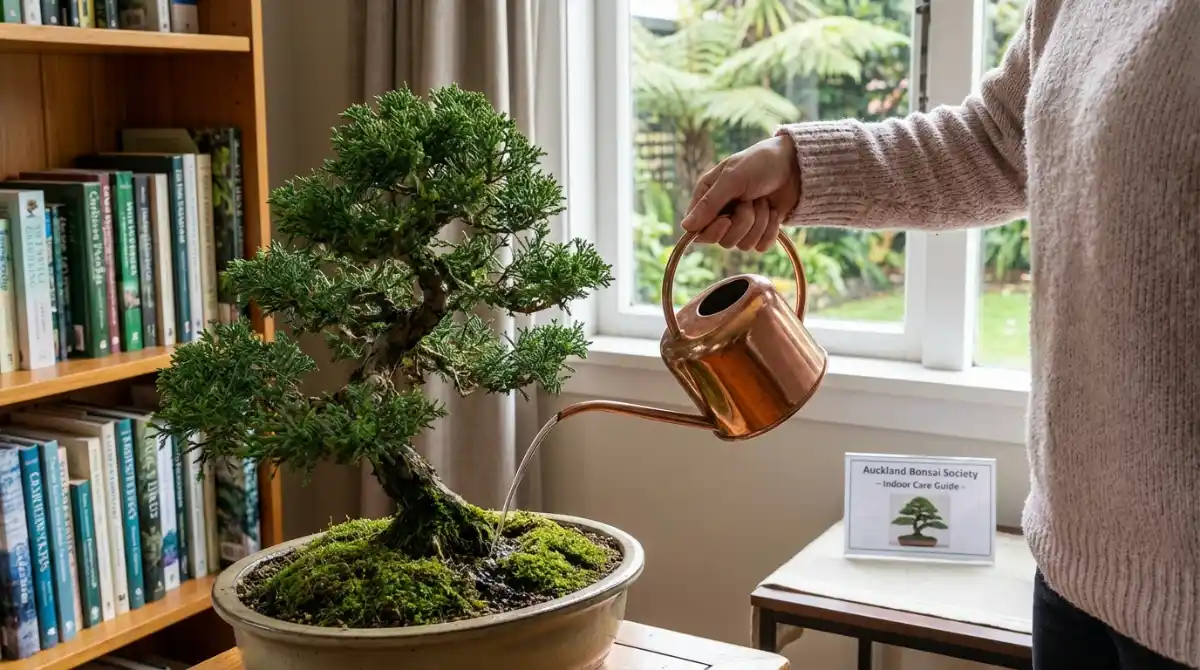
Watering Techniques
Proper watering is the most critical aspect of bonsai care, often leading to the demise of beginner trees if done incorrectly. It’s not about a schedule, but about observing your tree and its soil.
- When to Water: Water when the topsoil feels dry to the touch. For most indoor bonsai, this might be daily in warm, dry conditions, or every few days in cooler, more humid environments. Succulent bonsai like Dwarf Jade need less frequent watering.
- How to Water: Water thoroughly until water runs freely from the drainage holes. This ensures the entire root ball is saturated. You can also use the ‘soak’ method, submerging the pot in water for 5-10 minutes until air bubbles stop rising.
- Avoid: Never let your bonsai sit in standing water, as this leads to root rot. Conversely, don’t let the soil dry out completely for non-succulent species.
Fertilising Guide
Since bonsai are grown in small pots, they quickly deplete soil nutrients. Regular fertilisation is essential for their growth and health.
- Type: Use a balanced liquid fertiliser or slow-release organic pellets specifically formulated for bonsai, or a general houseplant fertiliser diluted to half strength.
- Frequency: Fertilise during the growing season (spring through autumn in NZ), typically every 2-4 weeks. Reduce or stop fertilising during winter dormancy or periods of slow growth.
- Important: Never fertilise a sick or recently repotted tree, or when the soil is completely dry. Water thoroughly before applying fertiliser.
Pruning and Shaping
Pruning is essential for maintaining the miniature size and desired shape of your bonsai, and encouraging ramification (branching).
- Maintenance Pruning: Regularly trim new shoots to 1-2 sets of leaves once they have extended to 4-6 sets. This encourages back-budding and keeps the tree compact.
- Structural Pruning: More severe pruning to establish the overall shape is usually done during late winter or early spring before new growth starts.
- Wiring: Copper or anodized aluminum wire can be used to gently bend and position branches to achieve specific styles. Apply carefully and remove before it bites into the bark.
Repotting Schedule
Bonsai need to be repotted periodically to replenish soil nutrients, provide fresh growing medium, and prune roots to prevent them from becoming pot-bound.
- When: Young, fast-growing trees might need repotting every 1-2 years. Older, slower-growing trees can go 3-5 years. The best time is typically early spring as new growth begins.
- How: Carefully remove the tree from its pot, gently prune about 1/3 of the outer and bottom roots, and repot with fresh bonsai soil mix (a well-draining blend of akadama, pumice, and lava rock, or a quality general potting mix for indoor plants).
- Post-Repotting Care: Water thoroughly and place in a sheltered, slightly shadier spot for a few weeks to recover before returning to its usual location.
Pest and Disease Control
Indoor bonsai are susceptible to common houseplant pests. Early detection and treatment are key.
- Common Pests: Spider mites (look for fine webbing, tiny red dots), aphids, mealybugs (cottony masses), and scale (small, hard bumps on stems/leaves).
- Prevention: Regular inspection, good air circulation, and maintaining proper humidity are the best defenses.
- Treatment: For minor infestations, wipe pests off with a damp cloth or cotton swab dipped in rubbing alcohol. For more severe cases, use insecticidal soap or neem oil spray. Always test on a small area first.
Where to Purchase Indoor Bonsai in NZ
Finding a healthy indoor bonsai in New Zealand is an exciting part of the journey. Here are some options and tips to ensure you bring home a thriving specimen.
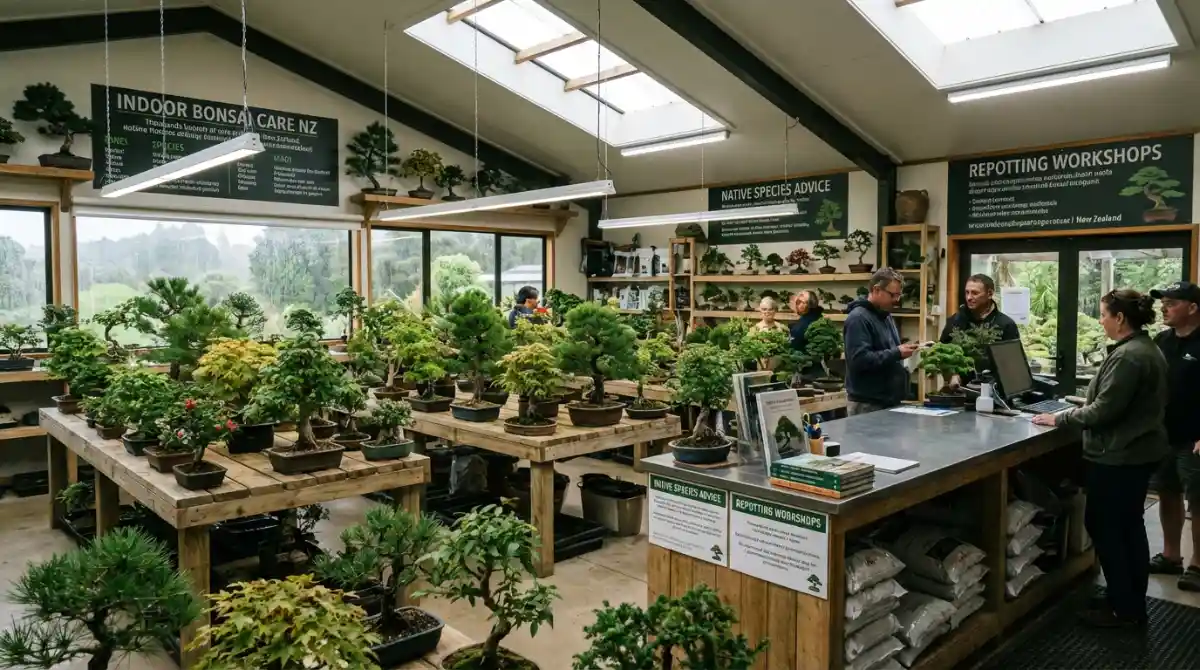
- Specialist Bonsai Nurseries: These are often the best source for quality trees and expert advice. They usually have a wider selection of species suitable for indoor cultivation and can provide detailed care instructions. Search online for ‘bonsai nurseries NZ’ or ‘bonsai supplies New Zealand’.
- Garden Centres: Larger garden centres sometimes carry a selection of indoor bonsai. While convenient, ensure the trees are well-cared for and not suffering from neglect (e.g., dry soil, yellowing leaves, pests).
- Online Retailers: Many reputable online stores in NZ offer bonsai for delivery. This can be a great option for variety, but always check reviews and their return policy. Ensure they package trees securely for transit.
- What to Look For: When purchasing, inspect the tree for vibrant, healthy foliage, firm branches, and a stable trunk. Check for any signs of pests (sticky residue, webbing, discolouration) or diseases. The soil should be moist but not waterlogged. A healthy root system is crucial.
- Local Bonsai Clubs: Joining a local bonsai club in NZ can be invaluable. Members often share cuttings, sell trees, and offer invaluable advice and workshops, connecting you with local growers and knowledge.
Frequently Asked Questions (FAQ)
What is the best indoor bonsai for beginners in NZ?
For beginners in New Zealand, the Chinese Elm (Ulmus parvifolia) is highly recommended. It’s forgiving, adapts well to indoor conditions, and is resilient to common beginner mistakes. Other excellent choices include the Fukien Tea (Carmona microphylla) and Portulacaria Afra (Dwarf Jade), which are also relatively easy to care for and tolerate varying indoor environments.
How often should I water my indoor bonsai in New Zealand?
The frequency of watering an indoor bonsai in NZ depends on several factors: the species, pot size, soil mix, humidity, and temperature. A good rule of thumb is to water when the topsoil feels dry to the touch. This could be daily, or every few days. Always ensure the water drains freely from the bottom of the pot, and avoid letting your bonsai sit in standing water. Checking the soil moisture daily is the best approach.
Do indoor bonsai need a dormant period in NZ?
Many traditional bonsai species, especially deciduous ones, require a dormant period. However, most popular indoor bonsai in NZ are tropical or subtropical evergreens (like Ficus, Fukien Tea, Dwarf Jade) that do not typically enter a deep dormancy if kept in stable warm indoor conditions. Deciduous indoor species like the Chinese Elm may experience a period of reduced growth or partial leaf drop in winter, especially if exposed to cooler temperatures, but don’t need a hard dormancy like outdoor varieties. Providing consistent light and temperature is generally preferred for tropical indoor bonsai.
Where can I buy healthy indoor bonsai in NZ?
You can find healthy indoor bonsai in New Zealand at specialist bonsai nurseries, some larger garden centres, and online retailers. Look for reputable suppliers who can provide information on the species’ care. When purchasing, inspect the tree for healthy foliage, no signs of pests or diseases, and ensure it’s well-rooted in its pot.
What are common pests for indoor bonsai in NZ and how do I treat them?
Common pests for indoor bonsai in New Zealand include spider mites, aphids, mealybugs, and scale insects. These often appear in dry, low-humidity environments. Treatment typically involves isolating the affected tree, manually removing visible pests, and applying organic solutions like neem oil spray or insecticidal soap. Ensuring good air circulation and maintaining adequate humidity levels can help prevent infestations.
Conclusion
Choosing the best indoor bonsai NZ offers is a deeply rewarding experience that brings a piece of nature’s tranquility into your home. By understanding the unique environmental factors of New Zealand and your own indoor space, along with the specific needs of various species, you can select a bonsai that will thrive and become a cherished living art piece. Whether you opt for the resilient Chinese Elm, the flowering Dwarf Pomegranate, the robust Ficus, or the charming Fukien Tea, remember that patience, observation, and consistent care are the keys to success.
Embrace the journey of learning and growing with your miniature tree. Each species presents its own character and challenges, but with this guide, you are well-equipped to provide the ideal conditions for your indoor bonsai to flourish for years to come. Happy growing!
References & Further Reading
- The New Zealand Bonsai Association: www.bonsai.co.nz
- Bonsai Empire: Indoor Bonsai Guide
- Local NZ Garden Centres and Specialist Bonsai Retailers.