Watering Bonsai In Australian Summer
Master watering bonsai in Australian summer with expert tips! Learn essential techniques, timing, and humidity management to keep your miniature trees thriving in the harsh heat.

bonzai.co.nz
What You Will Learn
Master watering bonsai in Australian summer with expert tips! Learn essential techniques, timing, and humidity management to keep your miniature trees thriving in the harsh heat.
The Australian summer, a season synonymous with vibrant beaches and outdoor living, presents a formidable challenge for bonsai enthusiasts. Unlike temperate climates, the Southern Hemisphere’s summer months often bring relentless heat, low humidity, and intense sunlight that can quickly turn your prized miniature trees from thriving marvels to parched relics. This necessitates an understanding of concepts like Seasonal Inversion for Bonsai Care. Mastering the art of watering bonsai in Australian summer is not just a routine task; it’s a critical skill that determines the survival and health of your collection.
This comprehensive guide will equip you with the expert knowledge and practical strategies needed to navigate the unique environmental demands of an Australian summer, ensuring your bonsai not only survive but flourish. We’ll delve into understanding your tree’s hydration needs, implementing effective watering techniques, and proactively protecting them from the harsh elements.
Table of Contents
- The Unique Challenge of Watering Bonsai in Australian Summer
- Essential Watering Strategies for Australian Heat (Step-by-Step Guide)
- Tools and Water Quality
- Conclusion
- Frequently Asked Questions (FAQ)
- References
The Unique Challenge of Watering Bonsai in Australian Summer
Australia’s summer climate is famously intense, characterized by soaring temperatures, often exceeding 35-40°C, high UV radiation, and frequently dry winds. These conditions can rapidly deplete moisture from bonsai soil and foliage, pushing trees to their physiological limits. A standard watering schedule effective for Spring Care for Bonsai SH or autumn simply won’t suffice when you’re watering bonsai in Australian summer.
Understanding the Australian Summer Environment
The primary factor influencing your watering regimen is evaporative loss. Water evaporates from the soil surface, through the tree’s leaves (transpiration), and from the pot itself. In extreme heat, this process accelerates dramatically. A bonsai in a small pot has a limited soil volume, meaning less moisture reservoir compared to a tree planted in the ground.
Statistic Callout: During peak Australian summer days, soil moisture can evaporate up to three times faster than in milder seasons, requiring diligent and often multiple daily water applications to prevent dehydration.
Wind, a common feature in many Australian regions, further exacerbates water loss by continuously drying the leaf surface and soil. Understanding these environmental pressures is the first step toward effective summer bonsai care.
Recognizing Your Bonsai’s Thirst Signals
Before any drop of water touches the soil, it’s crucial to know if your bonsai needs it. Overwatering can be just as detrimental as underwatering, leading to root rot. Here’s how to tell:
- Finger Test: The most reliable method. Stick your finger about 1-2 cm into the soil. If it feels dry, it’s time to water.
- Visual Cues: Dry, light-colored soil surface, leaves starting to droop or lose their turgor, or a general dullness in foliage color can indicate thirst.
- Weight Test: Lift the pot. A dry pot feels significantly lighter than a recently watered one. This method becomes intuitive with practice.
Essential Watering Strategies for Australian Heat (Step-by-Step Guide)
Effective watering bonsai in Australian summer requires a proactive and consistent approach. Here’s a step-by-step guide to keep your trees hydrated and healthy.
Step 1: Daily Assessment and Timing
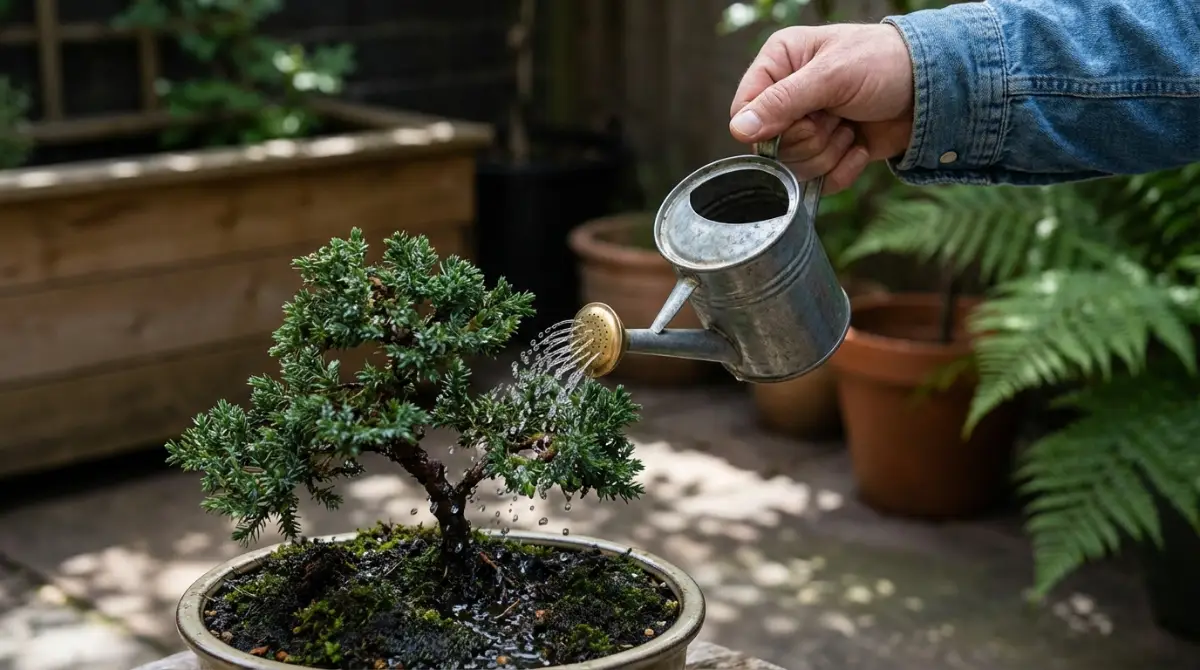
During the Australian summer, a daily (or even twice-daily) check is non-negotiable. The best time to water is typically early morning, before the day’s heat fully sets in. This allows the tree to absorb water efficiently before it evaporates rapidly. On extremely hot days, a second watering in the late afternoon/early evening might be necessary, once the harshest sun has passed. Avoid watering in the middle of the day if possible, as much of the water will evaporate before reaching the roots, and cold water on hot roots can shock the tree.
Step 2: The Deep Soak Method
When you water, do it thoroughly. Light sprinkles only wet the surface. Aim for a deep soak that ensures water penetrates every part of the root ball and drains freely from the bottom of the pot. Repeat the watering process several times if necessary, allowing water to drain between applications. For very dry or hydrophobic soils, consider submerging the entire pot in a bucket of water for 10-15 minutes until no more bubbles emerge. This ensures complete saturation.
Step 3: Humidity Management
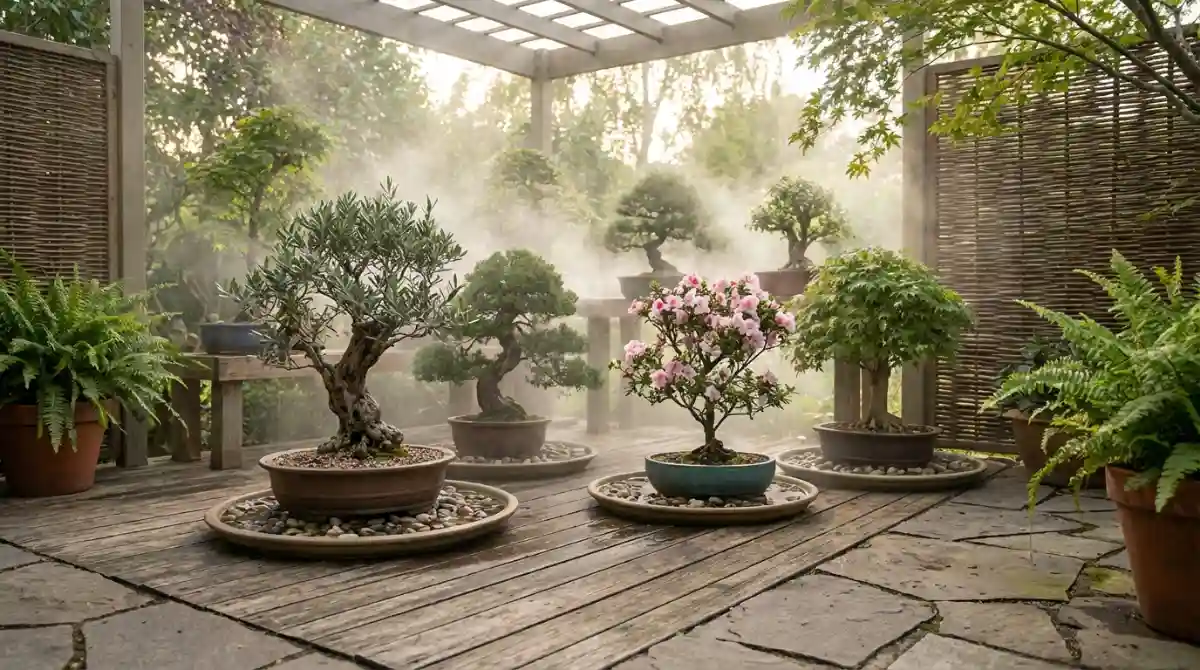
Low humidity intensifies water loss through transpiration. To combat this, consider placing your bonsai on humidity trays (trays filled with pebbles and water, ensuring the pot sits above the water level). Misting foliage can offer temporary relief, but it’s often short-lived and should not replace proper root watering. Grouping bonsai together can also create a microclimate with slightly higher local humidity.
Step 4: Monitoring for Stress and Recovery
Despite best efforts, some stress is inevitable. Look for wilting leaves, yellowing, or leaf drop. If you spot these signs, immediately check soil moisture, but also consider other factors like Common Pests of NZ Native Bonsai: Identification & Organic Solutions. If dry, water thoroughly. If soggy, you might have overwatered, leading to root rot. Move stressed trees to a shadier, cooler location and monitor closely. A sudden drop in temperature can also cause stress, so consistency in care is vital.
Step 5: Adapting to Heatwaves and Drought
During severe heatwaves, radical measures might be needed. Move trees to full shade, even indoors near a bright window if temperatures are extreme. Protect them from hot winds. Some growers even resort to placing trees in a shallow pan of water for part of the day, allowing capillary action to keep the soil moist. Be extra vigilant during these periods, as a single missed watering can be fatal.
Tools and Water Quality
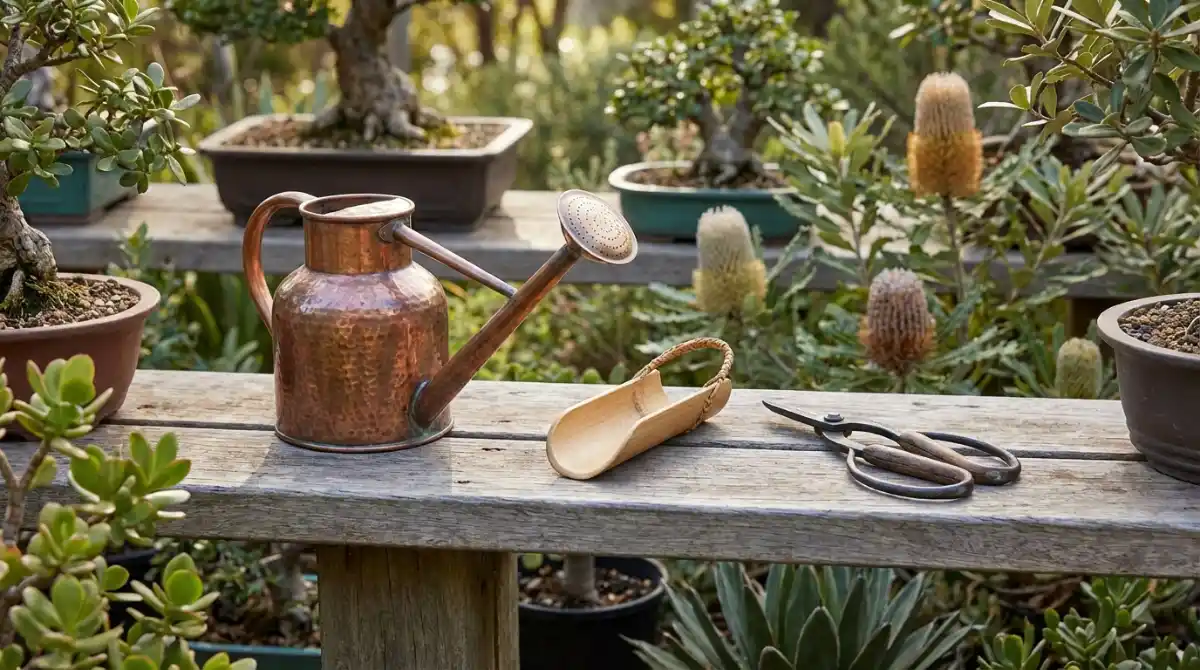
Having the right tools simplifies watering bonsai in Australian summer. A watering can with a fine rose attachment is essential to avoid washing away soil or damaging delicate foliage. For larger collections, a hose with a gentle spray nozzle can save time. Rainwater is ideal as it’s chlorine-free and typically has a neutral pH. If using tap water, allowing it to sit for 24 hours can help dissipate chlorine, though most bonsai tolerate chlorinated water well. Avoid water that’s too cold or too hot; room temperature is best.
Conclusion
Successfully navigating watering bonsai in Australian summer is a test of observation, consistency, and adaptation. By understanding the unique challenges posed by the climate, implementing deep and timely watering techniques, managing humidity, and continuously monitoring your trees, you can ensure your bonsai thrive through even the most scorching heat. Remember, each tree is an individual; pay attention to its specific needs, whether it’s general care, Repotting Bonsai: When, Why, and How-to, or specialized Ficus Bonsai Care: Indoor Growing and Shaping, and you’ll be rewarded with a resilient and beautiful living sculpture.
Frequently Asked Questions (FAQ)
How often should I water my bonsai during an Australian summer?
During an Australian summer, most bonsai will need watering at least once daily. On extremely hot, windy, or low-humidity days, some species might require watering twice or even three times a day. Always check the soil moisture with your finger before watering.
What’s the best time of day to water bonsai in summer?
The ideal time is early morning before the sun gets too strong. This allows the tree to absorb water before high evaporation rates begin. If a second watering is needed, do it in the late afternoon or early evening once the intense heat has subsided.
Can I overwater my bonsai in summer?
Yes, overwatering is still a risk, even in summer. While trees need more water, constantly soggy soil deprives roots of oxygen, leading to root rot. Always ensure the soil dries out slightly between waterings, and that your pot has excellent drainage.
Should I mist my bonsai in summer?
Misting can provide temporary relief from low humidity, but its effects are often short-lived in the Australian heat. It’s not a substitute for proper root watering. Humidity trays (pebbles and water below the pot) are a more effective way to create a localized humid microclimate.
What kind of water is best for bonsai in Australia?
Rainwater is generally considered the best due to its purity and balanced pH. If using tap water, letting it sit for 24 hours can help dissipate chlorine. Most bonsai are tolerant of tap water, but avoid water that is excessively hard, cold, or hot.
References
- Australian Bureau of Meteorology. (Annual Reports). Climate Statistics for Australian Locations. (Plausible example for temperature/humidity data)
- National Bonsai and Penjing Collection of Australia. (Information Guides). Bonsai Care in Hot Climates. (Plausible example for specific care advice)
- Bonsai Empire. (Online Resource). Watering Bonsai Trees. (General bonsai watering techniques)
- Various horticultural journals and publications focusing on arid and semi-arid plant care.