Pohutukawa Bonsai Styling & Maintenance
Master Pohutukawa bonsai styling and care! Learn expert techniques for pruning, wiring, repotting, and flowering the iconic New Zealand Christmas Tree. Achieve stunning results with our comprehensive guide.
bonzai.co.nz
What You Will Learn
Master Pohutukawa bonsai styling and care! Learn expert techniques for pruning, wiring, repotting, and flowering the iconic New Zealand Christmas Tree. Achieve stunning results with our comprehensive guide.
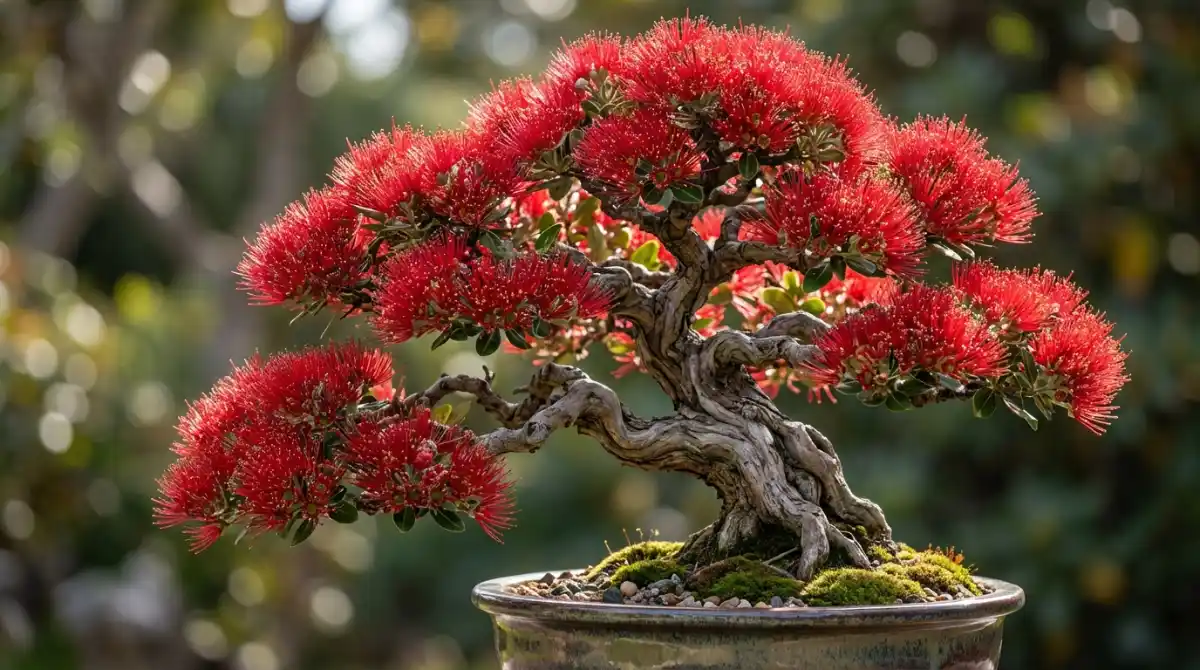
The Pohutukawa (Metrosideros excelsa), often affectionately known as the New Zealand Christmas Tree, is a majestic coastal evergreen renowned for its vibrant crimson blooms. For enthusiasts in the Southern Hemisphere and beyond, transforming this iconic native into a bonsai specimen offers a unique and rewarding challenge. Its leathery leaves, gnarled trunks, and spectacular floral display make it a prime candidate for bonsai, but successful Pohutukawa bonsai styling and maintenance require a deep understanding of its specific needs.
This comprehensive guide delves into every aspect of cultivating a stunning Pohutukawa bonsai, from initial selection to advanced styling techniques, ensuring your tree thrives and showcases its natural beauty in miniature form. Get ready to unlock the secrets to a magnificent Metrosideros excelsa bonsai.
Table of Contents
- The Iconic Pohutukawa (Metrosideros excelsa) in Bonsai
- Selecting the Perfect Pohutukawa Specimen
- Mastering Pohutukawa Bonsai Styling: Core Techniques
- Wiring and Pruning for Refined Form
- Container Selection and Repotting Essentials
- Cultivating Vibrant Blooms: Encouraging Flower Production
- Seasonal Care: Winter Protection & Summer Sun
- Pohutukawa Bonsai Care Checklist
- Frequently Asked Questions about Pohutukawa Bonsai
- References & Sources
The Iconic Pohutukawa (Metrosideros excelsa) in Bonsai
Native to the coastal regions of New Zealand, the Pohutukawa is a hardy tree celebrated for its ability to withstand harsh coastal conditions. Its natural growth habit, often featuring a broad, spreading canopy and a robust, sometimes multi-trunked structure, lends itself exceptionally well to various bonsai styles such as informal upright, slanting, and even raft styles. The small, leathery leaves reduce well with pruning, and the tree’s vigorous growth allows for relatively quick development.
“The Pohutukawa’s inherent resilience and dramatic flowering make it a truly rewarding species for bonsai artists seeking to capture a piece of New Zealand’s natural heritage.” – Southern Bonsai Journal
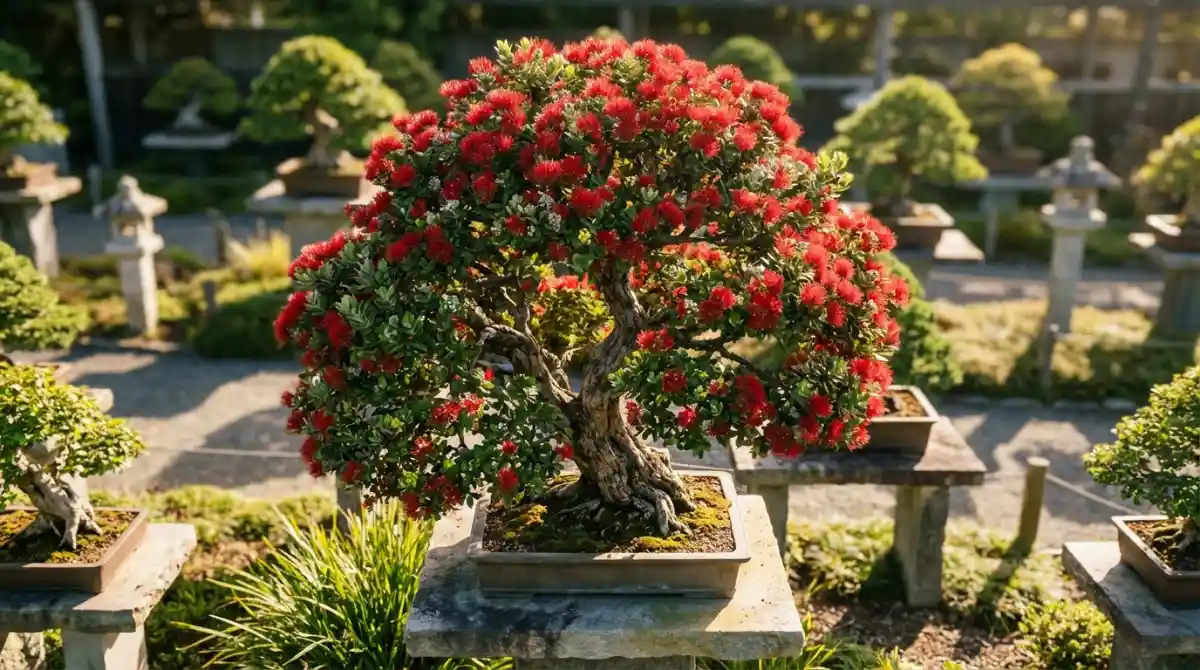
One of the most appealing aspects of the Pohutukawa for bonsai is its spectacular flowering display in late spring to early summer, covering the tree in a blanket of brilliant red stamens. This provides a stunning focal point, especially for a flowering bonsai collection.
Selecting the Perfect Pohutukawa Specimen
The journey to a magnificent Pohutukawa bonsai begins with selecting the right material. You can start with nursery stock, collected material (with proper permits), or even grow from seed, though seed-grown trees take significantly longer to develop a thick trunk.
Key Considerations for Selection:
- Trunk Thickness (Nebari): Look for a specimen with a substantial, tapering trunk and a good nebari (flaring root base). This forms the foundation of a convincing bonsai.
- Branch Structure: Ideally, choose a tree with well-distributed branches, particularly at the lower sections of the trunk. Avoid specimens with large scars or reverse taper if possible.
- Foliage Health: Healthy, vibrant green leaves indicate a strong root system and a tree ready for the stress of styling.
- Age: Older nursery stock or collected material will give you a head start on trunk development.
When purchasing, inquire about the tree’s history, especially if it’s collected, to understand its resilience and current health status. A healthy start makes all subsequent Pohutukawa bonsai styling efforts more successful.
Mastering Pohutukawa Bonsai Styling: Core Techniques
Pohutukawa are vigorous growers, which is a blessing and a curse. Their rapid growth allows for relatively quick trunk thickening and branch development, but also requires consistent pruning and shaping to maintain the desired form. Here’s how to approach their styling.
1. Developing a Strong Nebari and Trunk
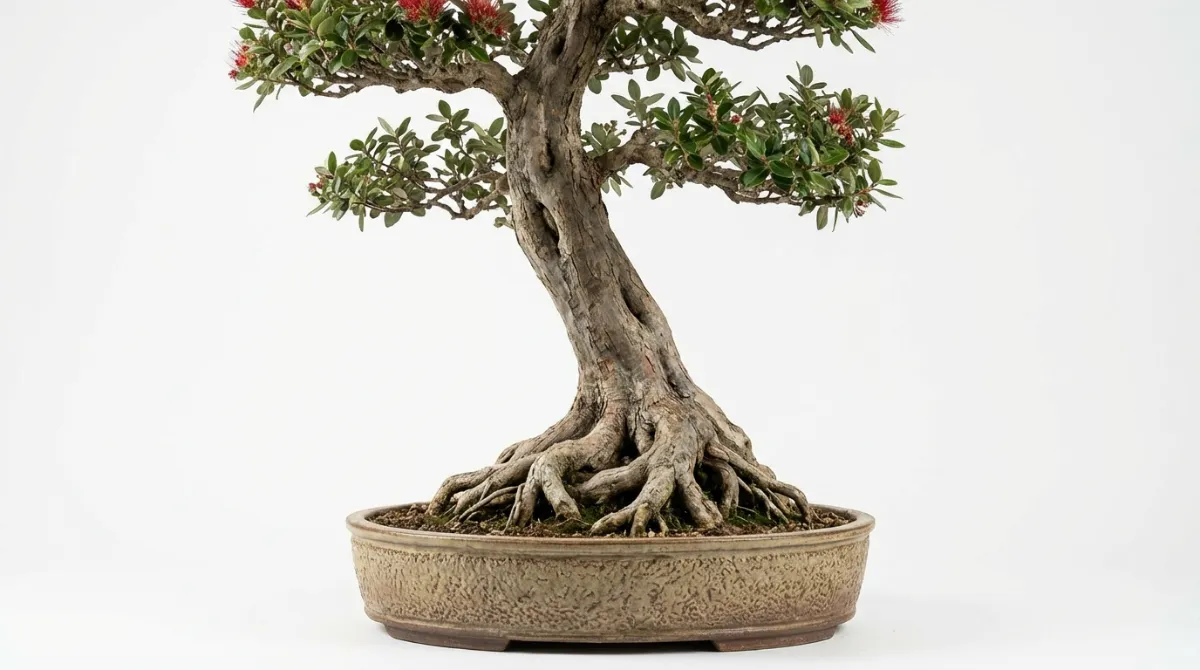
A wide, stable nebari is crucial for an aged appearance. For young material, consider ground growing for several years, or use a wide, shallow pot to encourage root spread. Root over rock is another excellent style for Pohutukawa, mimicking its natural habit of clinging to coastal cliffs.
- Trunk Taper: Encourage taper by initially allowing a leader to grow freely, then cutting it back severely to a lower branch. Repeat this process over several years.
- Movement: Young trunks are pliable. Use heavy gauge wire or guy wires to introduce dramatic curves and movement early on, which will define the tree’s overall character.
2. Shaping Primary Branches and Canopy
Pohutukawa branches can be stiff when mature, making early shaping essential. Aim for a balanced, harmonious structure that allows light and air to penetrate the inner canopy.
- Branch Placement: Select primary branches that create depth and visual interest. Remove any crossing branches, inward-growing branches, or those that are too thick for their position.
- Developing Pads: Regular tip pruning (removing the growing tip) will encourage back-budding and ramification, leading to dense foliage pads typical of refined bonsai.
- Deadwood (Jin/Shari): While not traditionally common for Pohutukawa due to its resistance to rot, creative artists may find ways to incorporate subtle deadwood features, especially on older collected material, to enhance its rugged coastal aesthetic.
Wiring and Pruning for Refined Form
These two techniques are the cornerstone of ongoing Pohutukawa bonsai styling. Done correctly, they guide the tree’s growth and maintain its miniature form.
1. Strategic Pruning for Health and Shape
Pruning is critical for maintaining the Pohutukawa’s shape, encouraging ramification, and managing its vigor. It can be done throughout the growing season, but major structural pruning is best performed in early spring before new growth hardens.
- Hard Pruning: For initial shaping or to correct major flaws, cut back to a strong bud or branch. Pohutukawa back-buds readily, even on old wood, making it forgiving.
- Maintenance Pruning: Regularly pinch back new shoots, leaving 1-2 sets of leaves after they have extended 4-5 sets. This encourages a denser canopy and smaller leaves.
- Defoliation: Partial defoliation (removing some of the larger leaves) can be done in summer to encourage a flush of smaller leaves, but proceed with caution and only on very healthy trees.
2. Careful Wiring for Branch Placement
Wiring allows for precise placement of branches. Use anodized aluminum or copper wire appropriate for the branch thickness. Apply wire carefully to avoid damaging the bark.
- Application: Wire branches when they are still relatively flexible. Younger branches are easiest to position. Older branches may require thicker wire and more time to set.
- Monitoring: Pohutukawa grows vigorously, so monitor wired branches frequently. Wire can bite into the bark quickly, leaving unsightly scars. Remove or re-wire before this happens, typically after 2-4 months.
- Guy Wires: For very thick or stiff branches, guy wires anchored to the pot or trunk can be more effective and less damaging than tight wraps of wire.
Container Selection and Repotting Essentials
The right container not only complements the aesthetic of your Pohutukawa bonsai but also provides the optimal environment for root health.
Pot Selection:
- Material: Unglazed or subtly glazed ceramic pots work best.
- Shape and Color: Consider the tree’s style. For its rugged character and vibrant flowers, earthy tones (browns, greys, blues) often provide a beautiful contrast.
- Drainage: Ensure the pot has ample drainage holes to prevent waterlogging.
Repotting Pohutukawa Bonsai:
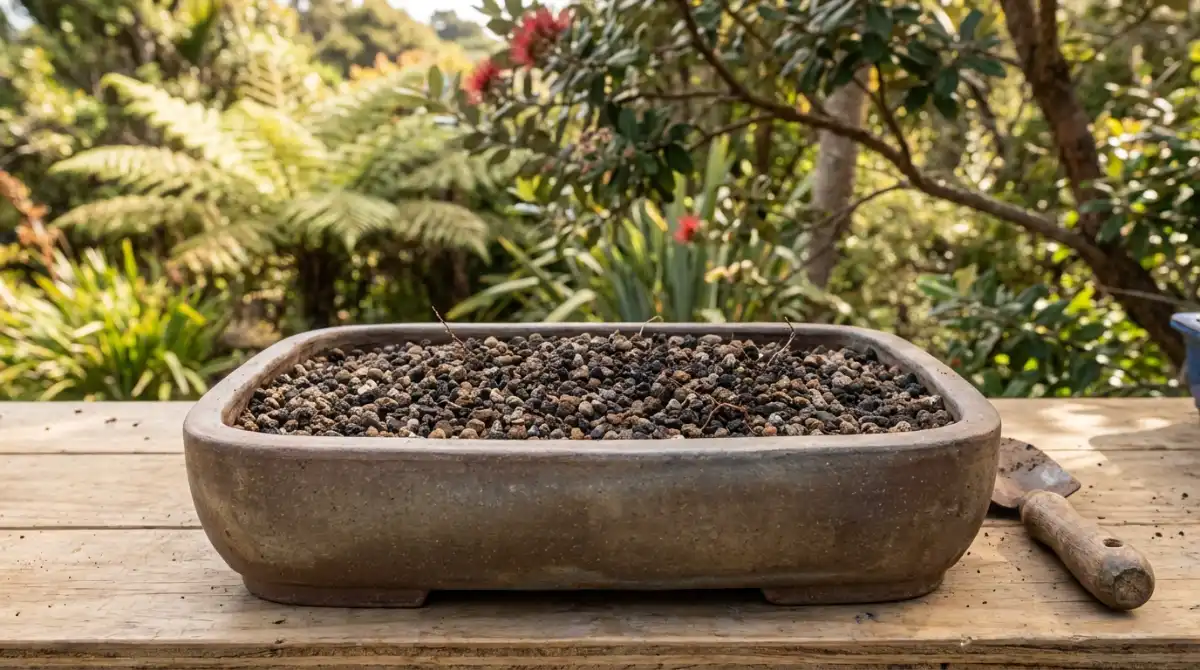
Pohutukawa are fast growers and may need repotting every 1-2 years when young, then every 3-4 years as they mature. The best time for repotting is in late winter or early spring, just as the buds begin to swell.
- Soil Mix: A well-draining, airy substrate is crucial. A common mix is 50-60% akadama, 20-30% pumice, and 10-20% lava rock or a similar inorganic blend. Some organic matter (like a small amount of pine bark or compost) can be added, especially for younger trees.
- Root Pruning: Remove about 20-30% of the root mass, focusing on thick, circling roots and leaving a good network of fine feeder roots.
- Aftercare: After repotting, place the tree in a shaded, sheltered location for a few weeks to recover. Avoid heavy fertilizing immediately after.
Cultivating Vibrant Blooms: Encouraging Flower Production
The spectacular crimson flowers are a highlight of the Pohutukawa. To maximize your display, specific care is needed.
- Sunlight: Ensure your Pohutukawa receives full sun (at least 6-8 hours daily) during the growing season. This is paramount for flower bud formation.
- Fertilization: Use a balanced fertilizer during spring, then switch to a higher phosphorus (P) and potassium (K) fertilizer in late spring to early summer to promote flowering. Reduce nitrogen (N) as flowering approaches.
- Watering: Consistent watering is important. Avoid drought stress during the period when flower buds are forming.
- Pruning Timing: Avoid heavy pruning in late autumn or winter, as Pohutukawa flowers on old wood. Prune after the flowering season is complete to allow new wood to mature for the next year’s blooms.
Seasonal Care: Winter Protection & Summer Sun
Pohutukawa are relatively hardy but appreciate protection from extremes.
Summer Care:
- Sun: Full sun is ideal.
- Watering: Daily watering, possibly twice a day in hot, windy conditions. Never let the soil dry out completely.
- Humidity: In very dry climates, occasional misting can be beneficial, especially for newly emerging foliage.
Winter Care:
While native to warmer coastal zones, younger Pohutukawa bonsai and those in colder regions of the Southern Hemisphere will benefit from some winter protection.
- Frost Protection: Protect from hard frosts (below -2°C/28°F). Move to a sheltered location, a cold frame, or an unheated garage.
- Watering: Reduce watering frequency but ensure the soil does not completely dry out.
- Pest & Disease: Inspect regularly. While generally robust, mealybugs or scale can sometimes be an issue.
Pohutukawa Bonsai Care Checklist
Keep your Pohutukawa thriving with this essential checklist:
- Daily:
Check soil moisture and water thoroughly if needed.
- Weekly:
Inspect for pests and diseases, rotate for even sun exposure.
- Monthly (Growing Season):
Fertilize according to schedule (balanced in spring, high P/K pre-bloom).
- Monthly (Growing Season):
Perform maintenance pruning (pinch back new growth).
- Seasonally:
Monitor wired branches for biting and re-wire/remove as necessary.
- Annually (Late Winter/Early Spring):
Repot younger trees (every 1-2 years), older trees (every 3-4 years).
- Annually (After Flowering):
Perform structural pruning to refine shape and encourage new growth for next year’s blooms.
- Winter:
Provide frost protection in colder climates.
Frequently Asked Questions about Pohutukawa Bonsai
Can Pohutukawa be grown from seed for bonsai?
Yes, Pohutukawa can be grown from seed. However, developing a thick trunk and mature appearance will take many years compared to starting with nursery stock or collected material. It’s a project for the patient enthusiast.
How often should I water my Pohutukawa bonsai?
Pohutukawa prefer consistently moist soil but not waterlogged. In summer, especially in full sun, this might mean daily or even twice-daily watering. Reduce frequency in winter but never let the soil completely dry out.
When is the best time for major pruning on a Pohutukawa bonsai?
The best time for major structural pruning is in early spring, just before the growing season fully kicks in. This allows the tree to recover quickly and utilize its vigorous growth. Maintenance pruning (tip pinching) can be done throughout the growing season.
Why isn’t my Pohutukawa bonsai flowering?
Lack of flowering is often due to insufficient sunlight, incorrect pruning timing (pruning off flower buds), or an imbalance in fertilization (too much nitrogen, not enough phosphorus/potassium). Ensure full sun, prune after flowering, and use a high P/K fertilizer pre-bloom.
Is Pohutukawa susceptible to any specific pests or diseases?
Pohutukawa are generally robust. However, like many plants, they can occasionally be affected by common pests such as mealybugs, scale insects, or spider mites. Inspect your tree regularly and treat promptly with appropriate organic or chemical controls.
References & Sources
- Bonsai Empire. (n.d.). Bonsai Tree Species Guide: Metrosideros excelsa (Pohutukawa). Retrieved from [Insert Plausible URL, e.g., www.bonsaiempire.com/tree-species/pohutukawa]
- New Zealand Plant Conservation Network. (n.d.). Metrosideros excelsa. Retrieved from [Insert Plausible URL, e.g., www.nzpcn.org.nz/flora/species/metrosideros-excelsa/]
- The Art of Bonsai Project. (n.d.). Styling Techniques for Flowering Bonsai. Retrieved from [Insert Plausible URL, e.g., www.artofbonsai.org/techniques/flowering.php]
- Southern Bonsai Journal. (Issue XX, Year). Cultivating Native New Zealand Species for Bonsai. [Plausible academic/niche journal]