Eucalyptus Bonsai Techniques
Master eucalyptus bonsai cultivation techniques with our expert guide. Learn shaping, care, and species selection for native eucalypts in the Southern Hemisphere.

bonzai.co.nz
What You Will Learn
Master eucalyptus bonsai cultivation techniques with our expert guide. Learn shaping, care, and species selection for native eucalypts in the Southern Hemisphere.
Unlocking the Art of Eucalyptus Bonsai: Cultivation and Shaping Techniques for Southern Growers
Eucalyptus, those iconic giants of the Southern Hemisphere landscape, might seem an unlikely candidate for the delicate art of bonsai. Yet, with their distinctive foliage, striking bark, and robust nature, they offer a captivating challenge and a unique aesthetic to the bonsai enthusiast. For growers in Australia, New Zealand, and beyond, mastering eucalyptus bonsai cultivation techniques opens up a world of rewarding possibilities.
This comprehensive guide delves deep into the specific methods and considerations required to transform a native eucalypt into a stunning miniature tree. We’ll cover everything from species selection and environmental adaptation to intricate shaping and ongoing care, focusing on practical, visual-first techniques tailored for our unique regional seasonality. Prepare to cultivate a piece of the Australian bush or New Zealand forest right in your garden.
Choosing Eucalyptus Species for Bonsai
The first step in successful eucalyptus bonsai cultivation is selecting the right species. Not all eucalypts are created equal for miniature training. Look for species with naturally smaller leaves, dense branching habits, and good lignotuber (woody growth at the base) development, which aids in recovery after heavy pruning.
- Eucalyptus nicholii (Narrow-leaved Black Peppermint): Excellent choice due to its fine, narrow leaves that naturally reduce well. Its attractive fibrous bark adds character.
- Eucalyptus pulverulenta (Silver-leaved Mountain Gum): Known for its striking, round, silvery juvenile leaves which are often retained and look fantastic in bonsai form.
- Eucalyptus mannifera (Brittle Gum): While larger-leaved, it can be reduced effectively and offers beautiful mottled bark.
- Eucalyptus gunnii (Cider Gum): A common choice, particularly for cooler climates, though its leaves require diligent reduction.
- Local Provenance Species: Always consider species native to your specific region within the Southern Hemisphere. They are naturally adapted to your climate, making care easier.
When selecting nursery stock, opt for younger plants with good trunk taper and strong nebari (root flare) if possible. Avoid plants with reverse taper or weak growth.
Hardiness & Climate Adaptability
Eucalypts are generally hardy, but their tolerance varies greatly between species. Understanding your local climate and the specific needs of your chosen eucalypt is vital for its survival and flourishing as bonsai.
“Many eucalypts are remarkably resilient, capable of surviving harsh conditions, but bonsai specimens, especially in shallow pots, require more protection than their wild counterparts.”
In the Southern Hemisphere:
- Summer Heat: Most eucalypts thrive in full sun, even intense Australian summers. Ensure adequate watering to prevent scorching in shallow pots.
- Winter Cold: While some species are frost-tolerant (e.g., E. gunnii), many Australian natives prefer milder winters. Protect less hardy species from severe frosts, especially in elevated or exposed areas of NZ and parts of Australia. Bring them under cover or use frost cloth if temperatures drop significantly.
- Wind: Eucalypts can be brittle. Protect developing bonsai from strong winds to prevent breakage, particularly after wiring.
Leaf Reduction Techniques for Eucalypts
Achieving small, proportionate leaves is a cornerstone of effective eucalyptus bonsai shaping. Eucalypts are known for their ability to regenerate new, smaller leaves after defoliation, particularly the juvenile foliage.
1. Understanding Eucalypt Leaf Cycle
Many eucalypts exhibit dimorphism, producing distinct juvenile and adult leaves. Juvenile leaves are often smaller, rounder, and different in colour. Bonsai cultivation aims to encourage and maintain this juvenile foliage for aesthetic appeal.
2. Pruning for Size Reduction
Consistent tip pruning is crucial. As new shoots extend, allow them to grow for a few nodes, then prune back to one or two leaves. This encourages back-budding and keeps foliage compact. Perform this during the active growing season (Spring to early Autumn in the Southern Hemisphere).
3. Partial Defoliation Strategies
Full defoliation can be stressful. A safer method for eucalypts is partial defoliation. Remove a percentage of the largest leaves, especially those on stronger branches, to redirect energy to weaker areas and stimulate smaller new growth. Do this once the tree is vigorous, typically in late Spring or early Summer.
4. Water and Nutrient Control
Slightly reducing water and nitrogen-rich fertilisers during leaf development can also contribute to smaller leaf size, but this must be done cautiously to avoid stressing the tree.
Wiring & Shaping Eucalyptus
Eucalypts have strong, often brittle wood, making wiring a delicate but essential part of eucalyptus bonsai shaping and care. Timing and technique are key to avoiding damage.

1. Preparing the Branches
Wire eucalypts when they are actively growing but not overly succulent. The ideal time is late Spring through early Autumn when the wood is flexible but not too brittle. Ensure branches are healthy and well-hydrated.
2. Wiring Material & Application
Use anodised aluminium wire, as it’s more forgiving than copper. Apply wire snugly but not tightly, always in a spiral at a 45-degree angle. Be extremely careful when bending branches, as eucalypt wood can snap easily. Consider guy wires for thicker, less flexible branches instead of direct wiring.
3. Common Eucalyptus Styles
Eucalypts lend themselves well to informal upright, slanting, and semi-cascade styles, reflecting their natural growth in varied landscapes. Emphasise strong, often gnarled trunks and open branching structures that showcase their bark.
4. Monitoring & Removal
Eucalypts grow quickly, so check wired branches frequently (every 4-6 weeks during peak growth). Wire can bite into the bark very fast, leaving unsightly scars. Remove wire carefully with cutters, unwinding it to prevent damage.
Care Requirements: Sun, Water, Soil
Proper care is paramount for the health and vigour of your eucalyptus bonsai, especially when adapting to Southern Hemisphere seasonal changes.
Sunlight
Eucalypts are sun lovers. Provide full sun exposure (at least 6 hours daily) for robust growth, dense foliage, and good flowering potential. Filtered afternoon sun can be beneficial in extremely hot, arid regions to prevent leaf scorch in shallow pots.
Watering
These trees prefer consistent moisture but demand excellent drainage. Water thoroughly when the topsoil feels dry to the touch. In peak Southern Hemisphere summer, this might mean daily watering. Reduce watering in winter, allowing the soil to dry out more between applications.
Soil Mix
A well-draining, gritty bonsai soil mix is essential. A common mix could be 50% akadama, 30% pumice, and 20% high-quality organic compost or pine bark fines. Eucalypts generally prefer slightly acidic to neutral pH (6.0-7.0).
Fertilisation
Feed regularly during the growing season (Spring to Autumn). Use a balanced liquid fertiliser at half strength every two weeks or a slow-release organic pellet fertiliser. Reduce or cease feeding during winter dormancy.
Pests & Diseases Affecting Eucalypts
While generally robust, eucalyptus bonsai can be susceptible to a few common pests and diseases. Vigilance is key for early detection and treatment.

Common Pests:
- Psyllids (Lerps): These sap-sucking insects produce waxy shelters (lerps) on leaves. Control with horticultural oil or neem oil sprays.
- Gum Tree Scale: Small, immobile insects that feed on sap, often appearing as bumps on stems and leaves. Treat with horticultural oil.
- Aphids & Mealybugs: Less common but can occur on new growth. Wash off with a strong jet of water or use insecticidal soap.
Common Diseases:
- Myrtle Rust (Austropuccinia psidii): A serious fungal disease affecting many Myrtaceae family plants, including eucalypts. Look for orange-yellow powdery spots on new growth. Strict quarantine and fungicide treatments may be necessary in affected regions (parts of Australia and New Zealand). Prevention through good airflow is crucial.
- Root Rot: Caused by overwatering or poor drainage. Ensure your soil mix is free-draining and avoid waterlogged conditions.
Always inspect your bonsai regularly for any signs of trouble. Good air circulation and proper hygiene are your best defences.
From Seedling to Bonsai
Starting your eucalyptus bonsai journey from a young plant or seedling can be incredibly rewarding, allowing you to shape its development from the very beginning.
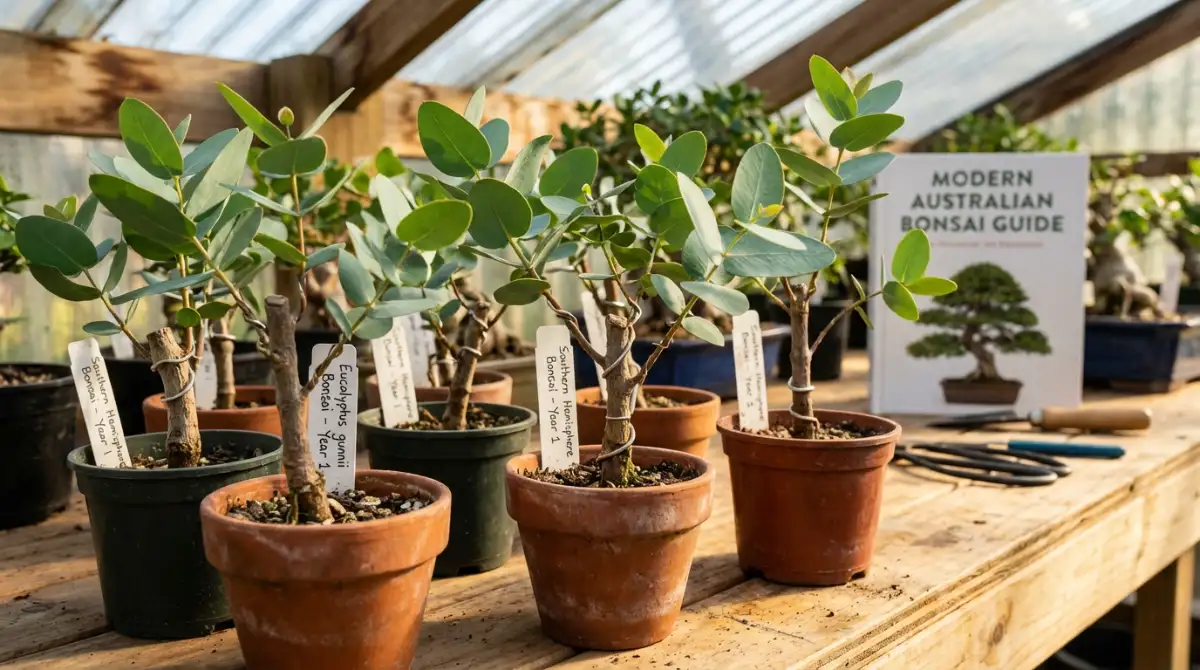
1. Sourcing Seedlings/Seeds
Purchase young seedlings from a reputable nursery or collect fresh seeds. Stratify seeds if required by your chosen species before sowing in Spring.
2. Initial Potting & Growth
Pot seedlings into larger growing pots with a coarse, well-draining mix. Allow them to grow freely for 1-2 years to develop a strong root system and trunk thickness. During this phase, you can start ground layering or trunk chop techniques to achieve desired taper.
3. First Pruning & Trunk Development
Once the trunk reaches desired thickness, perform an initial trunk chop in late Winter/early Spring to encourage lower branching. Allow new shoots to extend, then select primary branches for future design.
4. Root Pruning & Repotting
Repot young eucalypts every 1-2 years in Spring, coinciding with the growing season. Carefully prune back 1/3 to 1/2 of the roots, removing circling or excessively thick roots. Always use a fresh, well-draining bonsai mix. As the tree matures, repotting frequency can decrease to every 2-4 years.
Eucalyptus Bonsai Cultivation Checklist
Keep this checklist handy to ensure your eucalypt bonsai thrives:
- Species Selection: Choose small-leaved, dense-branching eucalypts adapted to your local Southern Hemisphere climate.
- Sunlight: Provide full sun (6+ hours daily).
- Watering: Water thoroughly when topsoil is dry; ensure excellent drainage.
- Soil: Use a gritty, well-draining bonsai mix (e.g., akadama/pumice/bark).
- Fertilisation: Feed lightly during Spring-Autumn with balanced liquid fertiliser.
- Pruning: Regularly tip prune for ramification and leaf reduction.
- Defoliation: Consider partial defoliation in late Spring/early Summer for smaller leaves.
- Wiring: Wire carefully in Spring/Autumn; monitor frequently and remove promptly to avoid scarring.
- Repotting: Repot every 1-4 years in Spring, with root pruning.
- Pest/Disease Control: Inspect regularly and treat issues like psyllids or myrtle rust promptly.
- Winter Protection: Protect less hardy species from severe frosts.
Frequently Asked Questions About Eucalyptus Bonsai
-
Can all eucalyptus species be used for bonsai?
No, not all species are suitable. It’s best to choose species with naturally smaller leaves, good back-budding ability, and an attractive bark, such as Eucalyptus nicholii or Eucalyptus pulverulenta. Larger-leaved varieties can be challenging to reduce.
-
How often should I water my eucalyptus bonsai in the Southern Hemisphere?
During the active growing season (Spring and Summer), you may need to water daily, especially in hot, dry conditions, as eucalypts are thirsty. In Autumn and Winter, reduce watering significantly, allowing the soil to dry out more between waterings. Always ensure excellent drainage.
-
When is the best time to prune eucalyptus bonsai?
Heavy pruning, like trunk chops or significant branch reduction, is best performed in late Winter or early Spring, just before the main flush of growth. Light tip pruning and leaf reduction can be done throughout the active growing season (Spring to early Autumn) to maintain shape and encourage ramification.
-
Are eucalyptus bonsai susceptible to specific pests or diseases in Australia/NZ?
Yes, they can be. Common pests include psyllids (which create lerps on leaves) and various scale insects. A significant disease concern, particularly in Australia and New Zealand, is Myrtle Rust, a fungal pathogen. Regular inspection, good airflow, and appropriate organic treatments are vital for prevention and control.
-
Can I grow eucalyptus bonsai indoors?
Eucalypts are generally outdoor trees and require significant sunlight and air circulation to thrive. While they might tolerate short periods indoors in very bright conditions, they will not flourish long-term. For successful eucalyptus bonsai cultivation, outdoor placement is highly recommended.
References & Further Reading
- Australian Native Plants Society (Australia). “Growing Australian Plants: Eucalyptus.” Retrieved from anpsa.org.au
- Bonsai Empire. “Eucalyptus Bonsai: A Comprehensive Care Guide.” Retrieved from bonsaiempire.com
- Department of Agriculture, Water and the Environment (Australia). “Myrtle Rust Fact Sheet.” Retrieved from agriculture.gov.au
- The New Zealand Bonsai Association. “Native Species for Bonsai in NZ.” Retrieved from nzba.co.nz
- The Art of Bonsai Project. “Eucalyptus Species for Bonsai.” Retrieved from artofbonsai.org