Seasonal Care Calendar for NZ Bonsai: A Month-by-Month Guide
What You Will Learn
Master bonsai seasonality in NZ with our month-by-month guide. Learn essential care for repotting, watering, feeding, and winter protection for your native trees.
Seasonal Care Calendar for NZ Bonsai: A Month-by-Month Guide
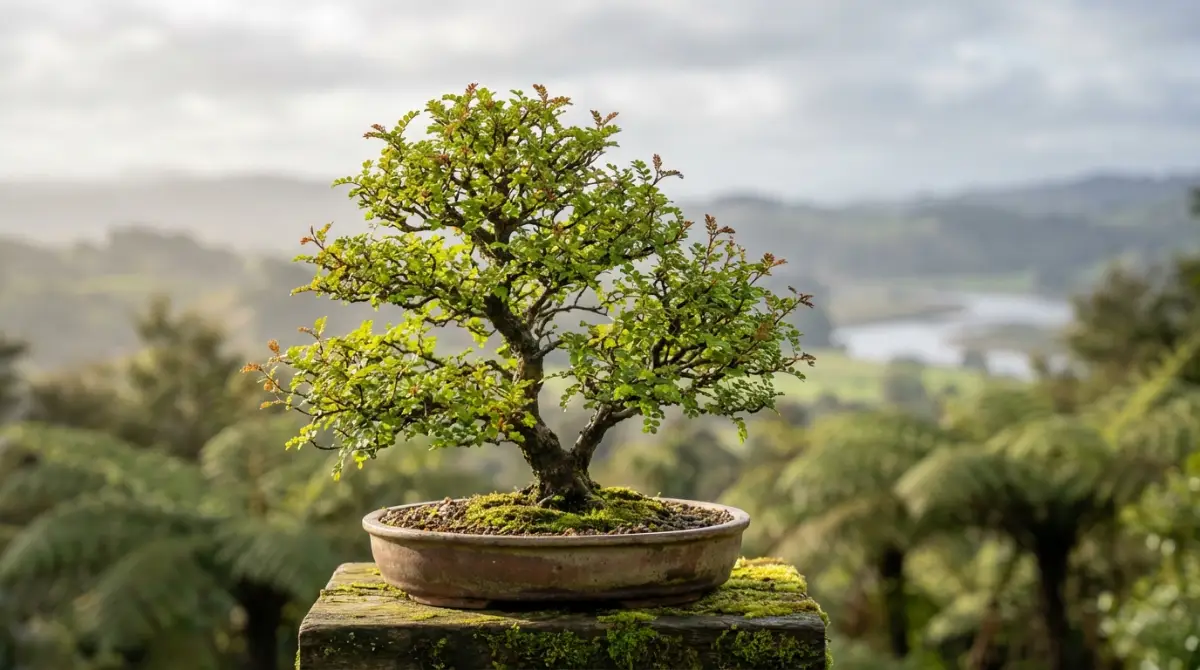
Embarking on the journey of cultivating NZ native bonsai is a profoundly rewarding experience, connecting you intimately with the rhythms of nature. For those looking to deepen their engagement, exploring Finding Bonsai Mentors & Clubs in NZ: Connect with Your Community can provide invaluable support and knowledge. Unlike their exotic counterparts, native New Zealand species have unique needs that are deeply tied to the local climate. Understanding bonsai seasonality NZ is not just a recommendation; it’s the cornerstone of successful cultivation, ensuring your miniature trees thrive year-round.
“To master NZ native bonsai is to dance with the seasons, anticipating every change and responding with informed care.”
This comprehensive guide, crafted for both nascent enthusiasts and seasoned practitioners, unveils a month-by-month calendar of essential care, helping you anticipate and respond to the distinct needs of your precious native bonsai. From the vibrant burst of spring growth to the quiet contemplation of winter dormancy, each season brings specific tasks and considerations vital for the health and aesthetic refinement of your living art.
Table of Contents
Introduction to NZ Bonsai Seasonal Rhythm
New Zealand’s temperate climate provides a unique environment for cultivating native bonsai. While the principles of bonsai care are universal, adapting them to the local seasonality is paramount. Our native flora, from the mighty Pohutukawa to the delicate Manuka, has evolved with the Southern Hemisphere’s distinct weather patterns. This guide will walk you through the essential monthly considerations, ensuring your NZ native bonsai flourishes by harmonizing with its natural seasonal cycle.
Spring Tasks: Repotting & Initial Shaping
As New Zealand awakens from its winter slumber, spring heralds a period of explosive growth and renewed vitality for your bonsai. This season, typically from September to November, is crucial for setting the stage for the year ahead, focusing on structural development and robust health. The key tasks revolve around repotting and initial shaping, laying the groundwork for the tree’s form and vigor. For more detailed guidance, delve into our comprehensive guide on Spring Care for Bonsai SH.
1. Mastering Repotting for Vigor
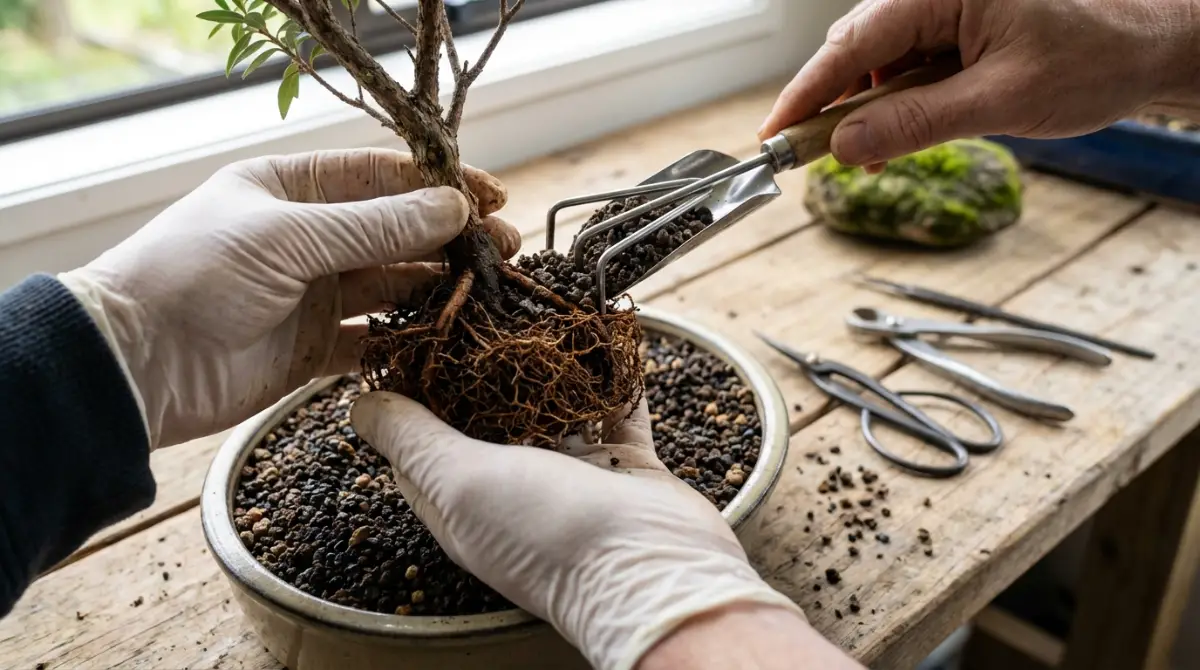
Repotting is arguably the most critical spring task, especially for younger, developing bonsai or those that have outgrown their pots—a perfect time to also consider Bonsai Pot Selection for Aesthetic Harmony. This process rejuvenates the root system, provides fresh nutrients, and promotes healthy growth for the upcoming season.
- Timing is Everything: Aim to repot just as the buds begin to swell, usually in early to mid-September, before the main flush of new growth emerges. This timing allows the tree to quickly establish new roots in its fresh substrate.
- Root Pruning: Carefully remove the tree from its pot. Gently untangle and prune back about a third to a half of the old, coarse roots, focusing on removing downward-growing roots and encouraging radial spread. For NZ native species, be mindful of their specific root structures.
- Substrate Selection: Use a well-draining, airy bonsai soil mix. For most NZ natives, a mix of akadama, pumice, and scoria (or similar local alternatives) is ideal, providing excellent drainage while retaining some moisture.
- Post-Repotting Care: Water thoroughly to settle the soil. Keep the tree in a sheltered, shaded location for a few weeks to minimize stress before gradually reintroducing it to full sun.
2. Initial Shaping & Pruning for Form
With the energy of spring, your bonsai is ready for its initial aesthetic refinements and structural pruning. Understanding various Bonsai Styles Explained: Upright, Slanting, Cascade can help define its primary branches and overall silhouette, guiding its future development.
- Structural Pruning: Remove any unwanted branches (e.g., crossing, dead, or reverse-taper branches) and prune back excessively long shoots to encourage ramification (branching). Aim for a balanced and harmonious structure.
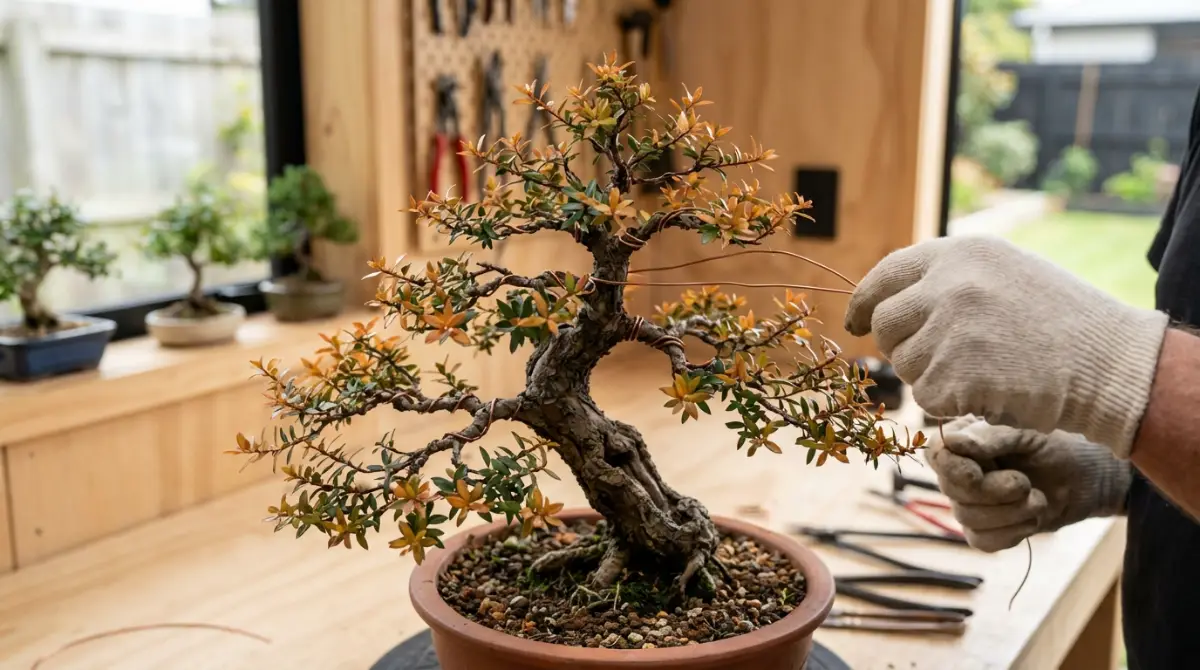
- Wiring Basics: If necessary, apply initial wiring to establish the direction and movement of main branches. Always use appropriate gauge wire and monitor for wire bite as the tree grows rapidly. Remove wire before it marks the bark, typically within a few months.
- Pinch & Grow: As new shoots extend, pinch back the tips to two or three leaves to promote denser foliage and finer ramification. This is a continuous task throughout the growing season to maintain shape and encourage density.
Spring Action Checklist:
- ✓ Repot any overdue bonsai with fresh, well-draining substrate.
- ✓ Perform necessary root pruning to stimulate new growth.
- ✓ Apply initial structural pruning and delicate wiring.
- ✓ Begin a regular, gentle feeding schedule as growth commences.
- ✓ Protect new shoots from strong winds and late frosts.
Summer Care: Watering, Feeding & Protection
New Zealand summers, from December to February, bring warmth, sunshine, and rapid growth, demanding consistent and vigilant care. For specific insights into Summer Bonsai Care: Heat & Humidity Management, this is the season where your bonsai’s health and vitality are most actively managed, primarily through meticulous watering, regular feeding, and diligent protection from pests and diseases. Staying attentive to bonsai seasonality NZ during summer is crucial for preventing stress.
1. Optimal Watering Regimes
Summer’s heat can quickly dry out bonsai pots, making watering the most critical daily task. Inconsistent watering can lead to rapid decline.
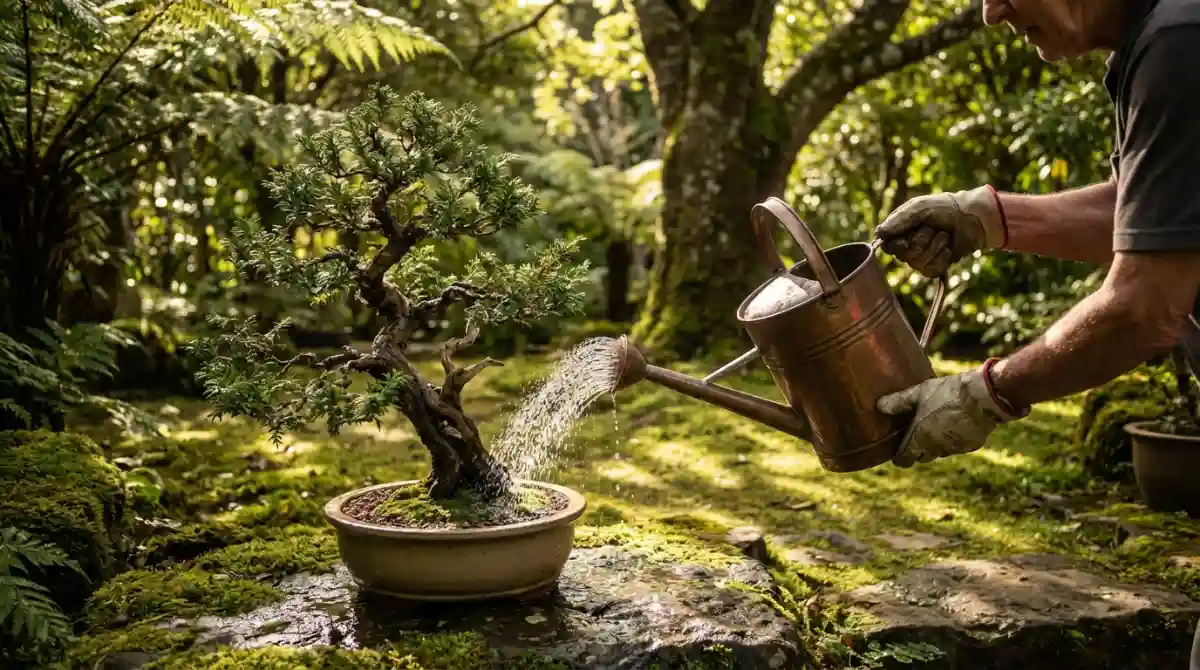
- Frequency: During hot, windy periods, your bonsai may need watering once or even twice a day. The rule of thumb is to water thoroughly when the topsoil starts to feel dry to the touch, not on a fixed schedule.
- Technique: Water thoroughly until it drains from the bottom of the pot. Ensure all parts of the root ball are moistened. Using a fine-rose watering can prevents soil erosion and evenly distributes water.
- Environmental Factors: Consider microclimates in your garden. Bonsai in full sun or smaller pots will dry out faster. Raised benches can also improve drainage and air circulation.
2. Nutrient & Feeding Guidelines
Active growth requires a steady supply of nutrients to support foliage, root development, and overall tree health. Regular feeding is key, but moderation is important for native species.
- Fertilizer Type: Use a balanced liquid organic fertilizer or slow-release granular fertilizer. For NZ native bonsai, lower concentrations are often preferred to avoid overfeeding and promote denser, healthier growth rather than just rapid elongation.
- Application: Apply regularly, typically weekly or bi-weekly, depending on the product and the tree’s vigor. Always ensure the soil is moist before fertilizing to prevent root burn.
- Monitor Growth: Adjust feeding based on the tree’s response. Excessive growth may indicate too much nitrogen; signs of nutrient deficiency include yellowing leaves or stunted growth.
3. Pest & Disease Management
Warm, humid conditions can invite pests and diseases, which can quickly compromise your bonsai’s health. Vigilance is your best defense.
- Regular Inspection: Daily checks for aphids, scale, spider mites, or unusual leaf spots are essential. Inspect the undersides of leaves and branch crotches. Early detection is key to prevention and easier treatment.
- Natural Solutions: Employ organic pest control methods where possible, such as neem oil or insecticidal soaps. Encourage beneficial insects like ladybugs, which prey on common pests.
- Air Circulation & Shade: Ensure good air circulation around your bonsai to deter fungal issues. Provide afternoon shade for species sensitive to intense summer sun, especially during heatwaves, to prevent leaf scorch.
Summer Action Checklist:
- ✓ Monitor soil moisture daily and water thoroughly as needed.
- ✓ Apply balanced liquid organic fertilizer weekly/bi-weekly.
- ✓ Inspect for pests and diseases regularly and act promptly.
- ✓ Provide shade during peak heat, especially for sensitive species.
- ✓ Continue pinching and pruning new growth to refine shape.
Autumn Preparations: Hardening Off & Styling
As summer’s intensity wanes, New Zealand’s autumn (March to May) brings cooler temperatures and shorter days. This is a pivotal time for your bonsai, shifting from vigorous growth to preparation for dormancy. Autumn tasks focus on hardening off your trees and performing significant styling work, making the most of the slower growth period for refinement.
1. Hardening Off Strategies
Preparing your bonsai for winter resilience is crucial to prevent cold damage and ensure a strong start next spring. This involves carefully adjusting their environment and nutrient intake.
- Reduce Nitrogen: Gradually decrease or switch from high-nitrogen fertilizers to those with higher potassium and phosphorus. This encourages root development and hardens new growth, making it more resilient to cold temperatures.
- Reduced Watering: As temperatures drop and growth slows, your bonsai will require less water. Adjust your watering schedule to prevent waterlogging, which can lead to root rot. Allow the soil to dry out slightly more between waterings.
- Sun Exposure: Continue to provide good sun exposure to promote photosynthesis and energy storage before dormancy. Healthy, hardened foliage will better withstand winter conditions.
2. Autumn Styling & Wiring
With the leaves still on (for evergreen natives) but growth slowing, autumn is an excellent time for major styling. The tree’s structure is visible, and the growth spurt is past, making it less prone to wire marks and allowing for thoughtful aesthetic adjustments.
- Structural Pruning: Undertake heavier pruning to refine the tree’s silhouette and branch structure. For an in-depth understanding, refer to Pruning for Bonsai Shape and Health. This is an opportune time to remove significant branches, as the healing process will begin before the colder winter months.
- Wiring Application: Apply wiring to adjust branch angles and create movement. For a comprehensive guide, see Bonsai Wiring Techniques: Step-by-Step Guide. Be vigilant and remove wire before it bites into the bark, as the tree will continue to expand in girth even if visible growth slows. Check wired branches every few weeks.
- Leaf Pruning (if applicable): For some deciduous species, selective leaf pruning can encourage a flush of smaller leaves in spring and improve ramification. Research your specific NZ native species to ensure this technique is appropriate.
Autumn Action Checklist:
- ✓ Reduce nitrogen fertilizer; switch to higher potassium/phosphorus.
- ✓ Perform major styling and wiring before full dormancy sets in.
- ✓ Gradually reduce watering frequency as temperatures drop.
- ✓ Inspect and prepare winter protection for sensitive species.
- ✓ Clean fallen leaves and debris from around pots.
Winter Protection & Dormancy Management
Winter in New Zealand (June to August) is a period of rest and dormancy for most native bonsai. While seemingly quiet, it’s a critical time for protection and careful management, ensuring your trees emerge healthy and vibrant in spring. Understanding bonsai seasonality NZ in winter is about safeguarding against the cold and maintaining a state of minimal stress for your valuable trees.
1. Winterizing Your Bonsai
Protecting your trees from frost, harsh winds, and excessive wetness is paramount, especially for species originating from warmer regions or younger, less established specimens.
- Sheltered Location: Move sensitive or recently repotted NZ native bonsai to a sheltered spot. This could be an unheated greenhouse, a cold frame, against a north-facing wall, or under the canopy of larger trees to provide natural protection.
- Frost Protection: Placing them on styrofoam boards, burying them partially in mulch, or wrapping pots with bubble wrap can prevent root damage. For very cold nights, temporary covering with horticultural fleece may be necessary.
- Airflow & Drainage: Even in shelter, ensure good air circulation to prevent fungal issues like mildew. Check that drainage holes are clear and pots are not sitting in standing water.
2. Managing Dormancy
During dormancy, your bonsai’s needs change significantly. Over-attentiveness can be as detrimental as neglect during this crucial resting phase.
- Minimal Watering: Water only when the soil is nearly dry. Overwatering in winter is a leading cause of root rot, especially when evaporation is low. Check the soil moisture every few days and water sparingly on warmer winter days.
- No Fertilizing: Halt all fertilizing during dormancy. The tree is not actively growing and cannot utilize nutrients, which can lead to root burn and unnecessary stress. Resume feeding only when spring growth begins.
- Occasional Pest Checks: Continue occasional checks for overwintering pests, although pest activity will be minimal. Address any issues promptly to prevent infestations in spring.
- Planning Ahead: Use this quieter time to plan your spring tasks, design refinements, and research new techniques. It’s an ideal period for visualising your bonsai’s future development.
Winter Action Checklist:
- ✓ Move sensitive bonsai to sheltered, frost-free locations.
- ✓ Reduce watering significantly; water only when soil is almost dry.
- ✓ Halt all fertilization until spring.
- ✓ Protect pots from freezing temperatures.
- ✓ Monitor for any signs of overwintering pests or disease.
Frequently Asked Questions (FAQ)
How often should I water my NZ native bonsai in summer?
During the peak New Zealand summer, you should check your bonsai daily. Depending on the species, pot size, and weather, watering might be required once or even twice a day. The key is to water thoroughly when the topsoil begins to feel dry, ensuring good drainage and preventing root desiccation.
When is the best time to repot NZ native bonsai?
The optimal time for repotting most NZ native bonsai is in early spring, typically September to October, just as the buds begin to swell but before significant new growth emerges. This allows the tree to recover quickly and establish new roots during its most vigorous growth period.
Do NZ native bonsai need winter protection?
While many NZ native bonsai are hardy, sensitive species or young trees will benefit from winter protection, especially in colder regions of New Zealand or during severe frosts. This can include moving them to a sheltered location, an unheated greenhouse, or protecting their roots from freezing temperatures by insulating their pots.
What kind of fertilizer should I use for my NZ bonsai?
During the growing season (spring and summer), use a balanced liquid organic fertilizer or slow-release granular fertilizer, often at a slightly reduced strength for native species. In autumn, switch to a lower nitrogen, higher potassium fertilizer to promote hardening off and root development for winter. For comprehensive insights into Bonsai Soil, Fertilization & Nutrition, always follow product instructions carefully.
How do I know if my bonsai needs watering in winter?
In winter, your bonsai will need significantly less water. The best way to check is by feeling the topsoil; it should be almost dry before you water again. You can also lift the pot to gauge its weight. Overwatering in winter is a common cause of root rot.