Rata Bonsai Cultivation: Techniques for a Hardy Native
What You Will Learn
Master rata bonsai cultivation with our expert guide. Learn propagation, training, and year-round care techniques for a stunning NZ native bonsai.
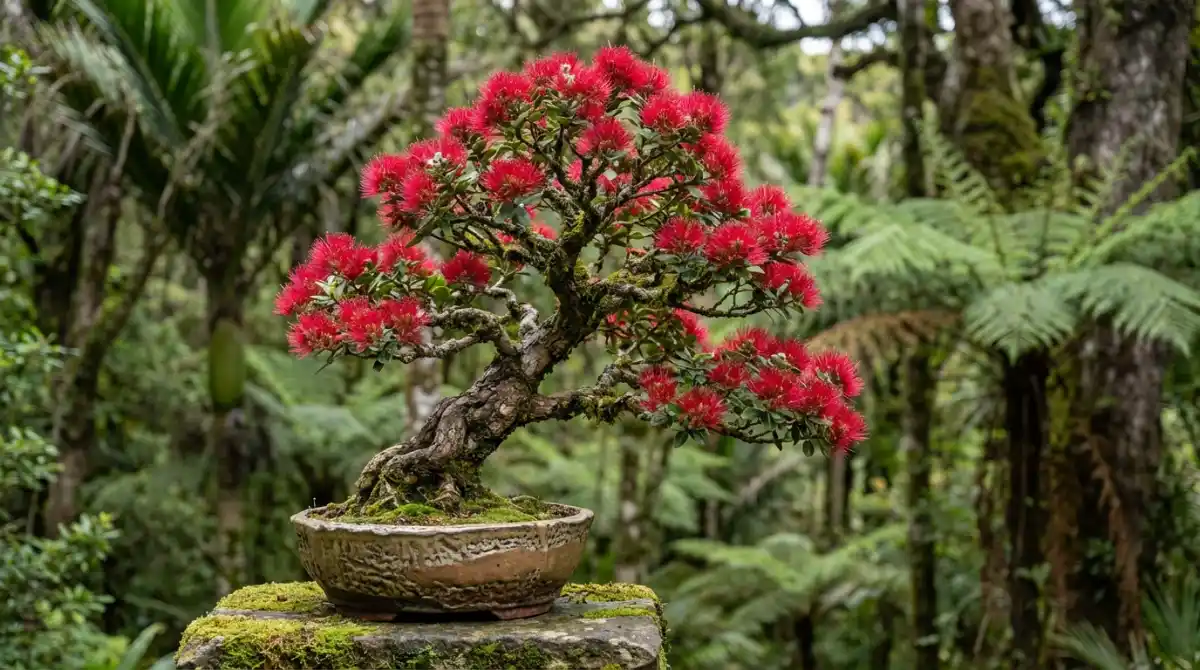
New Zealand’s native flora offers stunning species for bonsai, and the mighty Rata is among the most striking. Known for its vibrant crimson flowers and robust growth, the Rata (primarily Metrosideros robusta or Northern Rata) presents a unique and rewarding challenge for dedicated bonsai enthusiasts. Cultivating a Rata bonsai is not just about shaping a tree; it’s about connecting with a piece of New Zealand’s natural heritage, transforming wild endurance into a miniature masterpiece.
This comprehensive guide will delve into the intricate world of rata bonsai cultivation, providing expert techniques and invaluable insights. Whether you’re a seasoned artist or embarking on your first NZ native journey, unlock the secrets to a thriving, aesthetically refined Rata bonsai. To further enrich your journey and connect with like-minded individuals, consider Starting Your Own Local Bonsai Study Group.
Table of Contents
- Understanding Rata for Bonsai
- Propagation Methods for Rata
- Initial Training and Trunk Development
- Foliage Ramification and Refinement
- Year-Round Care for Rata Bonsai
- Frequently Asked Questions
Understanding Rata for Bonsai
Before embarking on rata bonsai cultivation, understand this remarkable tree’s natural characteristics. Rata species are slow-growing but possess immense resilience. They feature strong, often gnarled trunks and dense canopies, highly prized in bonsai.
Rata thrives in various natural habitats, from coastal to montane forests, showcasing adaptability. As a bonsai, it requires specific attention to mimic its ideal environment. Key considerations:
- Growth Habit: Rata can grow as epiphytes or terrestrial trees, adapting well to confined root spaces.
- Foliage: Small, leathery leaves reduce well with proper pruning, enhancing ramification.
- Flowers: Spectacular crimson flowers in summer add immense aesthetic value. For a complete aesthetic presentation, consider integrating Companion Plants & Display Elements for a True NZ Bonsai Scene.
- Hardiness: Generally hardy, but young plants in containers need protection from severe frosts.
“Cultivating a Rata bonsai is a testament to patience and a deep respect for nature’s enduring artistry. Its inherent strength, miniature foliage, and striking blossoms offer a truly unique experience.”
Propagation Methods for Rata
Your rata bonsai cultivation journey often begins with propagation. Rata can be successfully propagated from both cuttings and seeds.
Propagation from Cuttings
Often preferred for Rata, this method ensures genetic retention and quicker trunk development.
Step 1: Select Cuttings
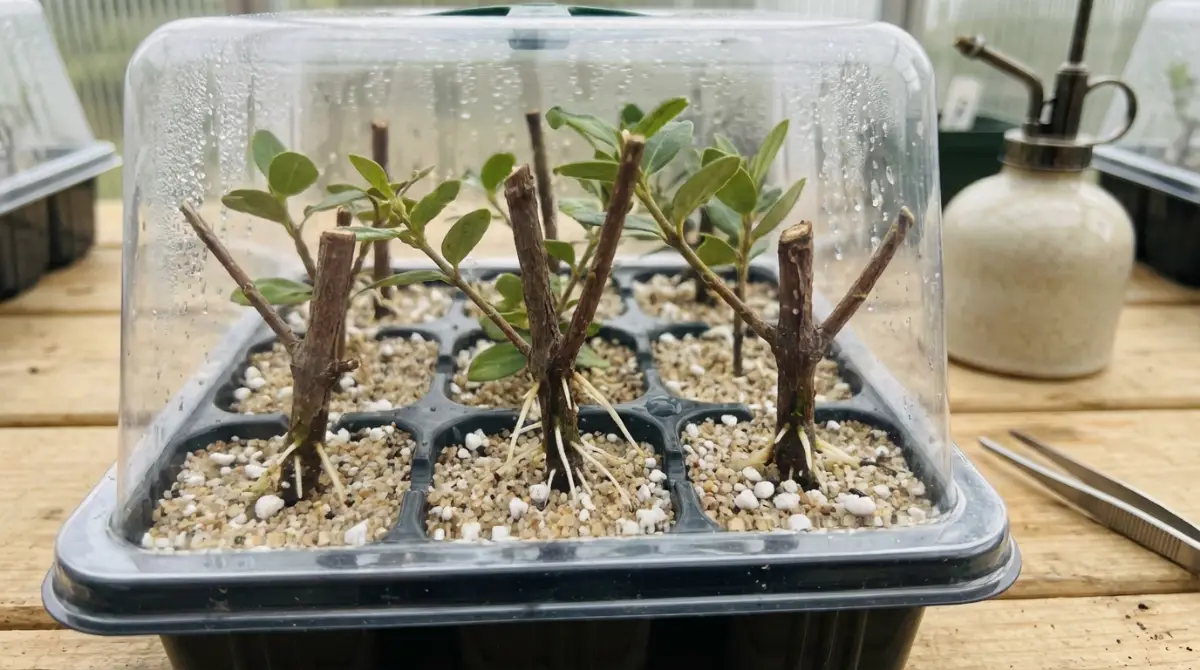
In late spring/early summer, choose healthy, semi-hardwood cuttings 10-15 cm long from current season’s growth. Remove all but the top two or three leaves.
Step 2: Prepare Cuttings
Make a clean cut just below a node. Dip the cut end into rooting hormone for increased success.
Step 3: Plant Cuttings
Use a well-draining propagation mix (sand/perlite). Insert cuttings, ensuring at least one node is buried.
Step 4: Create Humid Environment
Water thoroughly. Cover with a plastic bag or dome for high humidity. Place in a warm, bright spot out of direct sun.
Step 5: Monitor & Transplant
Roots form within 6-12 weeks. Transplant rooted cuttings into individual pots with a slightly richer bonsai soil mix.
Propagation from Seed
A longer process, but offers genetic diversity and early shaping opportunities.
Step 1: Collect & Prepare Seeds
Collect ripe seed capsules in late autumn/early winter. Dry them, then crush to release tiny seeds. Stratification is usually not required.
Step 2: Sow Seeds
Use a shallow tray with fine, well-draining seed-raising mix. Scatter seeds lightly on the surface, covering thinly. They require light for germination.
Step 3: Provide Optimal Conditions
Keep soil consistently moist (mist spray). Maintain 18-24°C and bright, indirect light. Bottom heat can improve germination.
Step 4: Care for Seedlings
Germination takes weeks to months. Once large enough, prick out and transplant into small pots. Protect from pests and harsh weather.
Initial Training and Trunk Development
The foundation of any good bonsai lies in its trunk and primary branch structure. For rata bonsai cultivation, developing a strong, tapered trunk with interesting movement is paramount.
Trunk Thickening & Sacrificial Branches
Allow young Rata to grow vigorously in a larger pot or ground for a few years to thicken the trunk. ‘Sacrificial branches’ draw sap flow, accelerating growth. Remove them once desired trunk caliper is achieved. Regular repotting every 1-2 years also encourages root development.
Wiring and Shaping the Trunk
Young Rata wood is flexible and responds well to wiring. Apply anodized aluminum wire carefully. Begin shaping the primary trunk line, creating curves. Check wire frequently to prevent damage.
- Primary Branches: Choose strong, well-placed branches for the main structure, aiming for a natural, flowing design.
- First Pruning: Once the trunk has sufficient thickness and initial movement, prune to establish primary branch structure and promote back-budding.
- Apex Development: Train the leader to form a strong apex, complementing the overall design.

Foliage Ramification and Refinement
Achieving fine ramification – a dense network of small branches – is the hallmark of a refined bonsai. For rata bonsai cultivation, this stage requires consistent attention to pruning and wiring.
Pruning for Density
Rata responds well to bonsai pruning for shape and health, back-budding vigorously. Repeatedly cut new shoots to two or three sets of leaves, encouraging secondary and tertiary branches during the growing season. Avoid heavy pruning in late autumn/winter.
- Apex Management: Prune the apex more heavily to maintain conical shape and prevent overgrowth.
- Interior Thinning: Remove inward-growing or crossing branches for air circulation and light penetration.
Fine Wiring
Use thinner wires for precise positioning of smaller branches to create distinct foliage pads. Be gentle as Rata branches can be brittle. Check wires frequently (every 4-6 weeks) to prevent girdling.
“The art of refinement in Rata bonsai lies in the delicate balance of promoting lush growth while meticulously guiding every branch to its destined place.”
Defoliation (Selective)
Partial defoliation can encourage smaller leaves and finer ramification on healthy Rata. Remove some older, larger leaves to stimulate new, smaller growth. Use sparingly on robust trees, typically in early summer.

Year-Round Care for Rata Bonsai
Consistent, seasonal care is vital for the long-term health and aesthetic appeal of your rata bonsai cultivation.
Watering
Rata prefers consistent moisture but dislikes soggy roots. For in-depth knowledge on proper hydration, consult our guide on Watering Bonsai Trees: How Often & How Much. Water thoroughly when the top inch of soil feels dry. Daily watering may be needed in hot, windy periods. Reduce in cooler months. Use rainwater or aged tap water.
Feeding
Feed regularly during the growing season (spring through autumn) with a balanced liquid or slow-release organic fertilizer. Reduce/cease feeding in winter. Use lower nitrogen (N) before flowering for better blooms. For a comprehensive approach to optimal feeding, soil health, and overall nutrient balance, consult our guide on Bonsai Soil, Fertilization & Nutrition.
Repotting
Repot every 2-3 years, or when root-bound, in late spring. Trim about one-third of the root mass, removing thick, circling roots. For comprehensive guidance on choosing the right container, refer to our Bonsai Pot Selection Guide: Material, Size, Drainage. Use a well-draining bonsai mix (akadama, pumice, organic compost). Ensure good drainage.
Pest and Disease Management
Rata is robust but can get scale or mealybugs. Inspect regularly. Treat with horticultural oil or insecticides. Ensure good air circulation to prevent fungal issues.
Winter Protection
Bonsai in shallow pots are prone to frost damage. In colder regions, move Rata bonsai to a sheltered location (unheated greenhouse, cold frame, protected wall). Prevent roots from freezing solid. For general guidelines applicable to various species, including specific considerations, you might also find our Jade Bonsai Winter Care guide helpful.

Action Checklist for Year-Round Rata Bonsai Care:
- Spring Care for Bonsai SH: Repot if needed. Begin fertilizing. Start initial shaping and wiring of new growth.
- Summer: Increase watering frequency. Continue light pruning for ramification. Monitor for pests. Protect from extreme heat.
- Autumn: Reduce fertilizing. Hardening off for winter. Minor aesthetic pruning.
- Winter: Reduce watering. Provide frost protection in colder areas. Minimal work, focus on observation.
Frequently Asked Questions about Rata Bonsai Cultivation
Can Rata be grown as an indoor bonsai?
Rata (Metrosideros species) are outdoor trees requiring significant light, air circulation, and seasonal temperature fluctuations. While they can tolerate short periods indoors in a very bright, cool room, they won’t thrive long-term. Cultivate them outdoors in New Zealand’s climate, bringing them in only for short display or extreme weather.
How long does it take to grow a Rata bonsai?
Developing a refined Rata bonsai is a long-term commitment. From seed, it can take 10-20+ years. Cuttings may reduce this to 7-15 years. The journey itself is a rewarding part of rata bonsai cultivation.
What is the best soil mix for Rata bonsai?
A free-draining yet moisture-retentive soil mix is ideal. A common blend is equal parts akadama, pumice, and lava rock, with 10-20% organic compost or bark. This ensures excellent drainage while retaining moisture and nutrients.
When is the best time to prune Rata bonsai?
Maintenance pruning for ramification is best during the active growing season (spring through early autumn). Heavy structural pruning is best in late spring after frost, as new growth begins, allowing time to recover. Avoid pruning during dormancy or late autumn.