Eucalyptus Bonsai Artistry
Unlock the secrets of Eucalyptus bonsai styling with expert tips on species selection, ramification, leaf reduction, and overcoming common challenges. Master this unique art!
Deep Dive
What You Will Learn
Unlock the secrets of Eucalyptus bonsai styling with expert tips on species selection, ramification, leaf reduction, and overcoming common challenges. Master this unique art!
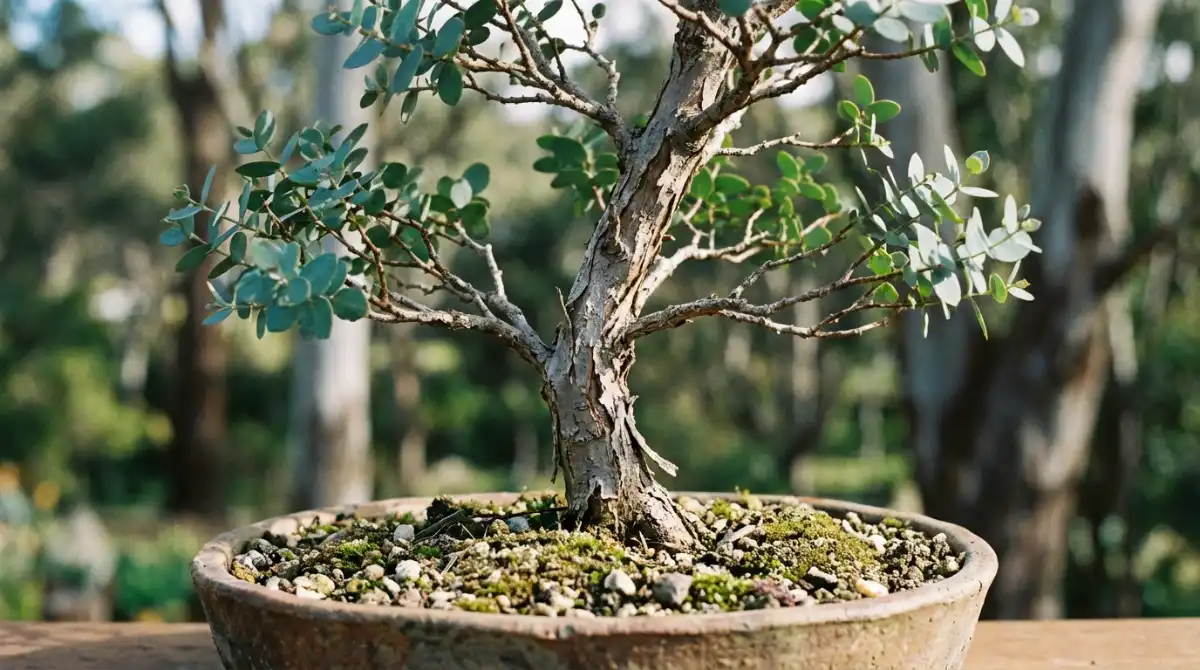
The majestic Eucalyptus, an iconic genus of the Southern Hemisphere, presents a unique and rewarding challenge for the dedicated bonsai artist. Far from the traditional Japanese or Chinese species, these vigorous natives demand a nuanced approach to thrive in miniature. Mastering Eucalyptus bonsai styling involves understanding their distinct growth habits, from their robust root systems to their often-large leaves and characteristic shedding bark.
This comprehensive guide delves into the artistry of transforming these giants into elegant bonsai. We’ll explore the specific techniques required to harness their natural vitality, encouraging fine ramification, dramatic trunk development, and the surprising delicacy of reduced foliage. Prepare to unlock the secrets to cultivating stunning Eucalyptus bonsai that capture the spirit of the Australian landscape in a pot.
Table of Contents
Selecting Eucalyptus for Bonsai
The journey of Eucalyptus bonsai styling begins with choosing the right species. Not all Eucalypts are created equal for bonsai; some are simply too vigorous or have leaves that are too large to reduce effectively. The key is to look for species with naturally smaller leaves, good branch structure, and a willingness to back-bud.
Ideal Eucalyptus Species for Bonsai
- Eucalyptus nicholii (Narrow-leaved Black Peppermint): Excellent small leaves, fine ramification, and attractive peeling bark.
- Eucalyptus pauciflora nana (Snow Gum Dwarf): Naturally compact growth, beautiful bark, and good cold tolerance.
- Eucalyptus mannifera (Brittle Gum): Known for its striking white bark and graceful form.
- Eucalyptus cinerea (Argyle Apple): Features distinct juvenile foliage that holds well, though mature leaves can be larger.
When selecting initial material, whether from a nursery or collected, look for a strong root flare (nebari), good trunk taper, and healthy foliage. Avoid plants with leggy growth or signs of stress.
Ramification & Leaf Reduction
Achieving dense ramification and successfully reducing leaf size are perhaps the most challenging, yet rewarding, aspects of Eucalyptus bonsai styling. Eucalypts are known for their vigorous growth and often large leaves, requiring consistent attention.
1. Pruning for Ramification
Eucalypts respond well to pruning, often back-budding prolifically. The key is timing and consistency.
- Decandling (for some species): Similar to pines, some Eucalypts benefit from removing the terminal growth tip (candle) to encourage secondary shoots.
- Clip-and-Grow: This technique is highly effective. Allow a branch to extend, then cut it back to two or three leaves or buds. Repeat this process continuously throughout the growing season.
- Winter Pruning: For structural pruning, late winter or early spring before the strongest flush of growth is ideal. Be mindful of severe cuts on older wood, as Eucalypts can be prone to dieback if not handled carefully.
2. Effective Leaf Reduction Techniques
Leaf size is crucial for creating a believable miniature tree. Eucalypts, with their typically large foliage, demand specific strategies.
- Partial Defoliation: The most common method. Remove 50-75% of the leaves on a healthy, vigorous tree during the peak growing season. This encourages a new flush of smaller leaves. Never completely defoliate an Eucalypt, as this can severely stress or kill the tree.
- Water Management: Slightly restricting water (without causing stress) during periods of rapid growth can encourage smaller new leaves.
- Nutrient Control: Avoiding excessive nitrogen, which promotes lush, large foliage, can also help. Balance nutrients to support overall health without over-stimulating leaf size.
“Patience is paramount with Eucalyptus. Their powerful growth means constant attention to pruning and defoliation, but the reward is a miniature powerhouse of Australian beauty.”

Trunk & Branch Development
The trunk and primary branches form the skeleton of any bonsai, and for Eucalyptus bonsai styling, establishing strong, tapering forms is vital. Their naturally fast growth can be both a blessing and a curse in this regard.
Developing a Strong Trunk and Nebari
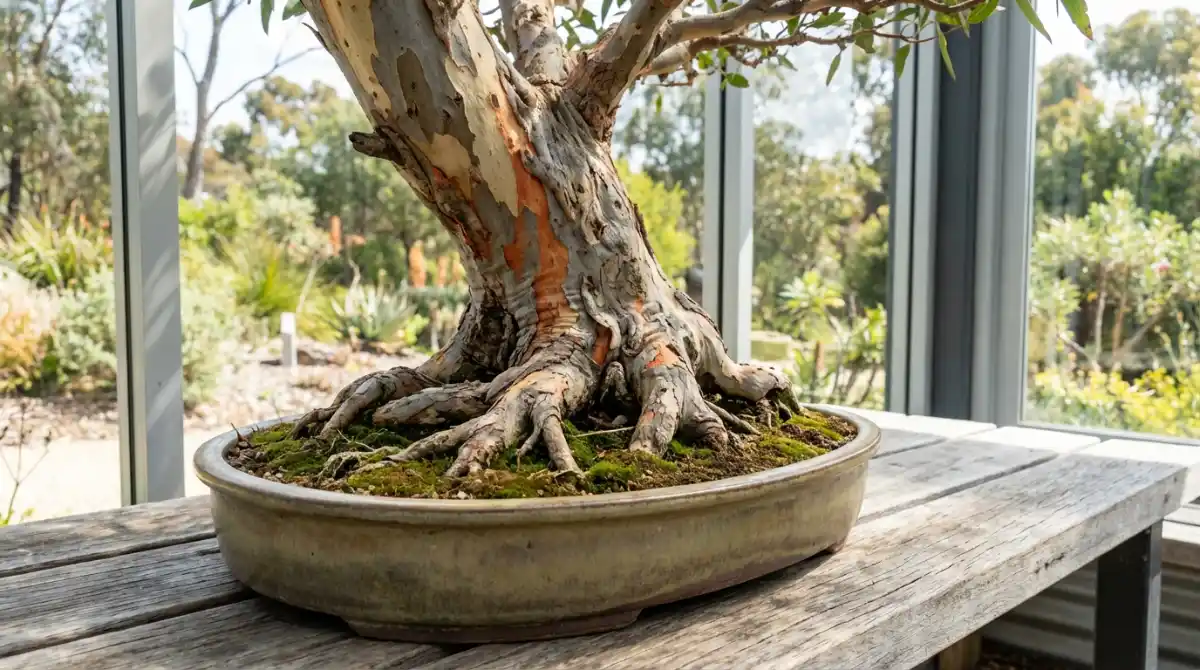
A thick, tapering trunk and well-spread surface roots (nebari) are hallmarks of quality bonsai.
- Sacrifice Branches: Allow a lower branch to grow freely for several years, providing energy to the trunk and helping it thicken rapidly. Once the desired trunk thickness is achieved, remove the sacrifice branch.
- Field Growing: For initial development, planting in the ground or a large grow bag can dramatically accelerate trunk thickening.
- Root Pruning: Regular root pruning encourages a dense, fibrous root system, which contributes to a good nebari and supports overall tree health. Ensure the roots are never allowed to dry out completely during this process.
Shaping Primary Branches with Wiring
Wiring Eucalypts requires care due to their brittle wood, especially when young. It’s best to wire younger branches, which are more pliable.
- Application: Apply wire carefully, ensuring it is snug but not biting into the bark. Check frequently, as Eucalypts grow rapidly and wire can mark the bark quickly.
- Removal: Remove wire as soon as the branch holds its new position, typically within a few weeks to a few months.
- Guy Wires: For thicker, older branches that are too rigid for traditional wiring, guy wires anchored to the pot or trunk can be effective for guiding their direction over time.
Common Eucalyptus Bonsai Challenges
While robust, Eucalypts do present specific challenges in bonsai cultivation that artists must be prepared to address. Understanding these issues is key to successful Eucalyptus bonsai styling.
Managing Pests and Diseases
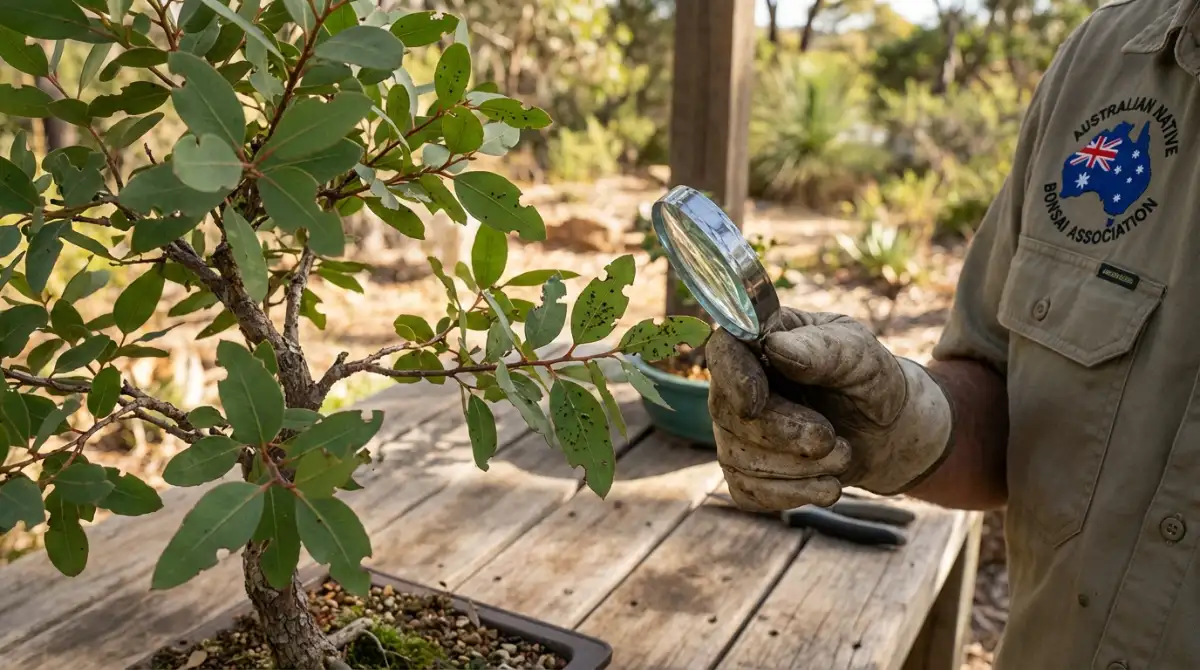
Eucalypts can be susceptible to certain pests and fungal issues. Vigilance is crucial.
- Psyllids: These small insects can cause leaf disfiguration and sticky honeydew. Systemic insecticides or regular sprays with horticultural oil can manage infestations.
- Scale Insects: Often found on stems and undersides of leaves. Scrape them off manually or use horticultural oil.
- Fungal Diseases: Damp, poorly ventilated conditions can lead to fungal issues. Ensure good air circulation and appropriate watering. Fungicides may be necessary in severe cases.
Watering and Fertilization for Eucalypts
Eucalypts are generally thirsty plants, especially when actively growing, but overwatering can lead to root rot.
- Watering: Water thoroughly when the top inch of soil begins to dry. In hot, windy conditions, this might be daily or even twice daily. Good drainage is essential.
- Fertilization: Use a balanced fertilizer during the growing season. Reduce nitrogen to control leaf size. Avoid fertilizing a newly repotted or stressed tree.
Overcoming Leaf Size and Dieback
These are arguably the biggest hurdles in Eucalyptus bonsai.
- Persistent Leaf Size: If defoliation isn’t yielding smaller leaves, consider a more aggressive approach in the next growing cycle, ensure adequate light, and re-evaluate your species choice if necessary.
- Branch Dieback: Eucalypts can notoriously suffer from dieback after heavy pruning or environmental stress. To mitigate this, ensure the tree is very healthy before major work, avoid cutting into old wood unnecessarily, and seal large cuts to prevent infection. Provide stable environmental conditions.
Conclusion
Embarking on the journey of Eucalyptus bonsai styling is a testament to the artist’s dedication and understanding of unique plant physiology. While these iconic Southern Hemisphere trees present distinct challenges, their vigorous growth, stunning bark, and distinctive foliage offer unparalleled opportunities for creating truly original and breathtaking bonsai.
By diligently applying the techniques for species selection, ramification, leaf reduction, trunk development, and mindful problem-solving, you can transform these powerful natives into captivating miniature masterpieces. Embrace the challenge, enjoy the process, and let the spirit of the Australian landscape flourish in your collection.
Frequently Asked Questions about Eucalyptus Bonsai
Which Eucalyptus species are best for bonsai?
Species like Eucalyptus nicholii (Narrow-leaved Black Peppermint), Eucalyptus pauciflora nana (Dwarf Snow Gum), and Eucalyptus mannifera (Brittle Gum) are highly recommended due to their smaller leaves, good ramification, and attractive bark.
How do I reduce the leaf size of my Eucalyptus bonsai?
Partial defoliation (removing 50-75% of leaves) during the active growing season is the most effective method, encouraging a new flush of smaller leaves. Never fully defoliate. Additionally, moderate water restriction and avoiding excessive nitrogen can help.
Can I use wire on Eucalyptus bonsai?
Yes, but with caution. Eucalyptus wood can be brittle, especially older growth. It’s best to wire younger, more flexible branches. Apply wire gently and check frequently, as Eucalypts grow fast and wire can bite into the bark quickly. Guy wires are a safer alternative for thicker branches.
Why is my Eucalyptus bonsai experiencing branch dieback?
Branch dieback can be caused by various factors, including severe pruning into old wood, environmental stress (e.g., inconsistent watering, extreme temperatures), or pest/disease issues. Ensure the tree is healthy before major work, seal large cuts, and provide stable growing conditions to minimize dieback.