Banksia Bonsai: Cultivation & Styling
Master Banksia bonsai care with this comprehensive guide. Learn cultivation, propagation, wiring, pruning, and how to encourage flowering for stunning native Australian bonsai.
Deep Dive
What You Will Learn
Master Banksia bonsai care with this comprehensive guide. Learn cultivation, propagation, wiring, pruning, and how to encourage flowering for stunning native Australian bonsai.
Banksia Bonsai: Cultivation & Styling
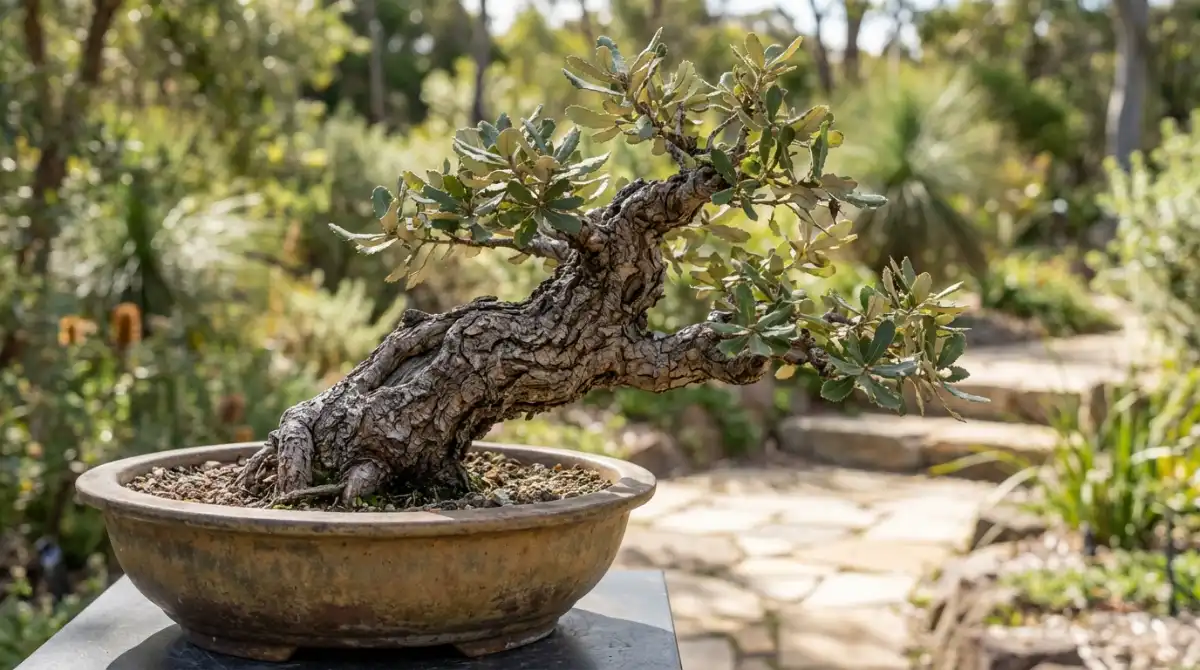
Embarking on the journey of cultivating a Banksia bonsai is a unique and deeply rewarding experience. These iconic Australian native plants, renowned for their distinctive flower spikes and architectural foliage, offer a fascinating challenge for any bonsai enthusiast. Far from being a mere aesthetic pursuit, mastering Banksia bonsai care allows you to connect with the raw beauty of the Australian landscape, bringing a piece of its ancient story into your garden.
In this comprehensive guide, we’ll delve into the specifics of transforming these hardy specimens into stunning miniature trees, covering everything from selecting the right species to advanced styling techniques. Prepare to unlock the secrets to a thriving Banksia bonsai.
Table of Contents
Banksia Species for Bonsai
Not all Banksia species are equally suited for bonsai. The key lies in selecting varieties with smaller leaves, naturally compact growth habits, and good response to pruning. Here are some of the best choices for your Banksia bonsai care journey:
- Banksia serrata (Saw Banksia): Known for its large, serrated leaves and impressive woody cones. It develops gnarly bark quickly, offering an ancient feel. Responds well to hard pruning.
- Banksia integrifolia (Coastal Banksia): Highly adaptable with variable leaf size (though generally larger), this species can be found from coastal dunes to mountains. Its strong growth makes it suitable for larger bonsai.
- Banksia spinulosa (Hairpin Banksia): Offers delicate, fine foliage and attractive flower spikes. Its compact nature and good ramification potential make it an excellent choice for smaller bonsai.
- Banksia ericifolia (Heath-leaved Banksia): Features very fine, heath-like leaves, giving it a soft texture. It can produce abundant, striking orange flower spikes. Excellent for intricate designs.
Choosing the Right Banksia
When selecting your stock, look for plants that show good vigour, a sturdy trunk base (nebari), and interesting initial branch structure. Younger plants offer more flexibility for styling, while older nursery stock can provide an instant ancient feel, though they may require more work to adapt to bonsai culture.
Understanding Banksia Characteristics
Banksias possess unique traits crucial for successful bonsai. Many have a lignotuber, a woody swelling at the base of the stem that stores energy and enables resprouting after fire or severe damage. This makes them remarkably resilient and tolerant of aggressive pruning. However, their wood can be brittle when dry, and their roots are notoriously sensitive to disturbance, especially their proteoid roots which aid nutrient uptake in poor soils.
Propagation & Initial Training
Starting your Banksia bonsai journey often begins with propagation. Whether from seed or cutting, understanding the initial steps is vital for developing a strong foundation for your future masterpiece.
Seed Propagation (Step-by-Step)
- Collect Seeds: Obtain fresh seeds from ripe Banksia cones. Heating the cones gently (e.g., in a warm oven at low temperature for a short period) can help them open and release seeds.
- Prepare Seed Raising Mix: Use a very well-draining, sandy mix, ideally specific for native plants or a 50/50 mix of coarse sand and peat.
- Sow Seeds: Plant seeds shallowly, just covering them with a thin layer of mix.
- Maintain Moisture & Warmth: Keep the soil consistently moist but not waterlogged. Banksia seeds often benefit from stratification (cold treatment) before sowing, or smoke water treatment, depending on the species. Germination can be slow and sporadic.
- Prick Out Seedlings: Once seedlings develop a few true leaves, carefully transplant them into individual small pots with a similar well-draining native potting mix. Handle roots minimally.
Cuttings & Air-Layering (Step-by-Step)
- Take Cuttings: In late summer or early autumn, select semi-hardwood cuttings (about 10-15 cm long) from healthy, disease-free branches. Remove lower leaves and dip the cut end in rooting hormone.
- Prepare Potting Medium: Use a very open, well-draining medium like perlite or a 50/50 mix of coarse sand and peat.
- Insert Cuttings: Plant cuttings firmly in the medium, ensuring good contact.
- Create Humidity: Cover the pot with a plastic bag or place it in a propagation tray with a lid to maintain high humidity. Keep in a warm, bright spot out of direct sun.
- Monitor & Transplant: Rooting can take several months. Once a strong root system is established, carefully transplant into individual pots.
Initial Potting & Styling
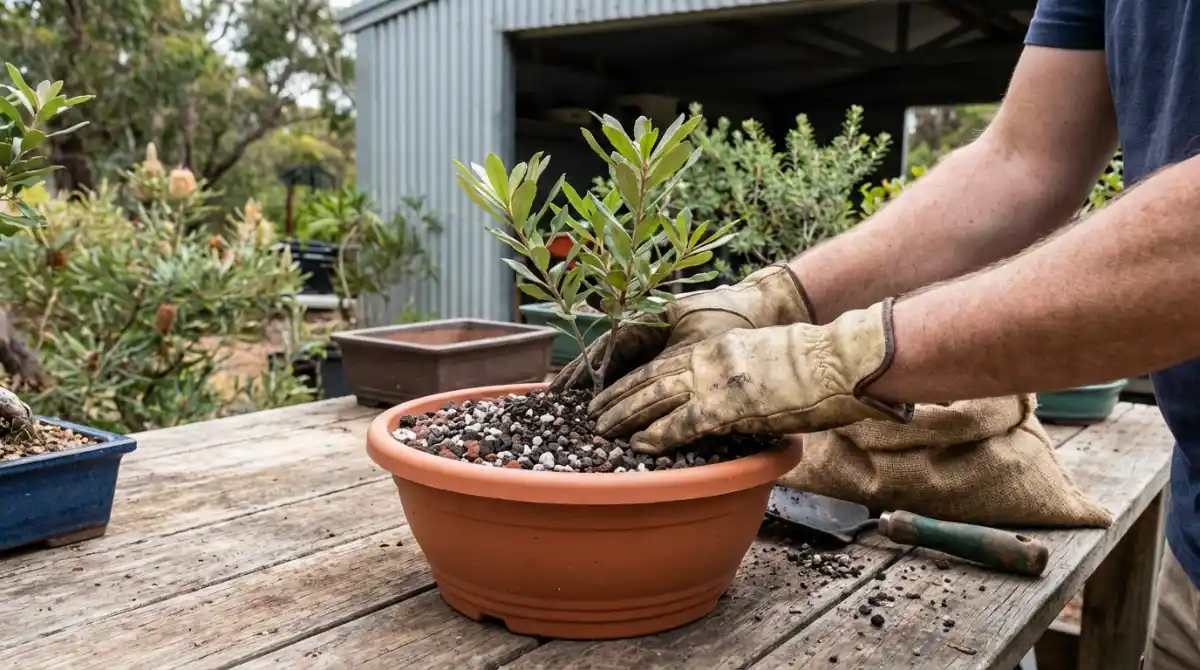
For young plants, prioritize strong growth in a larger training pot for the first few years. This allows the trunk to thicken and a robust root system to develop. Begin formative pruning by removing undesirable branches and identifying your primary branches. Don’t rush into a final bonsai pot; patience is key to developing significant trunk girth and character.
Wiring & Pruning Techniques for Banksia
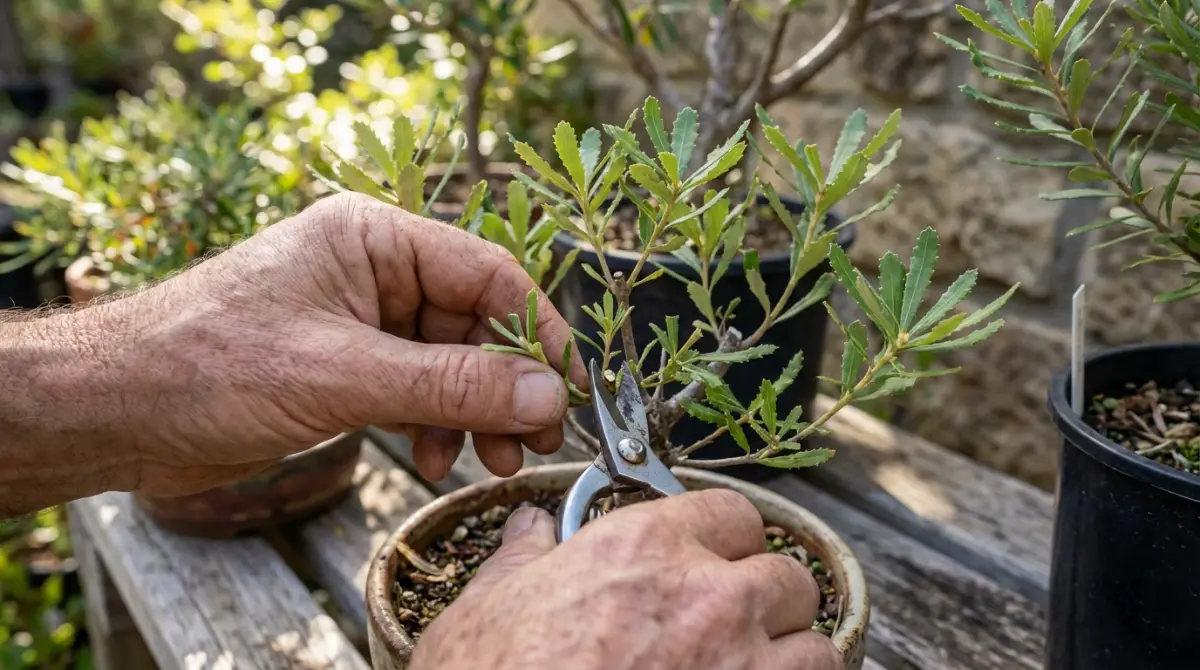
Shaping your Banksia bonsai requires a delicate hand and an understanding of its unique growth patterns. Both wiring and pruning are essential tools in your Banksia bonsai care arsenal.
Wiring Banksia Bonsai (Step-by-Step)
- Choose the Right Wire: Use anodized aluminum wire, appropriate for the branch thickness. Banksia wood can be brittle, so lighter gauges are often preferred.
- Apply Wire Carefully: Wire branches when the wood is flexible, typically on younger growth. Banksia branches tend to stiffen quickly. Wrap the wire at a 45-degree angle, snugly but not tightly.
- Position Branches: Gently bend branches into desired positions. Be mindful of the branch’s natural springiness.
- Monitor for Biting: Banksias can grow rapidly, especially in warmer months. Check wired branches frequently (every few weeks) to ensure the wire isn’t biting into the bark. Remove wire before scarring occurs.
- Remove Wire: When the branch holds its new position, carefully unwind the wire. Do not pull it off.
“Banksia wood, while strong, can be surprisingly brittle when dry. Always work with well-hydrated material, and approach bending with patience and gentle, consistent pressure to avoid breakage.”
Pruning for Form and Health (Step-by-Step)
- Structural Pruning: Perform heavy structural pruning in late winter or early spring before new growth flushes. Banksias, especially those with lignotubers, respond very well to hard cutbacks.
- Maintenance Pruning: Throughout the growing season, pinch back new shoots to encourage ramification and maintain the desired shape. This is crucial for developing dense foliage pads.
- Deadwood Management: Banksias can develop attractive deadwood. Clean and preserve jins and shari for added character, sealing larger cuts to prevent rot.
- Leaf Reduction: While challenging, consistent pinching and good light exposure can lead to some leaf reduction over time, though Banksia leaves generally remain relatively large.
Flowering & Fruiting in Bonsai
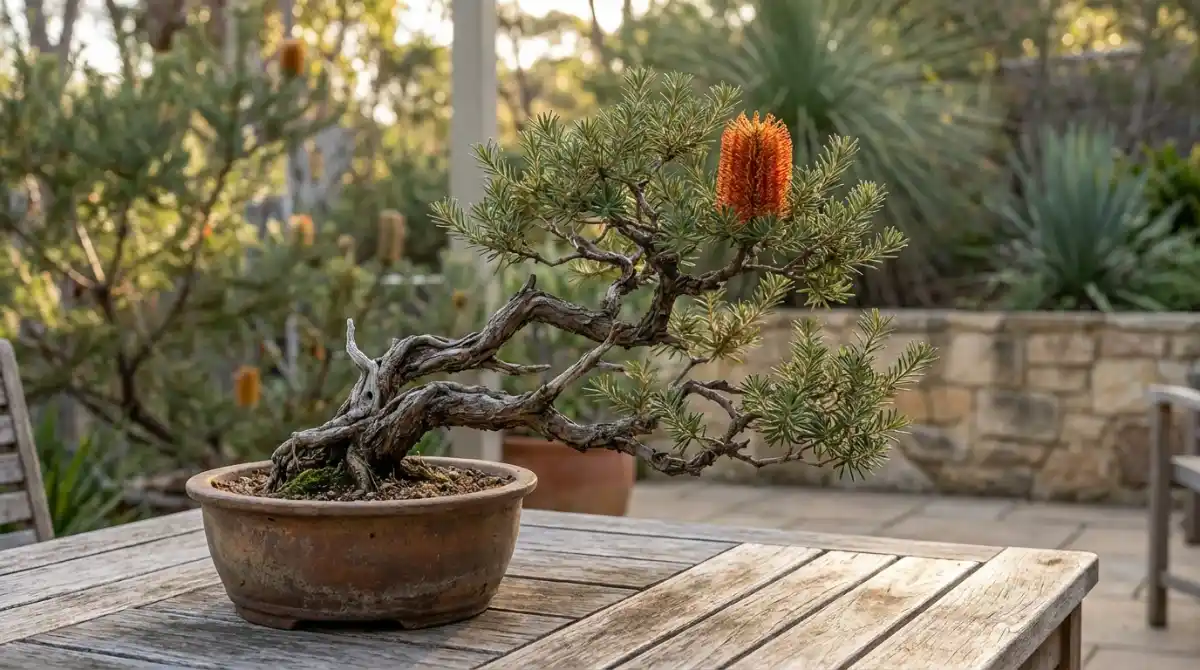
One of the most captivating aspects of Banksias is their incredible flower spikes and subsequent woody cones. While encouraging these on a bonsai can be challenging due to the stress of confinement and frequent pruning, it is achievable with careful management.
Encouraging Blooms and Cones
- Maturity: Banksias need to reach a certain level of maturity before flowering. Younger bonsai may focus energy on vegetative growth.
- Light & Nutrients: Provide ample direct sunlight and ensure a balanced feeding regimen. Avoid excessive nitrogen, which promotes leafy growth at the expense of flowers. A phosphorus-rich fertilizer can encourage blooming.
- Reduced Pruning: To allow flower buds to form, reduce heavy pruning in the lead-up to the plant’s natural flowering season. Some species flower on old wood, others on new.
- Stress Management: While a little stress can sometimes induce flowering, ensure your bonsai is otherwise healthy and vigorous. Poor general Banksia bonsai care will inhibit flowering.
Witnessing a miniature Banksia in full bloom, complete with its characteristic flower spike and eventually its woody cones, is a testament to successful cultivation and a deep understanding of this magnificent native species.
General Banksia Bonsai Care: An Action Checklist
Consistent and attentive care is paramount for the health and longevity of your Banksia bonsai. Use this checklist as a guide for your routine Banksia bonsai care.
- Soil Requirements: Use a very open, well-draining, slightly acidic mix. Incorporate plenty of coarse inorganic material like pumice, akadama (if available), scoria, or crushed granite. Avoid heavy, water-retentive soils.
- Watering Regimen: Water thoroughly when the top inch of soil feels dry. Banksias dislike constantly wet feet but also stress under prolonged drought. Water more frequently in hot, windy conditions.
- Feeding for Vigor: Use a low-phosphorus fertilizer specifically formulated for Australian native plants. Fertilize sparingly during the growing season (spring to early autumn), generally every 2-4 weeks at half strength.
- Pests & Diseases: Banksias are generally hardy but can be susceptible to scale, mealybugs, and sometimes fungal issues if air circulation is poor. Inspect regularly and treat promptly with appropriate organic or chemical controls.
- Repotting Schedule: Repot young Banksias every 1-2 years, older ones every 2-4 years, usually in late winter or early spring. Be extremely careful with the delicate proteoid roots. Prune only a small percentage of roots, focusing on removing circling or overly long roots.
- Winter Protection: While many Banksias are cold-tolerant, protect your bonsai from severe frosts, especially in pots where roots are more exposed. A sheltered position or temporary indoor placement in extreme cold is advisable.
- Sunlight: Provide as much full sun as possible. Banksias are sun-loving plants and will not thrive in deep shade.
Conclusion
Cultivating Banksia bonsai is a journey of discovery, connecting you to the unique flora of the Southern Hemisphere. With patience, observation, and adherence to sound Banksia bonsai care principles, you can transform these resilient natives into breathtaking works of living art. The reward of seeing their distinctive forms and perhaps even their iconic flowers in miniature is an unparalleled satisfaction for any bonsai enthusiast.
Embrace the challenge, understand their needs, and enjoy the remarkable beauty that a well-cared-for Banksia bonsai brings to your collection.
FAQ: Banksia Bonsai Care
What are the best Banksia species for bonsai?
For bonsai, species like Banksia serrata, Banksia integrifolia, Banksia spinulosa, and Banksia ericifolia are highly recommended due to their adaptability, leaf size, and response to pruning. They offer good trunk development and characteristic flowers.
How often should I water my Banksia bonsai?
Banksia bonsai should be watered thoroughly when the top inch of soil feels dry. They prefer consistently moist but not waterlogged conditions. Watering frequency will depend on climate, pot size, and soil mix, but generally, check daily in hot weather and every few days in cooler periods.
What type of soil is best for Banksia bonsai?
An extremely well-draining, open, and slightly acidic soil mix is essential. Avoid heavy, moisture-retentive soils. A good mix typically includes coarse inorganic materials like pumice, scoria, akadama, or crushed granite, with a small amount of bark or coir for organic content, ensuring rapid drainage.
Can Banksia bonsai be wired?
Yes, Banksia bonsai can be wired, but caution is advised as their wood can be brittle. It’s best to wire younger, more flexible branches. Monitor wired branches closely for wire bite, as they can grow quickly and scar easily. Remove wire as soon as the branch holds its position.
How do I encourage flowering on my Banksia bonsai?