South African Bonsai Care
What You Will Learn
Discover comprehensive South African bonsai species care for indigenous trees like Podocarpus and Wild Olive. Learn essential techniques for watering in arid climates, climate considerations, pruning, and repotting, tailored for the Southern Hemisphere.
South African Bonsai: Species & Climate Care
Embarking on the journey of bonsai cultivation is a profoundly rewarding experience, connecting you with the ancient art form through the unique lens of Southern Hemisphere horticulture. Unlike many traditional bonsai species originating from temperate climates, indigenous South African trees present distinct challenges and splendors. This comprehensive guide delves deep into the specific needs of popular South African bonsai species, offering unparalleled insights into their care, tailored precisely for the diverse climatic conditions found across the region. From the majestic Yellowwoods to the resilient Wild Olives, mastering the art of south african bonsai species care requires a nuanced understanding of local ecology and adaptation techniques. Prepare to transform raw natural beauty into living sculptures, celebrating the rich biodiversity of South Africa through the delicate art of bonsai.
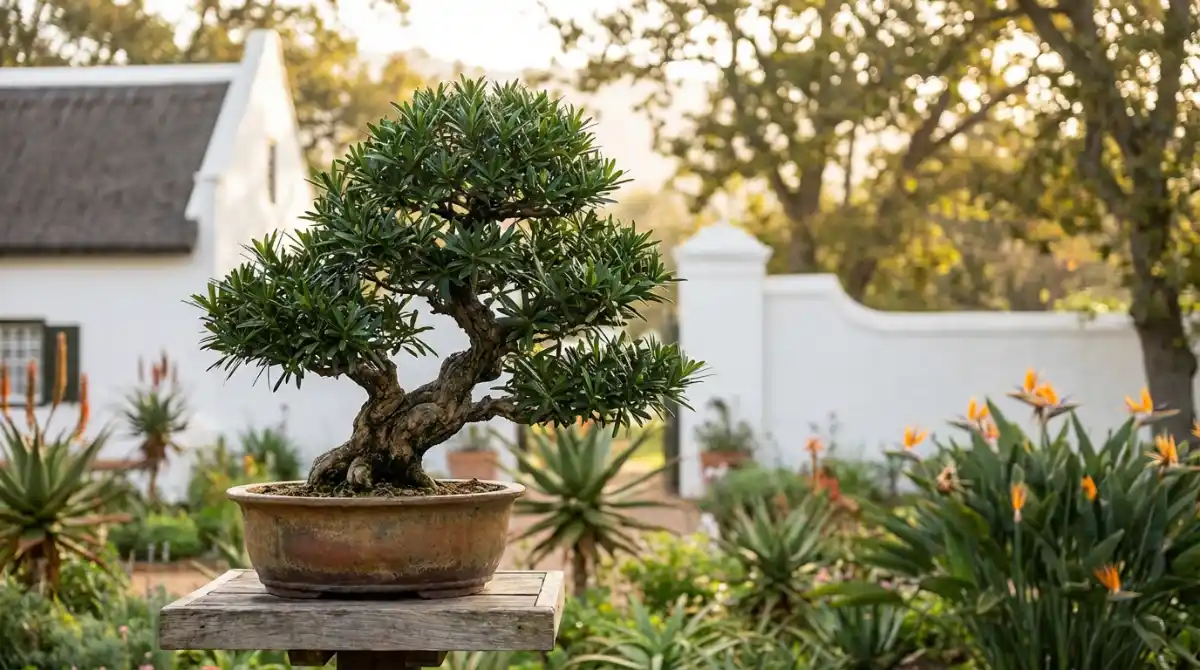
Podocarpus Bonsai Care SA (Yellowwood)
The Podocarpus genus, particularly species such as Podocarpus falcatus (Outeniqua Yellowwood) and Podocarpus latifolius (Real Yellowwood), are iconic indigenous trees of South Africa and exceptional subjects for bonsai. Their fine foliage, naturally elegant branching, and relatively rapid growth make them highly sought after by enthusiasts. However, successful Podocarpus bonsai care in South Africa requires specific attention to their environmental preferences and growth habits.
Light Requirements for Podocarpus Bonsai
Podocarpus species thrive in bright, indirect light to partial shade. While they can tolerate some morning sun, intense midday sun, especially during the peak of summer in hotter regions, can scorch their delicate foliage. Aim for a location that receives 4-6 hours of dappled sunlight daily. In coastal or cooler areas, they may tolerate more direct sun, but always observe your tree for signs of stress. Insufficient light will lead to sparse foliage and weak growth, diminishing the aesthetic appeal and health of your bonsai.
Watering Podocarpus Bonsai
Consistent moisture is key for Podocarpus, but they are highly susceptible to root rot if overwatered. The soil should be kept consistently moist but never waterlogged. During warmer months, this might mean watering daily or even twice a day, depending on the pot size, soil mix, and local climate. In cooler periods or during dormancy, reduce watering frequency significantly. Always check the top inch of soil before watering; if it feels dry, it’s time to water. Ensure excellent drainage to prevent standing water at the roots.
Ideal Soil Mix for Podocarpus
A well-draining, moisture-retentive soil mix is crucial. A common recommendation is a blend of akadama, pumice, and lava rock, often with a small percentage of organic material like high-quality compost or pine bark fines. For South African conditions, a mix with slightly more inorganic components can aid drainage and aeration. A good starting point is 50% inorganic (lava rock, pumice, grit) and 50% organic (bark, coco coir) which can be adjusted based on local humidity and watering habits. The pH preference is slightly acidic to neutral (6.0-7.0).
Fertilizing Podocarpus Bonsai
Feed your Podocarpus bonsai regularly during the growing season (spring through early autumn). Use a balanced liquid fertilizer (e.g., 10-10-10) diluted to half strength every two to four weeks. Alternatively, slow-release organic pellets can be applied. Reduce or cease fertilization during winter or periods of dormancy to prevent root burn or unwanted growth when the tree is resting. Young, developing trees benefit from higher nitrogen to encourage vegetative growth, while more mature trees can thrive on a more balanced approach.
Pruning and Shaping Podocarpus
Podocarpus respond well to pruning, which is essential for maintaining their shape and encouraging ramification.Structural Pruning: Best done in early spring before the main flush of growth. Remove any crossing, downward-growing, or overly strong branches. Aim to establish a clear trunk line and primary branch structure. Podocarpus back-buds readily on old wood, making it suitable for more drastic cutbacks if needed, though this should be done gradually.Maintenance Pruning: Throughout the growing season, pinch back new shoots to two or three sets of leaves once they have elongated. This encourages finer ramification and maintains the tree’s overall silhouette. Avoid cutting into hardened wood during the hottest parts of summer, as this can stress the tree.Wiring: Podocarpus branches are flexible when young but become brittle with age. Wire during the cooler months (autumn or early spring) when the tree’s sap flow is less vigorous. Use anodized aluminum wire and check it frequently to prevent it from biting into the bark, which can happen quickly on fast-growing trees. Remove wire after a few months, or once the branch holds its position.
Repotting Podocarpus
Young Podocarpus bonsai (under 10 years) typically require repotting every 1-2 years, while older, more established trees can be repotted every 2-4 years. The best time for repotting is in early spring, just as the buds begin to swell. Gently remove the tree from its pot, untangle and trim approximately one-third of the root mass, focusing on removing thick, circling roots. Repot into fresh, well-draining soil and avoid fertilizing for at least 4-6 weeks after repotting to allow the roots to recover.
Pests and Diseases
Podocarpus are generally resilient but can be susceptible to scale insects, aphids, and spider mites. Regularly inspect your tree, especially the undersides of leaves. Treat infestations with horticultural oil, neem oil, or an appropriate organic insecticide. Fungal issues, such as root rot, are usually a result of overwatering or poor drainage; ensure proper cultural practices to prevent these problems.
Wild Olive Bonsai SA (Olea europaea subsp. africana)
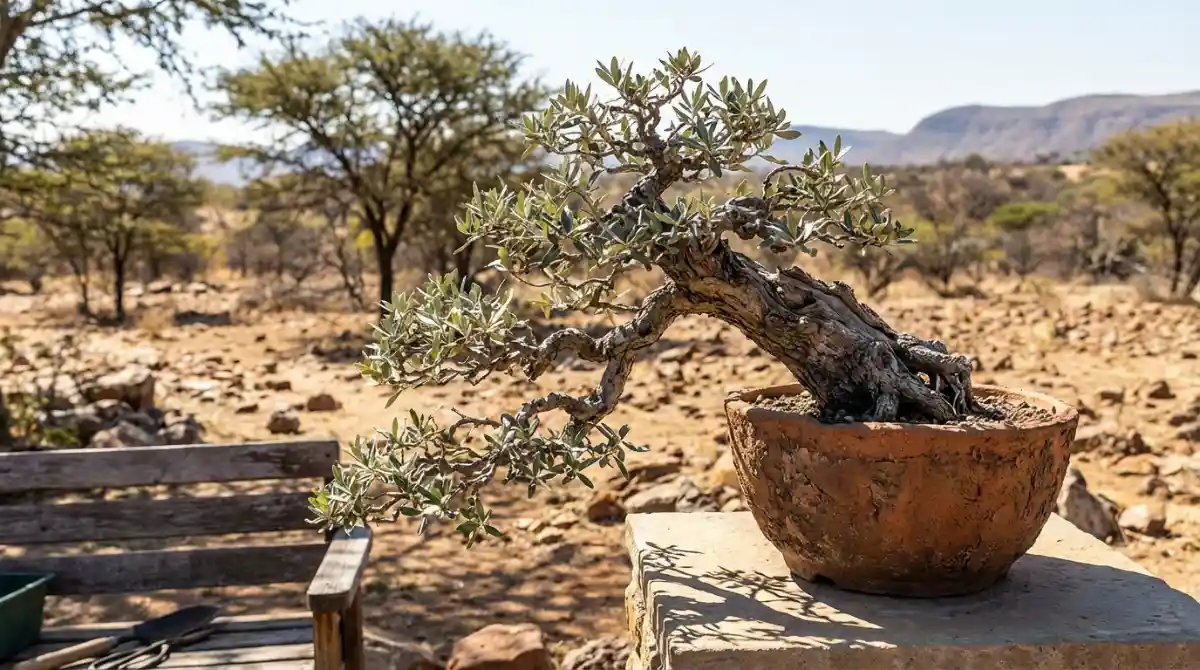
The Wild Olive, Olea europaea subsp. africana, is an iconic and highly popular indigenous South African species for bonsai. Revered for its extreme hardiness, attractive grey-green foliage, gnarled trunks, and ability to thrive in challenging conditions, it embodies the spirit of resilience in South African landscapes. Its natural ability to produce interesting deadwood and strong, sculptural forms makes it a favourite among local bonsai artists. Care for the Wild Olive differs significantly from the Podocarpus, reflecting its adaptation to often drier, harsher environments.
Light Requirements for Wild Olive Bonsai
Wild Olives are sun-worshippers. They absolutely demand full sun exposure for optimal health, compact growth, and fruiting (if desired). Provide at least 6-8 hours of direct sunlight daily. Inadequate light will result in leggy growth, larger leaves, and a general weakening of the tree. They can tolerate and even thrive in the intense South African sun, making them ideal candidates for outdoor display year-round in most regions, provided they are acclimatized.
Watering Wild Olive Bonsai
As a species adapted to arid and semi-arid conditions, the Wild Olive is remarkably drought-tolerant once established. However, as a bonsai in a shallow pot, it still requires regular watering. The key is to allow the soil to dry out moderately between waterings. Overwatering is a common mistake and can quickly lead to root rot. During hot, windy periods, you might need to water daily, but in cooler weather, watering every few days might suffice. Always check the soil moisture deeply before watering again. When you do water, water thoroughly until it drains from the bottom of the pot. Wild Olives prefer well-drained conditions.
Ideal Soil Mix for Wild Olive
A fast-draining, gritty soil mix is paramount for Wild Olives. They do not tolerate prolonged wet feet. A good mix could be 70-80% inorganic components (lava rock, pumice, coarse river sand, crushed granite) and 20-30% organic material (pine bark fines, coco coir). This ensures excellent aeration and drainage. Wild Olives are tolerant of slightly alkaline to neutral pH (7.0-8.0), which is often found in local water sources in some South African regions, making them well-suited.
Fertilizing Wild Olive Bonsai
Fertilize Wild Olives throughout their growing season, from spring to autumn. Opt for a balanced granular or liquid fertilizer, or one slightly higher in phosphorus and potassium to encourage flower and fruit production (if that’s part of your design). Apply every 2-4 weeks at half strength for liquid fertilizers, or according to product instructions for slow-release pellets. As with most bonsai, reduce or cease feeding during the cooler, dormant months. Young trees can benefit from a higher nitrogen feed to promote faster growth, but for refined trees, a more balanced approach is better to maintain small leaf size and ramification.
Pruning and Shaping Wild Olive
Wild Olives are incredibly vigorous and respond exceptionally well to hard pruning, often back-budding profusely on old wood. This makes them excellent candidates for styling and re-styling.Structural Pruning: Can be done in late winter or early spring before new growth emerges. Heavy cuts heal remarkably well. Use cut paste on larger wounds to aid healing. Develop a strong branch structure early on, as the wood hardens significantly with age.Maintenance Pruning: Pinch and trim new growth throughout the growing season to encourage ramification and maintain the tree’s silhouette. Wild Olives tend to produce long shoots, which should be cut back regularly. Defoliation can be done in mid-summer (in cycles, not all at once for very hot climates) to reduce leaf size and encourage a new flush of compact foliage, but observe the tree’s vigour carefully.Wiring: The branches of Wild Olives become stiff and brittle quite quickly. Wire young branches, ideally in spring or early summer, and check frequently as they grow. Older, thicker branches may require guy wires or the “clip and grow” method to achieve desired shapes. Integrate deadwood (Jin and Shari) techniques, as the natural deadwood of Wild Olives is highly attractive and durable.
Repotting Wild Olive
Repotting of Wild Olive bonsai is best done in late winter or early spring, just before new growth appears. Young trees may need repotting every 1-2 years, while mature trees can go 2-5 years between repots. They tolerate root pruning very well. Remove about one-third to one-half of the root ball, focusing on removing circling or overly thick roots. Repot into fresh, fast-draining soil. Water thoroughly after repotting and keep in a slightly shaded, sheltered location for a few weeks before returning to full sun. Withhold fertilizer for at least 4-6 weeks.
Pests and Diseases
Wild Olives are generally robust and pest-resistant. Occasionally, scale insects or olive fruit fly may appear. Regular inspection and prompt treatment with appropriate insecticides (e.g., horticultural oil) are effective. Good air circulation and proper watering practices will help prevent most fungal issues.
Climate Considerations for SA Bonsai
South Africa boasts an incredibly diverse range of climates, from the Mediterranean climate of the Western Cape to the subtropical conditions of KwaZulu-Natal, the arid plains of the Karoo, and the temperate zones of the Highveld. This diversity presents both opportunities and challenges for the South African bonsai enthusiast. Understanding your local microclimate is paramount to the successful cultivation of indigenous and exotic bonsai species alike.
Temperature Extremes: Heat and Frost
Managing Heat: Summer temperatures in many parts of South Africa can be extreme, often exceeding 30-35°C, sometimes reaching 40°C+. During heatwaves, sensitive species (like some Ficus or Maples if you also grow exotics, or even young Podocarpus) may require afternoon shade, especially if grown in small, shallow pots that heat up quickly. Grouping trees together can create a slightly cooler, more humid microclimate. Using lighter-coloured pots can also help reduce soil temperature. Ensure adequate watering, possibly twice daily, during peak heat.
Protecting from Frost: While many indigenous South African species are adapted to varying degrees of cold, hard frost can still be detrimental, especially to tropical or subtropical species, or to temperate species that are in small bonsai pots where roots are more exposed. In regions prone to frost (e.g., Highveld, parts of Eastern Cape), move sensitive trees indoors, into a frost-free greenhouse, or under protective covers during winter nights. Even hardy indigenous species like Wild Olive can benefit from protection from sustained hard freezes, especially when root systems are confined to shallow bonsai pots. Mulching the pot surface or placing the entire pot in a larger container filled with insulating material can provide additional root protection. Always ensure good air circulation to prevent fungal issues in sheltered environments.
Frequently Asked Questions about South African Bonsai Care
What are popular indigenous South African bonsai species?
Popular indigenous South African bonsai species include the Podocarpus genus (Yellowwoods like Podocarpus falcatus and Podocarpus latifolius) and the Wild Olive (Olea europaea subsp. africana). These species are valued for their aesthetic appeal and adaptability to local climates.
How often should I water a Podocarpus bonsai?
Podocarpus bonsai require consistent moisture but must never be waterlogged to prevent root rot. During warmer months, you might water daily or twice a day. In cooler periods, reduce frequency. Always check the top inch of soil; if dry, it’s time to water.
What is the ideal soil mix for Wild Olive bonsai?
Wild Olive bonsai thrive in a fast-draining, gritty soil mix, typically composed of 70-80% inorganic components (like lava rock, pumice, or coarse river sand) and 20-30% organic material (such as pine bark fines or coco coir). This prevents waterlogging, which Wild Olives do not tolerate.
How can I protect my South African bonsai from frost?
In regions prone to hard frost (e.g., Highveld), move sensitive species or even hardy indigenous trees in small pots indoors, into a frost-free greenhouse, or under protective covers during winter nights. Even hardy species can suffer root damage in shallow pots if exposed to extreme cold.
When is the best time to prune Wild Olive bonsai?
Structural pruning for Wild Olive bonsai is best performed in late winter or early spring before new growth emerges. Maintenance pruning (pinching back new shoots) can be done throughout the growing season to encourage ramification and maintain the tree’s shape.