Developing Bonsai Styles: Classic Forms & Modern Twists
bonzai.co.nz
Developing bonsai styles involves understanding foundational principles for shaping miniature trees. These guidelines, ranging from classic forms like Formal Upright to modern interpretations, empower enthusiasts to create balanced, aesthetically pleasing, and deeply expressive living art pieces.
Table of Contents
- The Roots of Bonsai Art: Classic Styles
- Embracing Evolution: Modern Bonsai Design
- Achieving Your Unique Artistic Expression
- The Journey of Bonsai: Continuous Learning
- References
The world of bonsai is an ancient art form that transforms ordinary trees into stunning miniature landscapes. Understanding classic bonsai styles is fundamental for anyone looking to create beautiful and meaningful living art. These foundational styles offer a roadmap for shaping trees, ensuring they reflect nature’s beauty in a confined space. They teach us about balance, proportion, and the essence of a natural tree.

The Roots of Bonsai Art: Classic Styles
Exploring the classic styles of bonsai reveals a deep appreciation for nature and meticulous craftsmanship. Each style has its own rules and aesthetic principles. These guidelines help artists create trees that look natural, even in miniature. They are not rigid laws, but rather a framework for artistic expression, allowing for individual interpretation within established forms.
These traditional forms evolved over centuries, primarily in Japan, drawing inspiration from trees found in harsh environments. They represent idealized versions of trees in nature, showcasing resilience and harmony. Mastering these forms allows enthusiasts to develop a strong artistic eye and technical skill, forming a solid basis for all bonsai development.
Formal Upright (Chokkan)
The formal upright style, known as Chokkan, is one of the most common and recognizable classic bonsai styles. It mimics a tree growing perfectly straight and tall in ideal conditions. The trunk is straight, tapering evenly from bottom to top, embodying strength and dignity.
Branches extend symmetrically, with the lowest branches being the longest and widest. They gradually shorten as they ascend the trunk, forming a triangular canopy. This style demands precision and a sense of calm strength. Pines, junipers, and other conifers often suit this formal look, highlighting their natural upright growth.
Informal Upright (Moyogi)
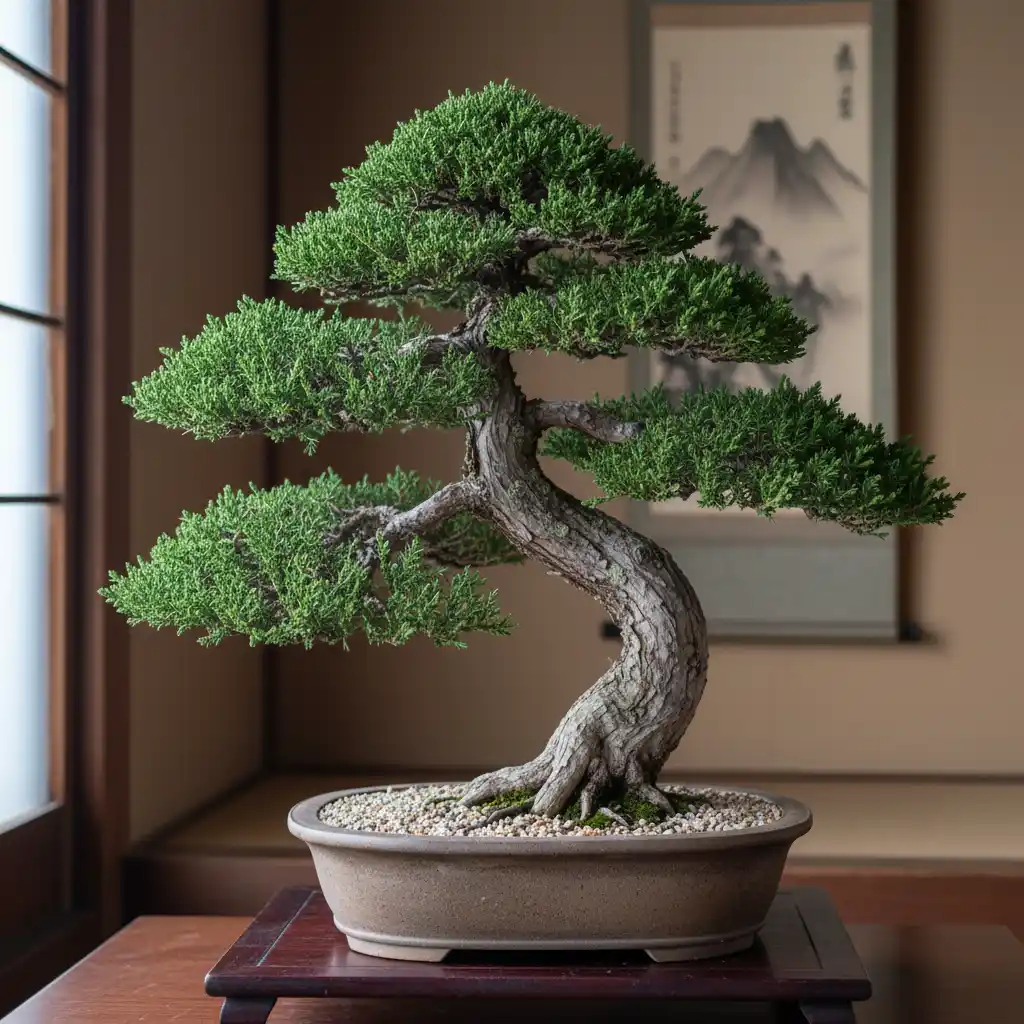
The informal upright style, or Moyogi, is perhaps the most popular of all classic bonsai styles. It reflects a tree that has grown with some challenges but still reaches for the sky. The trunk has gentle curves, creating a sense of natural movement and grace.
Despite its curves, the apex of the tree is directly above the base of the trunk. Branches grow outwards from the curves, also forming a balanced, somewhat triangular shape. This style feels more dynamic and natural than the formal upright, capturing the essence of a tree shaped by its environment. Many deciduous and evergreen species adapt well to Moyogi.
Slanting (Shakan)
The slanting style, called Shakan, depicts a tree leaning to one side. This often happens in nature due to strong winds, shaded conditions, or uneven ground. The trunk emerges from the soil at an angle, usually about 60 to 80 degrees from the vertical, suggesting resilience against forces of nature.
To maintain balance, a strong root structure on the opposite side of the lean is crucial. Branches generally follow the lean, but the lowest branch often extends in the opposite direction for counter-balance, adding stability to the composition. This style conveys resilience and adaptation, making it visually striking and impactful.
Cascade (Kengai) and Semi-Cascade (Han-Kengai)
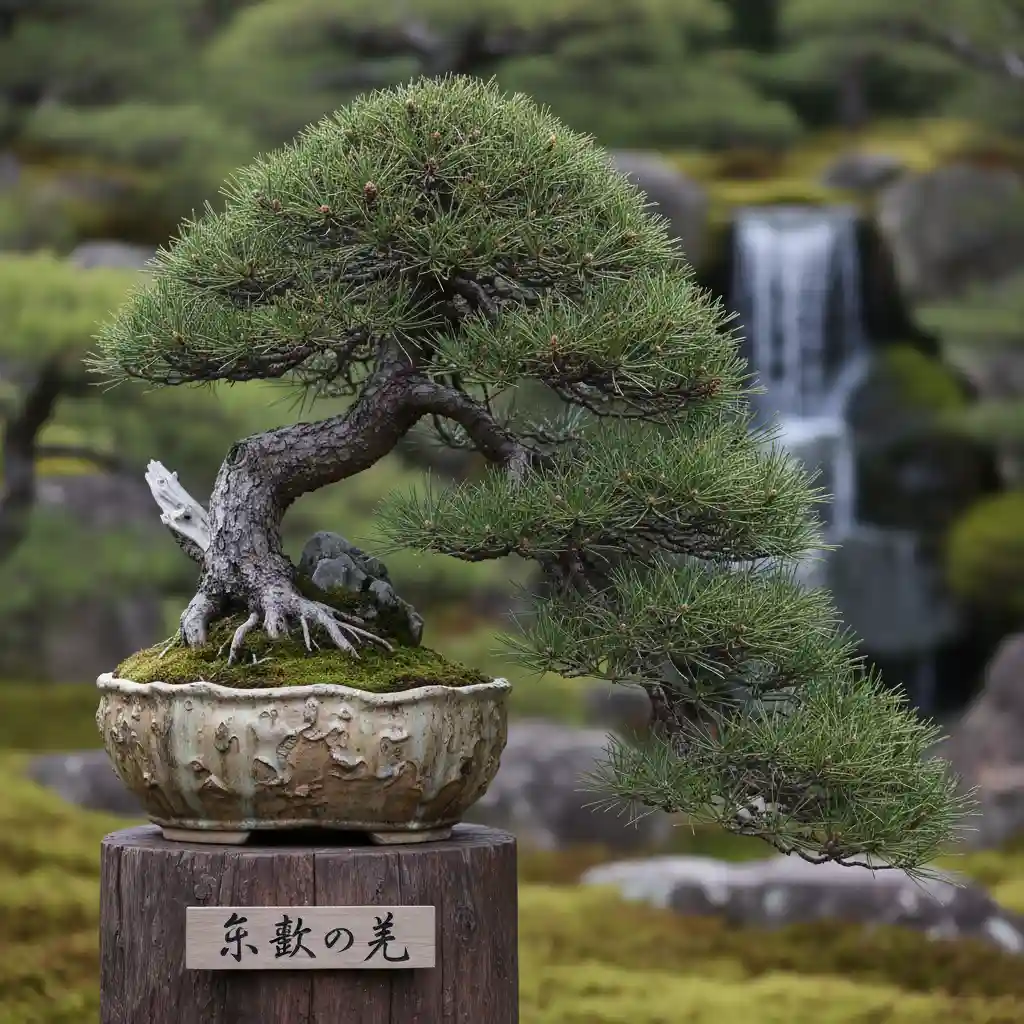
Cascade (Kengai) and semi-cascade (Han-Kengai) styles mimic trees growing on cliff faces. They are exposed to harsh elements, causing their trunks and branches to grow downwards. In Kengai, the main trunk extends below the bottom of the container, creating a dramatic, flowing form.
For Han-Kengai, the trunk extends only to the rim of the pot or slightly below it, offering a gentler downward flow. Both styles require deep, tall containers to allow the cascade to develop fully and balance the tree. They evoke a sense of drama and struggle against nature, symbolizing endurance. Junipers and pines are excellent choices for these challenging yet rewarding forms.
Forest (Yose-ue)
The forest style, or Yose-ue, creates the illusion of a natural forest or grove. It involves planting multiple trees in a single, often shallow, container. The trees vary in height, thickness, and age, replicating a true forest’s natural diversity and layered canopy.
Usually, an odd number of trees is used (e.g., three, five, seven) to create visual interest and avoid symmetry. The tallest tree is placed centrally or slightly off-center, acting as the focal point, while smaller trees frame it. This style emphasizes harmony and the collective beauty of trees growing together, a powerful way to express a large landscape in miniature.
Root-Over-Rock (Sekijoju)
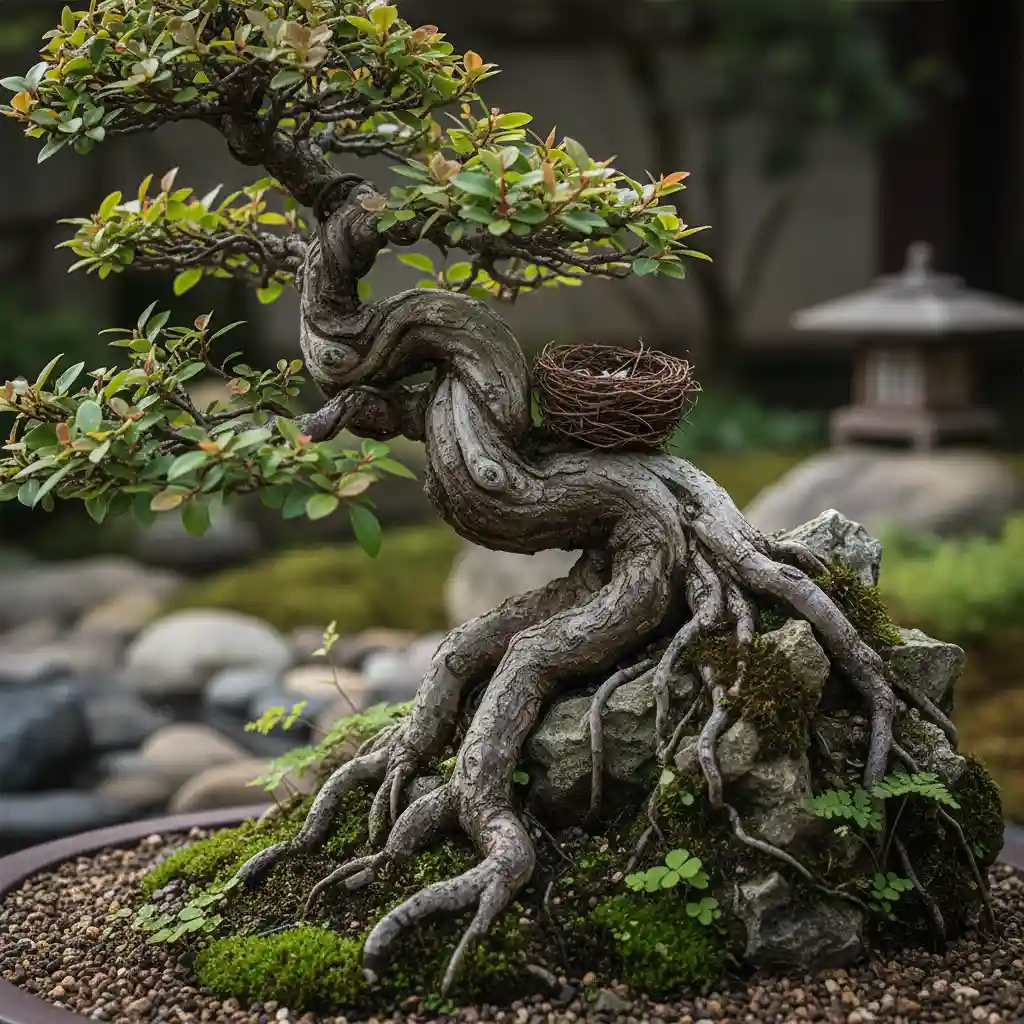
The root-over-rock style, Sekijoju, showcases tree roots growing over and around a prominent rock. This style tells a story of a tree struggling to find purchase in rocky terrain, its roots exposed as they cling to the rock before finding soil beneath. It highlights the tree’s determination and survival.
This style highlights the strength and tenacity of nature. It creates a striking visual of roots grasping the rock, forming an integral part of the tree’s overall design and aesthetic. Ficus and certain pines are often used for their strong, flexible roots that can artfully entwine around the stone.
Winding/Twisted (Nejikan)
The winding or twisted style, Nejikan, features a trunk that twists and turns dramatically. This look often comes from trees growing in harsh, windy coastal areas, or through natural growth patterns, creating an impression of age and character. The trunk is not just curved, but distinctly spiraled, conveying a powerful sense of movement.
This style conveys a sense of ancientness and resilience. It suggests a tree that has weathered many storms, its form shaped by time and elements. Species with naturally flexible trunks or those suitable for intensive wiring can be trained into this expressive form, creating a truly unique bonsai art piece.
Embracing Evolution: Modern Bonsai Design
While classic bonsai styles provide an essential foundation, the art of bonsai is not static. Modern designers push boundaries, creating new expressions while often referencing traditional principles. This evolution keeps the art form vibrant and engaging for new generations, ensuring its continued relevance.
Modern bonsai can incorporate different cultural influences and contemporary artistic trends. The goal is still to evoke nature, but perhaps through a more abstract or personal lens. This often involves combining elements from different styles or experimenting with unconventional forms, fostering greater individuality in bonsai art.
Blending Traditions
Many modern bonsai works blend elements from several classic bonsai styles. An artist might take the dramatic lean of a Shakan but combine it with the flowing branches of a semi-cascade. This allows for greater creativity and expression, moving beyond strict adherence to single forms and creating unique hybrid compositions.
This approach respects the past while building a new future for bonsai. It shows a deep understanding of the rules, which then allows for informed breaking of those rules to achieve a distinct vision. The result is often a unique, hybrid style that still feels balanced and natural, showcasing innovative bonsai design.
Abstract and Expressive Forms
Some modern bonsai moves towards more abstract or expressive forms. These might not fit neatly into any traditional category. They might emphasize unusual trunk movements, dramatic deadwood (jin and shari), or unique foliage pads, creating a striking visual narrative.
The focus shifts to conveying a particular emotion, a strong sense of movement, or an artistic concept. These pieces can be highly thought-provoking and challenge conventional ideas of beauty in bonsai. They are about pushing the limits of what a miniature tree can represent, making a bold artistic statement.
Minimalism and Simplicity
Another modern trend is minimalism. This approach focuses on extreme simplicity, stripping away non-essential elements to highlight the tree’s fundamental beauty. The goal is to highlight the tree’s essential form and character with as little distraction as possible.
This often involves clean lines, sparse foliage, and very simple containers. Minimalism in bonsai is about finding profound beauty in what is left unsaid, in the quiet spaces around the tree. It requires immense skill to achieve such impact with so few elements, demonstrating mastery of aesthetic restraint.
Achieving Your Unique Artistic Expression
Developing your own bonsai style, whether classic or modern, requires practice, patience, and observation. It’s a journey of learning and discovery, a continuous dialogue between the artist and nature. The connection you build with your tree is central to this artistic process.
Start by studying nature itself. Observe full-sized trees, how they grow, how they react to their environment. This insight is invaluable for creating believable miniature landscapes. The more you observe, the better your artistic eye becomes, allowing for deeper expression in your bonsai forms.
Understanding Your Tree’s Potential
Every tree has a natural growth habit and potential. Before you begin styling, spend time observing your particular species. Does it naturally grow upright? Does it have flexible branches? Understanding these characteristics helps you choose the most suitable style for that individual tree.
Trying to force a tree into an unnatural style can lead to stress for the tree and frustration for the artist. Work with the tree’s strengths, not against them. This symbiotic relationship is key to successful bonsai cultivation and truly unique artistic outcomes.
Techniques for Shaping and Refinement
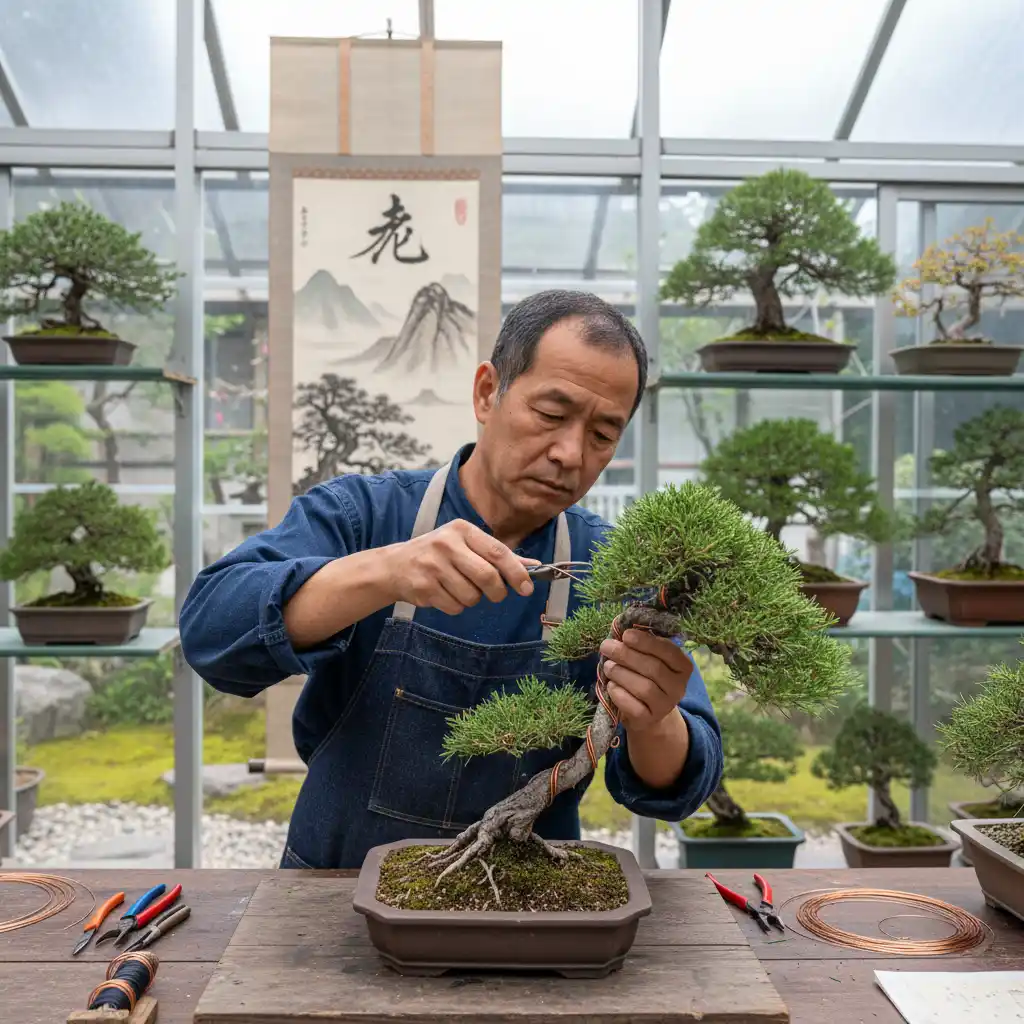
Key techniques for shaping bonsai include pruning, wiring, and defoliation. Pruning removes unwanted branches and foliage, guiding growth and creating desired shapes. Wiring uses annealed copper or aluminum wire to bend and position branches and trunks with precision. These techniques are learned over time and are crucial for bringing any bonsai design to life. Proper application ensures the tree remains healthy while being shaped. For more specific guidance, especially for wiring and pruning NZ natives, further resources can be invaluable. For more information on Bonsai Soil, Fertilization & Nutrition, including a detailed Bonsai Fertilization Schedule, and general bonsai care, see this Source. Additionally, understanding common issues like Overwatering Bonsai Symptoms and knowing how to handle Aphids on Bonsai Treatment can prevent significant setbacks.
Defoliation (removing leaves) encourages smaller leaf size and finer ramification, enhancing the tree’s delicate appearance.
The Role of the Container
The container is not just a pot; it’s an integral part of the bonsai composition. It should complement the tree’s style, color, and size without overpowering it, enhancing the overall aesthetic. A well-chosen pot enhances the overall aesthetic and supports the tree’s narrative, acting as a frame for the living sculpture.
For cascading styles, tall pots are needed to allow dramatic flow. For forest plantings, wide, shallow trays are common to suggest a sprawling landscape. The color and texture of the pot also contribute significantly to the final artistic impression, making container selection an art in itself.

The Journey of Bonsai: Continuous Learning
Whether you focus on classic bonsai styles or explore modern interpretations, the journey is one of continuous learning and growth. Each tree presents new challenges and opportunities for creativity. Bonsai is a living art form, constantly changing and evolving with the seasons and the artist’s touch. For example, understanding winter protection for NZ bonsai is a vital aspect of seasonal care. Similarly, focusing on Spring Care for Bonsai SH and following a comprehensive Seasonal Care Calendar for NZ Bonsai: A Month-by-Month Guide ensures year-round health.
It teaches patience, observation, and respect for nature. As you develop your skills, you’ll find your unique artistic voice, creating miniature masterpieces that reflect both the timeless beauty of the natural world and your personal vision. Enjoy the process, and let your trees inspire you.
References
- Wikipedia – Bonsai
- The Art of Bonsai Project (Generic Reference)