Mastering Bonsai Nebari Development: Achieving the Perfect Root Flare
bonzai.co.nz
Table of Contents
Introduction to Nebari
A beautiful bonsai tree is more than just a miniature tree; it’s a living sculpture. While many focus on the trunk, branches, and foliage, the base of the tree, known as the nebari, is equally vital. The nebari refers to the visible surface roots that spread out from the base of the trunk. It provides a sense of stability, age, and natural grounding for the entire composition.
Bonsai nebari development refers to the crucial process of enhancing the visible surface roots that radiate from the trunk base of a bonsai tree. A well-developed nebari creates a sense of age, stability, and natural grounding, significantly improving the tree’s overall aesthetic appeal.
Mastering bonsai nebari development is a cornerstone of advanced bonsai artistry. A well-formed nebari enhances the tree’s visual balance and creates the illusion of a mature tree that has weathered countless storms. Without a strong root flare, a bonsai can look unstable or like a stick merely planted in a pot. This guide will walk you through the essential steps and techniques.
Why Nebari Matters: Importance and Aesthetics
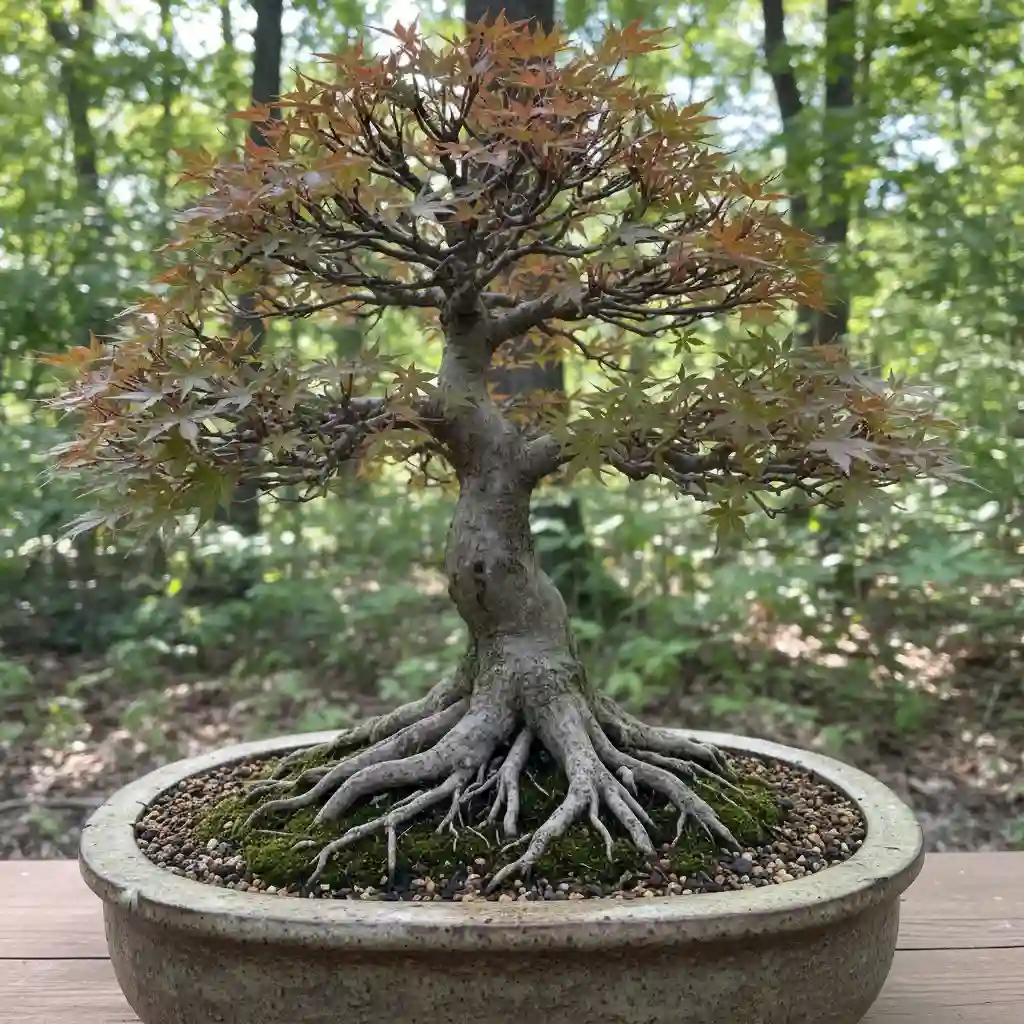
The importance of nebari in bonsai cannot be overstated. It contributes significantly to both the health and aesthetic value of your tree. Understanding these aspects will motivate your efforts in bonsai nebari development.
Visual Impact
A good nebari creates a powerful visual statement. It anchors the tree firmly to its pot, conveying strength and maturity. Imagine a large, ancient tree in nature; its roots spread wide, gripping the earth. This natural grounding is what we aim to replicate in miniature form. A radial root spread, where roots extend evenly in all directions, is often considered ideal.
The transition from the nebari to the trunk should be smooth and natural, forming a pleasing taper. This visual flow guides the eye upwards, appreciating the entire tree’s design. Without this foundational element, even the most perfectly styled branches might seem to float without purpose. For a deeper dive into the broader artistic considerations and design principles, explore resources on Developing Bonsai Styles: Classic Forms & Modern Twists.
Stability and Health
Beyond aesthetics, a strong nebari is crucial for the tree’s health. Surface roots are active in nutrient uptake and gas exchange. A well-developed root system beneath the surface supports vigorous growth. A tree with a poor nebari might lack adequate anchorage in the soil, making it vulnerable to tipping, especially in windy conditions or during repotting. This comprehensive root system is essential for the long-term vitality of your bonsai.
Foundation First: Early Stages of Bonsai Nebari Development
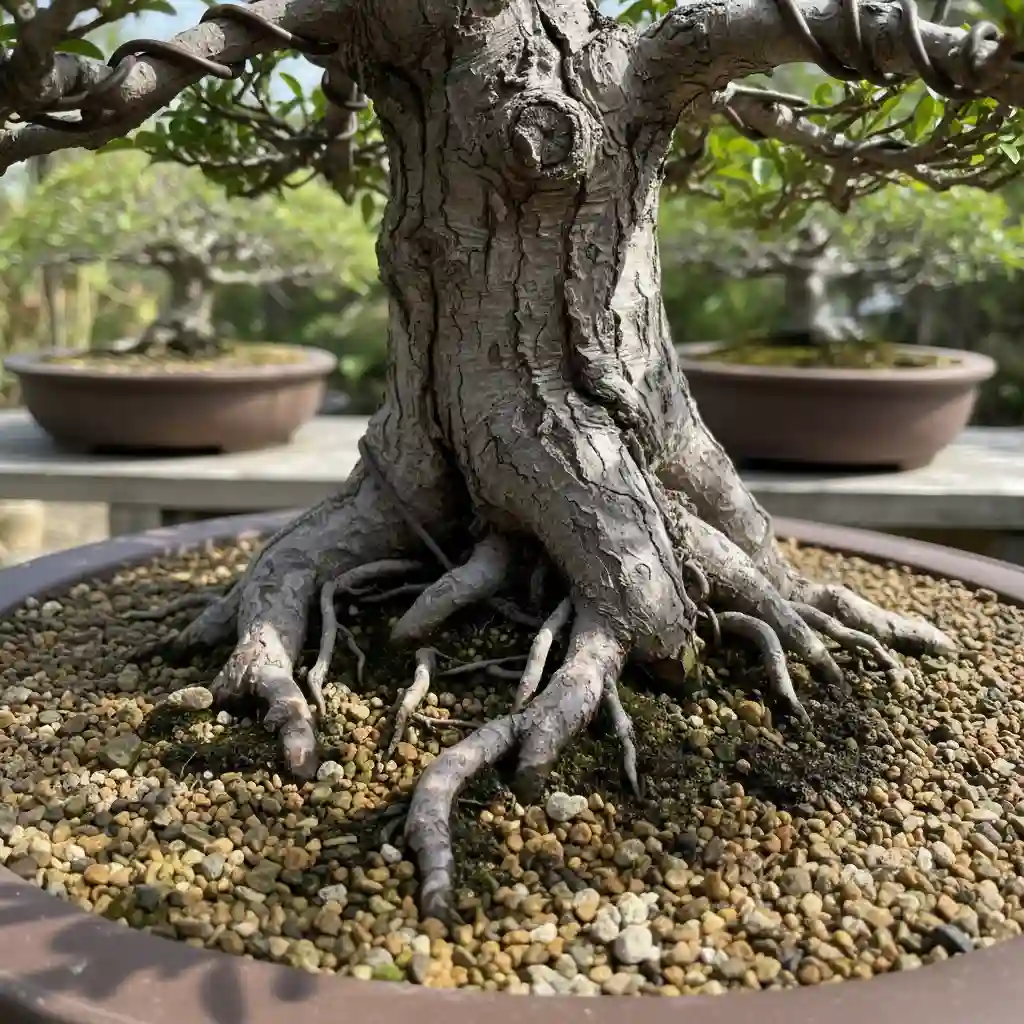
The journey to excellent nebari begins long before the tree resembles a finished bonsai. It starts with careful planning and initial work, often when the plant is still young stock. Early intervention is key for effective bonsai nebari development.
Choosing the Right Stock
Selecting nursery stock with a promising root system is a great head start. Look for plants with roots already showing some radial spread, even if they are small. If you’re growing from seed or cutting, you have the most control over root development from the very beginning. Remember, a good start makes future work much easier.
Initial Root Pruning
During the first repotting, carefully examine the root ball. Identify any large, tap roots growing straight down. These should be removed, as they hinder radial root growth. Encourage the lateral roots by pruning back any that are too long or circling the pot. The goal is to create a flat, even base of roots that will spread outwards.
Techniques for Enhanced Root Spread
Several specialized techniques can be employed to improve and refine the nebari of a bonsai. These methods require patience and a careful hand, but they yield impressive results over time.
Radial Root Spreading
This is perhaps the most fundamental technique for encouraging a beautiful root flare. It involves guiding the roots to grow outwards in a radial pattern.
Bare-Rooting and Repositioning
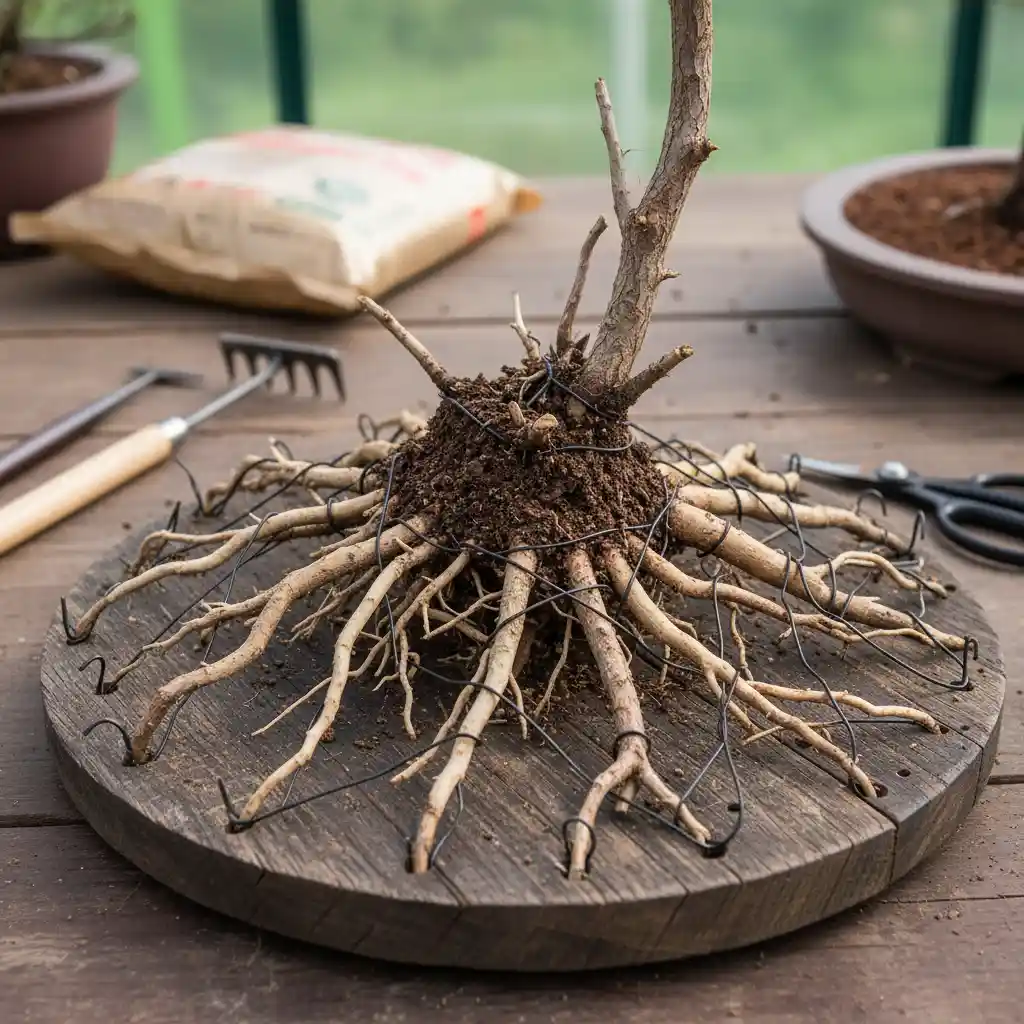
When repotting, carefully remove all soil from the root ball. Gently untangle the roots and spread them out evenly, like spokes on a wheel. You can use small pieces of wire or chopsticks to hold them in place as you repot. Some artists use a “root board,” a flat piece of wood or plastic, placed at the bottom of the pot to encourage horizontal root growth.
Using a Root Board
A root board, or root pad, is a simple but effective tool. It’s often a circular or square piece of wood, plastic, or even a tile, placed at the bottom of the pot. As new roots grow downwards, they hit the board and are forced to grow horizontally, thereby promoting radial spread. This technique is particularly useful for species that tend to produce strong taproots.
Air Layering for New Roots
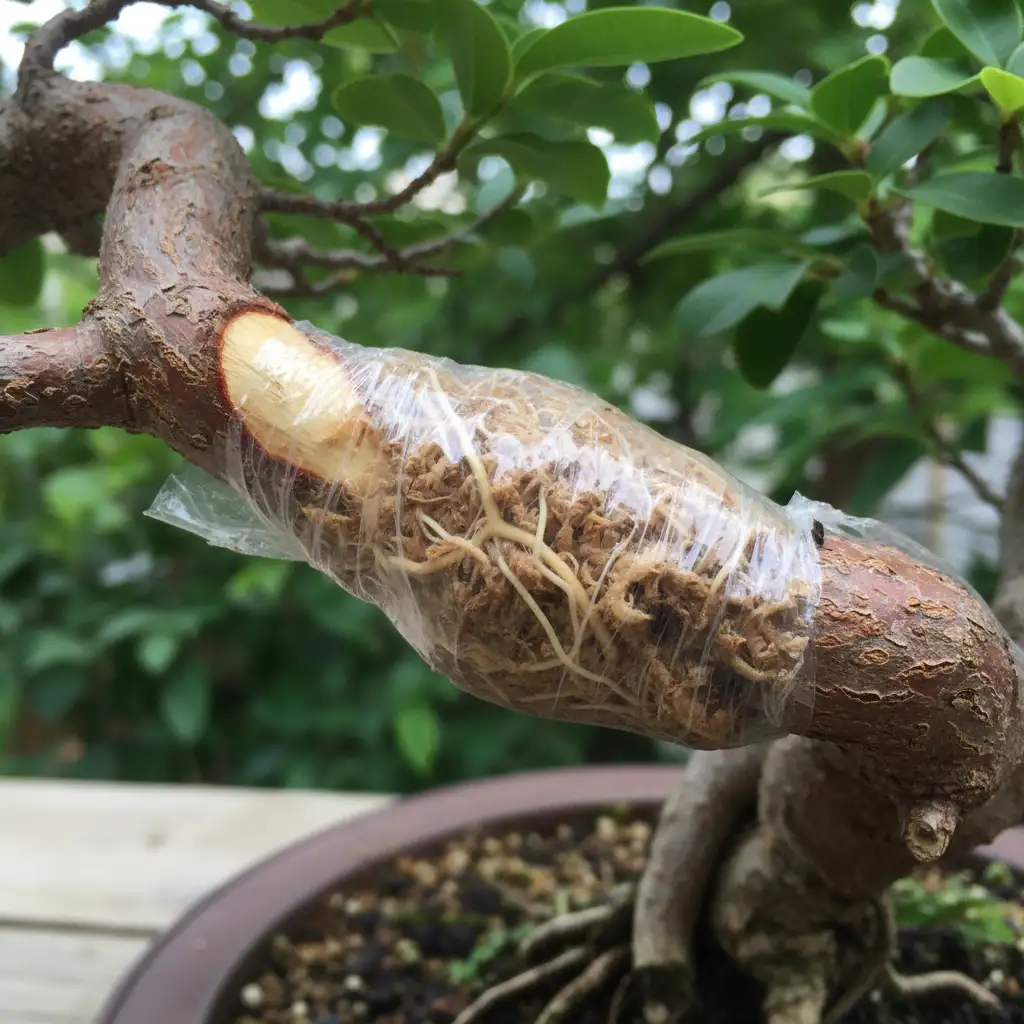
Air layering is a technique used to create new roots on a branch or trunk section above the ground. This method can be incredibly effective for correcting a poor nebari or creating a new tree with an ideal root base from scratch. It involves removing a ring of bark, applying rooting hormone, and wrapping the area in moist sphagnum moss and plastic.
Once roots have formed, the layered section is cut from the parent plant and potted as a new tree. This allows you to choose exactly where the new surface roots will emerge, giving you precise control over your bonsai nebari development.
Grafting for Improved Nebari
Root grafting involves attaching new roots to the base of the trunk where nebari is weak or missing. This is a more advanced technique, often used for older trees. Small seedlings or branches are grafted onto the trunk just above the existing roots. Over time, these grafted roots fuse with the main trunk, becoming an integral part of the nebari. It requires skill and patience but can dramatically improve the visual foundation of a bonsai. For more detailed information on grafting techniques, consider consulting resources like Wikipedia on Grafting.
Exposing Roots: Bringing Nebari to Light
Once the roots have developed and spread beautifully, the next step in bonsai nebari development is to reveal them. This process must be done carefully to avoid shocking the tree.
Gradual Soil Removal
Do not expose too many roots at once. Instead, remove a thin layer of soil from the surface each time you repot, perhaps every one to three years, depending on the tree’s vigor. Over several repottings, more of the nebari will become visible, gradually acclimating to the air and light. This slow exposure helps the roots to cork over and develop a desirable aged appearance.
Cleaning and Maintenance
Once exposed, the nebari requires regular cleaning. Use a soft brush to remove algae, moss, and loose soil that can accumulate between the roots. This not only keeps the nebari looking neat but also prevents potential fungal issues. Ensure proper drainage to avoid root rot, especially for newly exposed surface roots.
Ongoing Care and Refinement
Nebari development is not a one-time event; it’s an ongoing process throughout the life of your bonsai. Consistent care and refinement will maintain and improve its beauty. For comprehensive guidance on seasonal maintenance, including essential tasks for warmer months, refer to our guide on Spring Care for Bonsai SH. To ensure long-term health and address seasonal challenges, consider resources like Winter Protection for NZ Bonsai: Ensuring Health Through Colder Months.
Regular Root Pruning
During repotting, continue to prune any downward-growing roots or those that cross over each other. Encourage the growth of fine, fibrous roots near the surface. This helps maintain the radial spread and prevents the nebari from becoming too thick or chaotic.
Wiring and Training Surface Roots
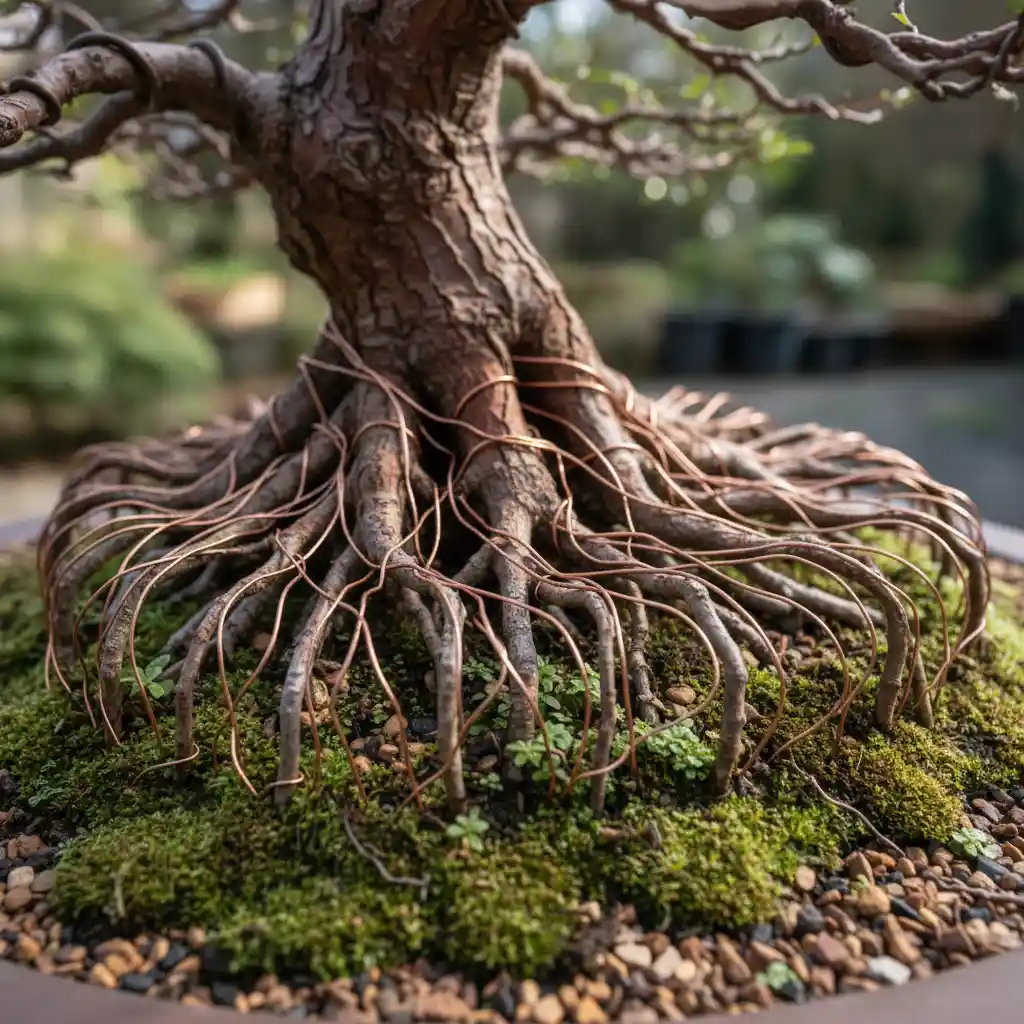
Just like branches, surface roots can be gently wired to guide their direction and spread. Use thin aluminum wire to hold roots in a desired position, promoting a more even and pleasing radial pattern. Remove the wire before it bites into the expanding roots to avoid unsightly marks.
Soil Selection and Watering
The right soil mix is crucial for healthy root development. For more details on maintaining optimal growing conditions, see Bonsai Soil, Fertilization & Nutrition. A well-draining, aerated soil encourages fine root growth and prevents waterlogging. Proper watering practices ensure the exposed surface roots receive adequate moisture without staying too wet. Allow the topsoil to dry slightly between waterings to promote a robust root system.
Common Challenges and Solutions
Even with careful planning, you might encounter issues during your bonsai nebari development journey. Here are a couple of common problems and how to address them. For issues related to tree health that might impact overall development, such as identifying and managing common pests, consult our detailed Bonsai Pest Identification Guide. Additionally, understanding proper watering is paramount; should you face issues, refer to Underwatering Bonsai Recovery. Furthermore, protecting your bonsai from diseases is crucial, and you can find comprehensive strategies in our guide on Disease Management for NZ Bonsai: Fungal, Bacterial & Viral Threats.
One-Sided Nebari
Sometimes, roots grow predominantly on one side of the trunk, leaving a sparse area. This can be addressed through strategic repotting, pruning roots on the dense side, and encouraging growth on the sparse side. Air layering or root grafting can also be used to introduce new roots where they are needed most, balancing the nebari over time.
Crossing Roots
Roots that cross over each other can look unnatural and potentially strangle other roots as they thicken. These should be identified during repotting and carefully pruned. Aim for roots that spread out individually without intertwining.
References and Further Reading
- Wikipedia: Grafting
- Bonsai Empire: Understanding Nebari
- The Art of Bonsai Project
Developing a strong, aesthetic nebari is a rewarding aspect of bonsai cultivation. It adds immense character and age to your trees, transforming them into truly magnificent living art pieces. For species-specific guidance on overall tree health, such as Maple Bonsai Care Tips, ensure you apply these principles while adapting to individual tree needs. With patience and consistent application of these techniques, you can achieve stunning root flares that captivate and inspire.