Grafting Techniques for Bonsai Development
bonzai.co.nz
What You’ll Learn
Grafting is a horticultural technique where two plants are joined to grow as one. For bonsai, it allows artists to combine desired traits, enhance aesthetics, improve root structure, add branches, or repair damaged sections, significantly advancing the tree’s development and health.
Grafting, a centuries-old technique, holds unique power in the art of bonsai. It is far more than just joining two plants; it is about intentional design and accelerated growth. This method allows you to overcome natural limitations and create stunning bonsai specimens.
Understanding various grafting techniques for bonsai development can unlock new possibilities for your trees. Whether you aim to improve root systems, add branches, or introduce new foliage, grafting offers precise control over your bonsai’s future.
Table of Contents
- Why Use Grafting for Bonsai?
- Key Grafting Techniques for Bonsai
- Essential Considerations for Successful Grafting
- Common Challenges and Troubleshooting
- Mastering Grafting for Your Bonsai Journey
- Sources and Further Reading
Why Use Grafting for Bonsai?
Bonsai artists employ grafting for several strategic reasons. It is a powerful tool for correcting flaws, enhancing specific features, and even speeding up the development process. Grafting can transform a mundane tree into a masterpiece.
Enhancing Aesthetics
One of the primary uses of grafting is to refine the visual appeal of a bonsai. You can add branches in bare spots, improve ramification, or change the foliage type. Imagine replacing coarse leaves with finer ones, creating a more delicate canopy.
This method allows for precise placement of new growth. It helps achieve a balanced design and a more mature appearance. The ability to dictate where branches grow is invaluable for advanced bonsai styling.
Improving Health and Structure
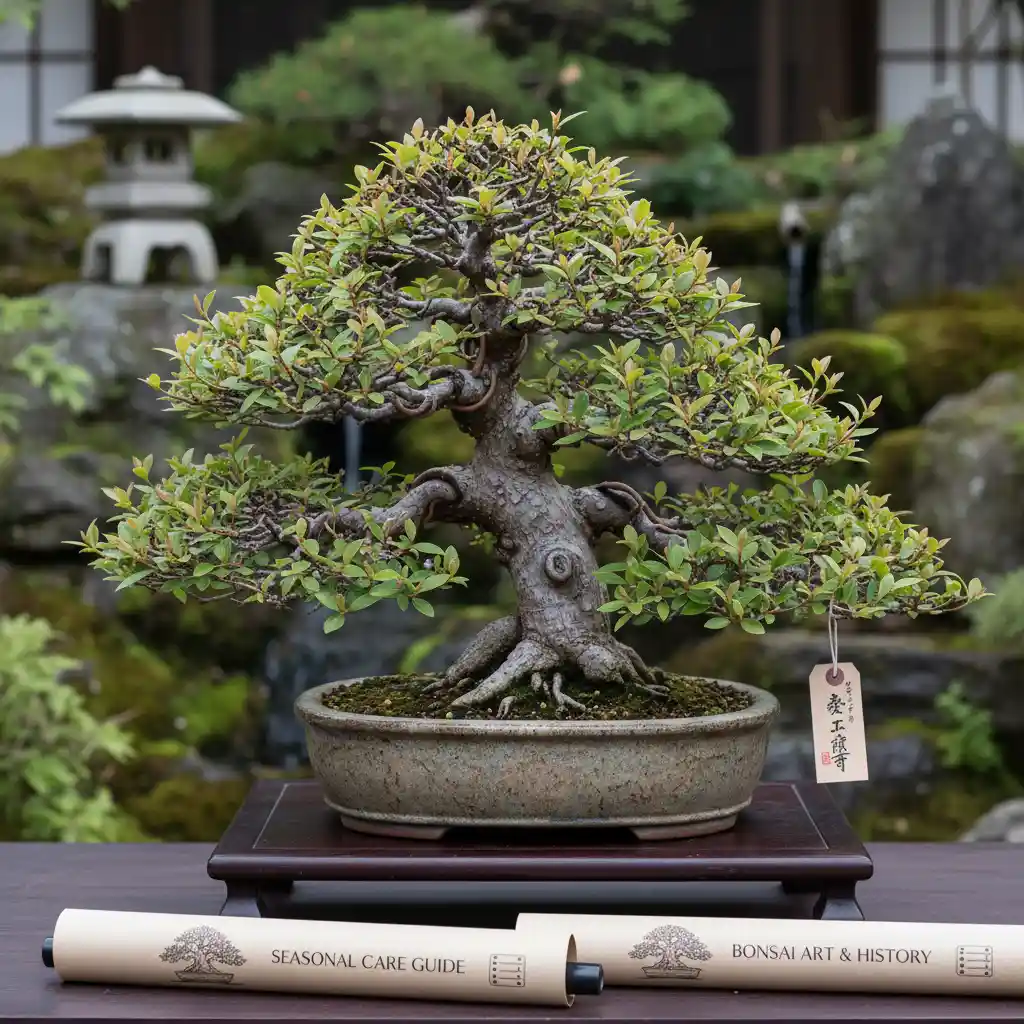
Grafting is also crucial for the health and structural integrity of a bonsai. For example, root grafting (nebari grafting) can enhance the tree’s stability and improve its visible surface root spread. A strong nebari is fundamental to the aesthetic of many bonsai styles.
You can also graft a more vigorous rootstock onto a weaker, but aesthetically pleasing, scion. This can provide increased disease resistance or a faster growth rate. It is a way to ensure the tree thrives for years to come, a goal also heavily supported by proper Bonsai Soil, Fertilization & Nutrition. Furthermore, the selection of appropriate containers, as covered in Choosing Bonsai Pots for NZ Natives: Function & Form, is vital for both the health and aesthetic presentation of your bonsai.
Accelerating Development
Starting a bonsai from seed or cutting takes a long time to develop maturity. Grafting can significantly shorten this period. By attaching a desirable scion from a mature plant to a vigorous rootstock, you gain a head start on developing a refined tree structure.
This is particularly useful for species that are slow to ramify or establish a strong trunk. Grafting techniques for bonsai development allow artists to achieve complex forms much faster than conventional methods alone.
Key Grafting Techniques for Bonsai
Various grafting methods exist, each suited for different purposes and plant materials. Choosing the right technique depends on your goal, the species involved, and your skill level. Mastering these techniques requires practice and patience.
Approach Grafting
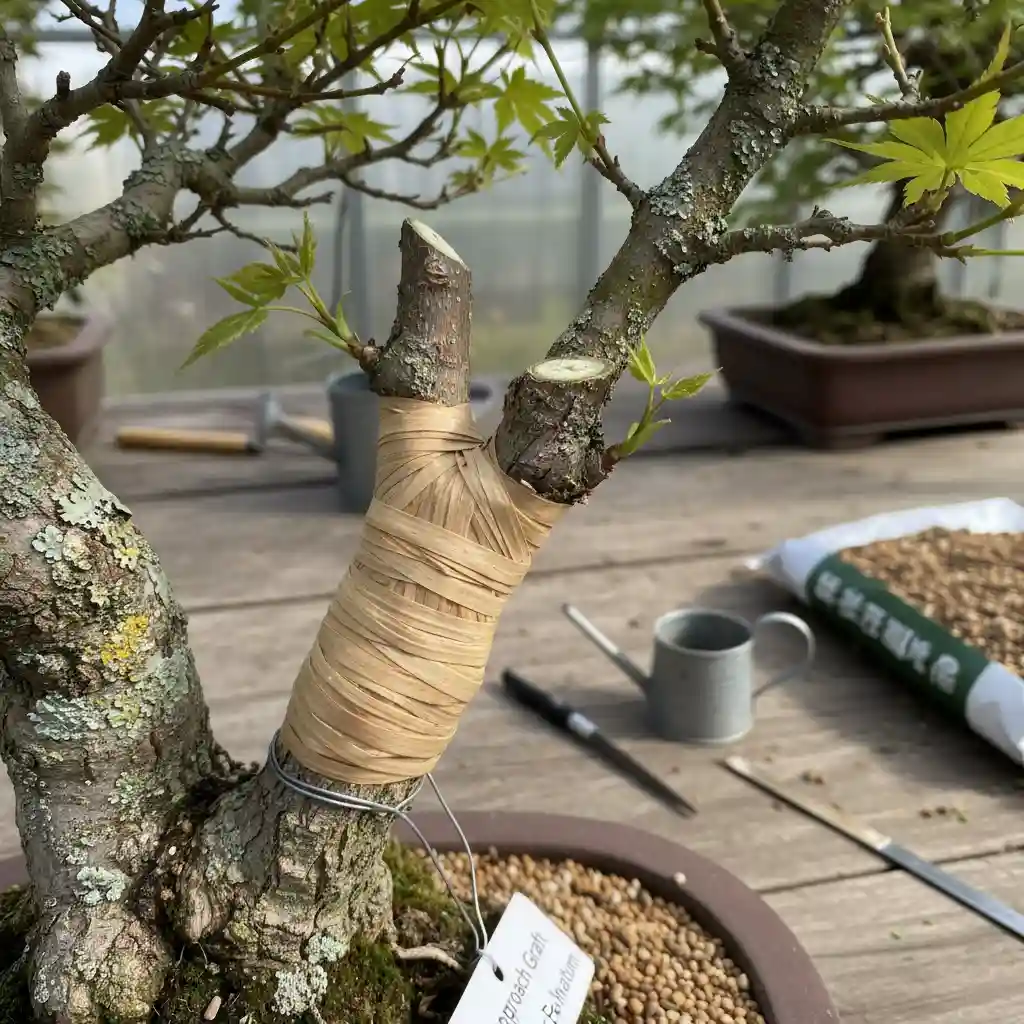
Approach grafting involves joining two independently rooted plants while they are still growing. A slice is made in both the scion (donor branch) and the rootstock (receiving plant), exposing the cambium layers. These cut surfaces are then tightly bound together.
Once a strong union forms, the rootstock above the graft and the scion below the graft are cut. This technique is often used for difficult-to-graft species or to create strong, thick branches in specific locations. It offers a high success rate due to both parts having their own root systems during the healing process.
Cleft Grafting
Cleft grafting is a common and versatile method. It involves inserting a wedge-shaped scion into a split (cleft) made in the rootstock. The cambium layers of both parts must align perfectly for success.
This technique is effective for changing the variety of a tree or adding branches to a large cut area. It’s particularly useful for deciduous trees. Proper sealing with grafting wax or tape is essential to prevent drying out and promote callus tissue formation.
Whip-and-Tongue Grafting
Similar to cleft grafting, whip-and-tongue grafting creates a strong union by interlocking the scion and rootstock. Both parts are cut with a long, sloping slice, and a small ‘tongue’ is cut into each slice. These tongues interlock, providing greater stability and contact between cambium layers.
This method is highly successful due to the increased surface area for cambial contact. It is often used for smaller diameter branches or seedlings. It results in a very strong, almost invisible union once healed.
Root Grafting
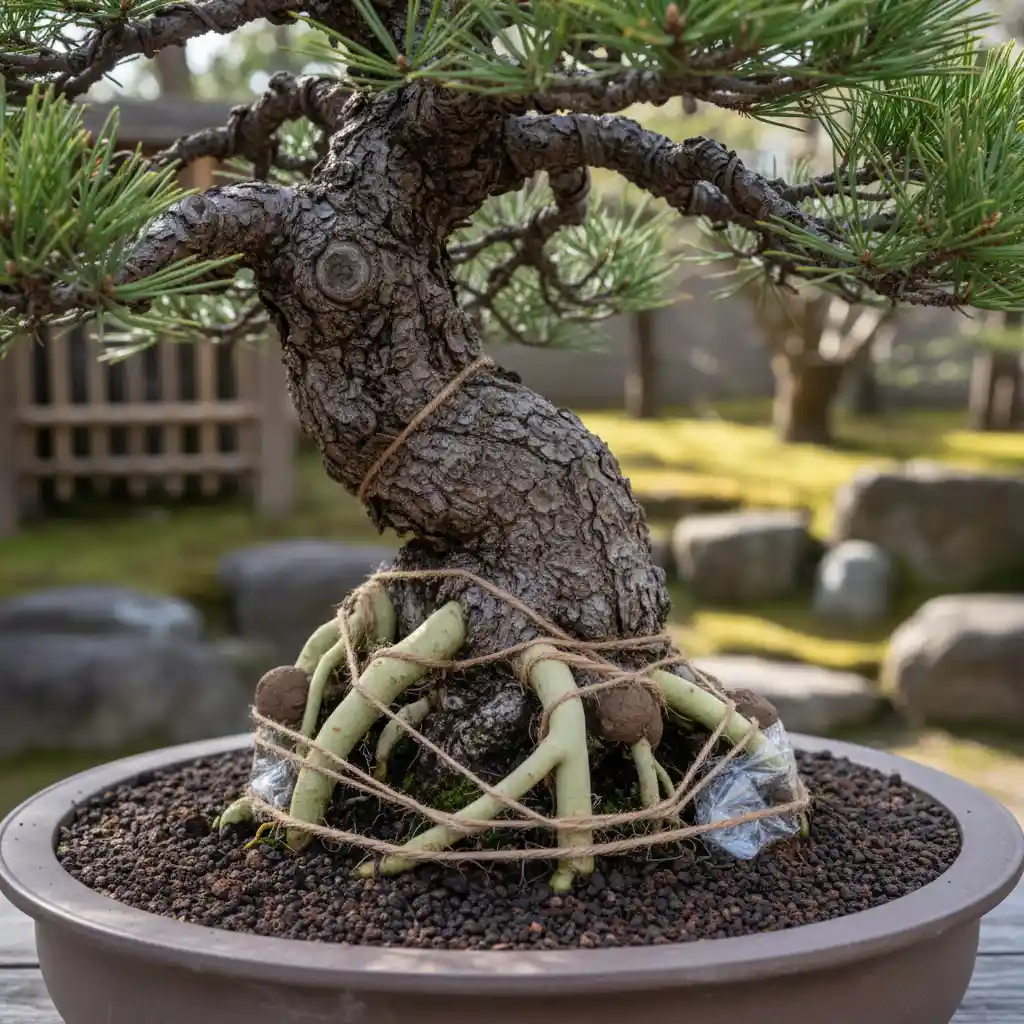
Root grafting is specifically used to improve the nebari, or surface root flare, of a bonsai. Small roots or seedlings are grafted directly onto the base of the trunk. This can fill gaps in the nebari or create a more radial root spread.
The scions for root grafting are typically small seedlings or rooted cuttings. They are inserted into slits made around the trunk’s base, ensuring good contact with the host cambium. This dramatically enhances the visual stability and age of the bonsai.
Bud Grafting
Bud grafting involves transferring a single bud (with a small piece of bark and cambium) from a desirable scion onto the rootstock. A T-shaped or patch cut is typically made on the rootstock, and the bud is inserted.
This technique is highly efficient as it uses very little scion material. It is effective for deciduous and some evergreen species. Bud grafting is often used to add branches in specific small areas or to change the foliage on a particular part of the tree.
Essential Considerations for Successful Grafting
Success in grafting relies on careful planning and execution. Several factors play a critical role, from selecting the right materials to providing optimal aftercare. Ignoring these details can lead to failure.
Species Compatibility
One of the most vital aspects is species compatibility. Generally, you can only graft within the same genus, and often within the same species. Attempting to graft incompatible species will result in failure because their vascular tissues cannot integrate.
Research your tree’s specific requirements, whether you’re working with common species like those covered in a Juniper Bonsai Care Guide or exploring unique options like Rata Bonsai Cultivation: Techniques for a Hardy Native. For instance, junipers can often be grafted onto different juniper varieties, but grafting a pine onto a maple is impossible. Understanding these genetic traits is key.
Optimal Timing
The timing of your grafting operation is crucial. For most woody plants, late winter or early spring, just before active growth begins, is ideal. This allows the tree to heal quickly as sap flow increases, aligning with critical periods for successful Spring Care for Bonsai SH.
However, some techniques like bud grafting might be more successful in late summer. The goal is to perform the graft when the cambium layers are most active and likely to form callus tissue, leading to a strong union.
Proper Tools and Preparation
Sharp, sterile grafting knives are indispensable. Clean cuts are essential for successful cambium alignment and reduce the risk of infection. You will also need binding materials like grafting tape or raffia, and grafting wax or sealants.
Ensure your scion material is healthy and dormant if required. Prepare your rootstock by cleaning the area where the graft will be placed. Proper preparation minimizes stress on the tree and maximizes healing potential.
Aftercare and Protection
Once grafted, the union needs protection. Keep the area moist but not waterlogged, and protect it from extreme temperatures and strong winds, similar to the considerations for Winter Protection for NZ Bonsai: Ensuring Health Through Colder Months.
Regularly check the graft for signs of healing or rejection. Remove binding materials gradually once a strong union is visible. Patience is a virtue during this healing process, which can take several months or even a full growing season. This also applies to other crucial maintenance tasks, such as Repotting Your First Bonsai Tree when the time is right.
Common Challenges and Troubleshooting
Even with careful preparation, grafting can present challenges. Graft failure is often due to poor cambium alignment, dehydration, or incompatible species. Don’t be discouraged by initial setbacks; they are part of the learning process.
If a graft fails, inspect the union. Was there good contact between the scion and rootstock cambium? Was the graft kept moist? Sometimes, a simple adjustment in technique or timing can make all the difference. Reattempting with fresh material and careful observation is often the best approach.
Pests and diseases can also impact graft success. Addressing specific issues like Aphids on Bonsai Treatment is crucial. Ensure your tools are sterile and that your grafting site is clean. Use appropriate fungicides or pesticides if necessary, but sparingly to avoid stressing the newly joined tissues.
Mastering Grafting for Your Bonsai Journey
Grafting is an advanced, yet rewarding, skill in bonsai cultivation. It empowers you to refine existing trees, create new forms, and overcome the natural limitations of specific species. By diligently applying these grafting techniques for bonsai development, you can achieve remarkable results.
Start with simpler grafts and compatible species to build your confidence. As you gain experience, you will discover the immense creative freedom that grafting offers. It’s a journey of continuous learning and artistic expression.
Explore different methods and observe how various species respond. With practice, patience, and attention to detail, grafting will become an invaluable tool in your bonsai journey, allowing you to craft truly unique and stunning living art pieces.
Sources and Further Reading
- Wikipedia: Grafting
- Bonsai Empire: Grafting Techniques
- The Art of Bonsai Project: Advanced Techniques