Classic Bonsai Styling Forms Explained
bonzai.co.nz
Bonsai styling forms are traditional aesthetic guidelines that help shape miniature trees to mimic their natural, full-sized counterparts. These forms create visual harmony and depth, reflecting nature’s beauty in a potted tree, making each a living work of art.
The art of bonsai is about more than just growing small trees. It is a disciplined practice that blends horticulture with artistic vision. To achieve this, enthusiasts follow various traditional bonsai styling forms. These styles are not strict rules but rather principles that guide the artist in creating a miniature landscape.
Understanding these forms is key to developing your own bonsai trees. Each style tells a different story and captures a unique aspect of nature. They help transform a young sapling into a mature, artistic statement. Let us explore some of the most classic and admired forms.
Formal Upright (Chokkan)
The formal upright style, known as Chokkan, is one of the most fundamental and striking bonsai forms. It represents a tree growing strong and straight, facing the sky. This style is often seen in nature with trees that grow in open areas, receiving abundant sunlight and facing minimal challenges.
The trunk of a formal upright bonsai is perfectly straight and tapers evenly from the base to the apex. Its branches are arranged symmetrically around the trunk, with the lowest branches being the longest and thicker, gradually shortening as they ascend. This creates a pleasing triangular or conical silhouette.
Key Characteristics of Formal Upright
- Straight Trunk: The trunk rises directly upwards without any bends or curves.
- Taper: The trunk gradually narrows from the roots (nebari) to the top.
- Branch Placement: Branches typically emerge from the trunk alternately, forming a clear, well-defined canopy. The first branch is often placed about one-third of the way up the trunk.
- Root System: A strong, radiating root system (nebari) visible at the base is crucial for stability and visual balance.
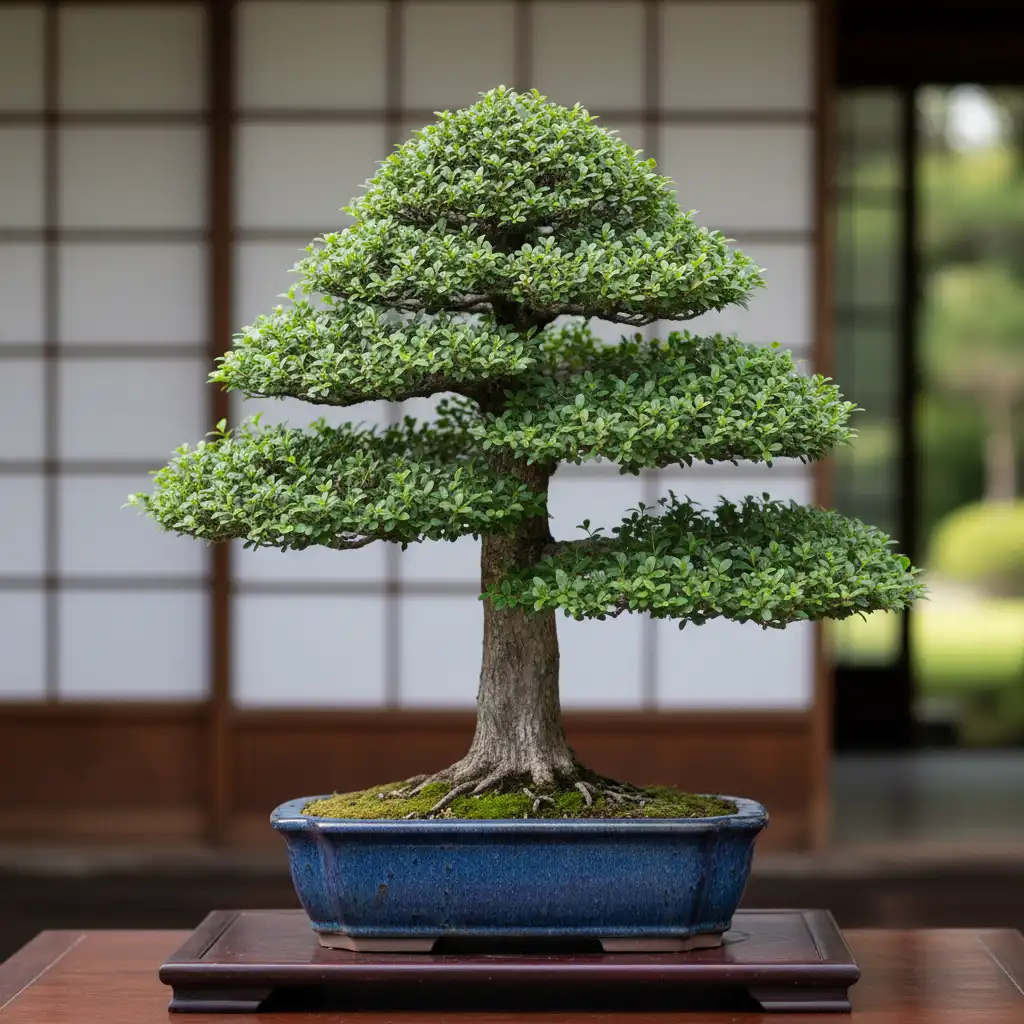
Popular species for this style include pines, spruces, and junipers. These trees naturally exhibit the robust and vertical growth patterns suitable for Chokkan. Achieving this style requires careful pruning and wiring over many years to maintain its precise structure.
Slanting Style (Shakan)
The slanting style, or Shakan, portrays a tree that has been pushed by strong winds or grows towards a light source. The trunk leans significantly to one side, creating a sense of dynamic movement and struggle against the elements. This form captures the resilience of trees in nature.
While the trunk leans, the apex of the tree must still point towards the sun. The roots on the side opposite the lean must be strong and well-developed to provide balance. This visual counterweight is essential for the tree’s perceived stability within its container.
Creating a Balanced Slanting Bonsai
- Leaning Trunk: The trunk leans at an angle, typically between 20 to 45 degrees from the vertical.
- Root Stability: Strong anchor roots on the side away from the lean are vital.
- Branching: Branches are arranged to balance the lean, often with more foliage on the side opposite the lean or shorter branches on the leaning side.
- Potting: The tree is usually planted off-center in its pot to enhance the visual effect of the lean and improve overall balance.
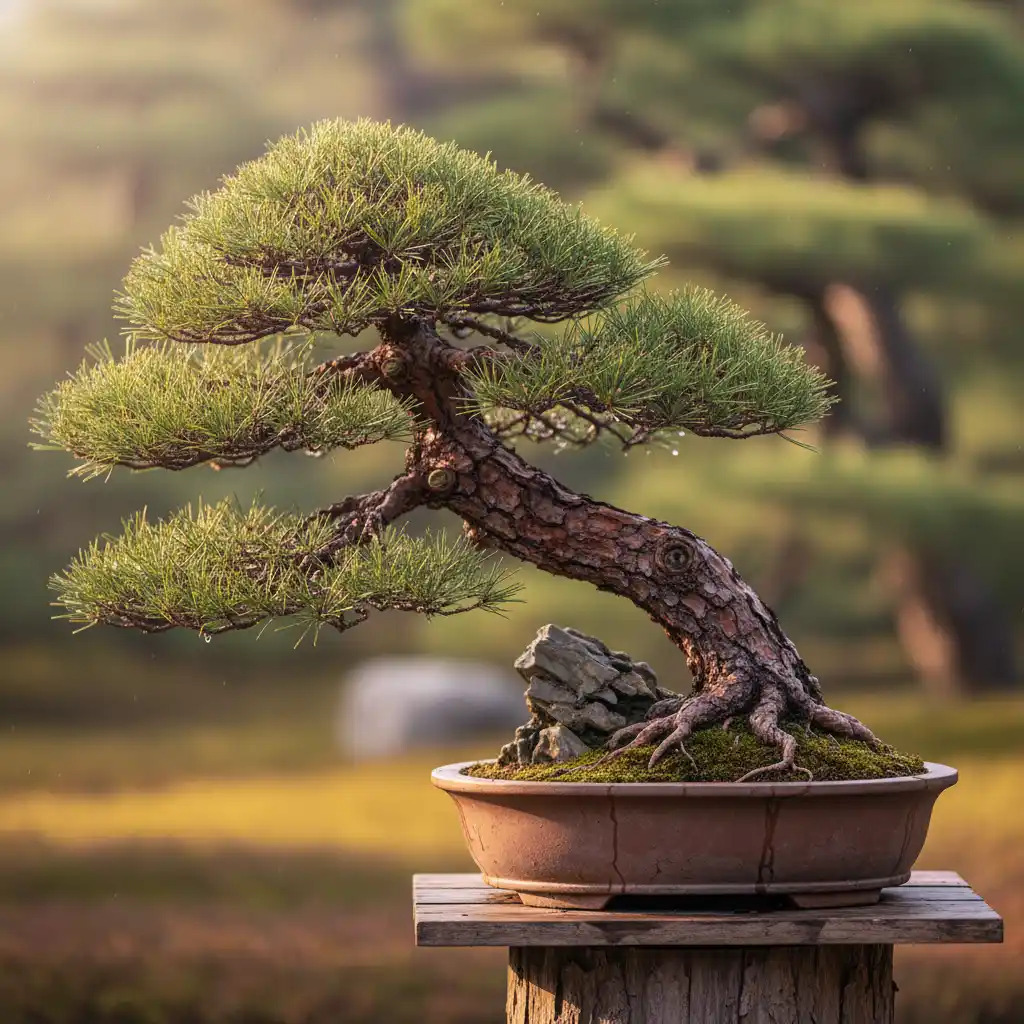
Deciduous trees like maples and elms, as well as some conifers, can be trained into this expressive form. The slanting style effectively conveys character and the impact of environmental forces on a tree’s growth. It requires careful consideration of the tree’s overall balance and aesthetic flow.
Cascade Forms (Kengai & Han-kengai)
Cascade styles mimic trees that grow over cliffs or along riverbanks, where strong winds or heavy snow forces their trunks and branches to grow downwards. These are dramatic and visually striking bonsai styling forms, creating a powerful impression of gravity and endurance.
There are two primary cascade forms: the full cascade (Kengai) and the semi-cascade (Han-kengai). Both require specific pot choices, often taller or deeper containers, to allow the trunk and branches to extend well below the rim of the pot.
Full Cascade (Kengai)
In a full cascade, the main trunk descends sharply below the bottom edge of the pot. The apex of the tree typically stays above the pot rim, then the trunk drops, often with a significant curve. A branch or two might extend horizontally to provide a visual counterweight to the downward flow.
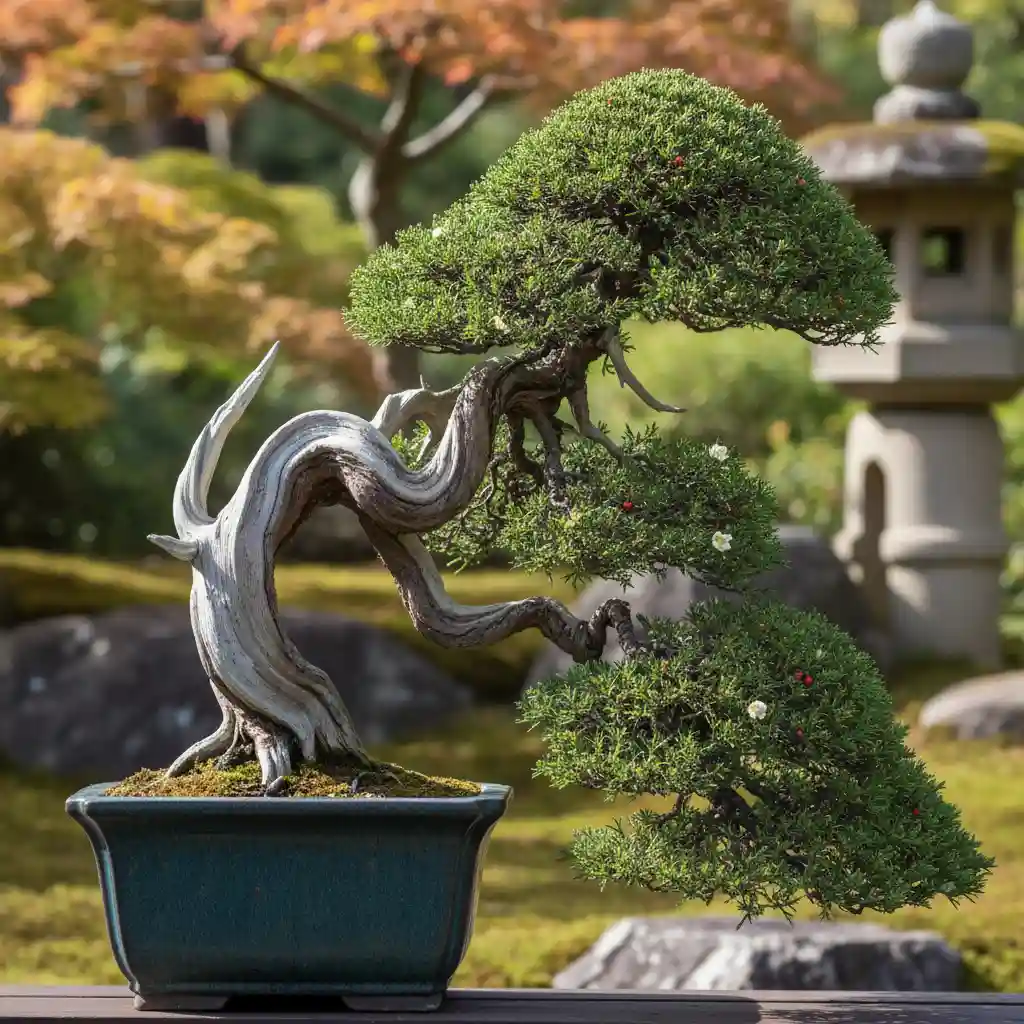
The longest branch of a full cascade bonsai often extends further down than the bottom of the pot. This style demands careful attention to root development and anchorage to ensure the tree’s stability. Water drains quickly from these trees, so regular watering is crucial.
Semi-Cascade (Han-kengai)
The semi-cascade style is less extreme than the full cascade. Here, the trunk extends horizontally for a distance and then begins to cascade downwards. However, it does not drop below the bottom edge of the pot. Instead, it typically extends to about pot level or slightly below it.
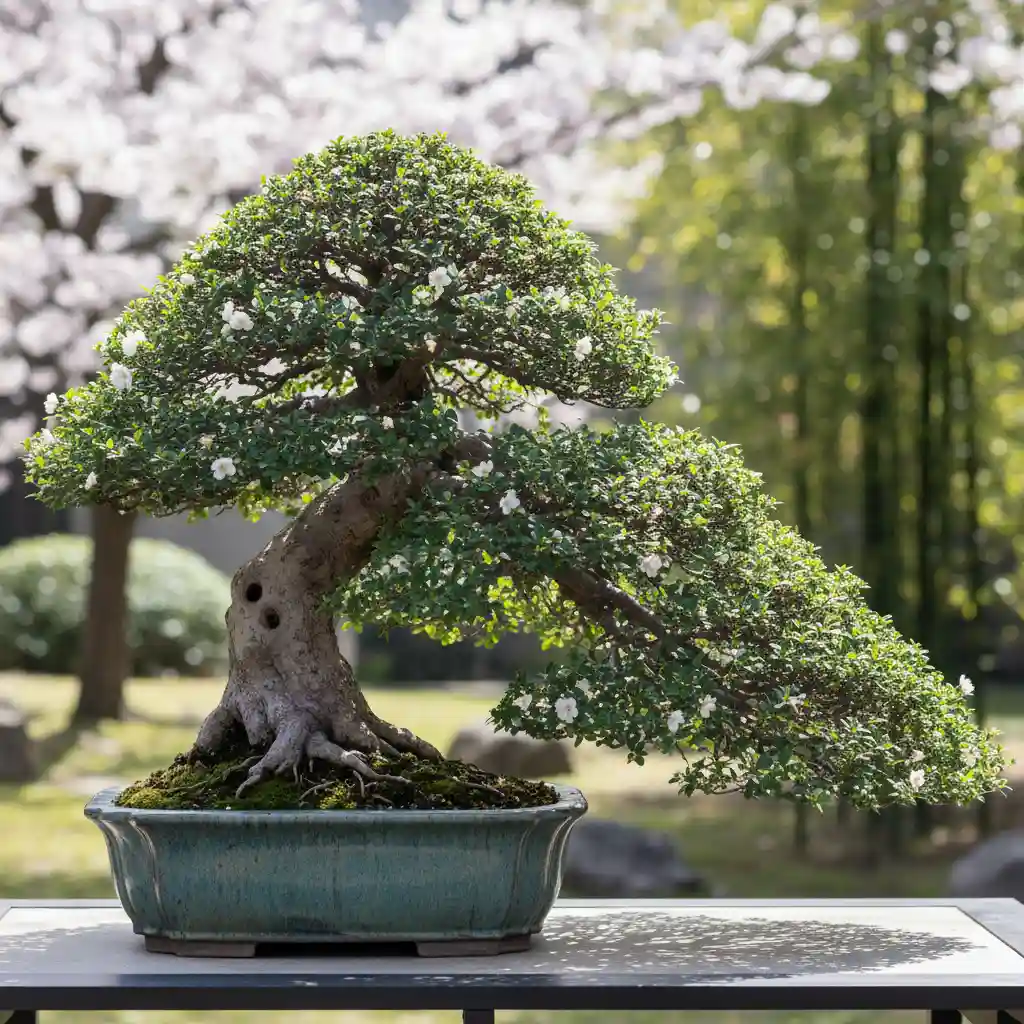
This form often conveys a sense of peacefulness and fluidity, like a tree hanging over a gentle slope. Both cascade styles are often created using junipers, pines, and other conifers that have flexible branches. They represent the strength of nature shaping life.
For more detailed information on specific bonsai styles and their history, you can visit Wikipedia’s page on Bonsai styles.
Developing Your Bonsai Vision
Mastering these bonsai styling forms is a journey of patience and observation. Each style offers a unique challenge and opportunity to express artistry. While traditional forms provide a strong foundation, the true art lies in interpreting nature and giving your tree a distinctive character, often enhanced by Companion Plants & Display Elements for a True NZ Bonsai Scene.
Experiment with different species and techniques. Pay attention to the natural growth habits of your trees and let them inspire your design choices. With dedication, you can cultivate beautiful bonsai trees that embody the serene beauty and enduring spirit of nature.
Remember that a healthy tree is the first step towards a beautiful bonsai. Proper care, including watering, Bonsai Repotting Techniques & Root Pruning, Soil & Fertilization for NZ Native Bonsai: Custom Blends & Feeding, and a Bonsai Fertilization Schedule, Spring Care for Bonsai SH, and pest control, is as important as the styling itself. For those looking for specific insights into substrates, refer to Bonsai Soil Reviews: Akadama, Pumice, Lava Rock. Continue to learn and grow your skills, and your bonsai collection will flourish.
Embrace the challenge of shaping these living sculptures. Each cut and wire placement contributes to the tree’s future form. Over time, your understanding of these forms will deepen, allowing you to create truly spectacular and personal works of art.